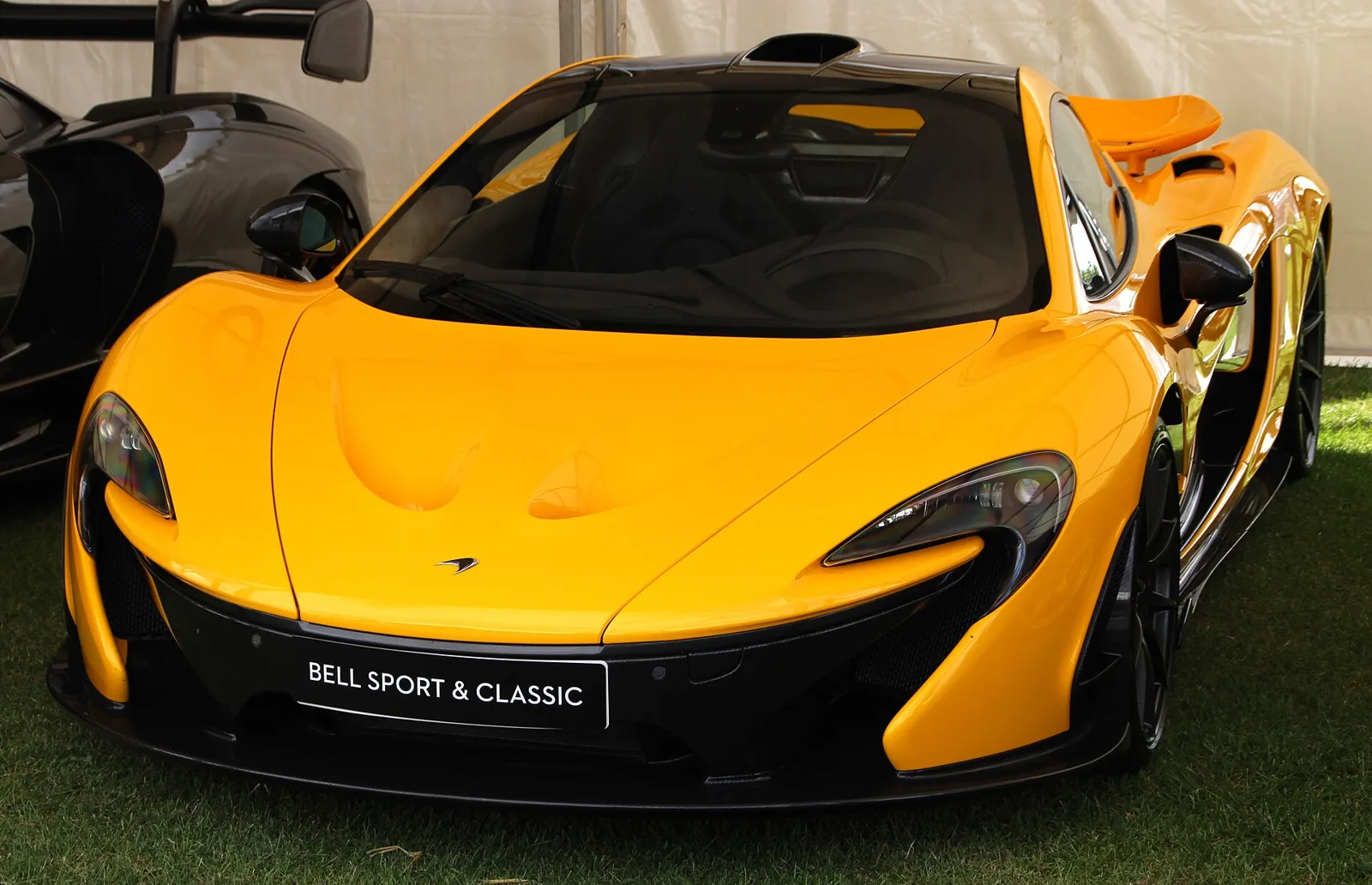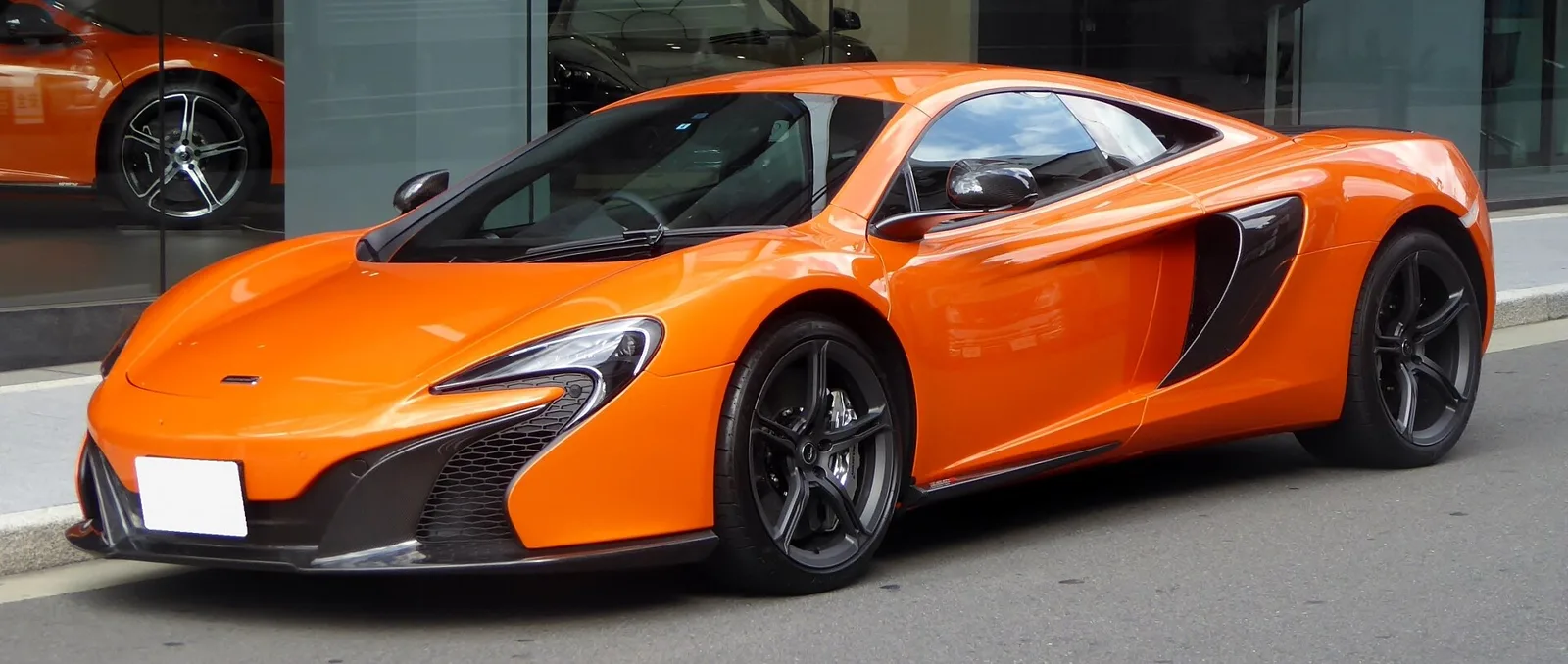
A 650 PS twin-turbo V8 in a carbon monocoque, with a Formula One-derived suspension and a family of spin-offs that ran from Spider to track-only GT3.
Launched in 2014 as the successor to the MP4-12C, the 650S pairs a carbon-fibre monocoque with a 3.8-litre twin-turbo V8 making 650 PS. A seven-speed dual-clutch gearbox handles the drive, and the range later grew to include the 675LT and several limited editions.
The McLaren 650S is a British sports car from McLaren Automotive, announced in February 2014 and unveiled at the Geneva Motor Show that year. It was built on the carbon-fibre tub of the MP4-12C and fitted with a 3.8-litre twin-turbo V8 rated at 650 PS (478 kW; 641 hp). Its variants ran from the 675LT to the MSO HS.
What is the McLaren 650S?
The 650S is a two-door mid-engined coupe with a carbon monocell chassis and a seven-speed dual-clutch gearbox. It was formally a new model, but it was based on the existing 12C with about a quarter of its parts changed. McLaren said the 650S uses the findings gained from the P1 to make the car more responsive and focused.
The name explains the car. The 650 refers to the engine's power output in PS, the European standard for horsepower, and the S stands for Sport. McLaren expected the 650S to sit alongside the 12C, but falling 12C sales led the company to market the 650S as its replacement.
A carbon tub, a 650 PS twin-turbo V8 and a family of variants that ran from Spider to track-only GT3.
How was the 650S developed from the 12C?
The 650S kept most of the 12C's components, including the carbon-fibre monocoque with aluminium subframes at each end. The changes focused on responsiveness and aerodynamics. The front end was revised to look more like the P1, and the design language set out in the 650S went on to define future McLaren sports cars.
Inside, Alcantara was the standard upholstery, and the infotainment system was the same unit used in the P1. The portrait screen was improved over the 12C, and the sat nav became easier to reach. Optional carbon fibre sports seats cut 15 kg from the car's weight, and the symmetrical layout aimed to reduce the time an owner needed to learn the controls.
How was the 650S carbon tub made?
The monocoque weighs 75 kg (165 lb) and is made by Carbo Tech, an Austrian aerospace contractor. McLaren wanted to build around 4,000 cars a year, and it judged the traditional pre-impregnation method too labour-intensive. It switched to resin transfer moulding, in which removable internal mandrels let the tub be built in one piece.
Aluminium components are bolted onto the tub after priming, which prevents galvanic corrosion between the two metals. The wide, hollow box sections on each side are designed to make getting in and out easier, which is a practical benefit for a car of this kind.
What engine did the 650S use?
The 650S draws on the 3.8-litre McLaren M838T engine, which makes 650 PS (478 kW; 641 hp) and 500 lb ft (678 Nm) of torque. Much of the powertrain was carried over from the 12C, but it has new pistons, better-flowing cylinder heads, new exhaust valves and recalibrated camshaft timing.
The red line rose to 8,500 rpm, and a new exhaust system reduced weight while improving response. The seven-speed dual-clutch gearbox, supplied by Graziano Trasmissioni, was recalibrated for faster shifts.
How did the 650S handle and stop?
The 650S used ProActive Chassis Control, a derivative of the active suspension system developed for McLaren's F1 road car. Dampers on each side are hydraulically linked so the car resists roll, and the stiffness of the suspension is adjusted by changing the gas pressure in accumulators. Pirelli P Zero Corsa tyres on new forged aluminium wheels added grip.
Aerodynamics were reworked too. A new front splitter and wing blades increased downforce by 24% over the 12C, and the rear diffuser came from the 12C GT3 race car. The air brake was now managed by a computer that reads accelerometers to counteract lift, and the car also had a Drag Reduction System. Carbon ceramic brakes by Akebono were standard, with the braking response of the 12C improved.
How fast was the McLaren 650S?
McLaren claimed a top speed of 333 km/h (207 mph) for the 650S. The coupe could reach 100 km/h (62 mph) in 3.0 seconds and 200 km/h (124 mph) in 8.4 seconds. These were the company's own claims, not independent test figures.
The 650S also became the base for a range of variants, several of them built by McLaren Special Operations, the company's bespoke division. Each one changed the car's weight, power or appearance to suit a different buyer.
What variants did the 650S spawn?
The 650S Spider arrived in 2014 with a three-piece retractable carbon hard-top that took 17 seconds to operate. It weighed 40 kg (88 lb) more than the coupe and was claimed to reach 328 km/h (204 mph). The 625C, launched in September 2014 for South Asia Pacific markets, cut output to 625 PS (460 kW; 616 hp) and used cast-iron discs.
Special Operations produced several limited editions. The MSO 650S came in a run of 50 with matte carbon and exclusive colours, plus lighter alloy wheels with titanium bolts. The 650S Le Mans, limited to 50 coupes, marked McLaren's 1995 win at the 24 Hours of Le Mans. The 650S Can-Am was a Spider of 50 units that celebrated 50 years of the Can-Am series.
What did the 675LT change?
The 675LT, announced in February 2015 and shown at the Geneva Motor Show that year, was a lightweight, track-focused evolution of the 650S. McLaren built 500 coupes. Its 3.8-litre engine was tuned to 675 PS (496 kW; 666 bhp) at 7,100 rpm, with 700 N m (516 lbf ft) of torque at 5,500 rpm.
Weight was the main target. The car used a single-piece carbon monocell weighing 75 kg, along with carbon bumpers, a carbon undertray and carbon decklid. Its dry weight of 1,230 kg (2,712 lb) was 100 kg (220 lb) less than the 650S, and removing the air conditioning unit and fitting carbon race seats together saved 26.5 kg (58 lb). Air conditioning and an adjustable passenger seat were still available at no cost.
Performance figures show the effect: 0-100 km/h in 2.9 seconds, 0-200 km/h in 7.9 seconds and 0-300 km/h in 25.9 seconds. The top speed was 330 km/h (205 mph). Downforce rose by 40% thanks to a larger rear wing, a new diffuser and an 80% larger front splitter.
The name points to the 1997 McLaren F1 GT, the long-tail version built to meet FIA rules for the F1 GTR. That car used extended front and rear overhangs to produce downforce without a drag-inducing fixed rear wing.
What were the 675LT Spider and MSO HS?
The 675LT Spider was revealed online in December 2015 and used a folding hard-top whose cycle takes 16 seconds. It reached 0-200 km/h in 8.1 seconds and had a top speed of 327 km/h (203 mph). McLaren built 500 Spiders before counting special editions. The Carbon Series, of which only 25 were made, added an extra 40% of carbon body panels.
The MSO HS was a limited edition of 25 cars based on the 675LT and inspired by the P1 GTR. Its engine was rated 688 PS (506 kW; 679 hp) with 516 lb ft (700 N m) of torque at 7,000 rpm. Its adjustable fixed rear wing and roof-mounted air scoop generated 220 kg (485 lb) of downforce at 241 km/h (150 mph).
How did the McLaren 650S race?
In June 2014 McLaren announced a GT3 version of the 650S, developed to compete in GT3 championships from 2015. It used a 6-speed sequential motorsport gearbox, 380 mm ventilated brake discs and a 52 mm wider track. Its 3.8-litre twin-turbo V8 produced 500 PS (368 kW; 493 hp), which was lower than the road car because of homologation rules.
The car's biggest result came at the 2016 Liqui Moly Bathurst 12 Hour in Australia, where Alvaro Parente, Shane van Gisbergen and Jonathon Webb won. Van Gisbergen also set a new outright lap record of 2:01.567 on 7 February 2016. An attempt to enter the 2016 24 Hours of Le Mans under LM GTE rules never materialised.
McLaren 650S specifications at a glance
| Specification | Detail |
|---|---|
| Engine (650S) | 3.8-litre twin-turbo McLaren M838T V8, 650 PS (478 kW; 641 hp) |
| Torque (650S) | 500 lb ft (678 Nm) |
| Gearbox | Seven-speed dual-clutch Seamless-Shift, by Graziano Trasmissioni |
| 0-100 km/h (650S) | 3.0 seconds |
| 0-200 km/h (650S) | 8.4 seconds |
| Top speed (650S) | 333 km/h (207 mph) |
| Monocoque | 75 kg (165 lb) carbon tub by Carbo Tech |
| 675LT engine | 675 PS (496 kW; 666 bhp) at 7,100 rpm |
| 675LT dry weight | 1,230 kg (2,712 lb) |
| 675LT 0-100 km/h | 2.9 seconds |
| 675LT top speed | 330 km/h (205 mph) |
| MSO HS engine | 688 PS (506 kW; 679 hp) |
| GT3 engine | 500 PS (368 kW; 493 hp) |