Michael Schumacher won at Monza for Ferrari and drew level with Ayrton Senna's win total, but the first-lap accident that killed fire marshal Paolo Gislimberti changed the race.
Held on 10 September 2000 at Monza, the Italian Grand Prix was the 14th race of the season. Michael Schumacher won the 53-lap race for Ferrari from pole position, with Mika Hakkinen second for McLaren and Ralf Schumacher third for Williams.
Michael Schumacher won the 2000 Italian Grand Prix at Monza, drawing level with Ayrton Senna on his 41st career victory. The race was overshadowed by a multi-car accident on the first lap, in which a fire marshal, Paolo Gislimberti, was struck by a wheel and later died. Schumacher's win, his sixth of the season, reduced Mika Hakkinen's championship lead to two points.
What was the 2000 Italian Grand Prix?
The race was the season's final European event and the 14th round of the Formula One World Championship. It took place on 10 September at the Autodromo Nazionale di Monza in Lombardy, a 5.793 km (3.600 mi) clockwise circuit, and the 53 laps covered 306.764 km (190.614 mi). Bridgestone supplied the hardest available dry compounds, the medium and hard tyres.
An estimated 110,000 to 120,000 people attended the race, which started at 14:00 local time in dry, warm and sunny conditions. The air was 25 C (77 F), and the track reached between 34 and 37 C (93 and 99 F). Every team ran two drivers, with no changes to the season's entry list.
Before the race Hakkinen led the drivers' table with 74 points, followed by Schumacher on 68 and David Coulthard on 61. Rubens Barrichello was fourth on 49 and Ralf Schumacher fifth on 20. McLaren led the constructors on 125 points, ahead of Ferrari on 117, with Williams on 30.
A marshal was killed in a first-lap accident, yet Michael Schumacher's win at Monza still changed the title fight.
What had changed at Monza before the race?
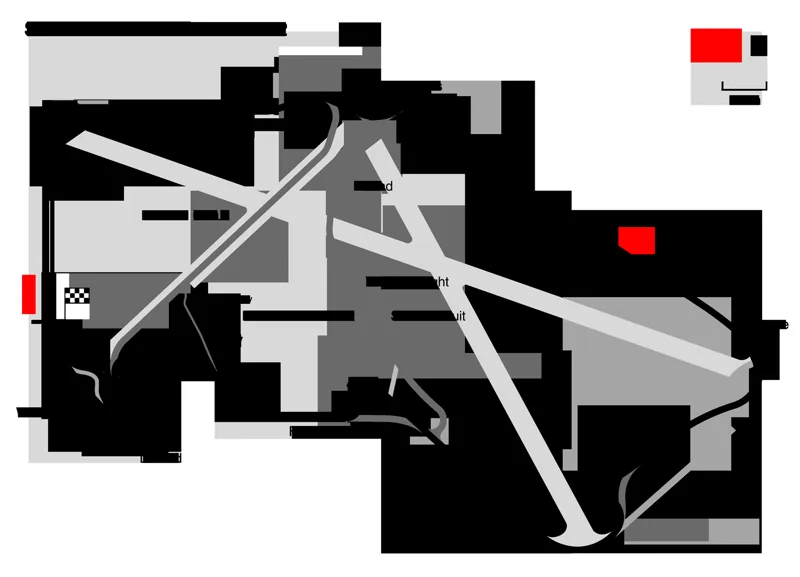
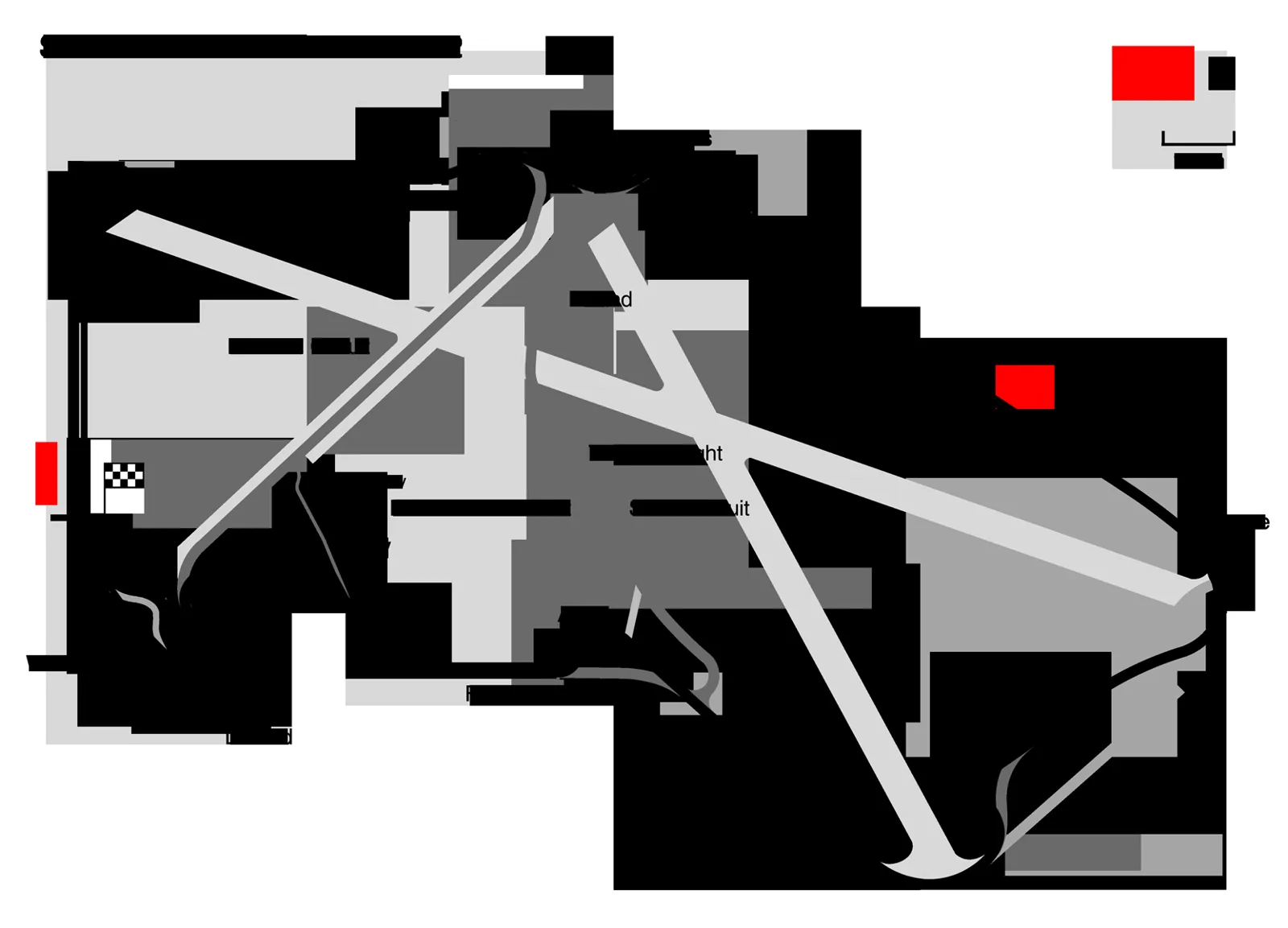
Monza had been modified to encourage more overtaking. The main straight was straightened in July, and the Prima and Seconda Variante chicanes were reworked into a sequence of tight bends, with the exit pointing away from the first corner's entry. The run-off areas were expanded and the tight kerbs removed, at the request of the FIA.
Some drivers were unhappy with the new layout. Coulthard said the new first corner would make braking harder, and he worried about the number of penalties being handed out to others. Schumacher thought suspension damage would be less of a problem for the teams, while Alesi, the first driver to test the new circuit, said drivers could leave the track more easily if something failed.
The teams tested for four days at Monza after the Belgian Grand Prix on 27 August, concentrating on set-ups for low downforce. Verstappen was fastest on the first day for Arrows, Coulthard was quickest on the second, and Villeneuve set the pace for BAR on the third, when rain cut the running short. Ralf Schumacher was fastest on the fourth and final day.
Benetton's Giancarlo Fisichella crashed at high speed into the Ascari chicane during testing, and he was diagnosed with an inflamed tendon in his right ankle. After five days of rest he was passed fit to drive again. Minardi's Gaston Mazzacane also had a high-speed accident at Ascari, which stopped testing for a time.
How did practice and qualifying set the grid?
Michael Schumacher took pole with a time of 1:23.770, his sixth of the season and the 29th of his career. He used his teammate's wing set-up and undertray, and he said that a mistake at the first chicane on his first run had cost him a better session.
Barrichello was second, 0.027 seconds slower, and happy to start alongside his teammate. Hakkinen was third after handling difficulties and a fuel pressure fault that made his Mercedes engine misfire during his last two timed laps. Villeneuve took fourth, BAR's best qualifying result to that point, and he was almost half a second behind Schumacher.
Coulthard qualified fifth after traffic and car balance issues, and he said Frentzen had blocked him when leaving the Rettifilo chicane. Trulli was sixth and Frentzen eighth for Jordan, with Ralf Schumacher seventh and Fisichella ninth. De la Rosa qualified tenth after modifying his car, and Verstappen was 11th after driving two of his team's cars when they developed hydraulic and engine problems.
Button was 12th after overheating his tyres, and Wurz took 13th in Benetton's spare car. Salo was 15th, the fastest Sauber driver, while Diniz and Zonta followed. Alesi and Heidfeld in the Prosts were 18th and 19th, and Gene and Mazzacane started 21st and 22nd, the latter after his car stopped at the Lesmo corners with an electrical problem.
Practice had shown the pace early. On Friday Barrichello set the first session's fastest time at 1:25.057, and Hakkinen did not set a timed lap in that session because of a slipping clutch. Coulthard spun into the gravel at the second Lesmo, and Saturday's third session brought Schumacher's 1:24.262. Schumacher's best time in the final session was 1:23.904.
What happened at the start of the race?
Every driver began on the medium tyre, which was three-tenths of a second faster than the hard compound. Schumacher kept the lead into the first corner, resisting Hakkinen's attempt to pass on the inside. Barrichello made a slow start and dropped from second to fifth, which left Villeneuve stuck behind the Ferrari.
Salo and Irvine collided at the first corner, and both drivers hit Diniz, which removed his front wing. Irvine retired with suspension damage, while Salo suffered a left-rear puncture. Behind them a much larger accident was developing at the Variante della Roggia, the second chicane.
Barrichello tried to pass Trulli on the inside, and Frentzen, running on a light fuel load, struck the left-rear corner of Trulli's car with his right-front corner at close to 300 km/h (190 mph). A moment later the Ferrari was struck at its back right corner by the front left of Frentzen's car, and all three cars spun into the gravel, collecting Coulthard as well.
The cloud of dust blinded Herbert, and De la Rosa crashed into the back of his Jaguar. De la Rosa was launched about 15 ft (4.6 m) into the air, barrel-rolled and landed upside down across the suspension of Barrichello's Ferrari. Herbert retired in the pit lane with a missing wheel, and Zonta was struck by De la Rosa's car and suffered a front puncture.
Why was the safety car needed after the crash?
Frentzen's right front wheel struck fire marshal Paolo Gislimberti, who had left his post and taken his extinguisher with him, and it hit his upper body through the barrier on the left side of the circuit. Gislimberti suffered head and chest injuries and received a heart massage at the scene. Then the doctors Sid Watkins and Gary Hartstein treated him.
Race director Charlie Whiting did not stop the race, and he deployed the safety car at the end of the first lap so that marshals could remove the carbon fibre debris and recover the cars from the gravel. Watkins and Hartstein were not told about Gislimberti's condition at first, because of initial reports that were wrong, and the delay extended the safety car period. Gislimberti was taken by ambulance to San Gerardo Hospital, because a helicopter would have taken longer.
Salo became the fifth driver to pit, on lap eight, when his team changed the engine cover and sidepods to fix handling problems. After the safety car period ended on lap 11, Schumacher braked and accelerated hard to bunch the field and warm his brakes and tyres. Button veered onto the grass to avoid Villeneuve, hit the guardrail and lost control at Parabolica, retiring on lap 11.
How did the race unfold after the restart?
When the race restarted on lap 12, Schumacher led from Hakkinen and Villeneuve, with Ralf Schumacher, Fisichella and Wurz behind them. Schumacher began to pull away immediately, setting consecutive fastest laps. Wurz passed Diniz and Mazzacane for tenth place soon after the restart.
On lap 13 Schumacher led Hakkinen by 1.4 seconds. Villeneuve retired from third on lap 15 with an electrical fault, which moved Ralf Schumacher up to third. Heidfeld spun and stalled on track at the Variante della Roggia chicane on the 16th lap and retired after his engine failed, and a second safety car was put on standby while marshals removed his car.
Verstappen overtook Fisichella on the inside into the first chicane on lap 15 to take fifth, and he later battled Zonta for third. Schumacher set the race's new fastest lap on lap 22, 1:26.428, which increased his advantage over Hakkinen to 5.4 seconds, while Hakkinen was 9.9 seconds ahead of Zonta. Zonta made the first scheduled stop of the leaders on lap 24, emerging in eleventh place.
How did the pit stops decide the finish?
Salo made a second stop on lap 29, and Verstappen pitted four laps later. Zonta made his third and final stop on lap 37 and dropped to eighth, which ended his chance of a podium. Because little fuel had been used under the safety car, the leaders wanted to stop after two-thirds of the race distance.
Schumacher stopped on the 40th lap and stood still for 7.2 seconds, rejoining 13.6 seconds behind Hakkinen. He then pushed hard to limit any advantage Hakkinen would gain, and three laps later Hakkinen stopped for 6.6 seconds and rejoined 12 seconds behind. Fisichella made the final scheduled stop on lap 44, but he stalled with a clutch fault and his mechanics had to push-start the Benetton.
At the end of lap 45, with the scheduled stops finished, the order was Schumacher, Hakkinen, Ralf Schumacher, Verstappen, Wurz and Zonta. Hakkinen closed on Schumacher, setting the race's fastest lap of 1:25.595 on lap 50 and drawing to within 6.2 seconds. Schumacher then eased off slightly and held on to win.
Who finished where at Monza?
Schumacher's winning time was 1 hour, 27 minutes and 31.368 seconds, an average of 210.286 km/h (130.666 mph). Hakkinen finished 3.8 seconds behind, ahead of Ralf Schumacher, who was third for the second race in succession. Verstappen took fourth, Wurz fifth and Zonta sixth, 1.8 seconds behind Wurz.
| Position | Driver | Team | Note |
|---|---|---|---|
| 1 | Michael Schumacher | Ferrari | 41st career win, level with Ayrton Senna |
| 2 | Mika Hakkinen | McLaren | 3.8 seconds behind; fastest lap of 1:25.595 |
| 3 | Ralf Schumacher | Williams | Third for the second race running |
| 4 | Jos Verstappen | Arrows | Fourth after a difficult start |
| 5 | Alexander Wurz | Benetton | Fifth, after a lack of preparation |
| 6 | Ricardo Zonta | BAR | 1.8 seconds behind Wurz |
How did the drivers react after the race?
Schumacher began to cry when asked whether tying Senna's win total meant much to him. He later explained that he was remembering Senna's death at the 1994 San Marino Grand Prix, and he said the media's reaction showed that he was human after all. Hakkinen said his mechanics' adjustments during the stop had helped him set the fastest lap, while the two Minardis had held him up.
Button blamed the race leader for catching him out, asking why Schumacher had been allowed to do so. Villeneuve disagreed, saying Schumacher was only doing what drivers were meant to do in that situation. Schumacher said he expected others to build heat into their brakes and apologised to those who had been affected.
Barrichello blamed Frentzen for starting the first-lap crash and demanded a ban of ten races for him. Frentzen answered that Barrichello had braked too early and collided with Trulli. The stewards eventually decided that the accident was a racing incident, with no single driver to blame.
What changes followed Gislimberti's death?
Gislimberti never regained consciousness and died in hospital. He was a volunteer firefighter from Trento and a provincial water control engineer, and he was vice-president of the CEA Squadra Corse firefighting group. He left a wife, Elena, who was pregnant with their child, and his funeral was held on 15 September at San Ulderico church in Lavis.
Ecclestone called for chicanes to be removed from circuits, while Max Mosley announced a review of safety measures and of the Monza track. Former driver Jacques Laffite argued for an electronic warning system for marshals. Five cars involved in the crash were impounded, and the magistrate Salvatore Bellomo opened a formal investigation, which closed in June 2001.
The strength of the wheel tethers was doubled after the accident, to stop flying tyres endangering drivers, officials and spectators. The chassis were also to be reinforced and their crash resistance tested.
What did the result mean for the championship?
Schumacher's victory reduced Hakkinen's lead in the drivers' table to two points, with Coulthard third on 61. Barrichello's retirement ended his chance of the title, and Ralf Schumacher stayed fifth on 24 points.
McLaren's constructors' lead over Ferrari fell to four points, with Williams third on 34. Benetton strengthened its gap over Jordan in fifth to seven points, with three races left in the season.