A red flag shown by mistake, a restart collision and a cracked exhaust that ended Michael Schumacher's lead, leaving David Coulthard to win at Monaco.
The 2000 Monaco Grand Prix was round seven of the Formula One World Championship, held on 4 June 2000 on the Circuit de Monaco. David Coulthard won the 78-lap race for McLaren from third on the grid, with Rubens Barrichello second and Giancarlo Fisichella third.
David Coulthard won the 2000 Monaco Grand Prix for McLaren, his second victory of the season, after Michael Schumacher's race ended with a broken suspension arm. The start had been halted by a red flag shown by mistake, and the restart was delayed again by a collision at the Loews hairpin. Coulthard stayed patient, saved his tyres and took the lead only when the pit stops had played out.
What was the 2000 Monaco Grand Prix?
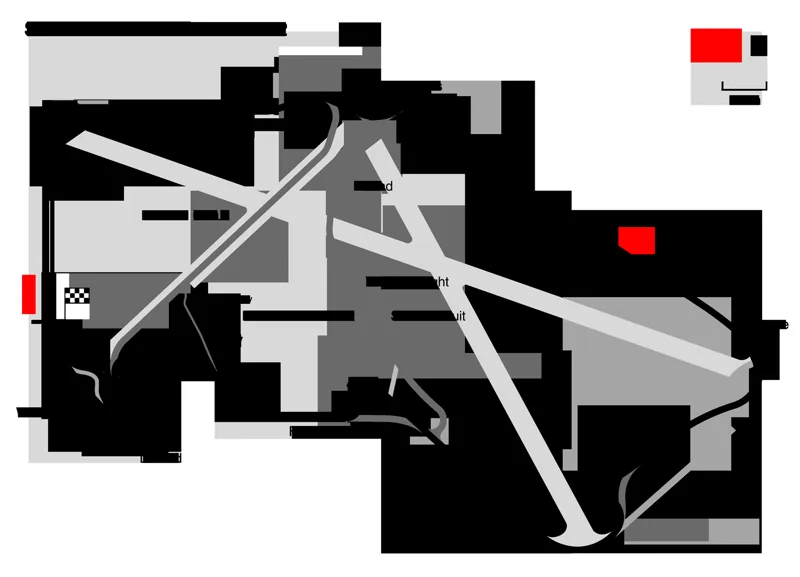
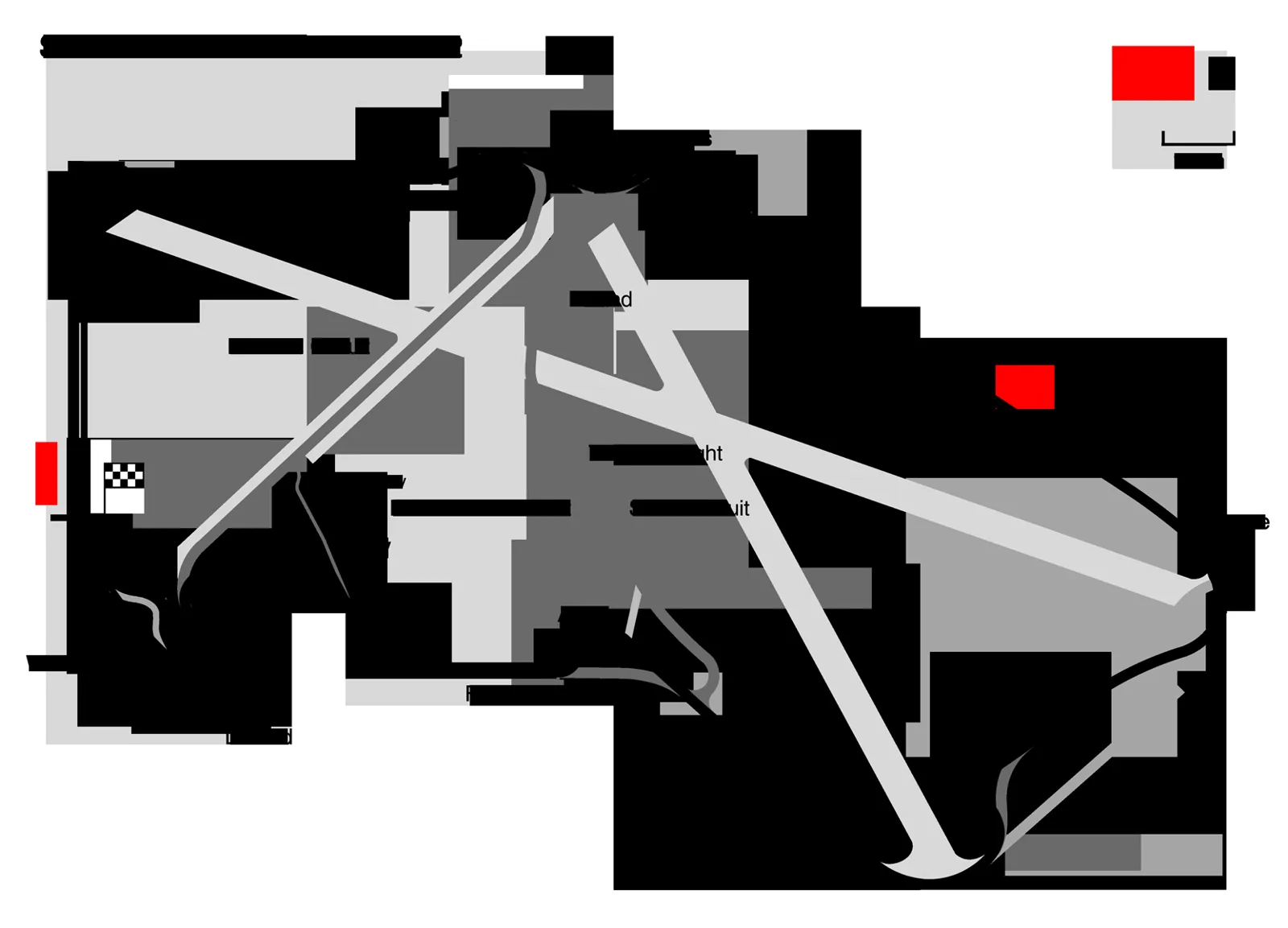
The race was the 58th edition of the Monaco Grand Prix, which was first held in 1929, and the seventh of seventeen rounds in the 2000 season. It took place on 4 June on the 3.370 km (2.094 mi) clockwise street circuit. Bridgestone supplied soft and extra-soft dry tyres for the eleven teams, two drivers each.
Before the race Schumacher led the drivers' table with 46 points, ahead of McLaren's Mika Hakkinen on 28 and David Coulthard on 24. Rubens Barrichello was fourth on 16 points and Ralf Schumacher fifth on 12. Ferrari led the constructors on 62 points, ten ahead of McLaren, with Williams third on 15.
Monaco is a slow, low-grip circuit, so every team set its car up for maximum downforce and mechanical grip. Benetton reworked the suspension of its B200 for the low-speed corners, and Minardi fitted a new titanium cast gearbox and rear springs. McLaren sent an extra spare car, giving Hakkinen and Coulthard four cars between them, and it also shipped six extra monocoques.
A red flag shown by mistake and a cracked exhaust gave David Coulthard the Monaco win he had long wanted.
How did the teams prepare for the race?
Teams tested across European circuits between 23 and 27 May, following the European Grand Prix on 21 May. Jordan, Sauber, Benetton, Jaguar and Arrows used the Circuit Ricardo Tormo, which made its Formula One testing debut and drew mixed reviews from drivers. Ferrari spent five days at its private Fiorano track instead.
Heinz-Harald Frentzen led the first day for Jordan, and Jos Verstappen was quickest for Arrows on the second. Late in one session Fisichella collided with the right-rear tyre of Trulli's Jordan, which flipped his Benetton and stopped testing for a while. Fisichella suffered only mild thumb bruising.
BAR tested a new control system called Athena 2000, which managed the engine software and several chassis parts. Williams and BAR travelled to the Circuit Paul Armagnac for shakedown runs, and both teams set up their cars for the tight street course.
How did practice and qualifying set the grid?
Michael Schumacher took his second pole of the season with a time of 1:19.475, set with seven minutes left in the one-hour session. Trulli joined him on the front row, 0.271 seconds slower, on soft tyres that gave him his best qualifying result of the year, while Coulthard took third.
Schumacher had struck the metal guardrail at Portier with his rear-left wheel but continued. Coulthard said he could have gone faster, because he had seen a yellow flag on his final run. Frentzen took fourth but criticised Irvine for blocking him in the tunnel, and Hakkinen qualified fifth, his worst result of 2000.
Barrichello was sixth, five places behind his teammate, and Alesi was seventh after alternator problems forced him into the spare Prost. Fisichella took eighth, Ralf Schumacher ninth and Irvine tenth. Herbert was 11th, and Alexander Wurz 12th in the slower Benetton, while Mika Salo was 13th.
Further back, De la Rosa crashed at the Rascasse chicane and started 16th, while Villeneuve was 17th after an engine failure at Lowes forced him into the spare BAR. Button was 14th, caught out by the yellow flags, and Heidfeld took 18th.
Practice had already shown the pace. On Thursday Schumacher set the first session's fastest time at 1:23.039, and Hakkinen was quickest in the second at 1:21.387. Schumacher led the third session on Saturday with 1:20.762, and Coulthard set 1:20.405 in the final session, 0.142 seconds quicker than Hakkinen's 1999 pole lap.
What stopped the race at the start?
The race began eight minutes late, with Schumacher keeping the lead into the first corner. The start was then suspended after race director Charlie Whiting accidentally pressed the red flag button instead of the pit exit open button. A collision between Button and De la Rosa at the Loews hairpin had already created a traffic jam behind them.
Marshals did not wave red flags around the circuit, except at the start and finish line. The rules allowed a stoppage before two laps to be restarted in spare cars, so Button, Zonta, Heidfeld, Diniz and Gene rejoined from the pit lane in them. De la Rosa had no spare car and could not restart.
The start procedure had also been disrupted earlier, when Wurz's engine failed and the race was briefly aborted so his car could be removed. Diniz had been unable to launch at the parade lap, and his grid position was allowed after the restart.
How did the race unfold after the restart?
Schumacher stayed ahead into the first corner of the restart. Ralf Schumacher had the best getaway, climbing from ninth to sixth in a single lap, while Barrichello lost two places. Button soon retired on lap 17, after telemetry showed his engine losing oil pressure.
Schumacher led Trulli by more than 11 seconds by lap 11, and by lap 19 that lead had grown to 19.5 seconds. Wurz lost control of his car and crashed into the barriers at Sainte Devote on the same lap, ending his race.
Gene retired on an escape road at Casino Square with a gearbox failure on lap 22. His team-mate Mazzacane hit the barriers at Sainte Devote on the next lap with a damaged wheel. Herbert made his first stop on lap 27 but stood for 30 seconds, and he rejoined 17th.
Diniz crashed into the tyre barriers at Sainte Devote on the 31st lap, retiring with left-rear wheel damage. Hakkinen slowed on lap 36 because a loose sensor had caused a brake pedal blockage, and mechanics cleared it by removing a loose data transmitter.
Why did Michael Schumacher's race end?
Schumacher's Ferrari suffered a cracked exhaust pipe that leaked gases under the fairing. The overheating broke a lower left-rear suspension arm, lifting the front-right wheel off the asphalt and forcing him to slow almost to a stop.
The problem happened on the 55th lap, as he was driving on the centre of the track after Anthony Noughes corner. Having already passed the pit lane entry, he was obliged to finish a full slow lap before stopping. Ross Brawn then retired him in the pit lane, since the mechanics could not replace the broken arm.
Schumacher said afterwards that the exhaust had been too hot and that it had effectively cooked the suspension. He added that he had felt something was wrong a few laps earlier, but there had been nothing he could do about it.
How did Coulthard take the win?
Coulthard inherited the lead when he made his final pit stop on lap 56, and he went on to win by 15.8 seconds from Barrichello. He had waited for the pit stops to pass Schumacher and Trulli rather than risk damage on the track, and he eased off a little after Frentzen's retirement.
Coulthard's winning time was 1 hour, 49 minutes and 28.213 seconds, an average of 144.072 km/h (89.522 mph). He was the first British winner of the Monaco Grand Prix since Jackie Stewart in 1973, and the win was his second of the season.
Coulthard had taken painkillers to cope with rib pain from a plane crash a month earlier, and he regarded the win as one of his career goals because of the demands the circuit places on drivers. Barrichello finished second, conserving tyres and fuel, while Fisichella came third, gaining on him in the closing laps.
Which accidents and retirements shaped the race?
Frentzen's rear suspension broke on the 71st lap, and he hit the wall at Sainte Devote, becoming the final retirement. His accident promoted Barrichello to second and Fisichella to third. Ralf Schumacher had struck the right-hand tyre wall at Sainte Devote on the 38th lap and suffered a deep cut to his leg, which needed stitches.
Trulli retired in the garage the following lap with a gearbox failure, and Verstappen spun into a concrete barrier at the Swimming Pool complex on lap 62. He was unhurt. Alesi suffered transmission trouble in the tunnel after 29 laps, and Zonta crashed into the Sainte Devote barrier on lap 48 after entering the corner too quickly.
Irvine, who finished fourth, earned Jaguar's first Formula One points, and he described the race as one of the most difficult of his career because of a malfunctioning drink bottle and a blistered foot. Only ten of the 22 qualifiers were classified as finishers, and nine of them had completed the race.
How did the drivers react after the race?
Barrichello said he had been conserving tyres and fuel, and that Ferrari's Ross Brawn had advised him to slow because of a problem. Fisichella was pleased with third place and revealed that he wanted to stay at Benetton for the 2001 season, while Michael Schumacher admitted disappointment at a retirement that came after he had led most of the race.
Irvine said the team's remaining problems would take months to solve rather than weeks. Salo said his hands were bruised because his car lacked power steering, but he was happy to finish fifth.
Ralf Schumacher suffered a gash on his left calf, was checked at the Princess Grace Hospital and had the cut stitched, and he was fit again for the following round. Williams had its test driver Bruno Junqueira on standby in case he could not. Frentzen accepted responsibility for the crash that had cost him second place and said sorry to his team owner, while Trulli said he was disappointed by his gearbox failure, since he had thought he would win once Schumacher retired.
What did the result mean for the championship?
Schumacher kept the drivers' lead despite retiring, but only by 12 points. Coulthard moved up to second on 34 points, ahead of his teammate Hakkinen on 29. Barrichello was fourth on 22 points and Fisichella fifth on 14.
McLaren cut Ferrari's lead in the constructors' table to five points. Benetton's fourth place narrowed its gap to Williams, who stayed third, to one point, and Jordan remained fifth on nine points with ten races remaining.
Race results at a glance
| Position | Driver | Team | Note |
|---|---|---|---|
| 1 | David Coulthard | McLaren | Second win of the season; first British winner since 1973 |
| 2 | Rubens Barrichello | Ferrari | 15.8 seconds behind the winner |
| 3 | Giancarlo Fisichella | Benetton | Gained on Barrichello in the closing laps |
| 4 | Eddie Irvine | Jaguar | Jaguar's first Formula One points |
| 5 | Mika Salo | Sauber | Fifth after holding off Hakkinen |
| 6 | Mika Hakkinen | McLaren | Completed the top six after a late challenge |