McLaren read the new rules best, Michael Schumacher closed the gap through the second half and Mika Hakkinen clinched the title in Japan.
The 1998 Formula One World Championship was won by Mika Hakkinen of McLaren, whose team also took its eighth Constructors' title. Sixteen races ran from 8 March to 1 November, and Michael Schumacher of Ferrari was level on points with two races to go.
The 1998 Formula One World Championship was the 52nd season of FIA Formula One, decided over sixteen races between 8 March and 1 November. McLaren adapted to the new rules faster than any rival, and Mika Hakkinen used that advantage to win the first Drivers' Championship of his career.
How was the 1998 season structured?
The season ran over sixteen races from 8 March to 1 November, and the drivers' and constructors' titles were contested at the same time. A Portuguese round planned for Estoril on 11 October never took place, which left a five-week gap before the finale in Japan.
The Estoril cancellation was the second in a row. The government refused to pay for the safety upgrades the circuit needed, so the race dropped off the calendar again. The European Grand Prix, which had been run at the Circuito de Jerez in 1997, was also missing. For the first time in six years no race carried the European title, while the Nurburgring kept the Luxembourg Grand Prix name.
McLaren read the new rules first, and the title was settled only in the final round in Japan.
What rule changes shaped the 1998 cars?
The 1998 rules brought back grooved tyres, which replaced slicks for the first time since 1970, and narrowed the track from 2,000 mm (6 ft 7 in) to 1,800 mm (5 ft 11 in). Both changes aimed to cut cornering speeds and give drivers more room, while new brake rules limited how hard the cars could stop.
Front tyres carried three grooves and rear tyres carried four. The grooves stayed in Formula One until slicks returned in 2009. The narrower cars also gave teams less room to generate downforce, which meant the aerodynamic battle changed shape.
Mid-season, the tall X wings fitted to the front of each sidepod were banned before the Spanish Grand Prix. Ferrari, Jordan, Prost, Sauber and Tyrrell had all used them, and the wings had first appeared on the Tyrrell 025 in 1997. The engine-cover cameras changed from an I-shape to a more aerodynamic T-shape, and any car without a camera had to carry a dummy unit of the same weight. The limit of 30 laps of free practice per day was abolished for the year.
Which teams changed engines and drivers?
Renault's withdrawal as a direct engine supplier left Williams and Benetton searching for power. Williams turned to Mecachrome engines, a rebadged version of the Renault RS9, while Benetton ran a similar unit badged Playlife. Prost moved to Peugeot and Jordan stayed with Mugen-Honda, while Minardi switched from Hart to Ford.
Arrows bought Brian Hart's preparation company so they could build their own engines, a plan they carried into 1999. Renault invested in Benetton for 2000, then bought the team outright in 2002, and it did not supply engines to rival teams again until 2007.
Gerhard Berger retired after fourteen years in F1, and Benetton signed Giancarlo Fisichella from Jordan together with Alexander Wurz, who had stood in for Berger for three races in 1997. Jordan answered by signing 1996 World Champion Damon Hill to partner Ralf Schumacher. Jean Alesi went to Sauber alongside Johnny Herbert on a two-year deal.
At Tyrrell, the new owners preferred Ricardo Rosset to Jos Verstappen, and test driver Toranosuke Takagi was promoted. Arrows took Mika Salo to partner Pedro Diniz. At Prost, Jarno Trulli replaced Shinji Nakano, who moved to Minardi and was partnered by the rookie Esteban Tuero. Stewart dropped Jan Magnussen after the Canadian Grand Prix, following a run of weak results that included a first-lap collision with Rubens Barrichello at Imola. Jos Verstappen took the seat midway through the year.
How did the early rounds unfold?
McLaren dominated the opening rounds. Hakkinen and Coulthard locked out the front row in Australia, and Hakkinen won there, while McLaren also finished first and second in Brazil and Spain. Schumacher's first win of the season came in Argentina, after Goodyear made steps forward with its tyres.
In Australia, Hakkinen led from pole until lap 36, when he misheard a call to come into the pits. David Coulthard took the lead, but he moved aside under a pre-race agreement that whoever led into the first corner could win, so Hakkinen could go back past. The result was protested and held up by the World Motor Sport Council.
McLaren finished first and second again in Brazil, but a protest over a braking system that could brake the front and rear wheels independently followed. McLaren agreed not to run that system. At Imola,Coulthard took pole and won ahead of the Ferraris of Schumacher and Eddie Irvine, while Hakkinen retired with a gearbox failure.
Spain brought another McLaren 1-2, led by Hakkinen. Hakkinen's Monaco victory pushed his advantage over Coulthard to seventeen points, and Schumacher trailed by a further five points.
How did Schumacher close the gap?
Schumacher closed the gap by winning the three races that followed Monaco, and by the British Grand Prix he was just two points behind Hakkinen. Hakkinen struck back with consecutive wins in Austria and Germany, but Ferrari stayed within reach.
Mistakes and mechanical failures cost both McLaren drivers points during this run. Coulthard had fallen 26 points behind his teammate and no longer looked like a championship contender. McLaren still had the strongest car, as the Austrian and German results showed.
A strategic master stroke in Hungary gave Schumacher the win, with Hakkinen only sixth, and the gap closed again to seven points.
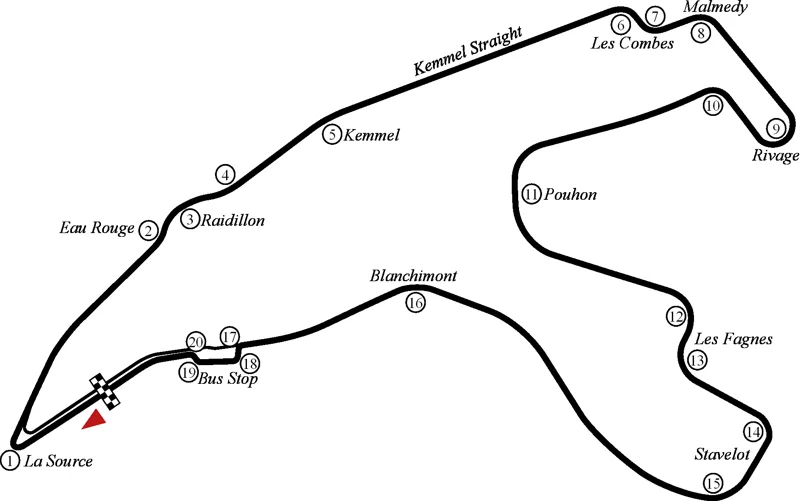
The Belgian Grand Prix began in heavy rain, and over half the cars on the grid crashed into one another after the first corner. Four drivers could not take the restart, which came almost an hour later because there were not enough spare cars. Hakkinen spun out at the restart, and Schumacher crashed into Coulthard while trying to lap him. Damon Hill won for Jordan, the team's first ever win, ahead of teammate Ralf Schumacher.
How did the title fight unfold?
The fight tightened in Italy, where Schumacher won and Hakkinen recovered to fourth after two spins. With two races remaining, the pair were tied on points. Hakkinen beat him in a straight fight at the Nurburgring, then won the finale in Japan after Schumacher stalled on the grid and retired with a blown tyre later on.
| Point in the season | Championship picture | Gap |
|---|---|---|
| After Monaco | Hakkinen leads Coulthard | Seventeen points; Schumacher five points further back |
| After the British Grand Prix | Schumacher closes on Hakkinen | Two points; Coulthard 26 points behind his teammate |
| After Hungary | Schumacher wins; Hakkinen sixth | Seven points |
| After Italy | Rivals level on points | Two races to go |
| Japan finale | Hakkinen wins the title | Schumacher retires with a blown tyre |
What did the title mean for McLaren?
Hakkinen's first Drivers' Championship came alongside McLaren's eighth Constructors' Championship, and it was the team's first constructors' title since 1991. The team had waited for that crown, and the Japanese finale settled both championships in its favour. McLaren would wait 26 years for its next constructors' title, which came in 2024.
The 1998 double was also the last time McLaren won both championships in one season, until 2025. Williams had a disappointing year as reigning champions, with its first winless season since 1988. Jacques Villeneuve took two podiums, Heinz-Harald Frentzen took one, and Williams still finished third in the Constructors' standings, ahead of Jordan and Benetton.