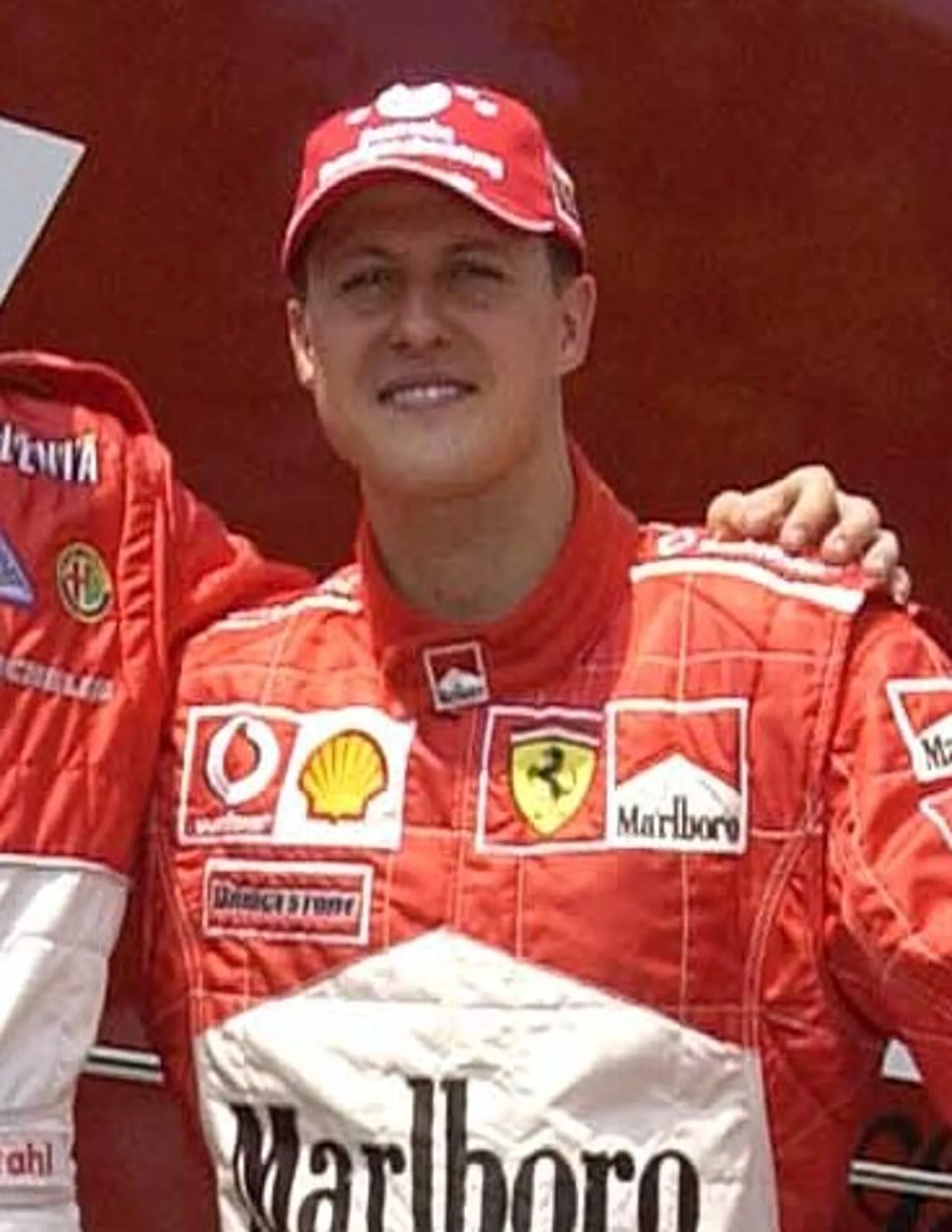
Michael Schumacher took Ferrari's first drivers' title in 21 years by winning the last four races, while Mika Hakkinen pushed him to Japan.
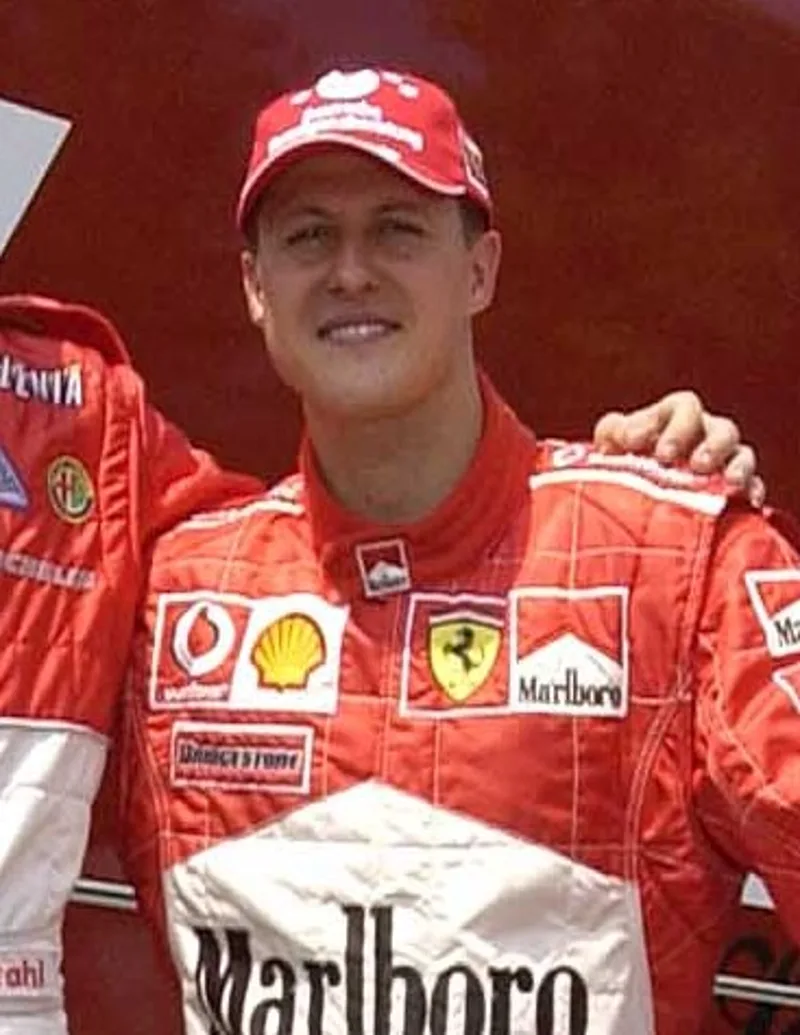
Michael Schumacher won the 2000 Formula One drivers' title for Ferrari, clinching it in Japan with 108 points to Mika Hakkinen's 89. Ferrari also defended its constructors' championship with 170 points, ahead of McLaren on 152.
Michael Schumacher won the 2000 Formula One World Championship for Ferrari, the team's first drivers' title in 21 years. The season was the 54th of Formula One motor racing and ran over seventeen races from 12 March to 22 October. Ferrari also kept the constructors' crown, and it was the year Jenson Button made his debut.
Who won the 2000 championship?
Schumacher clinched the drivers' title in Japan at the penultimate race, after a contest with Mika Hakkinen. He finished with 108 points, while Hakkinen took 89 and David Coulthard 73. Rubens Barrichello was fourth with 62, a result that reflected Ferrari's two-driver strength.
The title was Schumacher's reward for a strong finish. He won the final four races of the season and took pole position in each of them, turning a points deficit into a championship that ended a 21-year wait for Ferrari. The title battle was a repeat of earlier years, with Ferrari and McLaren at the front.
Ferrari's 2000 title ended a 21-year drought, sealed in Japan with one race of the season still to run.
How did the title fight unfold?
Schumacher won the first three races and built an early lead while McLaren struggled with reliability. That run was followed by retirements, which gave Hakkinen and Coulthard their chances. Hakkinen then won two races in a row and opened a six-point gap on Schumacher, whose wait for a title at Ferrari had reached five seasons.
Schumacher then fought back in the final stretch. He recovered his form, and his string of wins restored his position at the top of the table. The decisive race in Japan was a close contest between the two drivers, and Schumacher passed Hakkinen at the final pit stop before holding on to the lead.
What rule changes shaped the 2000 season?
Cost control drove a decision to make the V10 layout mandatory. Engine builders could no longer experiment with other layouts, although the bank angle of the V10 was still open to variation. The V10 had been the most popular configuration since turbocharged engines were banned in 1989.
The red flag procedure also changed. When a race was stopped after two laps but before three-quarters distance, it restarted with cars lining up in the order they held at the end of the penultimate lap. Time gaps were wiped, and the restarted race covered the laps that remained, minus three.
The FIA also banned cooled fuel during a Grand Prix, a decision announced on 7 September. 2000 was the final full year with no traction control, launch control or automatic gearboxes, and traction control returned at the Spanish Grand Prix in 2001.
Which teams changed engines and names?
Ford bought Stewart, which became Jaguar Racing, and its engines were rebadged as Cosworths. Minardi's Ford V10s were rebadged as Fondmetal engines, and the car's colour changed to fluorescent yellow. The Ford name left the grid for 2000, although it returned briefly in 2003 and 2004.
Williams moved to BMW engines under a contract signed in 1998, which marked the German firm's comeback after more than a decade away. BAR signed a deal to use Honda engines, and Arrows moved to Supertec units after the departure of engine designer Brian Hart.
Peugeot ended its engine involvement at the end of 2000. The company had not won a Grand Prix since entering as an engine supplier in 1994, and its partnership with Prost failed to score a single point during the year. Its engine assets were bought by Asia Motor Technologies France and used as Asiatech units for 2001 and 2002.
Who moved seats for 2000?
Rubens Barrichello joined Ferrari, replacing Eddie Irvine, who moved to the newly established Jaguar team. Luca Badoer, unable to find a race seat, focused on his test role at Ferrari. Trulli switched from Prost to Jordan, taking over the seat Damon Hill had vacated, and Jean Alesi and Nick Heidfeld joined Prost.
Button got his Williams chance after winning a shoot-out against the team's test driver, and he replaced Alessandro Zanardi. Toranosuke Takagi left Formula One to race in Formula Nippon, and Jos Verstappen returned to the grid at Arrows. Gaston Mazzacane was promoted to a Minardi race seat, and Mika Salo signed for Sauber after injury stand-in spells for Ricardo Zonta and Michael Schumacher in 1999.
How did the opening rounds go?
The first race in Australia was similar in shape to the previous year, with the McLaren pair starting ahead of the Ferraris. Coulthard retired with a misfire, and Hakkinen's engine failed nine laps later, which handed the lead to Schumacher. Ferrari took an easy 1-2 with Barrichello second.
In Brazil, Schumacher took the lead within two laps and went on to win, with Coulthard and Fisichella behind. A controversy followed when the top six cars were excluded for wooden floor problems, but an appeal and a fresh scrutineering check reinstated everyone except Coulthard. Jenson Button took sixth, which earned him his first championship point.
Schumacher had a maximum of 20 points after two races, while both McLaren drivers had none. Ferrari led the constructors' table by a wide margin, with Benetton and Williams far behind.
What happened in the European rounds?
The European season opened at San Marino, where Hakkinen took his third consecutive pole. Schumacher made a quick second stop to take the lead, and the race ended with Schumacher ahead of Hakkinen and Coulthard. The race set the tone for the European rounds.
At Silverstone, Barrichello took his third pole, but his car suffered engine and hydraulic problems and he later retired. Coulthard took the lead and won, giving McLaren a 1-2 with Hakkinen second. Schumacher was third.
Spain went to Hakkinen, his first victory of the year, with Coulthard close behind. At the Nurburgring, Schumacher won from Hakkinen after rain changed the race. Monaco then went to Coulthard after Trulli's gearbox failed on lap 37, and Schumacher's own race ended with a suspension failure late on.
How did Canada and France change the standings?
In Canada, rain brought a reshuffle of the order, and Schumacher still ended up with his fifth victory of the year. Barrichello ended up second, ahead of Fisichella, while Hakkinen had to settle for fourth. The result gave Schumacher a clear lead in the championship.
The French Grand Prix saw Coulthard win after a long battle with the leaders. Schumacher's tyres were badly blistered, and his engine failed with twelve laps to go. Coulthard then apologised for his angry gestures after a clash at the Adelaide hairpin, and Hakkinen finished second for a McLaren 1-2.
Austria was a messy race. Hakkinen and Coulthard led a McLaren 1-2, but Trulli and Schumacher collided and both retired. McLaren was penalised ten constructors' points after a missing FIA seal was found on Hakkinen's car.
Which races decided the late season?
Germany gave Barrichello his first ever Grand Prix win, in a race disrupted by rain and by a protester who ran onto the track with a banner. Hungary then brought a win for Hakkinen, with Schumacher and Coulthard on the podium. In Belgium, Schumacher forced Hakkinen onto the grass at high speed, but Hakkinen recovered to win.
The Italian Grand Prix was marred by tragedy. A first-lap collision led to a wheel striking a fire marshal, Paolo Ghislimberti, who died from the impact. Schumacher went on to win, which gave him his sixth win of the season, and he later broke down in tears in the press conference.
At the United States Grand Prix, Schumacher took his seventh pole and won the race, with Barrichello second. Hakkinen's engine failed in the race, which left Schumacher with an eight-point lead and a chance to take the title at the next round.
How did Japan and Malaysia settle the title?
In Japan, Schumacher beat Hakkinen to pole by a whisker and then took the lead with a second pit stop that moved him past his rival. Rain began to fall, and Schumacher's stop put him four seconds ahead after the stops. He won the race and the championship, with Hakkinen and Coulthard completing the podium.
The final race in Malaysia saw Schumacher take another pole, and he won ahead of Coulthard and Barrichello. Ferrari's win there confirmed the constructors' title as well. Hakkinen charged back to finish fourth after a jump-start penalty earlier in the race. His team had been in a close fight with Ferrari throughout the year, a sign of how tight the season remained.
What calendar changes shaped the year?
The United States Grand Prix returned after a nine-year gap and was held at Indianapolis Motor Speedway. The British Grand Prix moved from its usual summer slot to 23 April, which was controversial, and the European Grand Prix at the Nurburgring moved from its autumn date to 21 May.
Bernie Ecclestone had tried to move the French race at Magny-Cours to the same date, which added to the controversy. Those moves changed the rhythm of the season, bringing the British race into spring and making the European rounds start earlier than usual.
Results at a glance
| Grand Prix | Winner | Key point |
|---|---|---|
| Australian | Michael Schumacher | Ferrari 1-2 ahead of McLaren's retirements |
| Brazilian | Michael Schumacher | Button's first point, sixth place |
| San Marino | Michael Schumacher | Hakkinen second |
| British | David Coulthard | Second home win in a row |
| Spanish | Mika Hakkinen | His first win of the season |
| Monaco | David Coulthard | Trulli's gearbox failure |
| Canadian | Michael Schumacher | Fifth win of the season |
| French | David Coulthard | McLaren 1-2 |
| German | Rubens Barrichello | His first ever Grand Prix win |
| Hungarian | Mika Hakkinen | Schumacher second |
| Belgian | Mika Hakkinen | Schumacher second |
| Italian | Michael Schumacher | Sixth win; fire marshal killed |
| United States | Michael Schumacher | Seventh pole and race win |
| Japanese | Michael Schumacher | Title clinched |
| Malaysian | Michael Schumacher | Constructors title confirmed |