Heavy rain, a first-lap pile-up that stopped the race and a team-orders row at Jordan made the 1998 Belgian Grand Prix one of the strangest days of the decade.
The 1998 Belgian Grand Prix was held on 30 August 1998 at Spa-Francorchamps and won by Damon Hill for Jordan in heavy rain. Ralf Schumacher finished second and Jean Alesi third, after a first-lap pile-up stopped the race and the restart came nearly an hour later.
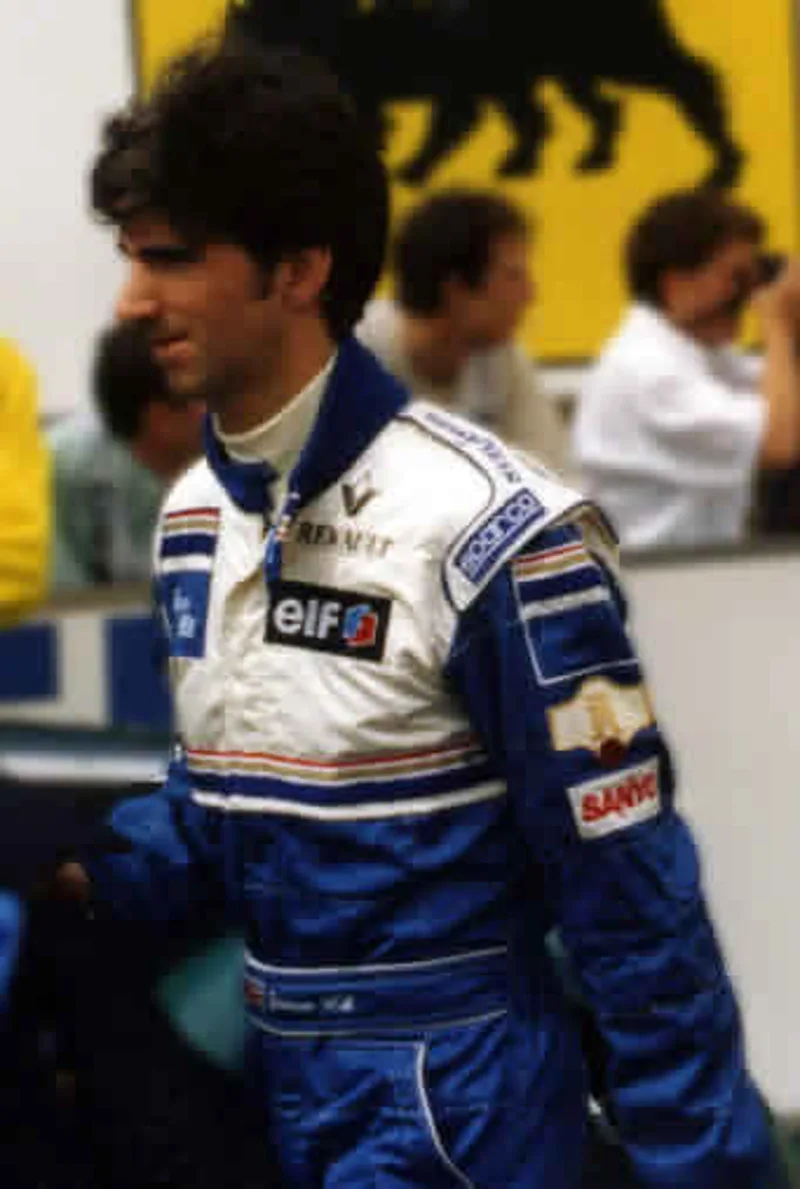
Damon Hill won the 1998 Belgian Grand Prix at Spa-Francorchamps for Jordan, his 22nd and final Grand Prix win, in a race run entirely in heavy rain. A first-lap collision stopped the race and forced a restart nearly an hour later. Team orders then decided the finish, which saw Hill hold off his own teammate.
Why did the 1998 title fight matter so much at Spa?
Mika Hakkinen led the drivers' championship with 77 points, seven ahead of Michael Schumacher. David Coulthard was third on 48, so only three drivers could still win the title with four races left. Eddie Irvine, fourth, was 45 points behind Hakkinen, and only 40 points remained across the last four races.
McLaren led the constructors' table on 125 points, with Ferrari on 102 and Benetton third on 32. Williams and Jordan were close behind.
The teams spent the break testing. McLaren ran at Monza and Silverstone, and Ferrari ran at Monza and at its own Fiorano circuit. Benetton and Prost went to Magny-Cours and Barcelona for private test days, and Tyrrell was the only team that did not test at all after the Hungarian race.
Heavy rain, a first-lap pile-up and a team-orders row made Spa one of the strangest Grands Prix of the decade.
Practice and qualifying at Spa
Three one-hour practice sessions were held, two on Friday and one on Saturday morning. Coulthard was fastest in the first, ahead of Hakkinen, who finished second despite a late crash. Michael Schumacher was quickest in the second session, with the two McLarens behind him.
Ferrari and Williams filled most of the top six in the first session. Schumacher was third and Irvine fifth, while the Williams pair were fourth and sixth, with Villeneuve ahead of Frentzen. In the second session Hill was fourth, behind the McLarens and Schumacher.
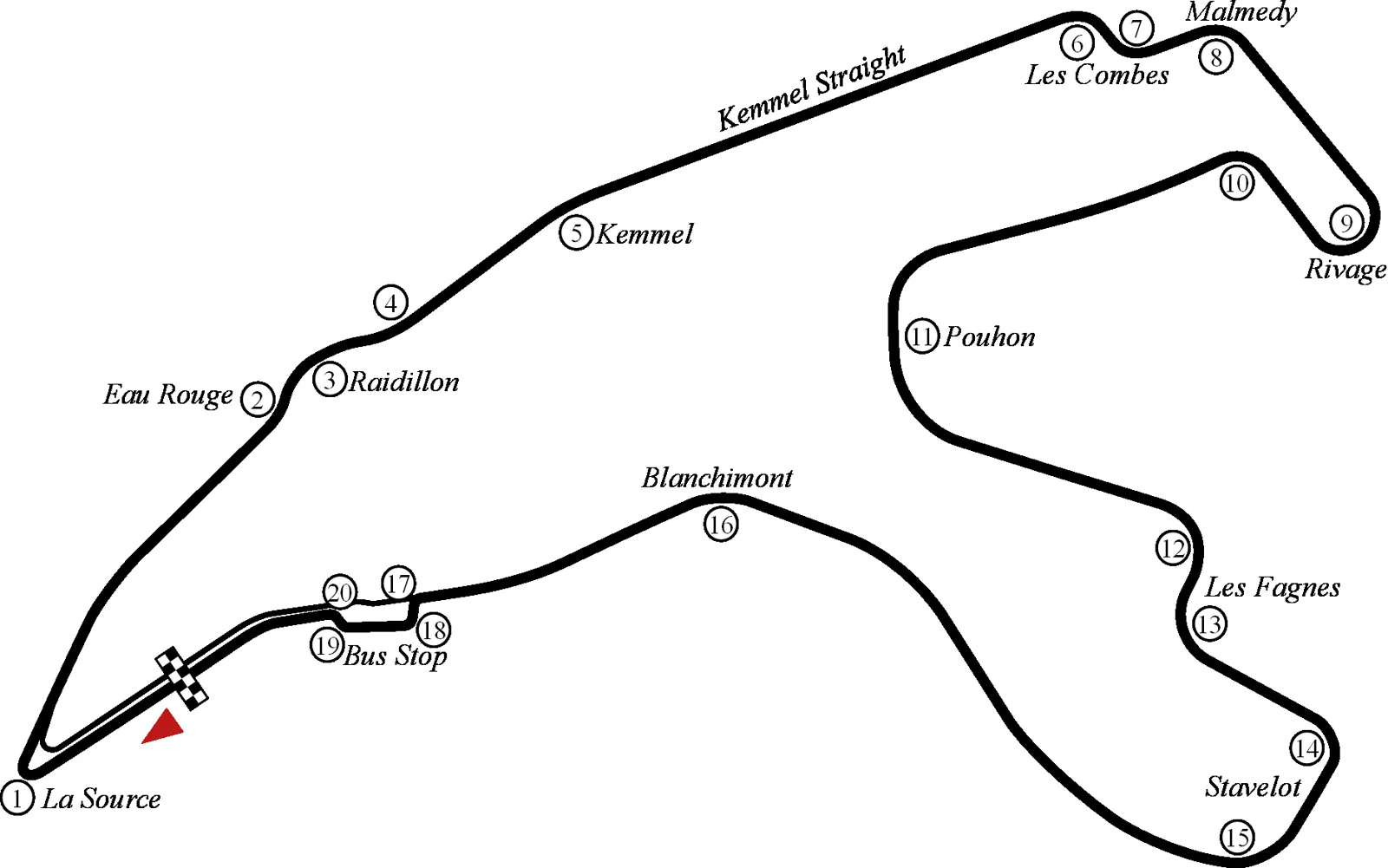
The most serious moment of the weekend came when Jacques Villeneuve lost control of his Williams at 290 km/h through Eau Rouge. The session was halted for 25 minutes while his car was recovered. Villeneuve reached the circuit's medical centre but was not hurt, and he described it as the biggest crash of his Formula One career so far.
Saturday's third session returned to form, with McLaren fastest again. Hakkinen took the top spot, Coulthard followed, Hill was third, and Villeneuve was fourth in the spare Williams after the damage to his race car. Mika Salo also had a heavy crash at Eau Rouge and was checked at hospital as a precaution, before being passed fit for qualifying.
How did qualifying set up the grid?
Hakkinen claimed pole, his ninth of the 1998 season, at 1:48.682, and Coulthard shared the front row. Hill qualified third, his best grid place of the year, while Schumacher's fastest lap was deleted for failing to slow down enough under a yellow flag. Schumacher still started fourth.
Coulthard's best lap was just under two-tenths of a second slower than Hakkinen's, and both McLaren drivers had held the fastest time at different points during the hour. Hill was more than a second down on Hakkinen, but three-tenths faster than Schumacher. Irvine finished fifth on the grid and Villeneuve sixth.
The deleted lap did not change Schumacher's place, since his fastest time would still have been good enough only for fourth. The result left the two McLarens on the front row.
The first-lap crash that stopped the race
Race day was very wet, and despite the heavy rain the race began at its scheduled time. Schumacher had been fastest in the morning warm-up. There was no safety car at the start, which was a change from the previous season. Hakkinen led from Villeneuve, Schumacher and Fisichella at the first corner.
Coulthard emerged from the spray at a right angle to the racing line and struck the trackside wall. His McLaren rebounded into the path of the field, and the chain reaction took out eleven drivers. Hill and Ralf Schumacher got through, along with Esteban Tuero, and the collision became known as the Great Pileup. Hill had been only a few metres ahead of the carnage, with his teammate further back. Those caught up included Irvine, Wurz, Barrichello, Herbert, Panis, Trulli and Salo.
Initially Coulthard said he had made contact with Irvine, but he later put it down to a wheel dropping onto a metal grille. Verstappen got his Stewart back to the pits, but the car was too badly damaged to continue. Officials halted the race before the first lap was complete, so the wrecked cars could be removed and the circuit cleared.
The pile-up was the largest first-lap incident since the British race of 1973, which had put eleven cars out. The regulations at the time meant that any race stopped within the first two laps was restarted from scratch, so every driver involved was eligible to take the second start. Irvine restarted despite minor injuries, but Barrichello did not. Salo, Rosset and Panis could not take the restart because their teams had given their spare cars to teammates, so four drivers missed the second start altogether.
How did the restart unfold?
Almost an hour later the second attempt got under way, and Hill inherited the lead for the first time in a Grand Prix since the 1997 Hungarian race. Hakkinen lost control at the first corner and was hit by Herbert's Sauber, and both retired. Hill held the lead until Schumacher passed him at the Bus Stop on lap eight.
With Hakkinen's stranded McLaren needing recovery, the safety car came out, and it pulled in at the close of lap two. Coulthard and Alexander Wurz had collided on the first lap, and Wurz's race was over, while Coulthard rejoined at the back of the field.
Irvine's race fell apart when he lost his front wing in an off-track moment. He dropped from third to eleventh while he pitted for repairs. Villeneuve, who had briefly led during the first round of stops, then spun out and retired from the race.
A lap later Fisichella's Benetton ran into the rear of Nakano's Minardi, and both front wheels came off the Benetton. The Benetton caught fire briefly as it came to a stop, but the flames were quickly put out. Both drivers were unhurt, but the safety car was deployed again and Hill made his second stop at once, keeping his lead. With only six cars still running, Coulthard and Nakano both rejoined after lengthy repairs.
Schumacher's lead over Hill had grown to close to 40 seconds when he reached Coulthard for the lapping move. Team principal Jean Todt had gone to the McLaren pit wall beforehand to ask that Coulthard let him by, and the stage was set for the most debated moment of the afternoon.
How did team orders decide the finish?
The team told Hill that his teammate was faster and implied that he should let Ralf Schumacher through. Hill refused, and the team then issued orders that both drivers hold their positions to the flag, which kept the 1-2 finish for Jordan.
Hill's reply was blunt. He would not step aside. He told team owner Eddie Jordan that they could fight for the win and risk leaving with nothing, a clear hint of a collision, or hold positions and deliver a 1-2 for the team. The team chose the second option.
Team orders were then issued, requiring both drivers to hold station until the chequered flag. Ralf Schumacher, who had been closing on Hill in the latter stages, stayed second for the rest of the race and could not challenge for the win. The arrangement only came to light afterwards, when it emerged that the orders had kept the younger Schumacher from passing.
The finishing order at Spa
| Position | Driver | Detail |
|---|---|---|
| First | Damon Hill | Jordan, 22nd and final Grand Prix win |
| Second | Ralf Schumacher | Jordan teammate, held behind Hill under team orders |
| Third | Jean Alesi | Sauber, his 32nd and last podium |
| Seventh | David Coulthard | Rejoined after a rear wing change |
| Retired | Michael Schumacher | Collided with Coulthard at Pouhon |
| Retired | Mika Hakkinen | Lost control at the first corner after the restart |
The result gave Jordan a one-two finish. The win was also Jordan's first Grand Prix victory and Mugen's second, and it came at the circuit where Jordan had taken its first pole position in 1994. It was also the first time Hill had won since leaving Williams. Jordan had finished second at this circuit in 1997, and it had taken its first pole position here in 1994.
What did the result mean for Hill and Schumacher?
Hill's win was his 22nd and last Grand Prix victory, and his 42nd and final podium. He would never return to a Grand Prix podium after this. It came after 126 starts, and it was his first win in two years. For Schumacher, the collision ended a race he had been controlling.
Schumacher's Ferrari reached Coulthard's McLaren in heavy spray near Pouhon. Coulthard lifted to let him by, but he did so without moving off the racing line. Schumacher slammed into the back of the McLaren, tearing off the Ferrari's right-front wheel and removing the McLaren's rear wing. Both cars limped back to the pits, and Schumacher went straight to the McLaren garage.
Schumacher accused Coulthard of trying to kill him, and he took his protest to the stewards. The stewards at the time found no case to answer, and Coulthard rejoined after a new rear wing was fitted. Coulthard later admitted in 2003 that the crash had been his fault.
A week after the race the two drivers met privately for about an hour and a half and emerged shaking hands, agreeing to press for clearer guidelines on lapping and overtaking. Coulthard later described lifting in heavy spray while on the racing line, something he said he would never do again.
Reaction spread well beyond the track. It emerged that Eddie Jordan had told Ralf Schumacher not to pass Hill. Michael Schumacher confronted Jordan in his motorhome, and he bought out his contract for 2 million pounds. He moved to Williams the following season.
Anthem mix-up and the legacy of the race
The podium ceremony had its own confusion. The British national anthem was played for Jordan instead of the Irish anthem, which reflected the team's Irish ownership and the Irish racing licence it held. Frentzen gave Jordan its second win at the 1999 French race, and the Irish anthem was played that day. Jordan was based in the United Kingdom, but its nationality reflected its Irish ownership and the Irish racing licence it held.
Described by many as one of the most dramatic wet races in the sport's history, it combined a first-lap crash, a restart, team orders and a collision between title contenders. Some commentators judged it the most eventful race since the 1997 season finale at Jerez, and others simply called it the best part of the season.