Starting 18th on the grid, Rubens Barrichello won at Hockenheim after a first-corner collision removed Michael Schumacher and Giancarlo Fisichella.
Rubens Barrichello won the 2000 German Grand Prix at Hockenheim on 30 July 2000, starting from 18th on the grid. Hakkinen finished second and Coulthard third in a race that began with a first-corner collision between Schumacher and Fisichella. It was Barrichello's first Formula One win.
Rubens Barrichello won the 2000 German Grand Prix for Ferrari after starting from 18th on the grid, and it was his first Formula One victory. Mika Hakkinen finished second for McLaren and David Coulthard third, while the race itself was shaped by an opening-corner collision and a late intruder.
How did the first corner decide the early order?
Coulthard and Michael Schumacher had started from the front row, but Michael moved left at the first corner and collided with Giancarlo Fisichella. Both cars retired at the first corner, and Hakkinen, who had started fourth, took the lead. Coulthard had earned his pole with a time of 1:45.697 on his first lap in damp conditions.
Hakkinen kept the lead until lap 25, when an intruder breached the circuit and forced the drivers to pit under safety car conditions. Barrichello had moved well up the order by then, and he was fifth at the first safety car period.
A first-corner collision, a late intruder and a two-stop strategy handed Barrichello the win from 18th on the grid.
What happened in the intruder period?
The track intruder was named as Robert Sehli, a 47-year-old Frenchman. He later apologised, and the track administration fined him for the incursion. The breach came on lap 25, while Hakkinen was leading, and the cars were called in under the safety car.
After Coulthard's stop on lap 27, Hakkinen reclaimed the lead. Barrichello had stayed out on dry slick tyres, and he moved into the lead and kept it to the flag.
Why was the win so widely celebrated?
The win was celebrated across the paddock because it came after a career setback for Barrichello. It was his maiden Formula One victory, and it came from 18th on the grid after an early strategy had carried him forward. He had gone from 18th to 10th on the first lap alone.
Barrichello's result tied Hakkinen and Coulthard for second place. It also cut Michael Schumacher's championship lead to two points, while Barrichello himself trailed the McLaren drivers by eight points.
The track and its tyres
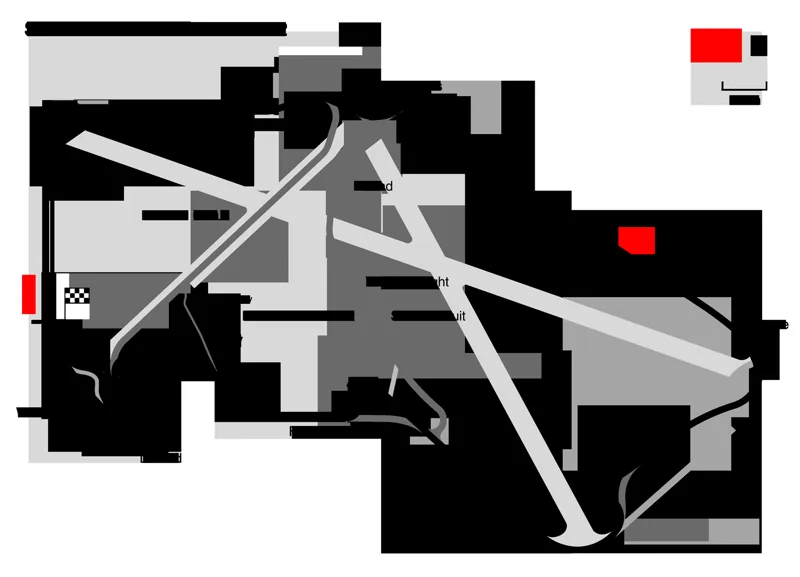
The Hockenheimring is a clockwise circuit of 6.825 km (4.241 mi) near the town of Hockenheim in Baden-Wurttemberg. Eleven teams with two drivers each took part, and the entry matched the season's list.
Bridgestone was the sole tyre supplier, bringing soft and medium dry compounds along with intermediate and full wet-weather tyres. Teams set up for the long straights, which meant reducing downforce while keeping aerodynamic efficiency.
The championship and teams before the race
Schumacher led the drivers' championship with 56 points before the race, followed by Coulthard on 50 and Hakkinen on 48. Barrichello was fourth on 36 and Fisichella fifth on 18.
Ferrari led the constructors' championship with 92 points, ahead of McLaren on 88. Williams had 19, Benetton 18 and BAR 12.
Eddie Irvine was declared fit for Hockenheim. He had withdrawn from the previous race with suspected appendicitis, and Burti had replaced him. Irvine was later taken into a London hospital, where doctors found a swollen intestine. He said he was looking forward to Hockenheim and was encouraged by the team's Silverstone test.
Going into Germany, Schumacher had scored ten points over the previous four races, with three retirements and a win in Canada. Coulthard had scored 20 points in the same stretch, which had reduced Schumacher's lead to six points.
How did the testing and set-ups shape the weekend?
The teams tested at three circuits between 18 and 21 July. Six of them, among them McLaren and Benetton, spent three days at Silverstone on low-drag set-ups for Hockenheim's long straights. Ferrari's Badoer worked at Fiorano, and Arrows stayed at its own base.
Olivier Panis led the first day for McLaren, and Jaguar's Luciano Burti damaged his car's suspension, wings and sidepod in an accident at Stowe corner. Jaguar sent a spare car for the next day, and Fisichella led the final day.
Ferrari's test driver Luca Badoer spent four days at Fiorano on engine and aerodynamic development, while Michael Schumacher practised starts and tested components on the fourth day. Arrows did not test in the period and worked on reliability at its Leafield base instead.
Jaguar replaced the large panels behind the front wheels with smaller screens and returned to the bodywork it had used at Monaco. Jordan's new EJ10B was also introduced that weekend, after its debut had been postponed while it completed safety tests.
How did practice unfold at Hockenheim?
Practice was spread across two hour-long sessions on Friday and two 45-minute sessions on Saturday. Schumacher set the first session's fastest time at 1:43.532, almost six-tenths of a second faster than Hakkinen. Barrichello was third and Coulthard fourth in that session.
The second session was held in heavy rain, which made the track wet and dusty and slowed the times. Schumacher stayed fastest, Frentzen was second, and Hakkinen finished third with Coulthard fifth. Ralf Schumacher missed half of the session while his team changed his engine. The two Minardis crashed, with Mazzacane hitting a barrier in the stadium section and Gene beaching his car in the last turn's gravel trap.
Trulli's engine failed after 20 minutes at the Ostkurve, and Jenson Button spun into the inside barriers at the pit lane entry after the session ended. Button's front wing came off in the impact.
Hakkinen was fastest in the third session at 1:44.144, with de la Rosa of Arrows a tenth of a second behind. Ralf Schumacher lost control after crossing the line onto a damp patch and hit the turn one tyre barrier.
Coulthard, Frentzen and Salo followed Hakkinen on the timesheets, and Trulli, Barrichello, Michael Schumacher, Villeneuve and Fisichella completed the top ten.
In the final session the track dried, and Hakkinen set the day's best at 1:41.658 with 15 minutes remaining. Michael Schumacher and Barrichello were second and fourth, Frentzen fell to fifth, and Fisichella was sixth, although his car billowed smoke after an engine failure at the North Kurve. Michael Schumacher had gone 50 m (160 ft) backwards into a wall at the Opel Kurve after the session, and he drove the spare Ferrari in qualifying.
Who took pole, and how was the grid set?
Coulthard took pole at 1:45.697 on his first timed lap in the damp, his second pole of the season and the 10th of his career. Schumacher joined him on the front row, 1.3 seconds slower. Drivers ran grooved and wet-weather tyres, and several were hesitant to go out at first.
The session was held in damp weather with intermittent rain, which produced a mixed-up starting order in places.
Fisichella qualified third in a spare Benetton with incorrect gear ratios. He spun on his first run, and he was later fined $5,000 for failing to take his car to the pit-lane weighbridge.
Hakkinen was fourth, three hundredths slower than Fisichella. De la Rosa was fifth in the spare Arrows, Trulli sixth, Wurz seventh, Herbert eighth, and Villeneuve ninth in BAR's spare car, with Irvine tenth.
Verstappen qualified 11th and Zonta 12th, and Heidfeld was 13th. Ralf Schumacher took 14th, ahead of Button in 16th, and Salo was 15th.
Frentzen was 17th and Barrichello 18th, in his teammate's repaired race car from practice after his own Ferrari developed oil-leak problems on his opening run. Diniz was 19th, Alesi 20th, and Mazzacane 21st, with Gene 22nd after a gearbox fault.
Jos Verstappen had engine starting problems, and Arrows removed the car's floor to fit a starter. Without enough qualifying laps he was 11th, while Zonta, who had fitted a new engine, was 12th after Alesi impeded him at the final chicane.
Ralf Schumacher, 14th, outpaced his team-mate Button, who was 16th, but the change in the weather caught Williams out. Salo was 15th after meeting two cars on his first fast lap as conditions slowed the track.
Frentzen spent most of qualifying outside the permitted margin of the fastest lap. The stewards disallowed his first quick lap after he cut the first chicane to find a way past slower cars.
Hakkinen admitted the weather had made him cautious about going off the track. De la Rosa took fifth with the spare Arrows, in what was then his best qualifying performance.
How did the warm-up and conditions look?
The 30-minute warm-up began at 09:30 Central European Summer Time. Coulthard was fastest after ten minutes at 1:44.065, and Hakkinen was second in the other McLaren. Teams used the session to check their set-ups, and several drivers tested tyres before the race.
Villeneuve and Verstappen collided at the Jim Clark chicane during their installation laps, and Verstappen suffered multiple arm abrasions. Coulthard then spun into the tyre wall at the stadium section, damaging his front wing and returning to the pit lane to drive the spare McLaren.
Heidfeld's engine cover detached at the Ostkurve, scattering carbon fibre and bringing out yellow flags again. De la Rosa then suffered a right-rear puncture after driving over the debris.
Before 102,000 spectators, the 45 laps of 307.125 km (190.839 mi) got under way at 14:00 local time. The air was 21 C (70 F) and the track between 21 and 25 C (70 and 77 F).
Rain had fallen eleven minutes before the parade lap and stopped eight minutes later, so the race began in dry weather. As it progressed the track became damp and then wet.
What happened at the start?
Button's engine would not start on the parade lap, so he began from the back of the field. When the lights went out, Coulthard steered hard to the inside to block Schumacher, and Hakkinen took the lead into the first corner.
Schumacher moved to the outside and collided with Fisichella's front wing, and both cars ran off the track and struck the turn one tyre barrier. Both retired, and no safety car was deployed because the cars were far off the racing line.
Barrichello, on a two-stop plan that kept his car light, had climbed to 10th by the end of lap one. At the end of that lap Hakkinen led from Coulthard, Trulli, De la Rosa, Irvine, Herbert and Verstappen.
Verstappen passed Irvine for sixth on lap two, and Herbert moved into fifth. Barrichello passed both BAR drivers for eighth, while the McLaren pair kept their gap over Trulli.
Trulli set the fastest lap of the race at 1:46.321.
Final result
| Position | Driver | Note |
|---|---|---|
| Winner | Rubens Barrichello (Ferrari) | From 18th on the grid; maiden Formula One win |
| Second | Mika Hakkinen (McLaren) | Led from the first corner until lap 25 and again later |
| Third | David Coulthard (McLaren) | Pole position; stopped on lap 27 |
| Retired | Michael Schumacher (Ferrari) | First-corner collision with Fisichella |
| Retired | Giancarlo Fisichella (Benetton) | First-corner collision with Schumacher |
Schumacher and Fisichella both went out at the first corner, and the race that followed featured Hakkinen, Coulthard and Barrichello in the leading group.
What did the result mean for the title race?
Barrichello's victory gave Ferrari the race win, and McLaren had two drivers on the podium. His win cut Schumacher's championship lead to two points, and Hakkinen and Coulthard were tied for second in the race. Hakkinen's second place kept McLaren in contention, and Coulthard's third place added to the team's points.
With six races remaining in the season, McLaren were four championship points behind Ferrari and 76 points ahead of Williams in the constructors' championship.