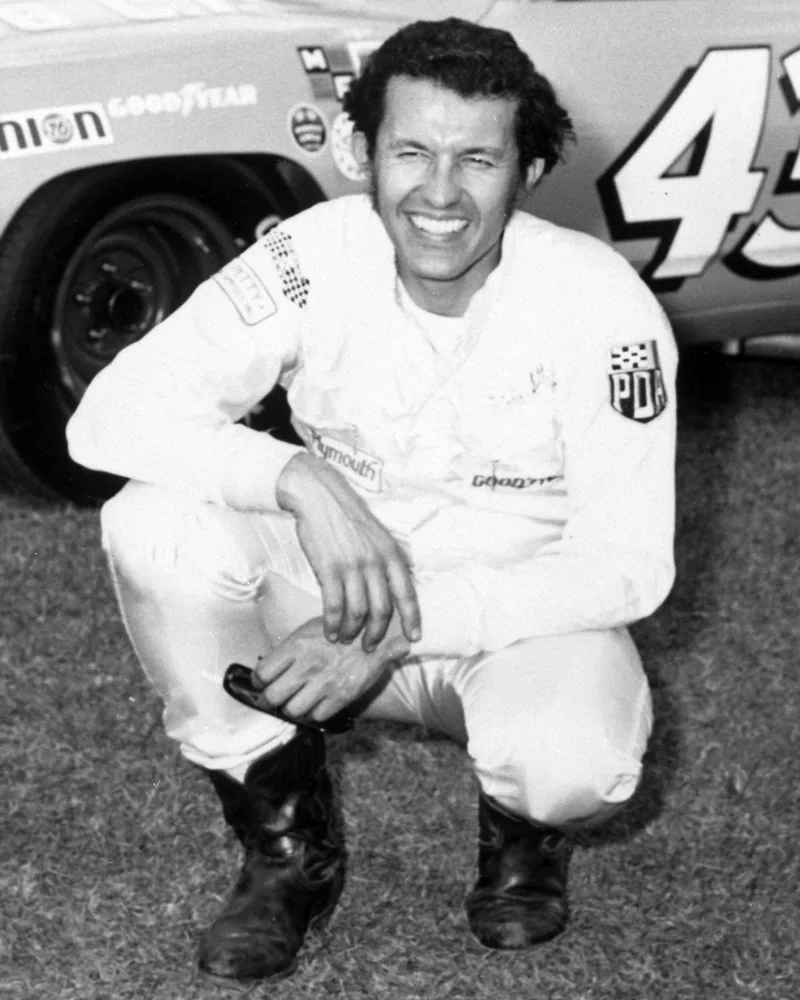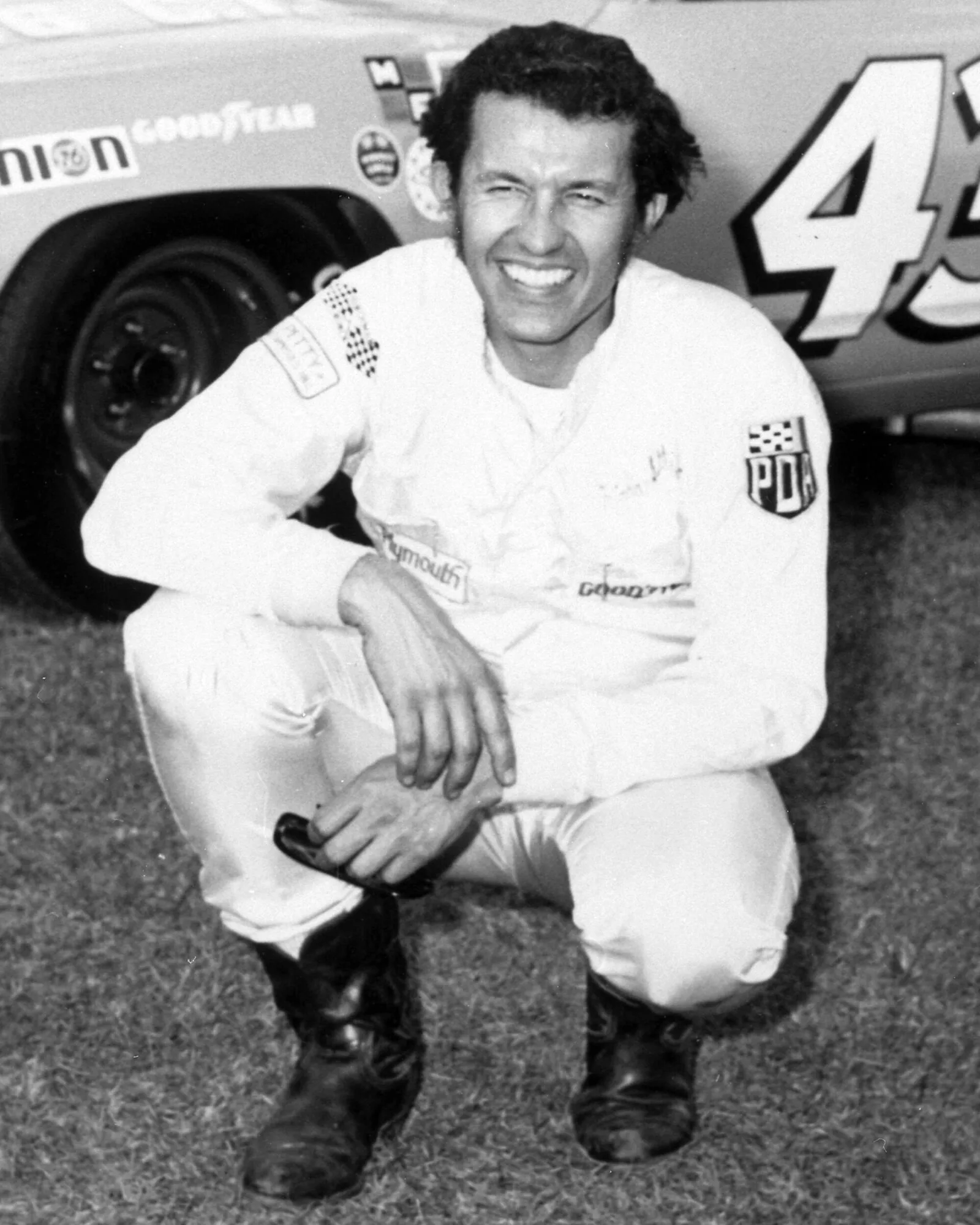
Richard Petty won his second straight title by 128 points over Bobby Allison, in the first season of the modern era and a feud that turned into open warfare.
Richard Petty won the 1972 title by 128 points over Bobby Allison, with 31 races on a schedule cut from 48. The season marked the start of NASCAR's modern era, and A.J. Foyt, David Pearson and Buddy Baker were among the other winners that year.
The 1972 NASCAR Winston Cup Series was the first season of what the sport calls its modern era, a year when the schedule shrank and dirt tracks disappeared. Richard Petty won his second straight championship, finishing 128 points ahead of Bobby Allison in a season shaped by their rivalry.
It was the 24th season of professional stock car racing in the United States. Factory teams had withdrawn from the sport, and the field lacked the depth it had once had, a point that the races themselves made clear.
When did the 1972 season run?
The season ran from 23 January at Riverside International Raceway to 12 November at Texas World Speedway, and Larry Smith was named Rookie of the Year. The season opened with a race that marked a change for Petty, who debuted under STP sponsorship.
The modern era arrived with three big changes. The number of races fell from 48 to 31, all dirt tracks were removed from the schedule, and oval tracks had to run a minimum distance of 402 km (250 miles). Texas World Speedway held two NASCAR races in the year, the only time it did so.
A feud that turned into open warfare, a title by 128 points and the first season of the modern era.
Who won the 1972 championship?
Richard Petty won his second consecutive Winston Cup title and his fourth overall, finishing 128 points ahead of Bobby Allison. He won several races along the way, including the Richmond 500, the Gwyn Staley 400, the Virginia 500, the Lone Star 500 and the Old Dominion 500.
Petty's season started at Riverside, where he debuted under STP sponsorship. Fog shortened that race to 149 laps, and Petty led 37 of the final 39 laps in his all-blue car, which he drove for the final time in that colour.
Allison's season was just as strong. He won ten races and finished second in the points, but the title went to Petty.
How did the Petty-Allison feud shape the year?
The rivalry between Petty and Allison grew into open warfare by the autumn. It produced some of the most dramatic finishes of the year.
At the Capital City 500 at Richmond on 10 September, Petty and Allison led 498 laps between them. With nine laps to go Allison passed Petty, and Petty sideswiped him at Turn Three. Petty then shot into the guardrail, collected Buddy Baker and still stayed in front, holding on to win by more than half a lap.
At the Wilkes 400 at North Wilkesboro on 1 October, the feud erupted again over the final 30 laps. Allison led 203 laps, and the lead changed nine times in the final 38, before Petty crashed into Allison on the final lap and went on to win. An intoxicated fan attacked Petty in victory lane and was struck by Maurice Petty, who used Richard's helmet.
Who won the Daytona 500 in 1972?
A.J. Foyt won the 14th Daytona 500 on 20 February, his only win in the race and his first at the track since 1965. Petty's engine failed 80 laps into the race, and Foyt led 167 laps, with Petty leading 31 and Allison two.
Bobby Isaac, who had won the pole, had an engine that soured at the start and finished 33rd. Buddy Baker crashed with Walter Ballard, who flipped in the grass of the tri-oval.
The race showed the slump in competitive depth that followed the withdrawal of the factories from the sport.
What happened in the spring races?
The spring was a showcase for Allison and Petty. Allison won the Atlanta 500 and the Southeastern 400 at Bristol, Petty took the Gwyn Staley 400 at North Wilkesboro, and Pearson's Rebel 400 win at Darlington began the 1-2 finish that defined the period.
The Miller High Life 500 at Ontario Motor Speedway on 5 March drew 51 starters, with more than 30 more cars sent home after qualifying. A.J. Foyt won the race, his final NASCAR win, while Isaac crashed with Mark Donohue 45 laps in. Petty lost a lap on a botched pitstop and then push-drafted Baker and Allison to keep them in contention with Foyt.
At Carolina on 12 March, Allison started 39th after changing tyres following qualifying, then stormed through the field to lead 260 laps before his engine failed at lap 345. Bobby Isaac led 210 laps and won, his last career Grand National win, and the race came two days after the birth of future champion Matt Kenseth.
The Gwyn Staley 400 at North Wilkesboro on 23 April produced a 1-2-3 for Petty, Allison and Isaac. Petty led the last 25 laps after a late tyre change to softer compound tyres nicknamed gumballs, and the three drivers battled hard all day.
How did the summer races unfold?
Summer produced a mix of surprise and dominance. Ray Elder won the Golden State 400 at Riverside on 18 June, Petty beat Allison by a full lap at the Lone Star 500 in Texas, and David Pearson won the Motor State 400 at Michigan by 16 seconds.
The Lone Star 500 at Texas World Speedway on 25 June was run in 100-degree heat. Petty battled Isaac until Isaac faltered, and Petty held a slender points lead over James Hylton, who had drawn criticism for leading the standings while finishing behind Petty and Allison in almost every race.
At Dover on 4 June, Allison and Petty finished first and second after leading 492 of the 500 laps, with Benny Parsons and Dean Dalton the only other drivers to lead. It was a sign of how the two men dominated the schedule in the middle of the year.
Privateer Richard Childress was involved in a bizarre crash at the Lone Star 500, when he spun in Leonard Faustina's oil and flipped into a ditch.
At Trenton on 16 July, Allison edged Isaac in the Northern 300, the last Grand National race held at Trenton Speedway. Petty stalled on pit road and lost a lap, while Dave Marcis led one lap before hitting the wall.
The Dixie 500 at Atlanta on 23 July gave Allison his third big-track win of the season, after Pearson slowed with a souring engine while leading. Petty finished a distant second.
Which races defined the 1972 season?
Several races stood out, from Foyt's Daytona 500 and Allison's Atlanta 500 win to the feud races at Richmond and North Wilkesboro. The table lists nine key winners across the calendar.
| Race | Date | Track | Winner |
|---|---|---|---|
| Daytona 500 | 20 February | Daytona International Speedway | A.J. Foyt |
| Atlanta 500 | 26 March | Atlanta International Raceway | Bobby Allison |
| Rebel 400 | 16 April | Darlington Raceway | David Pearson |
| Winston 500 | 7 May | Alabama International Motor Speedway | David Pearson |
| World 600 | 28 May | Charlotte Motor Speedway | Buddy Baker |
| Talladega 500 | 6 August | Alabama International Motor Speedway | James Hylton |
| Southern 500 | 4 September | Darlington Raceway | Bobby Allison |
| Capital City 500 | 10 September | Richmond Fairgrounds Raceway | Richard Petty |
| Wilkes 400 | 1 October | North Wilkesboro Speedway | Richard Petty |
The Atlanta 500 on 26 March gave Allison the first superspeedway win for Chevrolet in some eight years. He had worked through the engine problems plaguing the team, after Junior Johnson began using a different aviation oil in the engines.
The Southern 500 at Darlington on 4 September was a long duel. Allison and David Pearson battled for almost the whole 500 miles, and they led 352 laps between them. Allison took the win with six laps to go, while Petty finished seven laps down after repeated blistered tyres.
How did David Pearson's Wood Brothers team run?
David Pearson drove the No. 21 Wood Brothers Mercury after A.J. Foyt was committed to his IndyCar obligations. He won the Rebel 400 at Darlington on 16 April, his first win since March 1971, and he went on to win the Winston 500 at Talladega in May.
The Rebel 400 also began a 1-2 finish for Pearson and Petty, which became one of the most celebrated periods in NASCAR history. Petty finished a lap down in second place, and Bobby Allison led 29 laps but finished 15 laps down in seventh.
Pearson's later wins included the Motor State 400 at Michigan, won by 16 seconds, and the Yankee 400 at Michigan on 20 August, where he edged Allison by a single car length. The Delaware 500 at Dover on 17 September was his most dominant performance, with 350 laps led for his sixth win of the year.
What happened in the Talladega 500 with James Hylton?
James Hylton won the Talladega 500 on 6 August, the biggest upset of the season, after 32 of the 50 entries failed to finish. The top qualifiers crashed out on lap 22, when Joe Frasson blew a tyre while running second.
Hylton had used year-old rubber, and his win was his second career victory and his first on a superspeedway. Frasson was angry about the new Goodyear compound the top qualifiers had been using.
How did the year end at Texas World Speedway?
Buddy Baker won the Texas 500 at Texas World Speedway on 12 November, edging A.J. Foyt in a close finish. Richard Petty was third, and the three of them had led all 250 laps between them as they dueled for the lead.
Bobby Allison finished fourth and then left Junior Johnson's team, taking his Coca-Cola sponsorship with him to form his own team. Johnson's Richard Howard team announced that Cale Yarborough would take over the seat for 1973.
What did the 1972 season leave behind?
The season set the pattern for the modern era. Petty's title, Allison's second place and the rise of Pearson and Hylton showed what the new calendar could produce, even with fewer races and no dirt.
Darrell Waltrip made his Winston Cup debut at Talladega on 7 May, starting 25th and finishing 38th after a blown engine. Larry Smith's rookie title completed the year's list of firsts.
Footage from the Old Dominion 500 at Martinsville was also used in the 1973 film The Last American Hero, including a flyover by local military jets.