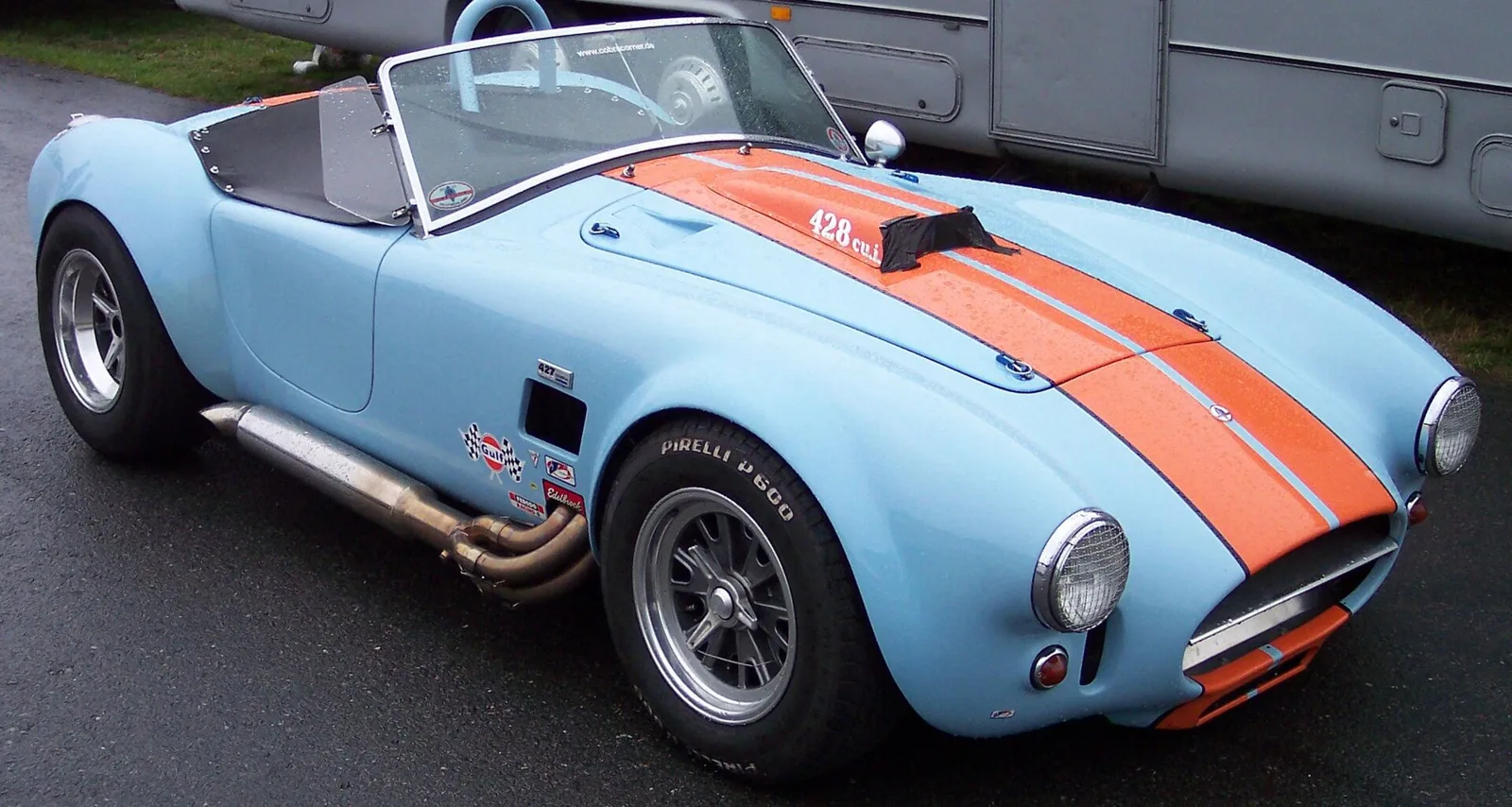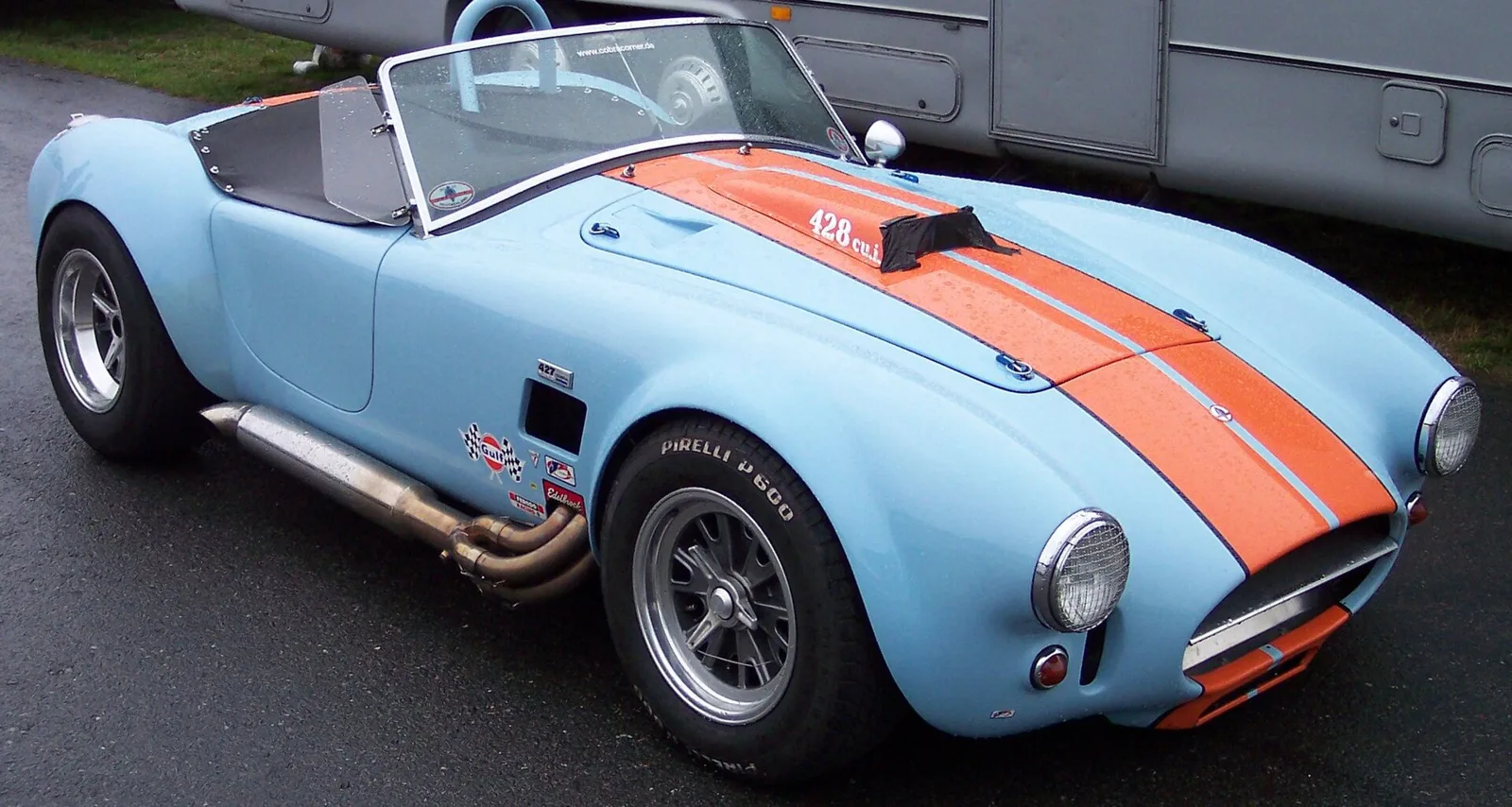
One of Britain's oldest independent carmakers, with a Le Mans tragedy, a Ford V8 partnership, a mid-engined flop and several owners, yet still building the Cobra.
AC Cars began in 1903 as a Weller tricar and later traded as Auto Carriers. Over the decades it is remembered for the Ace and for the Cobra, which used a Ford V8 from Carroll Shelby, and the marque has been revived several times.
AC Cars is one of the oldest independent car makers in Britain, and it is best known for the Ace and the Cobra. It began in 1903 as a Weller tricar, traded as Auto Carriers and later AC Cars Ltd., and it has been renamed or liquidated many times over. A new corporate structure began building Cobra models again in 2022, with a modified design that met modern safety rules and European homologation.
Where did AC Cars begin?
The first car from the company that became AC was shown at the Crystal Palace motor show in 1903. That machine was a 20 hp touring model shown under the Weller name, built by the Weller brothers of West Norwood in London, who wanted to produce an advanced 20 hp (15 kW) car.
Their financial backer and business manager, John Portwine, was a butcher. He judged the touring car too expensive to make, and he encouraged Weller to design a small delivery three-wheeler instead. That practical decision set the company on its first path.
A tricar maker that became the Cobra's home, lost its Le Mans car in tragedy and has been reborn several times since.
How did the Sociable and the early tricars sell?
In 1904 a new company, Autocars and Accessories, was founded to build the Auto-Carrier, and the vehicle caught on quickly and made money. Three years later a passenger version appeared, the A.C. Sociable, with a seat in place of the cargo box. It was later advertised as the Mighty Atom.
A 1912 review of the Motor Cycle and Cycle Car Show called the Sociable one of the most popular cycle cars on the road. A.C. displayed eight vehicles on its stand, six for pleasure and two for business. The single rear wheel held a two-speed hub, and the single-cylinder engine sat just in front of it with a rear chain drive.
In 1911 the business became Auto Carriers Ltd., moved to Ferry Works at Thames Ditton in Surrey, and adopted the famous AC roundel logo. Its first four-wheeled car came in 1913, a sporty two-seater with a gearbox on the rear axle, but only a few were built before the First World War interrupted production.
How did the company survive the First World War?
During the war the Ferry Works turned out munitions such as shells and fuses, and it also built at least one vehicle for the War Office. Once the fighting ended, car production resumed, and the firm took over an old balloon factory on Thames Ditton High Street.
John Weller then began designing an overhead-cam six-cylinder engine, and the first versions were running by 1919. That engine stayed in production until 1963. In 1921 Selwyn Edge, formerly of Napier, bought shares and became governing director, but Weller and Portwine resigned less than a year later.
Which racing successes built the AC name?
Edge sought publicity through motor sport, and in 1921 Sammy Davis joined as a driver for the Junior Car Club 200-mile race at Brooklands. In 1922 the company became AC Cars Ltd. J.A. Joyce won the Brighton Speed Trials in an AC in 1923 and 1924.
In May 1924 T.G. Gillett broke the continuous 24-hour record at Montlhery near Paris in a 2-litre AC with streamlined bodywork, covering 1,949.3 miles. Victor Bruce, a company employee who held the courtesy title Honourable, took the 1926 Monte Carlo Rally in a 2-litre AC. A year later Victor and Mildred Bruce, helped by J.A. Joyce, set a ten-day endurance record at Montlhery in an AC Six.
How did the company survive the 1929 crash?
Sales were already falling when Selwyn Edge bought the company outright in 1927 for 135,000 pounds and re-registered it as AC (Acedes) Ltd. The 1929 crash then pushed it into voluntary liquidation. The company was sold to the Hurlock family, who ran a successful haulage business and wanted the High Street factory mainly as a warehouse.
The Hurlocks allowed the service side to continue. In 1930 a single car was built for William Hurlock, who liked it enough to agree to restart very limited production from leftover components. A new chassis deal with Standard, a modern four-speed gearbox and a new range by 1932 followed, with output averaging less than 100 vehicles a year until the Second World War.
What did the post-war AC models look like?
After the war AC won a large government contract for the Thundersley Invacar Type 57, a fibreglass single-seat invalid carriage powered by Villiers two-stroke engines. Those carriages were built until 1976 and provided an important source of income. Car production restarted in 1947 with the 2-Litre, which used the 1991 cc engine from the 16 in an updated underslung chassis.
The 2-Litre came in saloon or convertible form, with an ash frame and aluminium panels. AC also built the Petite, an aluminium three-wheeled microcar, and Bag Boy golf carts with independent suspension to both rear wheels.
What were the AC Ace and Aceca?
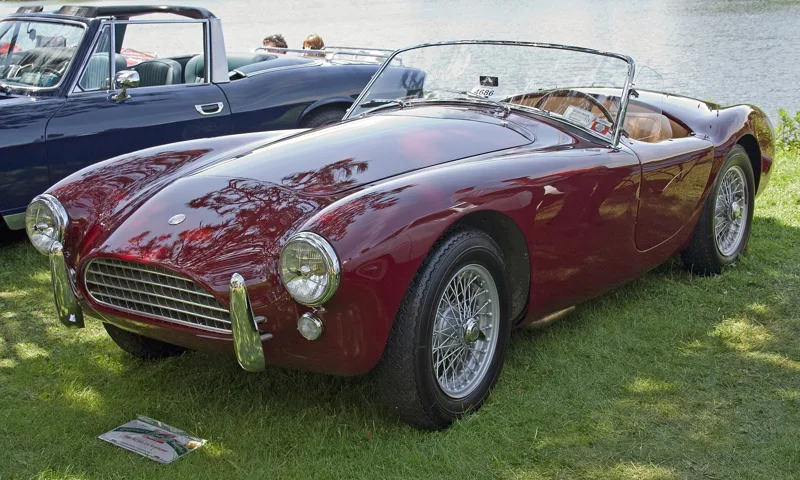
In 1953 AC began building the Ace, with a lightweight chassis designed by John Tojeiro and a hand-built aluminium body by Eric George Gray. It used the venerable 2-Litre engine. For 1954 a closed coupe, the Aceca, was unveiled at Earls Court. It was only slightly heavier than the Ace and, thanks to better aerodynamics, a little faster, with a top speed of 128 mph (206 km/h).
Customers who needed more seats were offered the Greyhound, a four-seater built on a stretched Ace chassis with coil springs all round and a 2.2-litre Bristol engine.
How did Carroll Shelby turn the Ace into the Cobra?
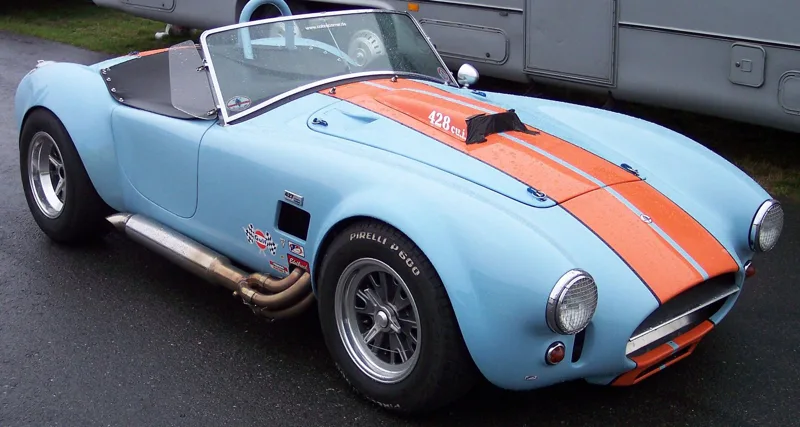
In September 1961 Carroll Shelby approached AC about fitting a small-block Ford Windsor V8 to the Ace chassis, creating the AC Cobra. He needed something able to take on the Chevrolet Corvette in American sports car racing. The first example, CSX 2000, used a Ford 221 V8 and debuted in 1962 with a Ford 260. The Ford 289 then took over.
Shelby later sold the Cobra name to Ford in 1965, and he went on to help develop the Ford GT40. AC built a milder European version with the small-block engine, the AC 289, and 27 were produced.
What happened to the Cobra at Le Mans in 1964?
In 1964 AC decided to enter a works Cobra, chassis A98, in the Le Mans 24 Hours and signed Jack Sears as one of its drivers. Before the race the team wanted to check stability and gearing at the speeds expected on the Mulsanne Straight. They used the northern end of the first section of the M1 motorway, which had no barriers in the central reservation and no speed limit.
On 11 June 1964, at about 4:15 am, Sears ran the car in top gear. It had no speedometer, so the team worked out from engine speed, allowing for tyre growth, that it had reached 185mph. Reports of the run reached the national newspapers, and the Ministry of Transport looked into it, but no action was taken because no laws had been broken.
Nine days later the car raced at Le Mans with Sears and Peter Bolton sharing the driving. In the evening, with Bolton at the wheel, a rear tyre blew, and the car spun and was struck by the Ferrari of Giancarlo Baghetti. The Cobra went into the barriers and three young French spectators who were standing in a prohibited area were killed. Baghetti was unhurt, and Bolton was taken to hospital with minor injuries.
The damaged car was brought back from France and stored at the Thames Ditton factory until 1972, when the collector Barrie Bird acquired it. He rebuilt it over many years, with a new body made by Maurice Gomm, who had created the original.
Why was a new Cobra chassis developed?
By the end of the 1964 season the Cobra was losing ground to Ferrari in sports car racing. Shelby fitted a big-block Ford FE 390 V8, but the car was over-powered and almost undrivable. A completely new chassis was needed, and with help from Ford's computers and the AC engineers the MKIII was born.
The MKIII used 4-inch (100 mm) main tubes instead of 3-inch (76 mm) ones, with large cross-braced shock towers and coil springs all round. A 1965 competition version had a stripped interior, a roll bar, wider wings and a Ford 427 FE NASCAR Side-Oiler V8 rated at 425 bhp (317 kW) in its mildest street form.
The car missed homologation for 1965 and was not raced by the Shelby team, but privateers raced it with success into the 1970s. At the end of 1966 Shelby American had 31 unsold competition cars, and it sold them to the public as the Cobra 427 S/C, short for semi-competition. Those cars are now the most sought after Cobras, and some can sell for over 1.5 million dollars.
What was the Frua-bodied AC 428?
AC also wanted a grand tourer for wealthy buyers, so it commissioned the Italian coachbuilder Pietro Frua to design a body that could sit on a MKIII chassis stretched by 6 inches (150 mm). The car was shown at the 1965 Turin show. In 1967 the long-stroke 428 engine became available and the car was known as the AC 428.
The Frua body was built in steel rather than AC's usual aluminium, which made it heavier than a Cobra at slightly under 3,000 lb (1,400 kg). It was never fully developed. Sending chassis from England to Italy and back for final assembly made it very expensive, and production ended in 1973 after only 80 cars, 29 convertibles and 51 coupes. A one-off coupe, the AC 429, was built in 1970 on a bodyshell Frua had made for Monteverdi.
What was the ME3000 and why did it struggle?
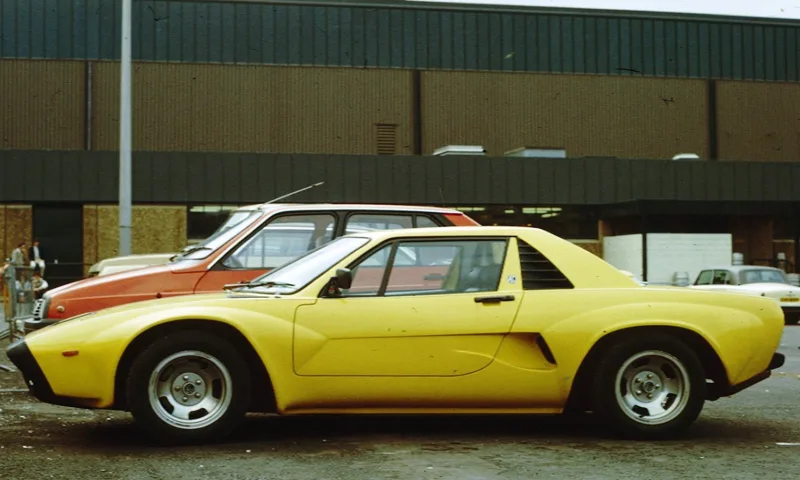
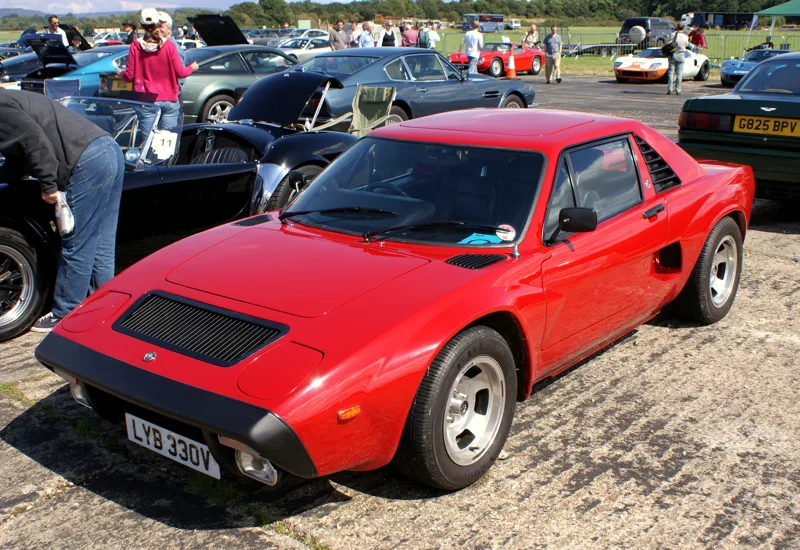
The 1970s were poor for luxury makers, and Derek Hurlock looked for a smaller car. In 1972 a prototype called the Diablo, with an Austin Maxi engine and transaxle, was built by the privateers Peter Bohanna and Robin Stables. AC acquired the rights and at the 1973 London Motor Show showed its own mid-engined ME3000, with a 3.0-litre Ford Essex V6 mounted transversely.
Development was almost complete by 1976, when new type approval rules came in. A prototype failed the 30 mph (48 km/h) crash test and its chassis had to be redesigned. The second attempt passed, which was a big achievement for a small firm. Deliveries of the production cars, later badged 3000ME, did not start until 1979, when they were up against the Lotus Esprit.
Writers from Car Magazine, Autocar and Motor criticised the handling, even though the car was comfortable and well built. The ambition of 250 cars a year was never close, and after 71 cars had been sold Hurlock halted production as his health suffered and the company struggled in a recession. Production at Thames Ditton stopped in 1984, and the car and the AC name were licensed to AC (Scotland) plc, run by David McDonald in Hillington, Glasgow. That firm built 30 cars before going into receivership in 1985.
Who kept the AC name alive in the 1980s and 1990s?
After the High Street works were sold for redevelopment, AC carried on as a service operation at the 21st Century works on Summer Road. The Hurlock family sold its holdings in 1986 to William West. The car brand was then acquired by the owner of C.P. Autokraft, Brian Angliss.
Angliss ran Autokraft, a Cobra restoration shop, parts supplier and replica maker. In 1982 he used tooling from Thames Ditton to build the MKIV, with US-spec 5 mph (8.0 km/h) bumpers, a motor that met US rules and a larger interior. About 480 were built at his Brooklands factory. He later gained the AC trademark and formed a joint venture with Ford, which had also bought Aston Martin.
In 1993 Angliss introduced a new AC Ace at the London Motor Show. It had a stainless steel chassis and an aluminium body, but it was expensive to develop and build. The receivers were called in by 1996, after about 50 new Aces had been built. In December 1996 the business was sold to the South African businessman Alan Lubinsky, who continued production at Weybridge in Surrey as AC Car Group Ltd.
How did the modern Cobra revivals unfold?
AC Motor Holdings Ltd. was set up in Malta in August 2002. In 2003 Carroll Shelby International and AC Motor Holdings announced an authentic Shelby AC Cobra, which reached dealers in July 2004 in the CSX 1000 and CSX 7500 series. The first handcrafted aluminium body was built at the Frimley works in February 2004.
A Malta plant opened in 2004 and began making the carbon-fibre AC MkV, but production stopped in 2007 after problems with the factory building. In August 2008 Acedes Holdings LLC was incorporated in St Kitts, and a joint venture with the Brooklands Motor Company in Weybridge was announced to continue the traditional tubular-chassis cars. A German joint venture for the MKVI followed in April 2009.
The MKVI had a GM-supplied 6.2-litre V8, a six-speed manual, a spaceframe chassis and Corvette brakes, and it entered series production in July 2012. AC Automotive, based in Straubenhardt, Germany, built cars under the AC name from 2010 to mid-2023, with the ACGT priced from 104,400 pounds before options. That company went into liquidation on 24 July 2023.
Other projects came and went. A 2010 venture with a US company produced the Iconic AC Roadster. At the 2012 Geneva Motor Show the company showed the MK VI, the MK II Classic and the 378 GT Zagato. In 2020 AC announced a zero-emission Series 1 Electric Cobra, with fifty-eight units planned, alongside a 2.3-litre petrol Cobra 140 Charter Edition. In 2022 the new structure began building 663 new Cobra models.
What did AC build for the railways?
AC also briefly entered railway rolling stock. In 1949 it built four trains for the Southend Pier Railway in Essex, each with three power cars and four coaches, which stayed in use until 1976. In 1958 it built five four-wheel railbuses for British Rail.
AC key models and figures
| Model or item | Years | Detail |
|---|---|---|
| Weller 20 HP touring car | 1903 | Shown at Crystal Palace under the Weller name |
| A.C. Sociable | After 1904 | Passenger tricar, later the Mighty Atom |
| 2-Litre | 1947 | 1991 cc straight-six from the 16 |
| Ace and Aceca | 1953 to 1954 | Aluminium body, Aceca top speed 128 mph (206 km/h) |
| Cobra CSX 2000 | 1962 | Ford 221 V8, debuted with a Ford 260 |
| Cobra 427 S/C | 1966 | 31 unsold competition cars sold to the public |
| AC 428 (Frua) | 1967 to 1973 | 80 cars, 29 convertibles and 51 coupes |
| 3000ME | 1979 to 1984 | Mid-engined, 71 cars sold at Thames Ditton |
| MKVI | 2012 onward | 6.2-litre V8, six-speed manual |
| New Cobra models | 2022 | 663 built under the new structure |