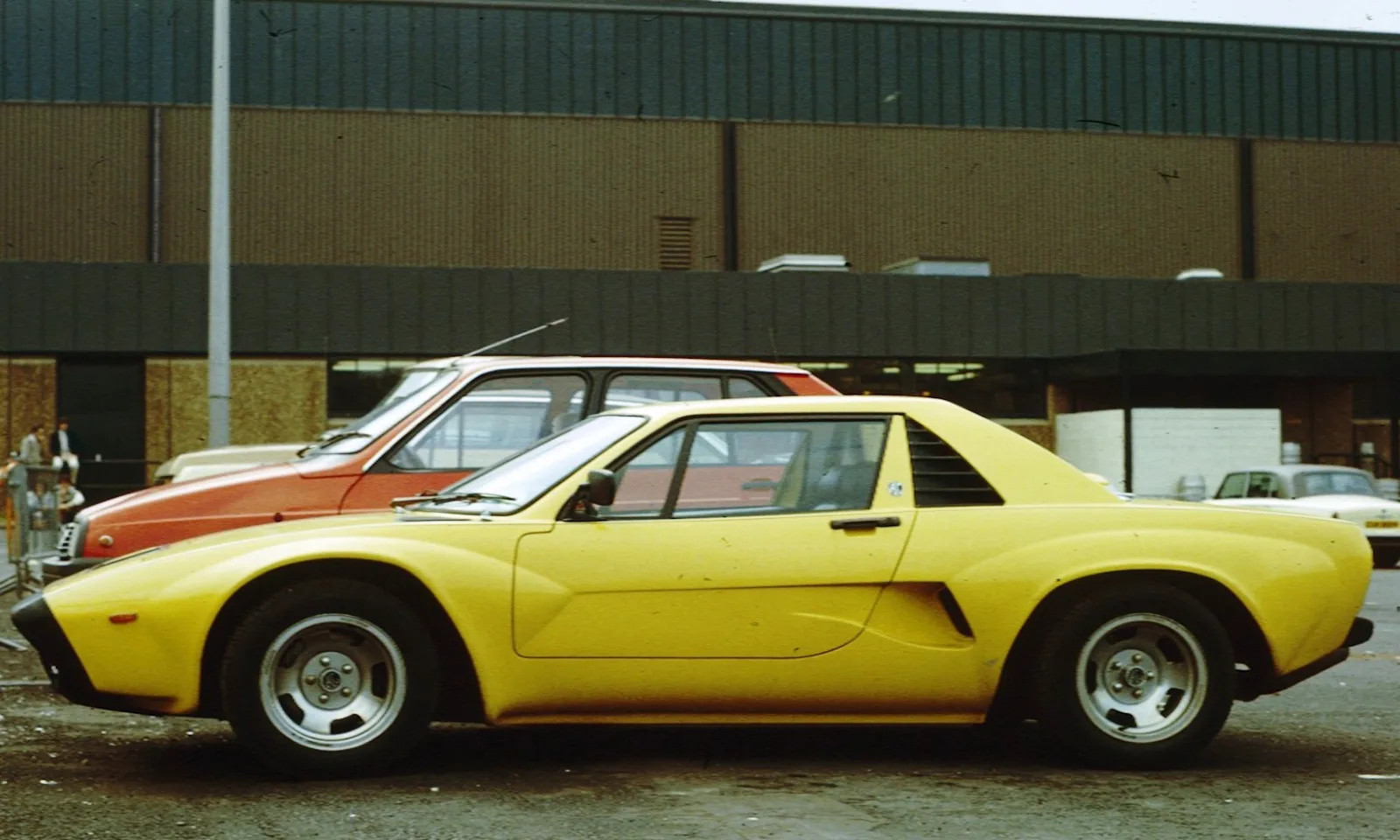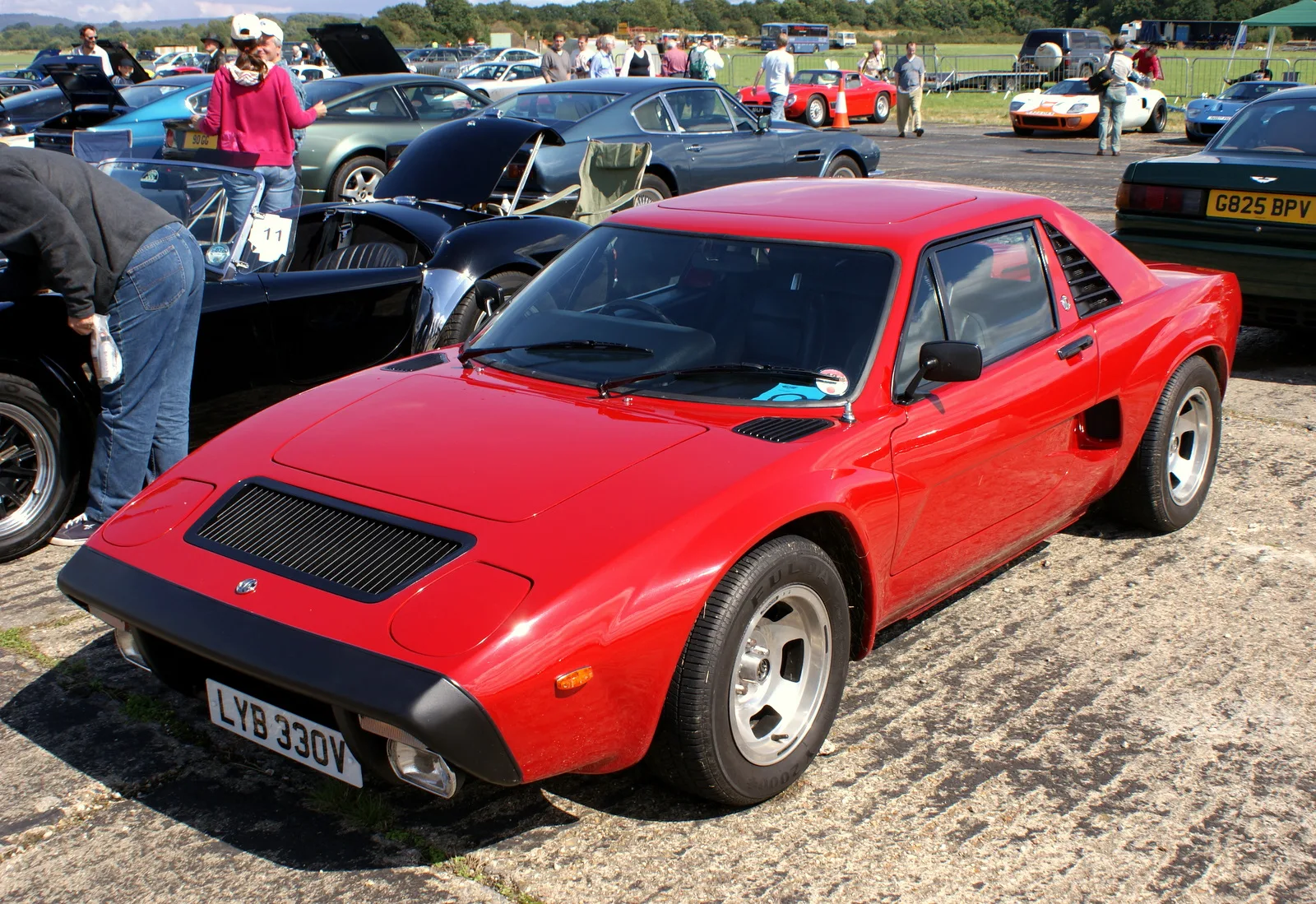
A carbon-fibre, turbocharged mid-engined coupe with AC roots, shown in Birmingham in 1988 and never put into series production.
The Ecosse Signature was a mid-engined coupe shown in October 1988 by Ecosse Car Company, with a turbocharged 2.0-litre Fiat-group four and a carbon-fibre body. It grew out of the AC 3000ME and never reached series production, leaving a single road-registered pre-production car.
The Ecosse Signature was a mid-engined two-seat coupe shown at the British International Motor Show in October 1988. It paired a carbon-fibre body with a turbocharged 2.0-litre (122 cu in) four-cylinder engine from the Fiat group. Only one road-registered pre-production car was built, because the small-series production planned for 1989 never began.
Where did the Ecosse Signature come from?
The Signature grew out of the AC 3000ME, a mid-engined sports car that AC Cars built at Thames Ditton from 1979 to 1984. A Scottish company, AC (Scotland) plc., took over its licensed production in 1984/85 and developed the AC Ecosse prototype. That company became insolvent in 1985, before the AC Ecosse could be officially presented.
John Parsons, a former racing driver who had also worked for Ford, founded AC Ecosse Ltd. and bought the rights to the 3000ME and its planned successor from the insolvency administrator in March 1986. Aubrey Woods, the development director who had worked for the B.R.M. Formula One team in the 1960s, remained convinced by the new model.
The central change was a switch to a 2.0-litre Fiat and Lancia four-cylinder with double overhead camshafts and a turbocharger, plus minor cosmetic touch-ups. The firm moved in early 1988 into a small factory hall at Knebworth in Hertfordshire and renamed itself Ecosse Car Company Ltd. Because the changes were so extensive, a new type approval was needed, and a prototype passed the crash test without difficulty.
A carbon-fibre, turbocharged coupe with an AC pedigree that never reached series production.
Why was the car not called an AC?
The AC name could not be kept for legal reasons. By then the Ecosse had moved far from the original car, and Brian Angliss, through his company Autokraft Ltd., had acquired the AC name rights to use on his own Cobra Mk.IV sports cars, an advanced variant of the AC Cobra 427. The new car therefore needed a name of its own.
The Signature name was unusual in itself. The record gives no reason for the choice, and some English specialist magazines called it odd. It recalls the Signature Series trim that Cadillac and Lincoln used on their top models into the early 1990s, and the Signature instruments of makers such as Yamaha, Fender, Gibson and Gretsch. The car had no link with the Signature Racing team, which was founded only in 1990.
What did the Ecosse Signature look like?
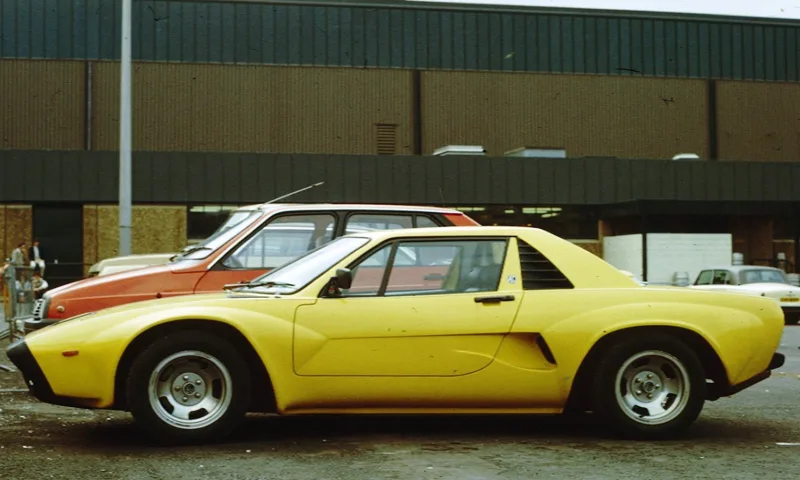
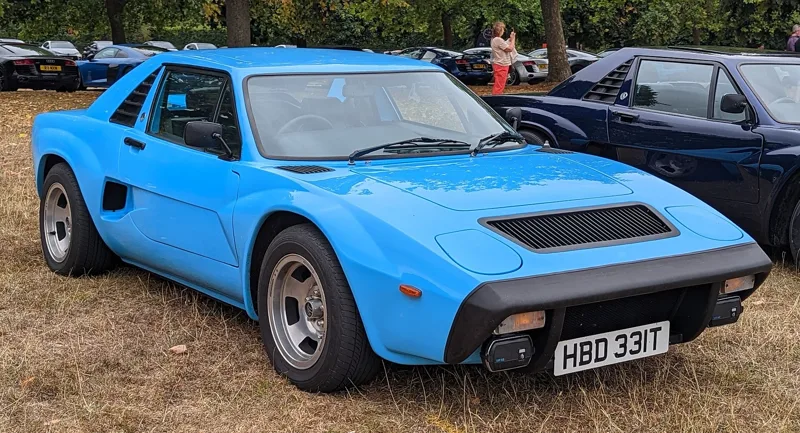
The Signature had a wedge-shaped body with a high, slightly rising shoulder line, flared wheel arches and large square air intakes just behind the doors to feed the mid-mounted engine. The nose was smooth, with no intakes or outlets at all. Its styling already looked behind the times when it was shown in 1988, because rounder, flowing shapes had returned to fashion.
The design came from a 1984/85 concept by Peter Stevens, who became chief designer at Lotus from 1985 to 1989 and later worked on the McLaren F1 with Gordon Murray. Aubrey Woods and his engineers then altered it. Extra small rectangular headlights sat under clear covers, the decoration came off the nose, and the side intakes were enlarged down into the high sills. The mirrors were moved out on solid mounts.
Long overhangs at the front and an unusually short wheelbase gave the Signature unharmonious proportions. Its rear window stands almost upright just behind the seats, in front of the engine, so the car only suggests a fastback. The angular form drew mostly harsh criticism, and it probably did much to keep buyers away.
What engine and gearbox did the Signature use?
The Signature used a 2.0-litre (122 cu in) turbocharged inline four-cylinder with twin overhead camshafts, mounted transversely behind the seats and driving the rear wheels. The engine came from the Fiat group, and Abarth's engine department developed its cylinder head and the turbocharger adaptation. It was very close to the unit fitted to the Lancia Delta HF 4WD.
The block itself was a design by former Ferrari engineer Aurelio Lampredi, made for Fiat in the 1960s and successful for decades. The same two-valve turbo engine was used briefly in the Lancia Thema 2.0 i.e. Turbo, in saloon and estate form, before a four-valve version with a catalytic converter replaced it. Fiat did not put this specification into its own production cars, using a simpler single-camshaft variant in the Fiat Croma 2.0 i.e. Turbo instead.
Whether the planned production car would have received the four-valve head and catalytic converter is not documented. The gearbox was a five-speed manual with a fully synchronised transverse layout and a single-plate dry clutch.
What were the key specifications?
| Item | Specification |
|---|---|
| Body | Carbon-fibre reinforced plastic, two-door two-seater |
| Engine | 2.0-litre (122 cu in) turbocharged inline four-cylinder |
| Layout | Mid-engined, rear-wheel drive |
| Gearbox | Five forward gears and reverse, fully synchronised manual |
| Final drive ratio | 2.944 |
| Fifth gear ratio | 0.93 |
| Brakes | Servo-assisted dual-circuit hydraulic, discs all round, no ABS; 283 mm front (internally ventilated), 272 mm rear |
| Steering | Power-assisted rack and pinion, 9.5 metre turning circle |
| Wheels and tyres | 6.5 J x 15 inch five-hole alloys, 205/50 VR 15 radial tyres |
| Track | 1,465 mm front, 1,500 mm rear |
| Boot | 280 litres |
| Fuel tank | 64 litres |
| Gross vehicle weight | 1,250 kg (2,756 lb) |
| Announced price (1988) | 18,950 pounds |
How was the chassis built?
The chassis was a monocoque modelled on the FIA Group C racing cars of the period, a concept that came from Aubrey Woods. It was regarded as extremely torsionally rigid and as offering a very high level of occupant protection.
Each corner had independent suspension with double wishbones, coil springs and shock absorbers, backed by anti-roll bars at the front and rear. The steering was power-assisted, and the braking system was servo-assisted with a brake-force regulator, although anti-lock brakes were not offered. The fuel tank held 64 litres.
Why did production never start?
The Signature was announced at 18,950 pounds in 1988, about 59,000 Deutsche Mark (DM) at the exchange rate of the time, with planned output of 150 vehicles a year in Coventry. Production was first set for spring 1989 and later moved to September 1989, but it never began.
The biggest problem was the long gap since 1985. Potential buyers who had waited lost interest, just as they had for the AC 3000ME at Thames Ditton and in Scotland. Evidently too few orders came in to secure further finance, so the project stalled.
Official sales brochures appeared in 1989, and the company hoped a detailed road test would give it a boost. The June 1989 report in Performance Car judged the car unfinished as tested, and the date announced for production came and went.
How did the press and public react?
Reactions to the 1988 show were divided. Some welcomed a new British mid-engined sports car and called the Signature exciting. Others objected to the slow progress since 1985, the missing image and the price that had been announced. Parts of the design also drew sharp criticism.
Ecosse used parts from the dismantled display car to build a single road-registered pre-production vehicle. That car served as a demonstrator for customers and as a test car for the press, and it is the only one of its kind to survive.
Does the one surviving car still exist?
Yes. The only pre-production vehicle from 1988/89 still exists and belongs to an AC enthusiast and collector. The owner also has the AC 3000ME Lightweight Twin Turbo one-off, an ordinary AC 3000ME, a left-hand-drive AC 3000ME Turbo, and the Diablo prototype of Peter Bohanna and Robin Stables, which was the AC 3000ME's starting point.
The 1988 display car was dismantled by Ecosse and no longer exists. Individual parts from it were, however, reused on the single pre-production car.
Were there other turbocharged AC 3000ME cars?
Yes. Rooster Turbos, the Silverstone firm run by the tuner Robin Rew, fitted turbochargers to 17 of the cars built at Thames Ditton with Ford Essex V6 engines. In 1981 one car, chassis number ME ... 161, was converted by two American businessmen working with Carroll Shelby into a one-off called the AC 3000ME Shelby Special.
The Shelby Special had a 2.2-litre four-cylinder turbo rated at 109 kW (148 PS; 146 hp), and its engine was taken from the Dodge Shelby Charger built by Chrysler in the USA.
Did the Ecosse Signature race?
No racing career is described for the Signature itself. The wider AC marque's greatest successes came with the Cobra in the 1960s, built together with Carroll Shelby and Ford.