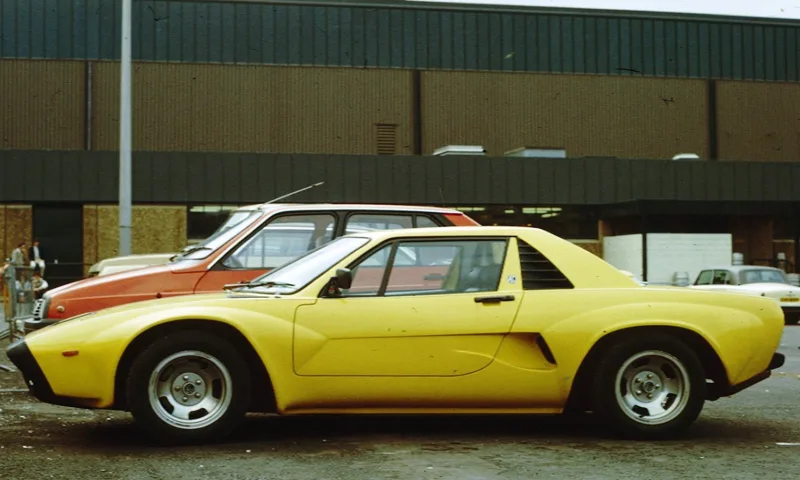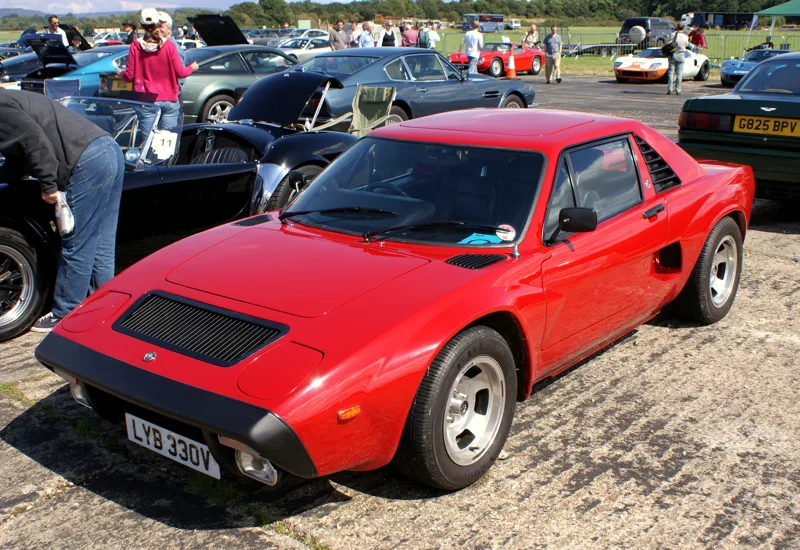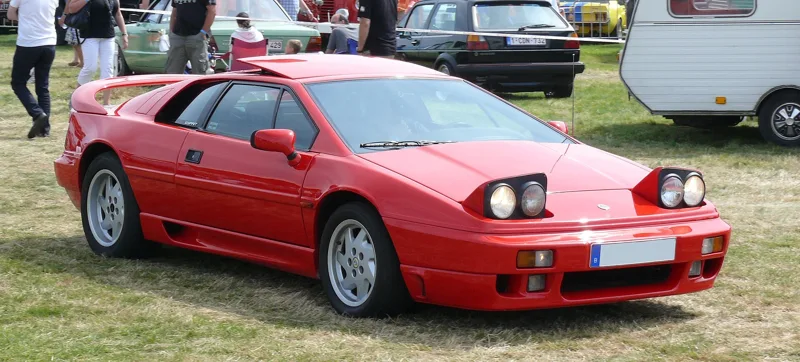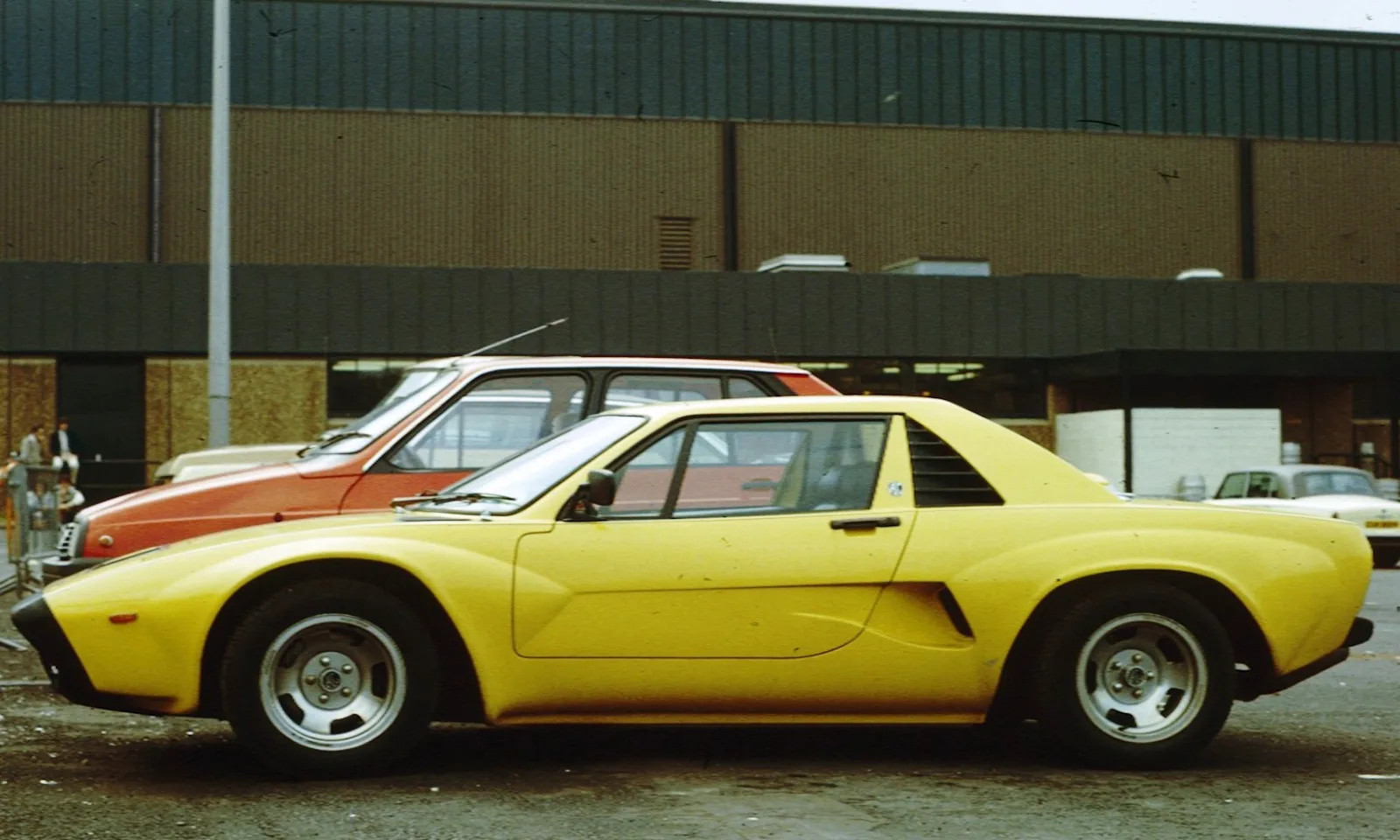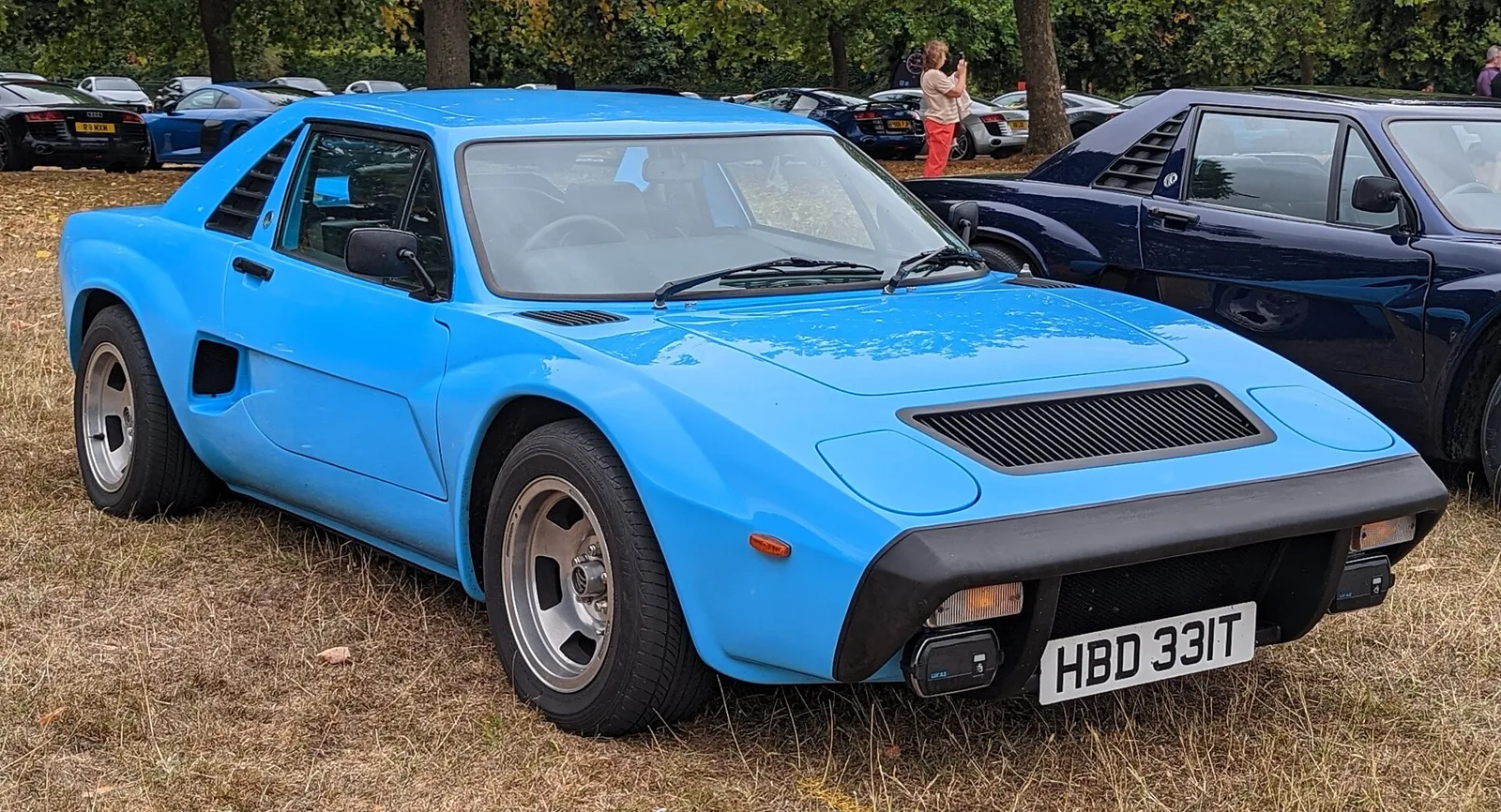
Both were two-door, mid-engined British coupes, but one arrived late and sold in small numbers while the other became a long-running Lotus.
The AC 3000ME and Lotus Esprit were rival British coupes built with a mid-engined layout. The Lotus went into production in 1976 and ran until 2004, while the AC was delivered from 1979 and built in small numbers until 1985.
The AC 3000ME and the Lotus Esprit were British coupes with their engines behind the seats, and they reached the market at different moments. The Esprit reached production in 1976 and stayed on sale until 2004, while the AC was not delivered until 1979 and was built in small numbers until 1985. Comparing the pair shows how a delayed launch can leave a car behind a rival that kept evolving.
Why were the AC 3000ME and Lotus Esprit rivals?
They were rivals because both were two-door, mid-engined coupes from British makers competing for the same buyers in the late 1970s. The AC's first customer cars were delivered in 1979, when they had to face newer designs such as the Esprit, which by then had been on sale for three years.
Both designs began in the early 1970s. The Esprit grew from a Lotus project started in 1970, and the AC began life as the Diablo prototype shown in 1972. Each company hoped to sell a fast, lightweight mid-engined car, yet the AC's long development meant the Lotus had already reached showrooms when the AC arrived.
Two British mid-engined coupes, one delayed into a short life and one that kept evolving for 28 years.
How did the AC 3000ME come about?
The AC 3000ME started as the Diablo, a two-seat mid-engined prototype built by Bohanna Stables and shown at the London Racing Car Show in 1972. AC took the design on, re-engineered its steel spaceframe and first showed the car at the 1973 London Motor Show.
Peter Bohanna and Robin Stables had won a 1968 design contract from Piers Weld-Forester, and their car was meant to use a 2.2-litre six from the BMC E-series family. That engine was delayed until 1972, so the Diablo prototype ran a 1.5-litre four from the same family, the unit used in the Austin Maxi. AC later needed a different engine, because British Leyland wanted its E-series units for its own cars, and it chose a Ford V6.
Production was slow. AC built several pre-production prototypes, reportedly eight, nine or eleven, and the styling was not finalised until 1974. A prototype also failed the 30 mph (48 km/h) crash section of the Type Approval tests introduced in 1976, which forced a chassis redesign. The car officially went on sale at the 1978 NEC Motor Show with a list price of GBP 11,300, and an Autocar road test in March 1980 recorded a cost of GBP 13,238.
How did the Lotus Esprit's design develop?
The Esprit's wedge body was styled by Giorgetto Giugiaro, launched at the 1975 Paris Motor Show and put into production in June 1976. Peter Stevens restyled it in 1987, and the X180 model arrived in 1988. The car stayed in production for 28 years through three main body styles.
The early car followed a steel backbone chassis under a fibreglass wedge. The Series 1 weighed less than 1,000 kg (2,205 lb), and Lotus built its appeal around that light weight. Series 2 cars gained an integrated front spoiler, ribbed taillights borrowed from the Rover SD1 and 14-inch Speedline alloy wheels.
The AC took a different route. Its perimeter frame used folded sheet steel with an integrated roll-over bar, and the body was glass-reinforced plastic. Weight was split 40/60 between front and rear, and each corner carried upper and lower A-arms with coil springs. Production cars had no anti-roll bars at all.
Peter Stevens' X180 used VARI moulding, a resin process Lotus patented to replace hand lay-up. Kevlar reinforced the roof and sides, and the changes raised torsional rigidity by 22%. The rectangular taillights were taken from a Toyota Corolla Levin of the mid-1980s, and the interior gave occupants more room. Julian Thomson's Series 4 body followed in 1994, and it became the longest-lived style of the Esprit, running until 2004.
What engines did each car use?
The AC used a 3.0-litre Ford Essex V6 producing 138 bhp (102.9 kW) and 192 lb ft (260.3 N m) of torque, mounted transversely behind the seats. The Esprit began with a 1,973 cc Lotus four-cylinder rated at 160 hp (119 kW; 162 PS) in European trim, and by 1996 a 3.5-litre twin-turbo Lotus V8 was giving 355 PS (350 hp; 261 kW).
AC did not adopt turbocharging as a factory option, even though it was considered from 1975. Instead, Robin Rews and his Rooster Turbos company fitted conversions that raised output to about 200 bhp (149.1 kW). On the semi-competition version boost was limited to 7.0 psi, and 19 cars received turbo upgrades. A later conversion tested in December 1983 used an IHI turbocharger and a waste-gate with a dump valve, and a twin-turbo car was estimated at 300 bhp (223.7 kW).
The Esprit went turbo at the factory first. The Essex Turbo Esprit of 1980 used a dry-sump engine making 213 PS (157 kW; 210 hp), and later cars moved to fuel injection. The HCi added Bosch injection and a catalytic converter for the United States in 1986, and the 1989 Type 910S gained multi-point injection and an intercooler for 268 PS (197 kW; 264 hp).
The transmissions were different too. The AC used an aluminium case of its own design with Hewland gears, a Renold chain and a Ferrari-like gated shift. The Series 1 Esprit used a Citroen C35 five-speed transaxle, and the later X180 cars with a Renault unit needed outboard rear brakes.
How did the two cars perform?
On the available figures the Esprit was the more powerful car. Lotus claimed 0-97 km/h (0-60 mph) in 6.8 seconds for the Series 1, and the Essex Turbo Esprit reached 0-60 mph in 6.1 seconds with a top speed of 241 km/h (150 mph). No acceleration or top speed figure can be given for the AC.
The AC's handling drew criticism. The Autocar test of March 1980 expressed reservations about the car when pushed, and several other contemporary reviews raised similar misgivings. The turbo conversions were the route to more pace, with about 200 bhp on the Rews setup.
The Series 1 Esprit was praised for its handling and for the best steering of any Esprit, but it was seen as underpowered, particularly in the United States where emissions controls held the engine back. Road tests found about 8 seconds to 60 mph and a top speed near 214 km/h (133 mph), below Lotus's claim of 222 km/h (138 mph). Later V8 cars passed 280 km/h (174 mph).
Which car was more practical?
The AC came with electric windows, a sunshine roof panel, laminated Sundym glass, an adjustable steering column and a radio with a powered antenna. The Esprit's practical gains came over time, with more headroom and footwell room in the Series 3 and extra occupant space in the X180. The available figures do not compare boot space, seating or running costs.
The Series 2 Esprit widened its seats and moved the battery from beneath the right-hand rear window to the back of the car, which also allowed an access door in the engine cover. Many switches came from the Morris Marina. The Series 3 had no cigarette lighter as standard, with ashtrays tucked into the door sills instead.
The AC's interior is described in less detail than the Esprit's, so a fair comparison leans on the listed equipment rather than measured space. On equipment alone the AC looks well appointed for its day, and the Esprit's advantages lie in the way its interior was revised through successive series.
How did sales and reception compare?
The AC sold in small numbers. Thames Ditton built fewer than 80 cars before production stopped in 1984, AC (Scotland) added 30 more, and the company went into receivership in June 1985. The Esprit ran for 28 years, and the Essex Turbo run totalled 45 cars alone.
The AC's ambition was higher than its output. The company hoped to build 10 to 20 cars a week at launch, and the AC (Scotland) era set a goal of 40 cars per week at Hillington, Glasgow. Derek Hurlock's poor health and a difficult world economy held volumes down, and sales never reached the level the company had hoped for.
Lotus production records are notoriously vague, but the Commemorative Edition in John Player and Sons livery, made to mark the 1978 Formula One title, is estimated at about 149 cars. The Series 2.2 was rare too, with 88 built during a production span of thirteen months.
What did each car do better?
The AC's recorded strengths were its equipment list and the AC Ghia prototype, which drew favourable reviews at the 1981 Geneva Motor Show. The Esprit did better on power, engine development, handling reputation and the length of its production run.
The Ghia was shaped by Ghia's Turin studio on the Ford-powered 3000ME, and Ford considered it for a Group B rally programme built around the 1982 rules. By the time it appeared at Geneva, Ford's rally effort had moved to a turbocharged rear-wheel drive Escort, so the car was no longer considered for that role. Ford also judged that AC's capacity was too small for its North American sportscar plan.
The Esprit's later figures show what sustained development could do: a 355 PS V8 by 1996, a top speed above 280 km/h (174 mph) and a body run from 1994 to 2004. The AC's programme ended with the 1985 receivership, and the Ecosse revival that followed never reached production.
Which buyer suits each car?
The AC suits a buyer who wants a rare early-1980s British coupe and does not mind a short production run with a limited set of engines. The Esprit suits a buyer who wants a longer-running Lotus with a wide choice of engines, from the Series 1 four-cylinder to the twin-turbo V8.
A buyer who values variety has more options with the Esprit, including the Essex Turbo, the fuel-injected HCi for American emissions rules, the X180 restyle and the Series 4 body. A buyer drawn by scarcity has the AC, built in fewer than 80 units at Thames Ditton and 30 more at AC (Scotland).
Side-by-side specifications
| Specification | AC 3000ME | Lotus Esprit (Series 1 unless stated) |
|---|---|---|
| Launch | Shown at the 1973 London Motor Show; on sale from the 1978 NEC Motor Show | Launched at the 1975 Paris Motor Show; production from June 1976 |
| Production | 1979 to 1984 at Thames Ditton; AC (Scotland) 1984 to 1985 | 1976 to 2004 at Hethel |
| Layout | Two-door, mid-engined coupe | Mid-engined, rear-wheel drive |
| Body | Glass-reinforced plastic on a perimeter steel frame | Fibreglass wedge on a steel backbone chassis |
| Engine | 3.0-litre Ford Essex V6 | 1,973 cc Lotus 907 four-cylinder |
| Power | 138 bhp (102.9 kW) | 160 hp (119 kW; 162 PS) in Europe; 140 hp (104 kW; 142 PS) in the US |
| Torque | 192 lb ft (260.3 N m) | Not given |
| Transmission | 5-speed manual transaxle | 5-speed manual transaxle (Citroen C35) |
| Weight | Not given | Less than 1,000 kg (2,205 lb) |
| Price | GBP 11,300 list at the 1978 show; GBP 13,238 in a 1980 road test | Not given |
| 0-97 km/h | Not given | 6.8 seconds claimed; about 8 seconds to 60 mph in road tests |
| Top speed | Not given | 222 km/h (138 mph) claimed; about 214 km/h (133 mph) in road tests |
| Turbo output | About 200 bhp (149.1 kW) by Rews and Rooster Turbos conversion | 213 PS (157 kW; 210 hp) in the 1980 Essex Turbo Esprit |
| Cars built | Fewer than 80 at Thames Ditton plus 30 by AC (Scotland) | 45 Essex Turbo cars; 88 Series 2.2 cars |