Porsche sold its Bugatti Rimac stake in April 2026, leaving Lamborghini and Bentley as the Volkswagen Group names under Audi.
Bugatti is owned by Bugatti Rimac, led by Rimac Group on 55 per cent, after Porsche sold its stake to HOF Capital in April 2026. Lamborghini and Bentley remain Volkswagen Group brands: Lamborghini has been under Audi since 1998 and Bentley since 2022.
In April 2026 Porsche sold every share it held in Bugatti Rimac, the company behind Bugatti, to a New York venture capital firm called HOF Capital. Bugatti began the story as a Volkswagen brand; Lamborghini and Bentley are still inside the group.
Who owns Bugatti now?
Bugatti belongs to Bugatti Rimac, a joint venture based at Sveta Nedelja in Croatia. Rimac Group held 55 per cent and Porsche 45 per cent until April 2026, when Porsche sold its whole stake to HOF Capital. Rimac Group is owned by Mate Rimac, Hyundai Motor Group and other minority shareholders.
The path there began with a decision by Porsche. It handed control of Bugatti to Mate Rimac and received a bigger share of Rimac Group in return. That group includes Rimac Technology, the arm that develops batteries and powertrains. The German maker also let go of every share in Rimac Group itself.
Bugatti Rimac is a venture rather than a merger of identities. Rimac Automobili and Bugatti Automobiles stay apart as brands and as manufacturers, with production facilities in Zagreb in Croatia and Molsheim in France, among other places. The global headquarters sits in the former Rimac Automobili headquarters near Zagreb. Of the 435 people who work for the venture, 300 are in Sveta Nedelja and 135 are in Molsheim.
Lamborghini changed hands again and again, and Bentley's own founder did not know who had bought his company until the deal was done.
How did a Croatian start-up end up running Bugatti?
Mate Rimac started in a garage. In 2007 he converted a BMW 3 Series of the E30 generation to electric power as a hobby, and the press and investors noticed. Early money came from angel investors and from selling patents he had developed. Rimac Automobili was founded in 2009 in rented premises at Sveta Nedelja, near Zagreb, when he was 19 and already working on an E30 M3 as his first test mule.
That car became the Rimac e-M3. It produced 442 kW (601 PS; 593 hp) and 900 N m of torque, reached 100 km/h from rest in 3.3 seconds and topped out at 280 km/h (174 mph). In 2011 it took the crown as the quickest-accelerating electric vehicle in its class, and records were set on 17 April of that year. Five rounds of development left so little of the original BMW that Rimac decided to build a new car from scratch.
The first of those new cars, the Concept One, was shown at the 2011 Frankfurt Motor Show and reached production form in 2016. It had 960 kW (1,305 PS; 1,287 hp), a 92 kWh battery, a claimed range of 600 km and a top speed of 355 km/h (221 mph). Rimac first spoke of 88 units, then cut the run to 8, and all were sold. The Nevera followed, unveiled at Geneva in March 2018 under the name Concept Two. It has four motors producing 1,427 kW (1,940 PS; 1,914 hp), weighs 2,150 kg (4,740 lb) and, the company claims, reaches 97 km/h (60 mph) in 1.85 seconds on the way to 415 km/h (258 mph). Production was to be limited to 150 units.
How did Porsche become involved with Rimac?
A series of investments came first. In 2018 Porsche Engineering Group, a Volkswagen Group subsidiary, bought a 10 per cent stake in Rimac as part of its move into electrification. In 2019 Hyundai Motor Company and Kia together put in 80 million euros and said they planned to collaborate on high-performance electric vehicles. A year later Rimac recommended the software and design firm Infinum to Porsche, which led to the joint venture Porsche Digital Croatia and an investment of 10 million euros.
In March 2021 Porsche lifted its holding in Rimac Automobili from 15 per cent to 24 per cent. Then came the big step. In July 2021 Porsche and Rimac announced a venture to bring Volkswagen's Bugatti brand together with Rimac Automobili, under the name Bugatti Rimac, with Rimac Group on 55 per cent and Porsche on the remaining 45 per cent. Porsche said that June it had taken part in a fresh 500 million euro fundraising round.
Ownership at a glance
| Brand | Base | Owner today | How it got there |
|---|---|---|---|
| Bugatti | Sveta Nedelja, Croatia, with Molsheim, France | Bugatti Rimac: Rimac Group 55 per cent; Porsche's 45 per cent stake sold to HOF Capital in April 2026 | A Volkswagen brand placed in a venture with Rimac, announced July 2021 |
| Lamborghini | Sant'Agata Bolognese, Italy | Volkswagen Group, through Audi | Bought from Mycom Setdco and V'Power Corporation in 1998 |
| Bentley | Crewe, England | Volkswagen Group, under Audi since 2022 | Came with Rolls-Royce when Vickers sold to Volkswagen in 1998 |
What does Bugatti Rimac build, and what else does Rimac do?
The first joint car was the Bugatti W16 Mistral, presented on 20 August 2022. The two brands keep their own models, so a Bugatti and a Rimac are still different cars from different factories. What they share is a group, an engineering base and a battery and powertrain business that sells outside the venture as well.
Rimac Technology supplies battery systems to other carmakers. It produces the battery for the Aston Martin Valkyrie and for the Koenigsegg Regera, and it has worked on the Jaguar E-type Zero and SEAT Cupra e-Racer concept cars. In 2018 it formed a technical partnership with Automobili Pininfarina, whose Battista is said to rest on the same architecture and powertrain as the Nevera. Rimac also built the drivetrain for the Tajima Rimac E-Runner Concept_One, which finished second at the 2015 Pikes Peak hill climb, ahead of every petrol-powered car.
Further afield, Rimac announced the Verne robotaxi concept in June 2024 after four years of testing. It has no driver controls, two reclining seats and a phone app that tailors the experience. Verne plans to start with 500 vehicles in Zagreb in 2026 and move into the UK in 2027. In September 2023 Rimac set up outposts in Tokyo and Katowice.
Who owns Lamborghini?
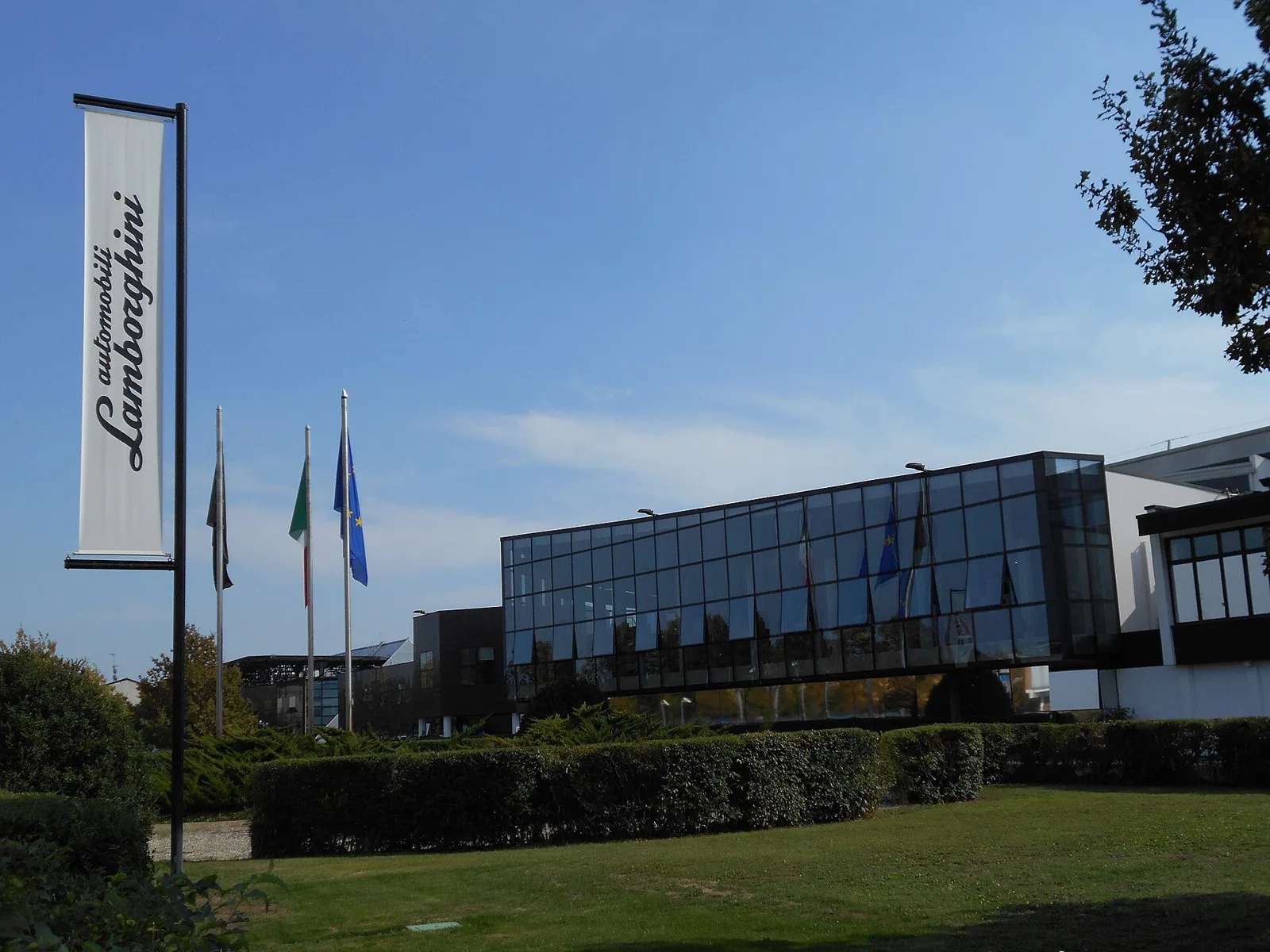
Lamborghini is owned by the Volkswagen Group through Audi, its premium division. Volkswagen bought it from Mycom Setdco and V'Power Corporation in 1998, and Lamborghini has sat under Audi's control ever since. Its headquarters remain in Sant'Agata Bolognese, where the company was founded in 1963.
Lamborghini changed hands again and again. Ferruccio Lamborghini, who already made tractors, boilers and air conditioners, founded the firm on 7 May 1963 to compete with Ferrari. His first series car was the 350 GT, and in 1966 came the Miura with its rear mid-engine layout. He sold a majority stake to Georges-Henri Rossetti in 1972, as the 1973 financial downturn and oil crisis battered sales, and his remaining interest went to Rene Leimer in 1974, when he retired from the business.
The company went bankrupt in 1978 and was put into receivership under the brothers Jean-Claude and Patrick Mimran in 1980. They bought it out by 1984, invested heavily and added the Jalpa sports car and the LM002 off-road vehicle. Chrysler Corporation bought Lamborghini in 1987, replaced the Countach with the Diablo and dropped the Jalpa and LM002. Chrysler then sold to MegaTech Ltd in 1994, and the Malaysian group Mycom Setdco and the Indonesian group V'Power acquired it the following year.
Under Audi, new model lines arrived and output rose, although sales dropped by nearly half during the Great Recession of the late 2000s. In 2021 the chief executive said that every Lamborghini would be a hybrid by 2024.
What does Lamborghini sell today?
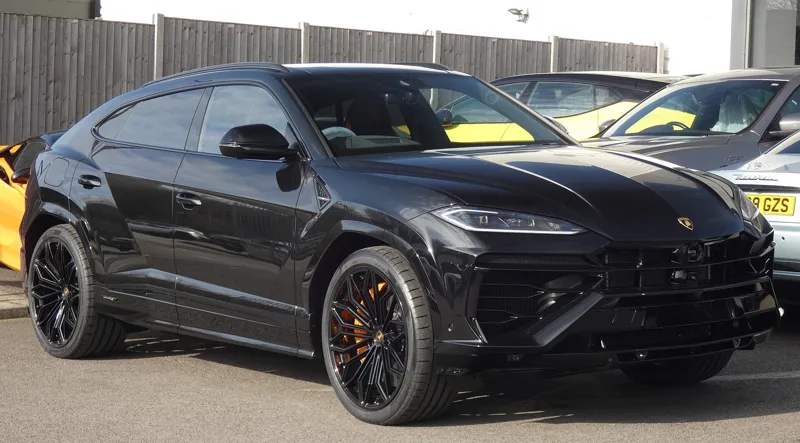
As of 2026 the range has three model lines. The Revuelto began production in mid-2023 and reached customers in late 2023 as a 2024 model. Its naturally aspirated 6.5L V12 and three electric motors give a combined 1,001 hp (1,015 PS), and it replaces the Aventador. The Temerario, a mid-engined plug-in hybrid with a twin-turbo V8, was unveiled on 16 August 2024 and replaces the Huracan. The Urus is the SUV, with a twin-turbo V8 at the front and all-wheel drive; Lamborghini added it intending to double its sales volume by 2019.
Not everything with the name belongs to the car company. Lamborghini Trattori, which Ferruccio founded in 1948, builds tractors from Pieve di Cento and has been a separate entity since 1973. The car maker also builds V12 marine engines of about 8,171 cc and 940 hp (700 kW) for powerboat racing.
Racing runs through the Squadra Corse division, which builds GT3 and Super Trofeo cars and special cars to customer order. More than 60 private teams take part in its GT3 events. The founder himself disliked factory racing as too expensive, and the company only entered Formula One as an engine supplier between 1989 and 1993. Its best result was third place for Aguri Suzuki, driving a Larrousse, at the 1990 Japanese Grand Prix.
Who owns Bentley?
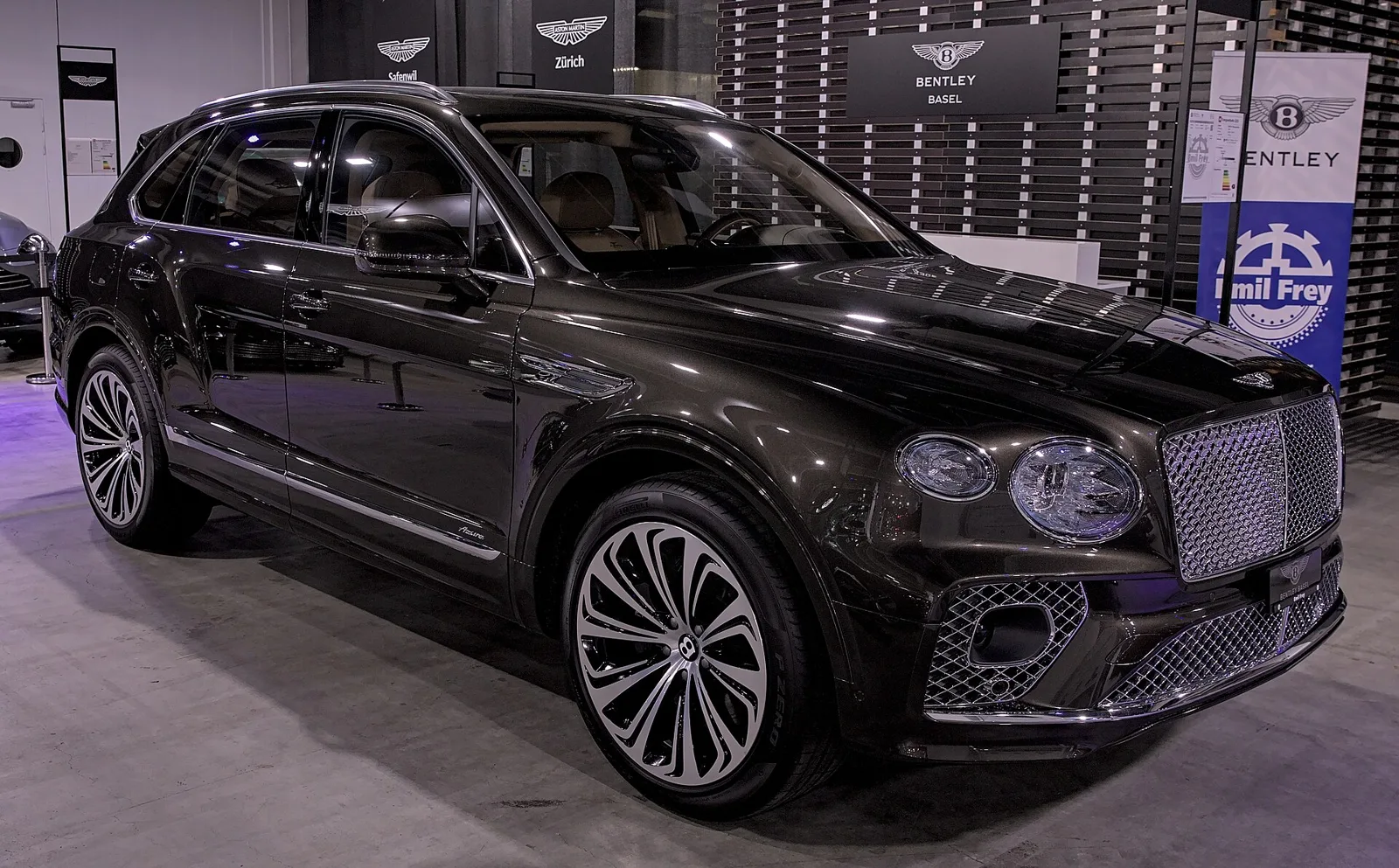
Volkswagen Group has owned Bentley since 1998, and since 2022 the brand has been folded into Audi. Volkswagen acquired it as part of the purchase of Rolls-Royce from Vickers, taking the Bentley name and logos but leaving the Rolls-Royce name behind. Most Bentleys are assembled in Crewe, England.
The company's history is a chain of rescues. W. O. Bentley founded Bentley Motors on 18 January 1919 in Cricklewood, north London, and the firm was always short of money. In May 1926 Woolf Barnato, an heir to a South African gold and diamond fortune, put in more than 100,000 pounds, paid off the creditors for 75,000 pounds and became chairman. Existing shares were marked down from one pound to one shilling.
Barnato and his friends, known as the Bentley Boys, won Le Mans in 1924, then four times running from 1927 to 1930. Bentley stopped racing after the 1930 event. The Wall Street crash and the Great Depression hit demand for expensive cars, and a receiver was appointed on 10 July 1931.
Napier wanted to buy the firm. Instead a sealed bid of 125,000 pounds from British Central Equitable Trust won, and the trust turned out to be a front for Rolls-Royce. Not even W. O. Bentley knew who the buyer was until the deal closed. Barnato received 42,000 pounds for his shares. Rolls-Royce is said to have wanted to stop the quiet and powerful 8-litre Bentley competing with its own Phantom II.
How did Bentley end up with Volkswagen?
Production restarted in Derby after a two-year gap, and the Cricklewood factory was sold in 1932. For decades Bentley was effectively a sporting sibling of Rolls-Royce: every Bentley from 1931 to 2004 sat on a Rolls-Royce chassis, inherited or shared, with reworked Rolls-Royce engines, which critics call badge engineering. When Rolls-Royce itself went into receivership in 1971 the British government nationalised it and split it into an aerospace company and a car company, Rolls-Royce Motors, which included Bentley. Rolls-Royce Motors was sold to the engineering group Vickers, and in 1998 Vickers sold it to Volkswagen AG.
Crewe, the home of the cars, began as a wartime shadow factory. Construction started in July 1938 on a 60-acre site that had been potato fields, and the first Rolls-Royce Merlin aero-engine came off the line five months later. At its peak in 1943 the plant employed 10,000 people, and 25,000 Merlin engines were built there. After the war Rolls-Royce moved its car operations to Crewe.
Where are Bentleys built, and who buys them?
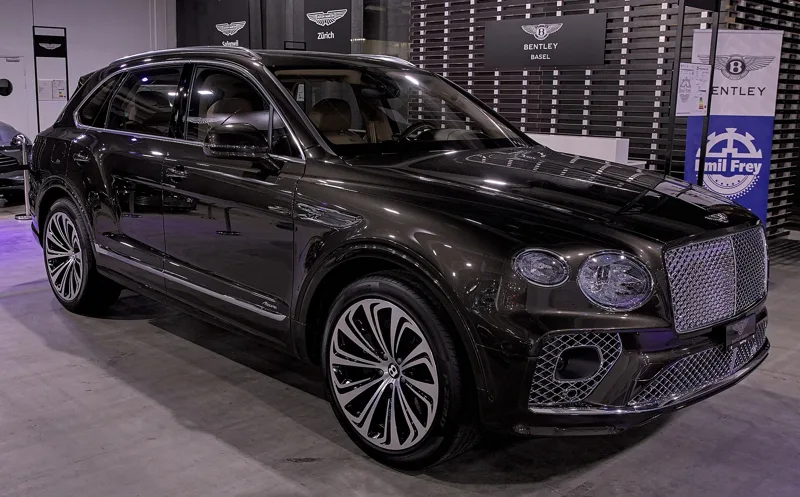
Today's range includes the Flying Spur, the Continental GT and the Bentayga, sold worldwide, with China the largest market as of November 2012. Most are assembled at Crewe, and a small number at Volkswagen's Dresden factory in Germany. The bodies for the Continental are made in Zwickau and those for the Bentayga at the Volkswagen plant in Bratislava.