A cousin's loan, an e-book company sale, a fifth-employee badge and a BMW whose engine blew up: how four engineers built companies that now sit at the centre of electric cars.
Wang Chuanfu founded BYD in 1995, Martin Eberhard and Marc Tarpenning co-founded Tesla in 2003, J. B. Straubel joined Tesla in 2004 and founded Redwood Materials in 2017, and Mate Rimac founded Rimac Automobili in 2009. Each began with little money or experience in carmaking.
Mate Rimac's first investors offered to fund his electric supercar, and they asked for one thing in return: move the company to the Middle East. He refused, lost his only backers, and went looking for engineering work to keep the lights on. Years later he called it the best thing he had ever done. That choice is the reason a Croatian company now sits at the heart of Bugatti Rimac.
Four men share this story: Rimac, Wang Chuanfu of BYD, Martin Eberhard of Tesla and J. B. Straubel, Tesla's fifth employee who went on to found Redwood Materials. Each started with an unfashionable idea, and each had to survive a stretch when the money ran thin.
Mate Rimac and the Concept_One
Rimac was born on 12 February 1988 in Livno, in what was then Yugoslavia. His family moved to Frankfurt in 1991 to escape the Yugoslav Wars, then settled in Samobor, Croatia, in 2000. He found the move hard, and was bullied for his Bosnian accent. He spent his time on projects in his parents' garage, and at school a teacher named Ivan Vlainic pushed him into an electronics competition. He won first prize, then national contests, then international ones.
By 17 he had applied for two international patents. One invention was the iGlove, a glove that stood in for the keyboard and mouse, and another was the Active Mirror System, a rear-view mirror that covered a vehicle's blind spot and won an award at the IENA trade fair in Nuremberg in 2006.
The car came next. In 2006, aged 18, he bought a 1984 BMW E30 323i because it looked like the cheapest way into racing. When the petrol engine blew up during a race, he decided to make the car electric, inspired by Nikola Tesla. Rivals mocked him for bringing a washing machine to the track. Over seven iterations he replaced every key component with parts of his own design, and the car began to win races and collect FIA and Guinness world records. The attention gave him the idea of building a company. It started life as VST Conversions, the name taken from the velocity formula v=s/t, and offered to convert conventional cars to electric power. The business that became Rimac Automobili was founded in September 2009, when he was 21.
For two years it had no employees. In 2010 he met Adriano Mudri, then a designer at General Motors, and the two began sketching an electric supercar on nights and weekends, Rimac handling the technology and Mudri the design. A brochure of renderings reached a Middle Eastern royal family, who wanted to buy two cars. Rimac had no real company to build them, and the family offered to invest instead. Then came the condition about moving the business, and the refusal.
Survival work followed. Rimac took on jobs for other manufacturers, developing batteries, electric powertrains and even complete vehicles, while the Concept_One crawled forward. A professor at the University for Mechanical Engineering in Zagreb had told him that a car could not be built in Croatia and advised him to quit. The Concept_One was unveiled at the 2011 Frankfurt Motor Show, when Rimac was 23. Mudri has worked with him ever since and is the company's Director of Design.
Investors eventually came. Porsche, Hyundai and Kia put money in, and Camel Group is also named among the major backers. The company introduced the Nevera in 2018 under the name C_Two, finished development and testing in 2020, and planned customer deliveries for 2021. Headcount rose from none before 2011 to more than 1,000 in 2020. Its client list includes Porsche, Hyundai, Kia and Renault, with Jaguar, Aston Martin, SEAT, Koenigsegg and Automobili Pininfarina also named. On 2 November 2021 Rimac was named CEO of Bugatti Rimac, a joint venture between the Rimac Group, Bugatti and Porsche AG.
He also founded Greyp Bikes in 2013, which Porsche AG took over completely in February 2023 and which is now Porsche eBike Performance GmbH. Honours include the Order of Danica Hrvatska in 2014, a place on the Forbes 30 Under 30 list and EY's Croatian Entrepreneur of the Year award in 2017, and election to the US National Academy of Engineering in 2025. According to Nedeljnik, his net worth stood at 1.74 billion euros in December 2025, making him the second-richest individual in Croatia.
Rimac refused to move his company abroad, lost his only investors, and later called it the best thing he had ever done.
Wang Chuanfu and the founding of BYD
Wang Chuanfu came from the opposite end of the economic scale. Born on 8 April 1966 in Wuwei County, Anhui, he was one of eight children in a poor farming family, and after both his parents died his elder brother and sister brought him up. He studied metallurgical physical chemistry at Central South Industrial University, graduating in 1987, and took a master's degree in 1990 at the Beijing Non-Ferrous Metal General Research Institute.
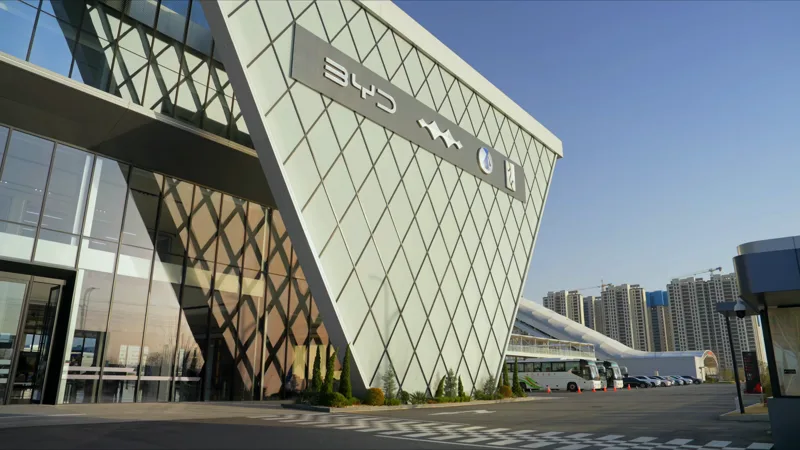
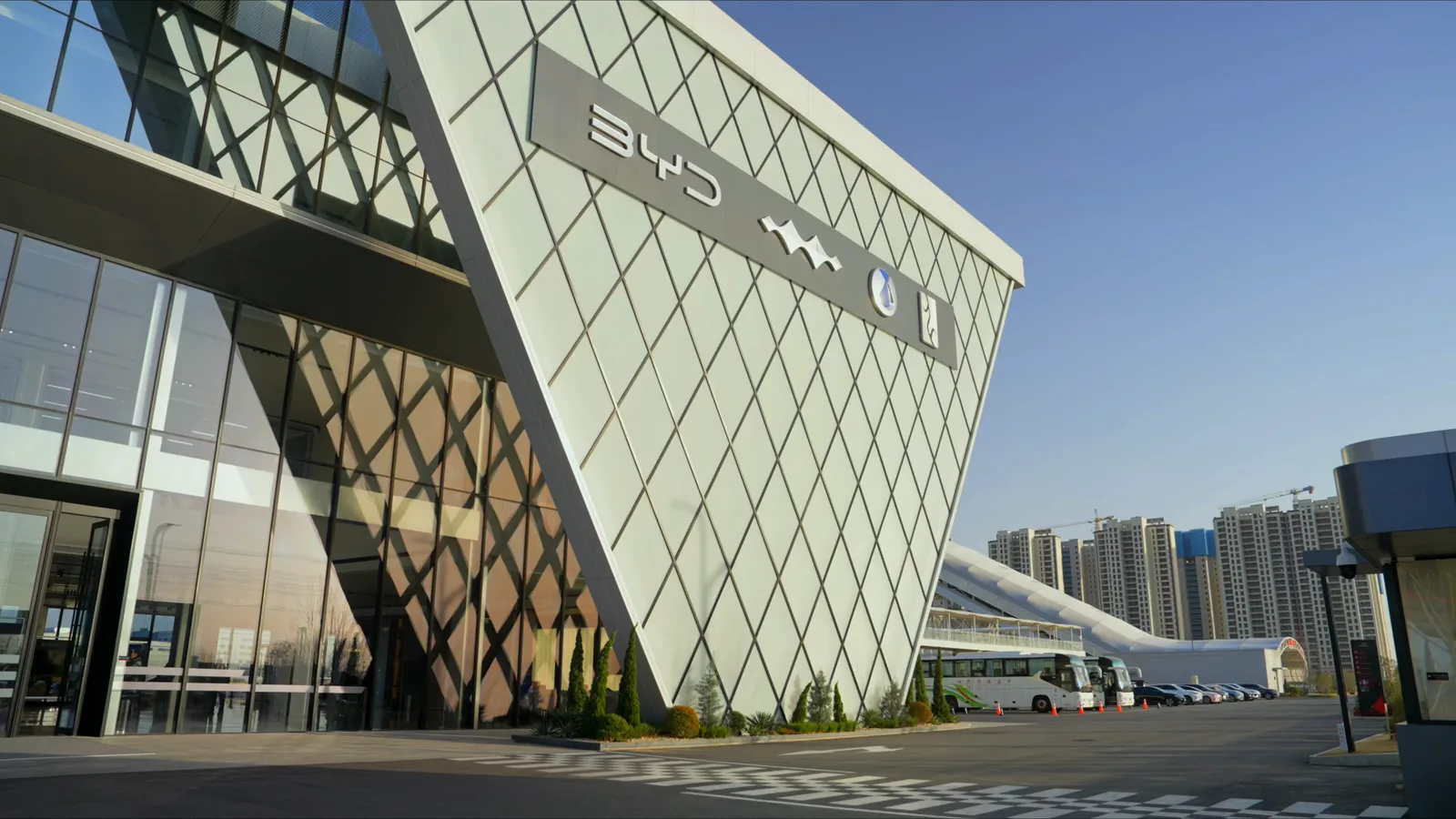
In 1993 the institute set up BAK Battery in Shenzhen and made him general manager. Two years later, spotting the rise of mobile phones and Japan's retreat from nickel-cadmium batteries, he left to start his own company. BYD was founded when Wang was 29, with 250,000 yuan lent by his cousin Lu Xiangyang. BYD entered the automotive industry in 2003, and it is now described as the world's largest maker of mobile phone batteries, while BYD Auto is described as the largest plug-in electric vehicle manufacturer.
The turning point for his profile came in September 2008, when Warren Buffett's Berkshire Hathaway, through MidAmerican Energy Holdings, invested about US$230 million for 9.89% of BYD at HK$8 a share. Buffett credited his partner Charlie Munger, who credited Li Lu for the introduction. Munger called Wang a genius and a workaholic. By late 2009 Wang's net worth had reached $5.1 billion, which made him China's richest man on the Hurun Report, largely because the company's value had risen five-fold after Berkshire bought 225 million new shares.
His ambitions were set out in 2008: BYD would lead the Chinese car market by 2015 and become the largest car maker in the world by 2025. Electric vehicles, he said, would be a stepping stone that let BYD skip the development of combustion engines and reach international markets.
It was not a straight line. Around 2017 and 2019 BYD was hit by cuts to government electric vehicle subsidies. Sales and market share slowed sharply, and net profit fell over three consecutive years. Wang recalled it as the company's darkest moment, when the goal was merely to survive. By November 2021 Forbes reported his wealth at $23.5 billion, ranking him 14th among China's richest people, after BYD's share price doubled in a year. He says he spends 60 to 70 per cent of his time on technology and product development.
Martin Eberhard and the first Tesla
Martin Eberhard, born in 1960 and raised in Kensington in the Berkeley Hills, earned a computer engineering degree at the University of Illinois Urbana-Champaign in 1982 and a master's in electrical engineering in 1984. His early career was in electronics. He designed the WY-30 terminal at Wyse Technology, co-founded Network Computing Devices in 1987, and in 1996 founded NuvoMedia with Marc Tarpenning to make the Rocket eBook. Gemstar bought NuvoMedia in 2000.
The e-book work gave him experience of sourcing lithium-ion cells, and a love of sports cars, worry about oil imports and concern over global warming pointed him toward electric cars. He tried to buy the AC Propulsion tzero, an electric sports car prototype, and helped fund its conversion to lithium-ion batteries. When AC Propulsion's founder, Alan Cocconi, would not turn it into a production car, Eberhard and Tarpenning started Tesla Motors in Menlo Park in July 2003, with Eberhard as the first CEO.
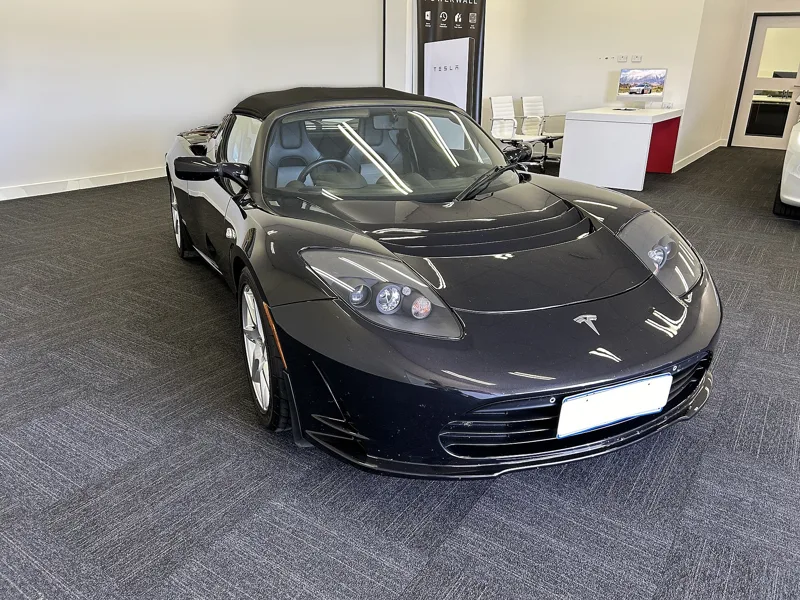
Their market idea was grounded in a sight on Palo Alto driveways: a Toyota Prius parked beside a Porsche, a BMW or a Lexus. Affluent buyers wanted to show environmental virtue but still wanted the driving experience of a premium car, so a performance-minded electric car would fit them. Eberhard's principles were that an electric car should not be a compromise, that battery technology is the key, and that electric drive can seriously outperform combustion engines. The first Tesla Roadster, from 2008, had an EPA range of 244 miles (393 km).
His exit was painful. On 30 November 2007 Tesla announced that he would move to its advisory board. Fortune reported in December 2007 that the chairman, Elon Musk, had asked him to go, and Musk said it was not over ideological differences but because he saw no role for Eberhard. In June 2009 Eberhard sued Musk for libel, slander and breach of contract, then dropped the case in August. Tesla confirmed a settlement in September 2009 without giving details. In October 2019 he told CNBC that he is still a shareholder.
His later ventures stayed in electric drivetrains and batteries. He founded inEVit in September 2016, which SF Motors, now Seres, acquired in October 2017, and he served as its chief innovation officer until July 2018. He founded Tiveni in 2019, and American Battery Solutions acquired its intellectual property in September 2022. He joined the University of Illinois Engineering Hall of Fame in 2015 and was elected to the National Academy of Engineering in 2025.
J. B. Straubel, from Tesla to Redwood Materials
Jeffrey Brian Straubel was born on 20 December 1975 in Des Moines, Iowa, and holds degrees in energy systems engineering and energy engineering from Stanford University. He joined Tesla in 2004 as its fifth employee and is named as a co-founder. As the result of a court settlement, he is legally considered one, even though Eberhard and Tarpenning started the company in July 2003, before he arrived. He was Tesla's inaugural chief technical officer until July 2019, when he moved to an advisory role after 15 years.
At Tesla he led battery cell design and the supply chain, and carried the first Gigafactory concept through the Model 3 ramp-up. Before that he had co-founded Volacom with Harold Rosen, working with Burt Rutan on a high-altitude aircraft with a hydrogen-powered electric plant, and co-invented a hybrid propulsion concept later licensed to Boeing. His passion for electric cars predates all of it: in 2000 he turned a Porsche 944 electric and set a world electric-vehicle racing record in the 240 V SC/B class. In July 2006 he took Governor Arnold Schwarzenegger for a drive in the Roadster at its unveiling in Santa Monica, a moment that was photographed, and in 2008 MIT's Technology Review named him a TR35 innovator.
In 2017 he founded Redwood Materials in Nevada to recycle lithium-ion batteries, recovering lithium, cobalt and nickel from used packs and manufacturing scrap so they can go into new batteries. It worked in stealth mode until 2020. In 2019 Panasonic began sending scrap from its side of the Nevada Gigafactory to Redwood, and in 2020 the first fundraising round brought in $40 million from Capricorn Investment Group and Breakthrough Energy Ventures. Amazon's Climate Pledge Fund, part of a $2 billion programme, also invested.
By July 2021 Redwood had more than 130 employees and had raised $775 million in a Series C round led by T. Rowe Price. Straubel returned to Tesla's board as an independent director in May 2023, four years after leaving as CTO.
The four founders compared
| Founder | Born | Company | Founded | Starting point |
|---|---|---|---|---|
| Wang Chuanfu | 1966 | BYD | 1995 | Loan of 250,000 yuan from a cousin; cars from 2003 |
| Martin Eberhard | 1960 | Tesla Motors, with Marc Tarpenning | July 2003 | Earlier e-book business and an AC Propulsion prototype |
| J. B. Straubel | 1975 | Tesla (fifth employee, 2004); Redwood Materials | Redwood in 2017 | Electric Porsche 944 and aircraft propulsion work |
| Mate Rimac | 1988 | Rimac Automobili | September 2009 | Electric conversion of a 1984 BMW E30 |
What targets did the four founders set?
Straubel's target is for recycled supply to cost about half as much as freshly mined material for lithium-ion cells within 10 years. Plans announced by Redwood in June 2021 call for its Carson City site in Nevada to grow to 550,000 square feet, with a second facility at the Tahoe-Reno Industrial Center and 500 more hires. Wang's stated goal from 2008 was for BYD to become the largest car manufacturer in the world by 2025. Rimac, for his part, has said he wants to bring automotive manufacturers to Croatia.