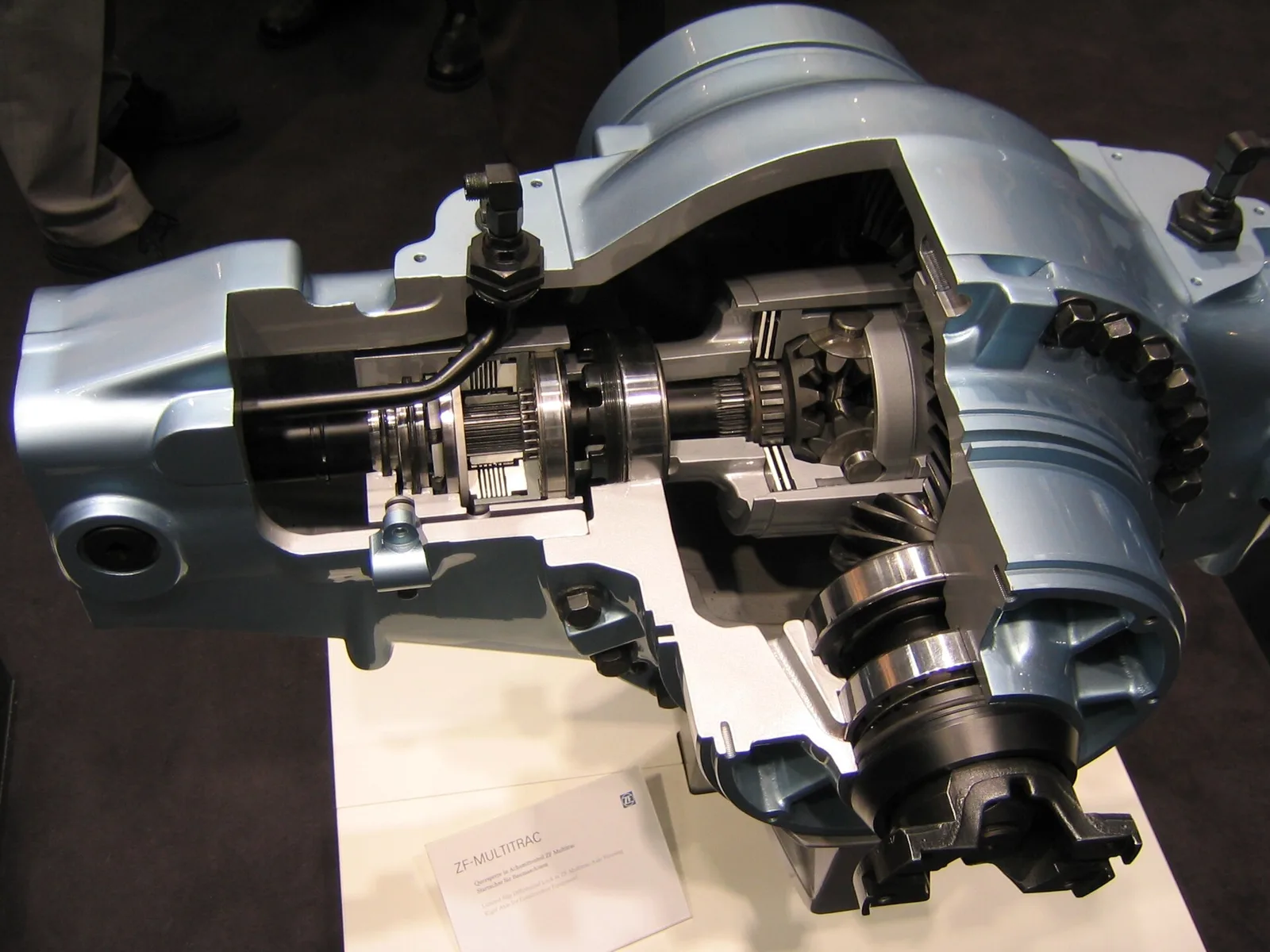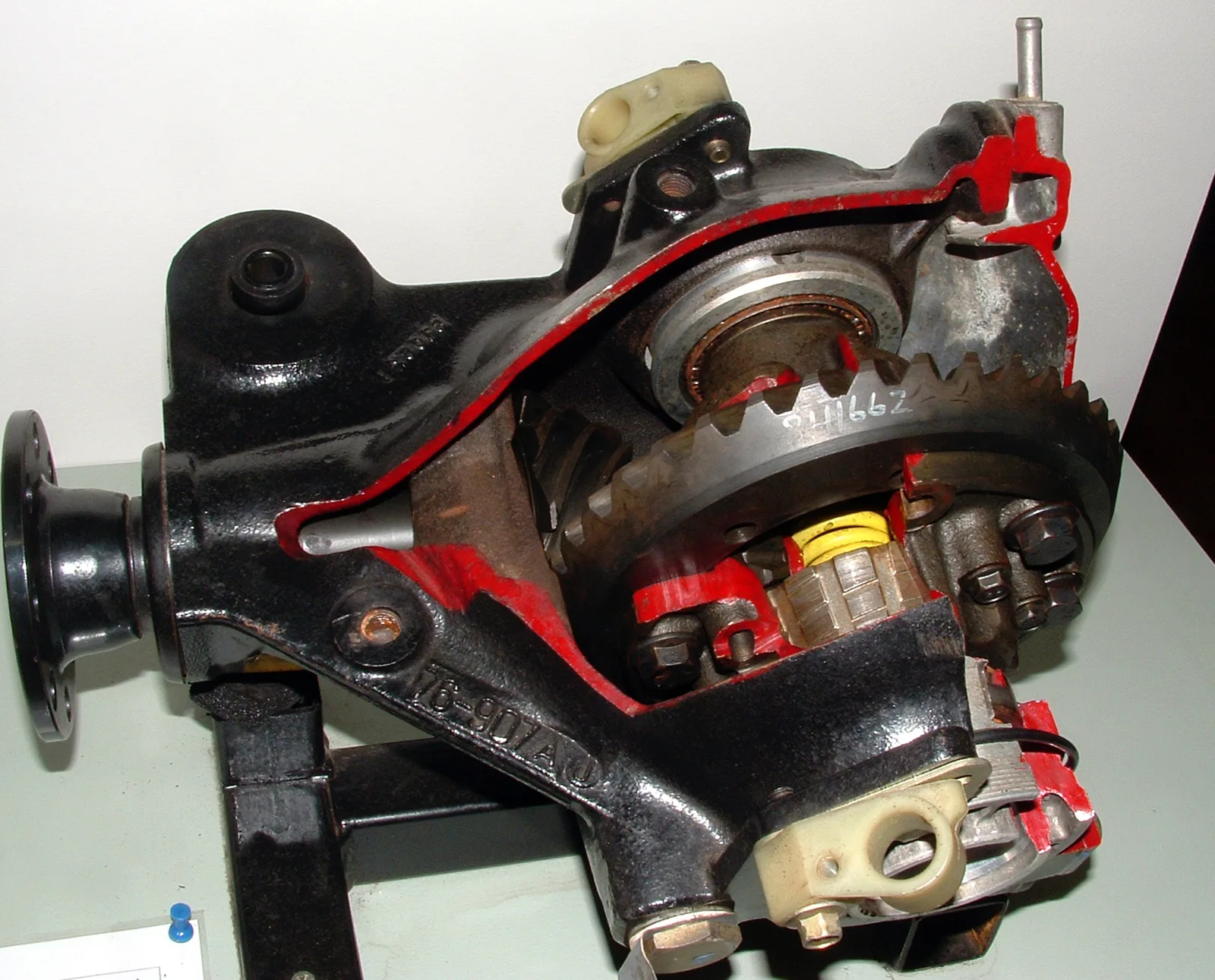
An open differential sends the power to the wheel that cannot use it. Clutch, geared and locking alternatives each fix that, and each belongs somewhere different.
A limited-slip differential is a differential that lets the driven wheels turn at different speeds but caps the difference between them. When one wheel loses grip, clutches or gears shift torque to the wheel that still has traction, where an open differential would let the slipping wheel take the power.
An ordinary car differential will happily send most of the engine's output to the one tyre that cannot use it. On ice, or on the inside of a hard corner, that wheel spins and the car goes nowhere. A limited-slip differential cures the problem.
What does a differential do in the first place?
A differential is a set of gears linking three shafts, arranged so that one shaft always turns at the average speed of the other two. In a car it lets the wheels on one axle turn at different speeds, which they must do in every corner, because the outer wheel travels farther than the inner one.
Not every vehicle bothers. Go-karts and trams run axles with no differential and rely on wheel slip to get round bends. Steam road vehicles of the late nineteenth century put a clutch on each driven wheel, and usually drove only one wheel at all.
The first proven differential turned up in a clock built by Joseph Williamson in 1720. It reached road transport in 1876, when James Starley of Coventry patented one for a quadricycle, and in 1885 Carl Benz fitted a very similar device inside the Patent-Motorwagen.
In a rear-wheel-drive car the common layout is a ring gear driven by a pinion from the transmission. That pair does two jobs. It turns the drive through a right angle, 90 degrees, between the propshaft and the half shafts, and it provides a reduction in gearing.
An open differential sends the power to the wheel that cannot use it; a limited-slip unit hands it back to the wheel that can.
What is a limited-slip differential?
A limited-slip differential, or LSD, still lets its two output shafts rotate at different speeds, but it limits how far apart they can drift. That limit enforces a minimum of traction. It sits between the open differential, which allows one wheel to stand still while the other takes all the power, and the locking differential, which ties both wheels together.
Many people call any such unit a "posi". The word comes from Positraction, a General Motors trademark first used on Chevrolets, and the popularity of those cars turned it into a generic name across the United States.
Why does an open differential send power to the slipping wheel?
An open differential always delivers equal torque to both wheels. Torque is the twisting force at the wheel, so if one tyre sits on a surface that lets it break free at a low figure, that figure caps the force available to the other tyre as well. The slipping wheel then spins freely.
Put numbers on it. Suppose the right tyre is on ice and begins to spin at 70 newton metres (50 lb ft). Because both sides always feel the same torque, the tyre with grip cannot receive more than 70 newton metres (50 lb ft) either, which is far too little to move the car. Meanwhile the spinning tyre soaks up all the real power.
Ice is not the only trigger. Grip can drop under one wheel because of cornering forces as well, which is why the problem follows powerful cars onto perfectly dry roads.
Muscle cars of the mid-1960s to the early 1970s showed it vividly. They were rear-wheel drive with a live axle at the back, and under heavy torque the axle tries to twist with the driveshaft while the car's structure holds it still. That unloads one rear tyre, hence the old terms "one-wheel peel" and "one tyre fire". Cars with a limited-slip unit simply got away from the line better than those without.
How does a limited-slip differential stop the inside wheel spinning?
Every LSD carries a mechanism that creates a resisting torque inside the differential, working against any speed difference between the two outputs. That resistance shifts torque away from the faster, slipping wheel and towards the slower wheel that still has grip. Designs are named after the mechanism, such as clutch, cone, gear or viscous.
Picture two people pushing a stuck car, one standing on dry tarmac and the other on ice. With an open differential the person on ice slides at the first shove and sets the limit for both. An LSD works like a short tether between the pair, so the one who slips cannot simply run away from the one who grips.
The arithmetic is tidy. The two outputs always add up to the input torque. The slower wheel gets half the input plus half of the torque difference the mechanism creates, and the faster wheel gets half the input minus the same amount. In a straight line, when one wheel starts to spin faster, torque is taken from it and handed to the wheel that is turning more slowly.
Cornering adds a twist. With neither wheel slipping, the inside wheel turns slower than the outside one, so it receives the larger share of torque, and that can push the car towards understeer. It is a trade a driver accepts for the traction gained.
How do clutch, helical and Torsen differentials differ?
They differ in how they create the resisting torque. Clutch and cone types press friction surfaces together. Geared designs, the Torsen among them, use worm and spur gears that jam against the housing. Viscous units resist according to speed difference, and a fourth group is controlled electronically.
Fixed value and torque-sensing units
In a fixed-value differential the permitted torque difference never changes, whatever the engine is doing and however fast the wheels are turning. These typically use spring-loaded clutch assemblies.
Torque-sensing units, which use helical gears, clutches or cones, behave differently. The harder the engine pushes, the harder the gears or clutches clamp together, and the more tightly the two wheels are coupled. Some add spring loading, so a small amount of coupling remains with the throttle closed or the clutch pedal down. That preload changes with wear and with how tightly the unit was set up.
Clutch and cone types
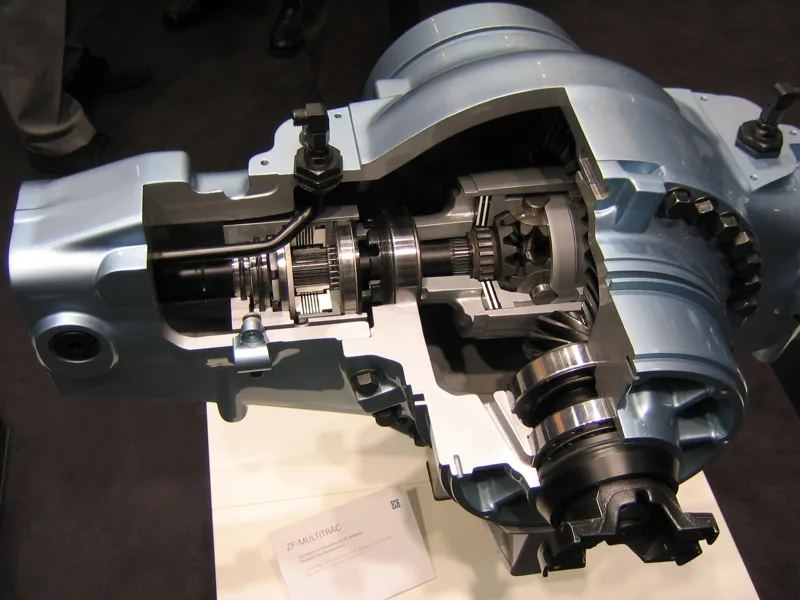
The clutch type holds a stack of thin discs, half of them tied to one of the drive shafts and half to the carrier that holds the spider gears. Stacks can sit on both shafts or on just one. A cone type swaps the discs for a pair of cones pressed together to the same effect.
One common way to squeeze the stack is a cam-ramp arrangement, as in the Salisbury or ramp style. The spider gears sit on a cross shaft resting in angled cutouts, and as engine torque tries to climb those ramps it forces pressure rings against the discs. Another method uses the natural separation force between gear teeth to load the clutch, as in the centre differential of the 2011 Audi Quattro RS 5.
Geared units and the Torsen
Geared limited-slip units use worm gears and spur gears instead of the bevel spider gears found in most differentials. Under torque the gears are pushed against the walls of the housing, and the friction resists any difference between the outputs. The sensing of torque bias is part of the design rather than an add-on, and the result does not bind up the way some limited-slip and locking types can.
The best-known example is the Torsen T-1, the original differential of Vernon Gleasman. The design was sold to the Gleason Works, which began marketing it in 1982. Mario Andretti and Paul Newman used it in racing with great success, and every later worm-gear LSD descends from it.
The T-1 is original equipment on the Audi Quattro, the Subaru Impreza WRX STI, the Toyota Mega Cruiser and the AM General HMMWV. It does have one quirk: the original model cannot be used with c-clip drive axles, which restricted the cars and pick-ups it fitted.
Speed-sensing and electronic units
A viscous differential is the classic speed-sensitive design. Its resisting torque comes from the difference in output speeds rather than from how hard the engine is pushing. At the electronic end of the scale sits torque vectoring, which varies the torque sent to each half shaft to augment stability or cornering.
What do 1-way, 1.5-way and 2-way mean?
The labels describe what the differential does when you lift off the throttle. A 2-way unit limits slip under power and under engine braking. A 1-way unit limits in one direction only and acts like an open differential on the overrun. A 1.5-way unit limits both ways, but by different amounts.
The ramp shape decides which you get. Symmetrical ramps make a 2-way unit, saw-toothed ramps with one vertical face make a 1-way unit, and sloped but unequal ramps make a 1.5-way unit. In practice the vertical face sits at 80-85 degrees, which avoids chipping.
Each has a purpose. Packard's early Twin Traction was a 2-way design, promoted partly because a wheel that lifts off a bump under load will not spin freely and then break traction when it lands. A 1.5-way unit suits racing cars, where a firm limiting action steadies the car when the driver lifts.
A front-wheel-drive car is a special case. The argument for a 1-way unit there is that it unlocks the moment the driver lifts, so the nose can tighten into the corner on a closed throttle instead of ploughing straight on.
How do the main types compare with an open differential?
| Type | What drives the limiting action | Character on the road |
|---|---|---|
| Open differential | Nothing; equal torque to each wheel | Smooth, but one wheel can stand still while the other takes all the power |
| Fixed-value LSD | Spring-loaded clutches | Same limit regardless of input torque or wheel-speed difference |
| Clutch or cone LSD | Input torque clamps friction surfaces | Grip rises with load; 1-way, 1.5-way or 2-way behaviour on the overrun |
| Geared LSD (Torsen) | Worm and spur gears pressing on the housing | Bias sensing is built in; does not bind up like some limited-slip and locking types |
| Viscous LSD | Difference in output speeds | Resistance follows the speed gap rather than engine torque |
| Locking differential | Both wheels forced to one speed | Each wheel pulls as hard as its own grip allows; tyre wear and understeer |
| Spool | Axles joined straight to the ring gear | No differentiation at all; tyres bark in turns; competition use |
| Electronic differential lock | Brake applied to the faster wheel | Open differential underneath; momentary correction |
What is the difference between an LSD and a locking differential?
A locking differential forces both wheels on an axle to turn at the same speed, as if on one shaft, regardless of grip under either. Each wheel then applies as much force as its own traction allows. An LSD is the compromise: smoother, and it sends extra torque to the wheel with more grip, but it cannot lock up completely.
Lockers earn their keep off-road. They are fitted to utility vehicles, trucks, tractors and military machines, and an operator can engage them by lever or cable, hydraulically, electrically, or automatically once torque and speed thresholds are met.
Automatic lockers rest in the locked position and release only when a corner demands it. The Detroit Locker from Eaton is the common example, and the price is tyre wear, a noticeable effect on how the car drives, and a jerk with a chirp from the tyres when the torque direction reverses mid-corner. A car on one can feel heavily understeering until traction is exceeded, then snap into power oversteer.
Selectable lockers let the driver choose, by compressed air, vacuum, cable or electronic solenoid. Ford fits an electronic rear locker to the F-series, Ranger and full-size Bronco, and Toyota fits a rear e-locker to the Tacoma, 4Runner and 2022 onwards Tundra in off-road trims. The cost is complexity, and a need for the driver to think ahead.
Then there are the cheap, blunt options. A spool joins the axles straight to the ring gear and suits only competition cars. A welded differential, with the internal gears fused, is common in drifting and off-roading, though welding compromises the metal and the unit can fail under stress. Locked axles also misbehave on ice: a vehicle left across a slippery slope has both wheels spin and slides down it, where an open differential would have let one wheel grip.
Do I need a limited-slip diff?
That depends on the car and how it is used. The clearest cases are powerful rear-wheel-drive cars, especially those with a live axle, and any car driven to drift, where a mechanical LSD is considered essential. Front-wheel-drive cars raise a different question about which type to choose.
The old muscle-car lesson still applies: power into a single driven wheel turns into smoke. A limited-slip unit keeps both wheels in powered rotation, and because the inside wheel in a corner can lose grip through cornering forces alone, the benefit is not confined to snow.
Buying one is a choice of character as much as hardware. A clutch unit gets firmer with throttle load and may carry a preload that wears. A geared unit such as the Torsen bites without that adjustment. A race-bred 1.5-way unit steadies the car on the overrun, while a 1-way unit leaves a front-driven car free to turn in as the driver lifts.
Plenty of modern cars lean on software instead. Volkswagen's electronic differential lock and Opel's TC+, first fitted to the Astra G in 2001, are not true locks. Sensors compare wheel speeds, and if one turns faster than the other by a set amount, say 100 rpm, the system briefly brakes it. That sends more drive to the other wheel while the differential underneath remains open. If all driven wheels lose traction, throttle control can step in as well. Systems like this appear on the latest Nissan Pathfinder, the Land Rover Defender and Freelander, and the McLaren P1 and 650S.
Where this goes next
One further route removes the need for the part altogether. Individual wheel drive gives each wheel its own engine, motor or gearbox, so no central component has to share torque between the wheels.
Where did the limited-slip differential come from?
The story starts with racing. In 1932 Ferdinand Porsche drew up the P-Wagen Grand Prix car, and its supercharged V16 could spin a rear wheel at speeds as high as 160 km/h (100 mph). By 1935 he had asked the engineering firm ZF for a limited-slip differential.
ZF's sliding pins and cams followed, and one version, the Type B-70, went into the military Kubelwagen and Schwimmwagen of the Second World War. Strictly it was not an LSD at all but a pair of freewheels that sent all the power to the slower-turning wheel.
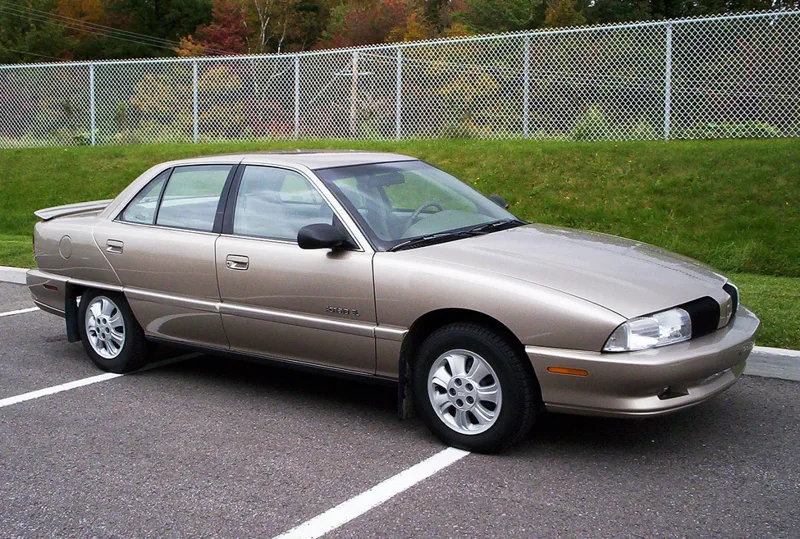
American makers took the idea to the showroom. Packard introduced its clutch-type Twin Traction in early 1956 and pitched it at severe winter weather. GM answered in 1957 with Positraction for Chevrolet, and a crowd of names followed: Safe-T-Track at Pontiac, Anti Spin at Oldsmobile, Traction-Lok at Ford, Directed Power at Lincoln. Chrysler bought Power-Lok units from Dana and Spin-Resistant units from Borg-Warner and sold both as Sure-Grip.