A racing-fuel headline number, a missing windscreen and four limited production runs.
The McLaren Senna and Elva, Pagani Zonda R and Bugatti Bolide are limited-run hypercars built around the circuit. The Senna and Elva are road cars; the Zonda R and Bolide are confined to the track, and the Bolide makes 1,177 kW (1,600 PS).
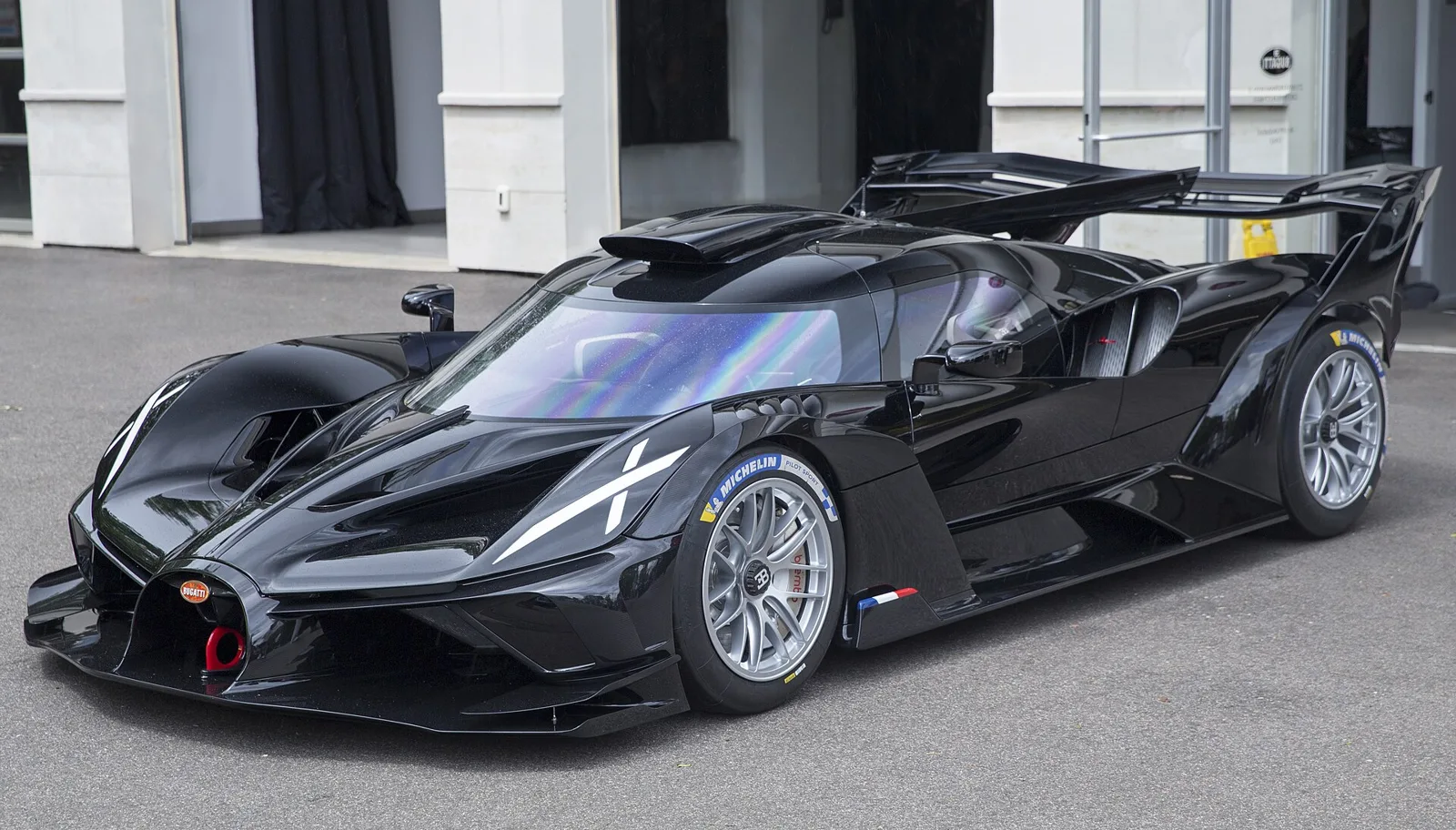
When Bugatti announced the Bolide, the headline figure was 1,361 kW (1,850 PS). That figure was reached on 110-octane racing fuel. The car customers eventually received makes 1,177 kW (1,600 PS) on 98 RON petrol, which is still more power than any of the other cars here can offer, and it is built for the circuit and nothing else.
That tension between a showpiece number and a usable one sits at the heart of the track-focused hypercar. The McLaren Senna, McLaren Elva, Pagani Zonda R and Bugatti Bolide are four attempts to take the hypercar away from the road, each in a different way, and the differences show what a buyer gives up in exchange for lap times.
What makes a hypercar track-focused?
A road hypercar has to start on a cold morning, pass regulations and carry luggage, as well as being fast. A track-focused one drops some of those duties. The Senna was designed to lap quickly, the Zonda R and Bolide are not road cars at all, and the Elva removes the roof and windscreen.
The four are not the same sort of car. The Senna is a road car tuned for the circuit, and a track-only version, the GTR, followed. The Elva is a road-legal open car. The Zonda R was never road-legal, and the Bolide is described as track-only. What links them is that each makes the circuit, rather than the commute, the thing the car is built around, and each was made in tiny numbers.
Track focus costs comfort, a roof or a number plate, and the four cars here give up different things for lap time.
What is the McLaren Senna?
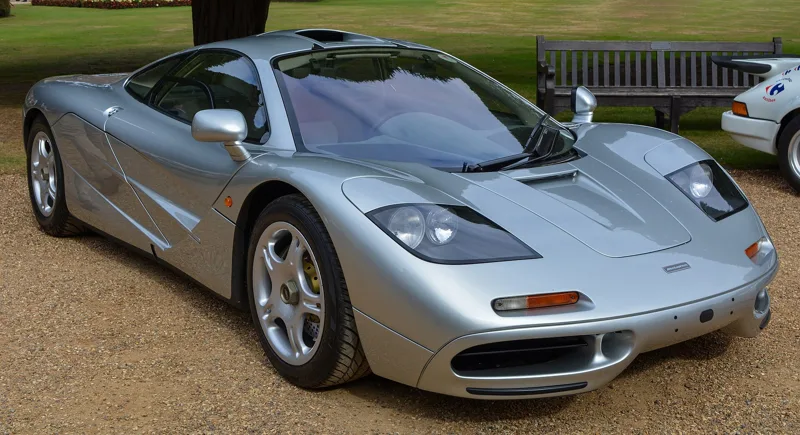
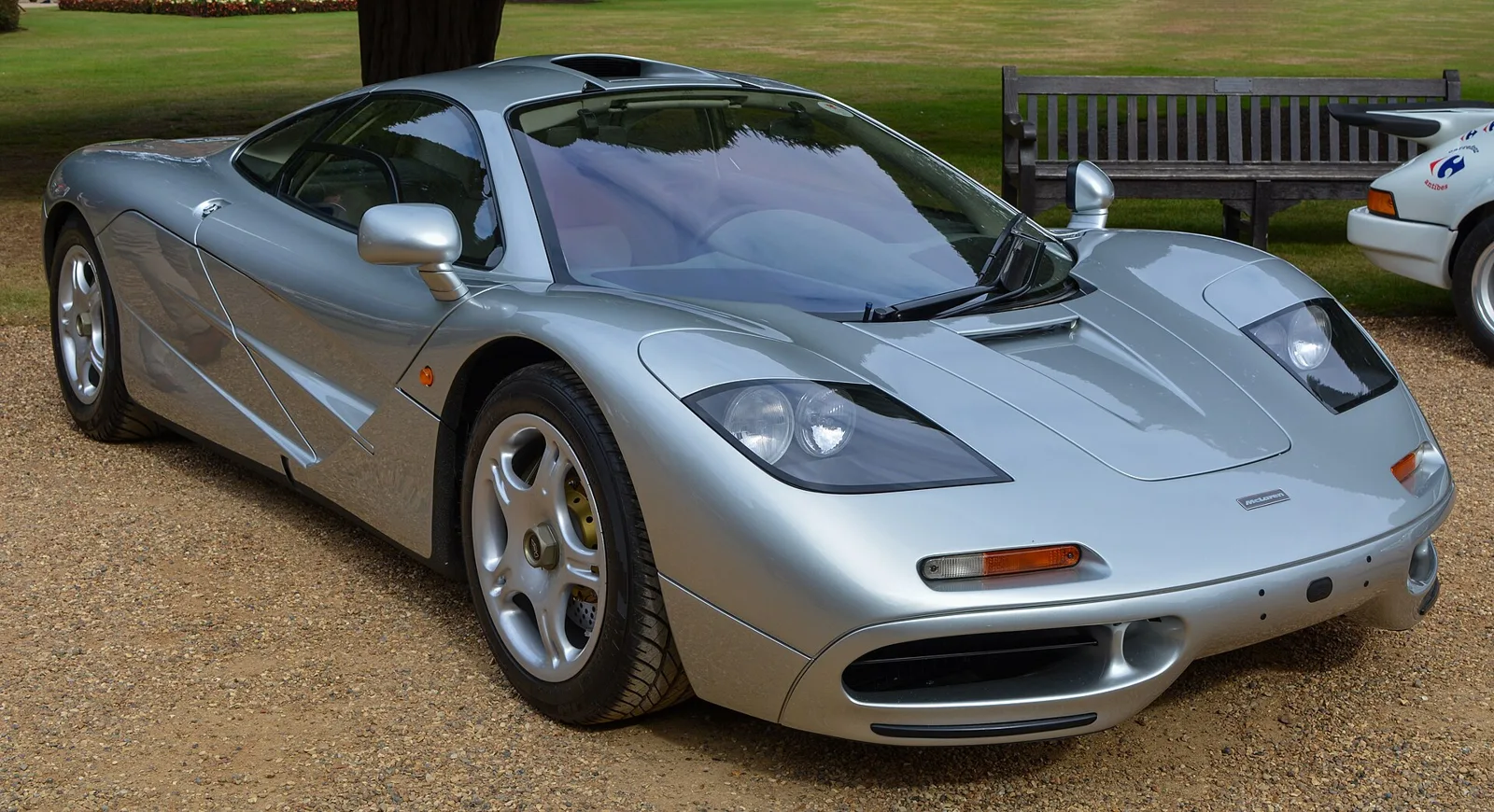
The Senna is a mid-engined sports car that McLaren Automotive built in a limited run of 500 hand-assembled cars. It is the third model in the Ultimate Series after the F1 and P1, and was unveiled online on 10 December 2017, with its official debut at the 2018 Geneva Motor Show.
The name honours Ayrton Senna, who won three Formula One world titles and 35 Grand Prix victories for McLaren between 1988 and 1993. McLaren, together with the Instituto Ayrton Senna, controls the family name and has made it exclusive to the car. The brief was simple: faster lap times. To get there McLaren built on a modified version of the 720S carbon monocoque, its central structure a new generation named MonoCage III, and a reworked version of that car's 3,994 cc twin-turbo V8, which sends 588 kW (799 PS) at 7,250 rpm and 800 N-m of torque to the rear wheels through a seven-speed dual-clutch gearbox.
Unlike the P1 there is no electric motor. Without it the Senna claims a dry weight of 1,198 kg, giving 668 hp per tonne. A large, adjustable double-element rear wing doubles as an airbrake, and there is a Formula One-style roof scoop, a double-element diffuser and a set of mini-canards. The brakes are a new generation of carbon ceramic with, according to the maker, three and a half times the thermal conductivity of the previous material, so they could be made smaller and lighter. The exhaust is mounted high in the engine bay and made of inconel and titanium.
Inside there is exposed carbon fibre, Alcantara, and a space behind the two seats big enough for two helmets and race suits. McLaren claimed 2.8 seconds to reach 100 km/h, 6.8 seconds to 200 km/h, 17.5 seconds to 300 km/h, a standing quarter mile in 9.9 seconds and a top speed of 335 km/h. The list price was 750,000 pounds, and every car sold; the last was auctioned for 1,916,793 pounds. Deliveries began in the third quarter of 2018.
What are the Senna GTR, Senna LM, GTR LM and Sabre?
They are the harder, rarer branches of the Senna. The GTR is the track-only version, limited to 75 cars. The Senna LM, GTR LM and Sabre came from McLaren Special Operations, in runs of 35, 5 and 15, with more power than the standard car.
The GTR concept appeared at the 2018 Geneva show as the preview of a Le Mans GTE entry. Costs resembling those of a Le Mans prototype programme, and the performance of the Formula One team, persuaded McLaren to cancel the racing plan and sell the car for non-competitive track use. The production GTR, shown two years later, has different bodywork, a different wing arrangement, a race dual-clutch gearbox, a revised suspension and racing slicks. Its 4.0-litre V8 is estimated at 607 kW (825 PS) at least, and it produces around 1,000 kg of downforce. The FIA named it among the models that match its vision for a successor to the Le Mans Prototype category.
The Senna LM wears an orange livery that honours the McLaren F1 LM and raises the standard car's output to the GTR's 825 PS. Of the 35 built, 5 went to the US market, and one was crashed in 2020 by the former Formula One driver Adrian Sutil and later repaired. The road-legal Senna GTR LM, shown online on 17 September 2020, adds carbon wheels and a redline raised from 8250 to 9000 rpm, and each of its five cars carries a livery recalling one of the F1 GTRs that McLaren ran at Le Mans in 1995. Power is 621 kW (845 PS). The Sabre, from December 2020, was claimed to be for the US only, with 15 built, 614 kW (835 PS) and a top speed of 351 km/h.
What is the McLaren Elva?
The McLaren Elva is an open-top, mid-engined sports car, the fifth in the Ultimate Series after the F1, P1, Senna and Speedtail. It was the first road-legal McLaren with no roof and no windscreen, and McLaren says it is the lightest of the sports cars it has made.
The name comes from the French elle va, meaning "she goes", and from the lightweight open-top racers Bruce McLaren developed in the 1960s, the M1 series (M1A, M1B and M1C), which Elva, the British maker, built between 1964 and 1967 because McLaren lacked the staff. The new car's body, chassis, doors and seats are all carbon fibre. A carbon spar runs the length of the cabin and separates driver and passenger, and the brake rotors, shared with the Senna, are more than 390 mm across, with titanium calipers saving about 1 kg.
Without a windscreen, McLaren relied on airflow. An Air Active Management System channels air from the splitter and sends it in a 130-degree arc ahead of the occupants, creating what the company calls an oasis of calm at speeds up to 40 km/h. On track the system can be turned off so the air goes to the engine instead. A six-point harness is optional for track days, a deployable roll-over system is standard, and the optional audio system uses marine-grade speakers in case of rain. The 4.0-litre twin-turbo V8 makes 599 kW (815 PS) and 800 N-m, the most powerful form of McLaren's V8, with a flat-plane crankshaft and dry-sump lubrication.
The Elva reaches 100 km/h in under three seconds and 200 km/h in 6.7 seconds, with a peak of 203 mph. It went on sale at a base price of $1,690,000 and was unveiled in Dubai, with Middle East deliveries beginning in the first half of 2021. A windscreen version, announced in 2019 for customers in places where the law demands one, was shown at Salon Prive in 2021. Production was originally to be 399, cut to 249 in April 2020 by what McLaren chief executive Mike Flewitt called customer feedback encouraging exclusivity rather than sluggish sales, and finally set at 149.
What is the Pagani Zonda R?
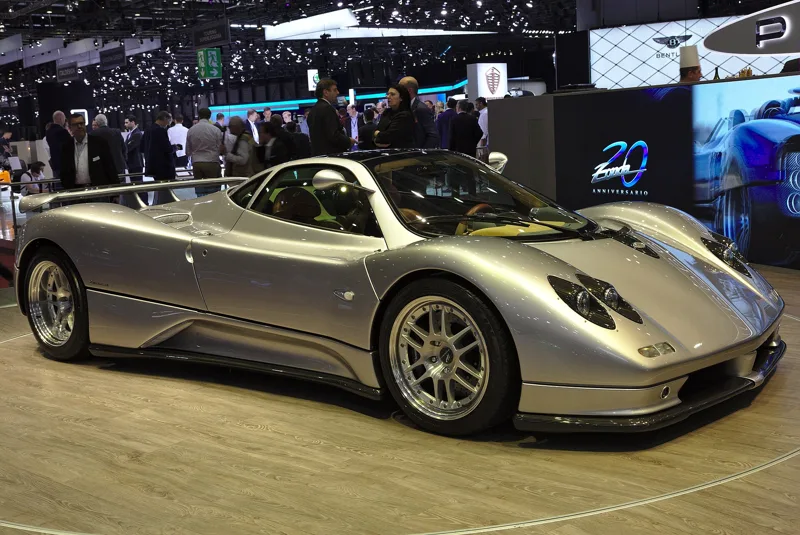
The Zonda R is a track-day car from the Italian maker Pagani, shown at the 2007 Geneva Motor Show. It is not road-legal, and it uses the 6.0-litre engine from the racing Mercedes-Benz CLK-GTR. Only 15 were produced, plus 5 Revolucion cars and a prototype.
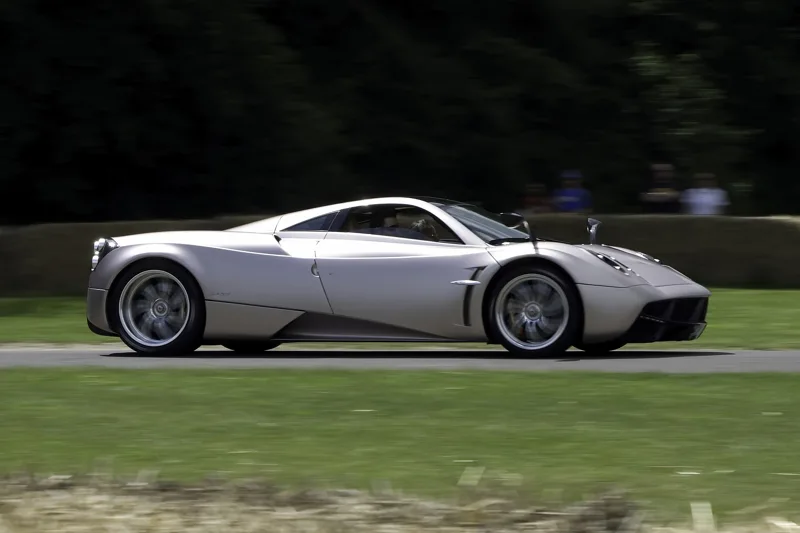
Although it looks like a Zonda, the R shares only 10% of its components with the Zonda F. Horacio Pagani has suggested, obliquely, that it is a testbed for the Huayra, which replaced the Zonda. Its natural opponents were track machines like the Maserati MC12 Corse and the Ferrari FXX, not the usual rivals of the road Zonda.
The chassis is a central carbon tub with a roll cage and a racing fuel cell with four pumps. The wheelbase grew by 47 mm and the overall length by 394 mm, the track by 50 mm. Forged-magnesium centre-lock wheels and on-board pneumatic jacks allow whole wheel assemblies to be changed quickly, and the car senses and logs the downforce at each wheel, which owners can use to adjust the set-up. The engine, built by AMG, makes 552 kW (750 PS) at 7,500 rpm and 710 N-m, a specific output of 125 PS per litre, with a Formula One-style exhaust in Inconel 625 and a six-speed sequential gearbox from Xtrac. The seats are customised to each owner, and the interior has minimal comforts.
Pagani claims a top speed of 375 km/h, 0-100 km/h in 2.8 seconds and cornering at 1.25 g. On 30 June 2010 the company claimed a production-based-car record at the Nurburgring of 6:47, ahead of the Ferrari 599XX. The Zonda R also lapped the Top Gear test track in 1:08.5, but was disqualified from the Power Lap board because it is not road legal.
Evolution, Revolucion and the one-offs
The Zonda R Evolution, shown at the 2012 Goodwood Festival of Speed, took parts and ideas from the Zonda 760RS and lifted the V12 to 559 kW (760 PS). Five were planned, but only the original prototype was finished, and its chassis later became a Revolucion. The Zonda Revolucion, revealed to clients at the 2013 Vanishing Point gathering, has a carbon-titanium monocoque and a weight of 1,070 kg, with 588 kW (800 PS) and 730 N-m. Its gearbox shifts in 20 milliseconds, and the rear wing has a drag reduction system. Five were built at 2.2 million euros each before taxes, and in 2021 one began a long conversion to road-legal. A one-off R Revolucion Specification, at 780 hp, was bought from RM Sotheby's for US$5.34 million and sold in Australia in 2024 for AU$11 million.
What is the Bugatti Bolide?
The Bolide is a track-only sports car engineered by Bugatti in Wolfsburg and built in Molsheim, France. It was revealed online on 28 October 2020. Bugatti says it is the last car to use its 8.0-litre, four-turbocharger W16 engine, and 40 are being built at a net 4 million euros each.
The name comes from the ancient Greek word for a spear, later used in old French to describe a meteorite blazing across the sky. The production car was shown in April 2023 and the first customer deliveries began at the start of 2024. In February 2025 the Bolide made its Southern Hemisphere debut at the Adelaide Motorsport Festival.
The production Bolide's W16 makes 1,600 PS at 7050 rpm and 1600 Nm between 3800 and 7050 rpm, enough to reach 100 km/h in 2.2 seconds, 200 km/h in 5.4 and 300 km/h in 11.5. Top speed is electronically limited to 380 km/h. Braking figures are just as extreme, with a stop from 300 km/h taking 6 seconds and 228 metres. The concept Bolide, at 1,240 kg and on racing fuel, claimed 0-400 km/h in 12.1 seconds and 0-500 km/h in 20.1 seconds. The production car weighs 1,450 kg.
The monocoque and its components are titanium, with nearly all body panels in carbon fibre. The shape follows the Bugatti Vision Gran Turismo concept, with an X-shaped motif inspired by the Bell X-1 aircraft, and the car makes more than 2,630 kg of downforce at 320 km/h. At 100 cm it matches the height of the Bugatti Type 57C that raced at Le Mans. The carbon structure, developed with Dallara, meets the LMH and LMDh requirements the FIA applies to Le Mans race cars. Bugatti's own computer simulations suggest a Nurburgring lap of 5 minutes 23.1 seconds, four seconds slower than the Porsche 919 Hybrid Evo's record, and a lap of the Circuit de la Sarthe in 3 minutes 7.1 seconds, quicker than the Toyota TS050's 3 minutes 14.7 seconds.
The Bolide is also appearing in other forms. In July 2026 Lanzante unveiled a road-legal Bolide, with changes including lights, mirrors, raised ground clearance, softer suspension, treaded tyres and catalytic converters. Its performance is slightly slower. On 6 August 2026 Bugatti revealed the Destrier, a one-off with a dark blue finish and the same 1,177 kW W16, as the third car of its Programme Solitaire coachbuilding division.
The four hypercars compared
| Car | Power | Number built | Price | Road status |
|---|---|---|---|---|
| McLaren Senna | 588 kW (799 PS) | 500 | 750,000 pounds | Road car; GTR is track-only |
| McLaren Elva | 599 kW (815 PS) | 149 | $1,690,000 | Road-legal, open top |
| Pagani Zonda R | 552 kW (750 PS) | 15, plus 5 Revolucion | Revolucion 2.2 million euros | Not road-legal |
| Bugatti Bolide | 1,177 kW (1,600 PS) | 40 | 4 million euros | Track-only |
How do they differ from road hypercars?
They drop comfort and legal requirements and add track equipment. The Senna adds wings and a spartan cabin, the Elva removes its screen, the Zonda R carries race hardware such as a fuel cell and per-wheel downforce readouts, and the Bolide follows Le Mans structural rules. Several of the track-only cars have since been reworked for the road.
The pattern of conversions is telling. McLaren made a road-legal version of the track-only Senna GTR in the GTR LM, a Zonda Revolucion began a road-legal conversion in 2021, and Lanzante has unveiled a road-legal Bolide. A track-only label, in other words, is not always final, although the road-legal Bolide is slightly slower than the original. Numbers are small throughout: 500 Sennas, 149 Elvas, 40 Bolides and 15 Zonda Rs.