From Brazil's leap to 1.7 million flex cars in 2007 to a 26.5% fuel economy penalty in one Tahoe test, the facts behind E85 and flexible-fuel engines.
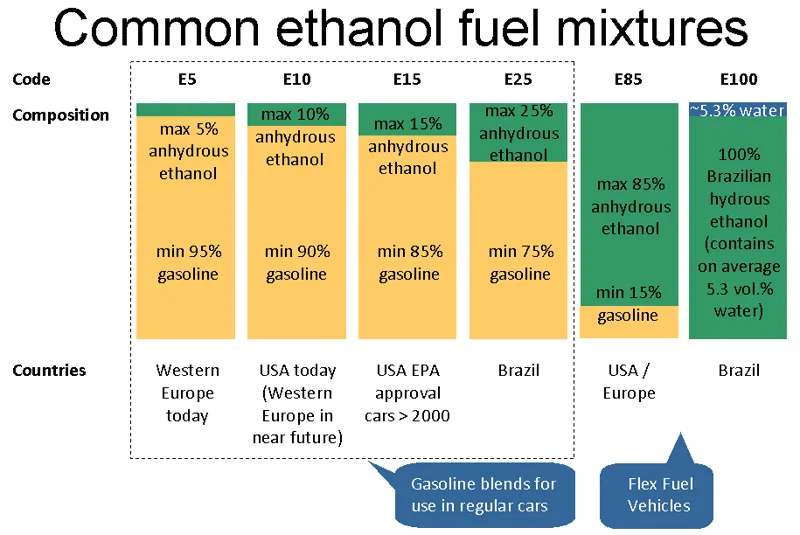
E85 combines 85% ethanol with 15% gasoline and suits flex-fuel vehicles, whose engines adjust to the mix automatically. Its heating value is 33% below gasoline, so economy suffers, yet its octane rating is higher. Roughly 60 million flex-fuel vehicles had been sold by March 2018, with Brazil the biggest market.
In 2003 Brazil built almost 40 thousand cars that could run on petrol, ethanol or any mix of the two. By 2007 the figure was 1.7 million. Brazil's fleet of 30.5 million light-duty flex vehicles is the biggest of the four main markets, and the reason owes as much to pumps and politics as to engineering.
E85 sits at the centre of the story in the United States and Europe: a mixture of 85% ethanol and 15% gasoline that some cars will accept and most will not. What it takes to run on it, how flex-fuel vehicles spread, and what a driver gives up or gains are all questions with answers in the figures.
What is a flex-fuel vehicle?
A flexible-fuel vehicle is a petrol-style car, truck or motorcycle whose engine is built to burn more than one fuel. The usual pairing is gasoline with ethanol or methanol, and both sit in the same tank. A fuel composition sensor detects the blend, and the engine adjusts fuel injection and spark timing to suit. Modern engines can burn any proportion of the mix.
That sets flex-fuel apart from bi-fuel vehicles, which keep two fuels in separate tanks and run on one at a time. Compressed natural gas, liquefied petroleum gas and hydrogen cars are bi-fuel. Natural gas vehicles numbered 9.6 million by 2008, led by Pakistan with 2.0 million, Argentina with 1.7 million and Brazil with 1.6 million. Natural gas cars are a popular choice for taxis in the main cities of Argentina and Brazil, where standard petrol cars are usually retrofitted in specialist shops.
Some cars go further. In 2004 GM do Brasil introduced a Chevrolet Astra whose engine, built on flex technology from Bosch of Brazil, could use natural gas, ethanol and an E20-E25 petrol blend, aimed at taxis and switched by hand. In 2006 Fiat showed the Siena Tetra fuel, which runs on E100, E20-E25, pure gasoline or natural gas and can switch to gas automatically depending on the power the road demands. Sao Paulo and Rio de Janeiro taxi owners can add a gas tank to a flex car and pick between E25, E100 and natural gas according to pump prices, a combination Brazilians call a tri-fuel car.
Brazil went from almost 40 thousand flex cars in 2003 to 1.7 million in 2007.
Can my car run on E85?
Only if it was built or converted for the job. In the United States, flex-fuel models have worn a yellow gas cap labelled "E85/Gasoline" since 2008, to tell them from petrol-only cars. Makers badge them with variations on the word flex: Volvo Flexifuel, Volkswagen Total Flex, Chevrolet FlexPower, Renault Hi-Flex. Ford sells its Focus as Flexifuel in Europe and as Flex in Brazil.
The hardware differs from a petrol-only car in several ways. Bare magnesium, aluminium and rubber parts are removed from the fuel system. Fuel injection control has a wider range of pulse widths, enough to inject up to 34% more fuel. Stainless steel fuel lines, sometimes plastic-lined, replace others, stainless steel tanks replace tinplate ones, and some vehicles use an engine oil that neutralises acidity. Where the fuel pump sits inside the tank, makers sometimes add precautions against arcing and flame arrestors in the filler pipe.
What exactly is E85?
E85 is a fuel of 85% ethanol and 15% gasoline or another hydrocarbon by volume. In the United States the standard that governs it, ASTM 5798, allows the actual ethanol content to range from 51% to 83%. The reason is cold starting, which gets harder as ethanol content rises. North American and European flex-fuel cars are optimised for E85 to avoid cold-start problems at temperatures below 11 degrees Celsius (52 degrees Fahrenheit). Where it falls below 0 degrees Celsius (32 degrees Fahrenheit), the blend is cut to E70 in the US and E75 in Sweden from November until March.
Outside the US, E85 means just that: 85% ethanol at the pump or in the barrel. Australia calls the pump fuel with varying fractions "flex fuel". There, performance enthusiasts and racing clubs use E85 widely without any flex-fuel certification. Brazil is different again. Pumps sell neat ethanol, and the cars are tuned for any blend from E20-E25 petrol to 100% hydrous ethanol, known as E100. Early Brazilian cars carried a small petrol reservoir for starting below 15 degrees Celsius (59 degrees Fahrenheit), and an improved engine generation launched in 2009 removed the need for it.
How did Brazil lead the way?
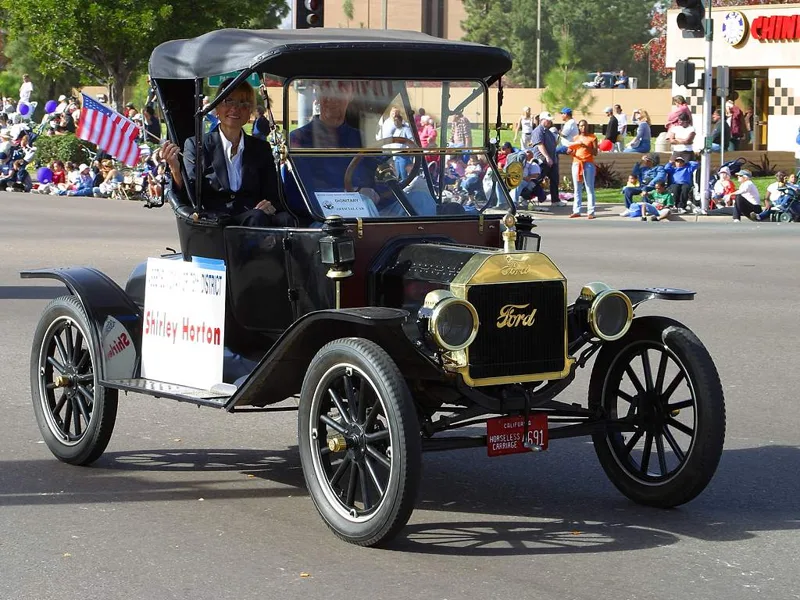
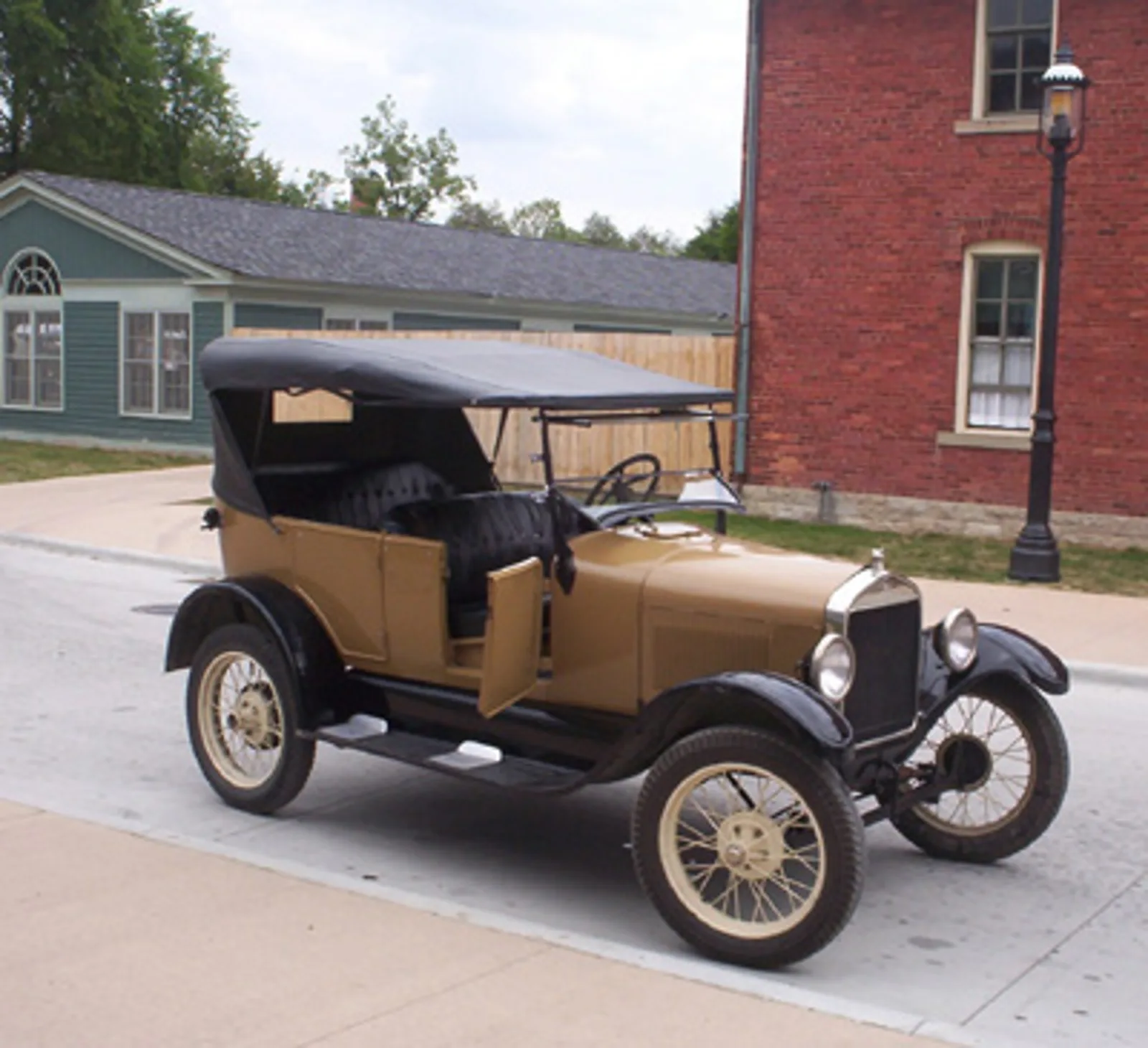
Henry Ford's Model T, built from 1908 to 1927, had a carburettor with adjustable jetting that let it run on ethanol, gasoline or kerosene. Cheap oil then pushed ethanol aside until the 1973 oil crisis. Brazil responded in 1975 with the National Alcohol Programme, Pro-Alcool, which aimed to replace fossil fuel with ethanol from sugar cane. A low blend began in 1976, and since July 2007 the mandatory blend has been 25% alcohol. In 1979 the Fiat 147 became the first vehicle able to run on pure hydrous ethanol. Brazil supported the industry with guaranteed purchases by the state oil company Petrobras, low-interest loans and fixed fuel prices. By the late 1980s over 4 million cars and light trucks were running on pure ethanol, but their use fell sharply when sugar price rises caused ethanol shortages.
The second push came in March 2003, when Volkswagen's Brazilian arm launched the Gol 1.6 Total Flex, the first full flex car. By 2010 General Motors, Fiat, Ford, Peugeot, Renault, Volkswagen, Honda, Mitsubishi, Toyota, Citroen, Nissan and Kia were all making flex models. The infrastructure was ready: by 1997 around 27,000 filling stations across the country had at least one ethanol pump, a legacy of the earlier programme.
How did flex fuel start in the United States?
American interest began with the first oil crisis and later became a drive for cleaner air. Liquid fuels won over gaseous ones because they pack more energy by volume and fit existing distribution systems. California led, with methanol the focus. In 1981 Ford delivered 40 dedicated methanol Escorts to Los Angeles County, but only four refuelling stations were installed. In 1983 Ford built 582 methanol vehicles, 501 of them for California.
To solve the shortage of stations, Ford started developing a flexible-fuel vehicle in 1982. Between 1985 and 1992 it delivered 705 experimental examples to California and Canada, including an Escort, a Taurus and a Crown Victoria, able to run on gasoline or methanol from a single fuel system. Production of M85 flex-fuel models began at Ford in 1993. The 1996 Ford Taurus could run on methanol or ethanol blended with gasoline, and its ethanol version became the first commercial E85 flex-fuel vehicle. Ethanol won out over methanol for two reasons: support from the farming community, and government incentives and corn-based subsidies. Sweden tested both fuels, and agricultural policy decided that it would favour ethanol.
Where are flex-fuel cars today?
| Market | Flex-fuel fleet | Fuel it is built around |
|---|---|---|
| Brazil | 30.5 million light-duty vehicles and over 6 million motorcycles | E20-E25 petrol and up to E100 |
| United States | 27 million by the end of 2021 | E85, E70 in winter |
| Canada | 1.6 million by 2014 | E85 |
| Sweden | 243,100 | E85, E75 in winter |
Worldwide, around 60 million ethanol flex-fuel cars, motorcycles and light trucks had been made and sold by March 2018, concentrated in those four markets. In the US, E85 stations cluster in the corn-growing Midwest, where government subsidies of ethanol helped build the retail network. As of 1 July 2014 more than 3,300 stations offered it. Sweden uses E85 widely, but most of it is imported from Italy and Brazil. In Finland, 52 St1 and 71 ABC stations sell it, labelled RE85 and Eko E85 and made from Finnish bio-waste. In France about 30% of petrol stations supply E85, roughly 2,725, and the number of flex-fuel conversion kits fitted doubled in 2021 to 30,000.
The picture is patchier elsewhere. E85 reached the United Kingdom on 14 March 2006 when a Morrisons supermarket in Norwich became the first forecourt to sell it, but take-up was low and only a small number of outlets sell it now. In Ireland, E85 made from cheese whey was sold by Maxol until a severe excise duty rise ended it in 2011.
What does a driver give up and gain on E85?
Ethanol carries less energy. Critics point to E85's heating value, which is 33% lower than gasoline's, though another view in the debate holds that heat alone does not measure the work an engine can extract. Promoters and the Society of Automotive Engineers say makers do not exploit ethanol's strengths, and claim some ethanol engines have produced 22% more miles per gallon than identical petrol ones.
Road tests show a penalty. In one US test a 2007 Chevrolet Tahoe FFV averaged 18.3 mpg on gasoline and 13.5 mpg on E85, 26.5% worse. In Australia, where Holden has sold more than 70,000 flex-fuel cars since 2010, the gap on similar V8 family sedans is 10% to 20%. A fleet of Ford Tauruses showed only about 6% fewer miles per gallon on ethanol-based fuel. For the pump to make up the difference, E85 has to be much cheaper than petrol. As recently as 2011 it was at least 20% cheaper in most American areas, and in 2010 it averaged US$3.09 against US$3.42 for gasoline, or 90% of the price.
On the other side of the ledger, E85 has a higher octane rating than regular petrol at 87 or premium at 91 to 93, which allows higher compression and more power for a given engine size. The Koenigsegg CCXR makes 20% more horsepower on E85 than on petrol. In turbocharged performance cars converted to the fuel, gains of 10 to 12% in power and torque at the wheels are typical, and up to 40% where the engine was previously limited by knock. Some drivers use it instead of racing fuels that cost over US$10.00 a gallon.
Is E85 cleaner?
The studies disagree, because results depend on the vehicle, how the ethanol was made and overall efficiency. Engineers at the National Renewable Energy Laboratory combined all applicable data and found that, on average, every federally regulated emission either fell or showed no statistically relevant difference compared with gasoline. EPA Tier II standards require flex-fuel vehicles to meet the same low emissions on either fuel. E85 is less volatile, which means fewer evaporative emissions, and it cuts carbon monoxide and toxics including benzene, a known carcinogen. In some operating conditions it may raise acetaldehyde, and the EPA is analysing further.
The food-versus-fuel argument runs the other way. Critics say corn ethanol drives up food prices. Advocates answer that over 93% of American corn is never fed directly to people. A Purdue University study found the economics depend heavily on the price of crude oil.
Where this goes next
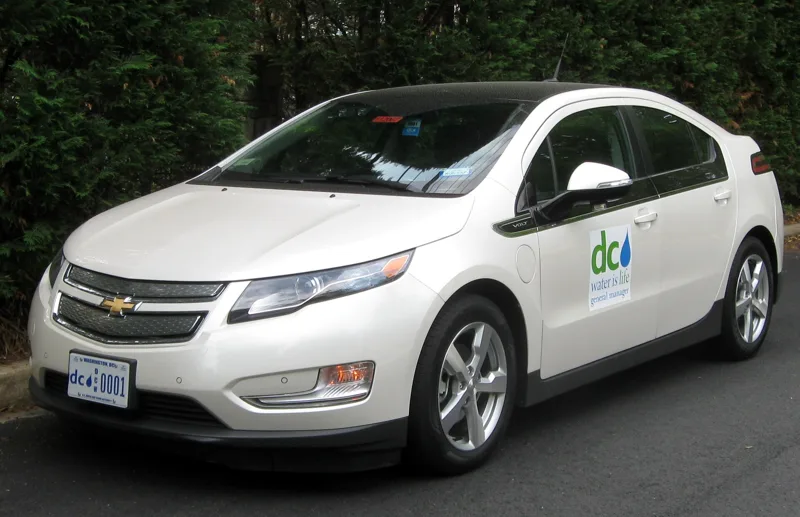
Hybrids are the next step. Ford built 20 Escape Hybrid E85 demonstration vehicles in 2007 and delivered a flex-fuel plug-in Escape to the US Department of Energy in 2008. The Chevrolet Volt was expected to be flex-fuel capable in 2013 but never was. In December 2018 Toyota do Brasil announced a flex-fuel hybrid developed with Brazilian universities and tested on a Prius for six months, with production planned for the second half of 2019. P-series fuels have tested successfully on E85 flex-fuel vehicles, but as of September 2025 they are not available to the public.