A rear-drive Opel that beat Audi's four-wheel drive, near-constant Lancia wins and a title decided when a rival left the road.
Walter Rohrl won the world rally title in 1980 with Fiat and in 1982 with Opel. Miki Biasion won in 1988 and 1989 with Lancia, and Didier Auriol won in 1994 with Toyota, the first French champion. Each title came in a different way.
Didier Auriol won six rallies in a single World Rally Championship season in 1992, a record that stood until Sebastien Loeb broke it in 2005, and he still lost the title. A string of poor results elsewhere and a retirement on the final round handed the championship to Carlos Sainz. Two years later Auriol became champion in the oddest way, by finishing a rally he did not win while his rival went off the road.
Auriol, Walter Rohrl and Miki Biasion spanned three eras of the sport. Rohrl won with Fiat and Opel in the rear-drive years, Biasion with Lancia in the early days of Group A, and Auriol with Toyota. Their stories include a cancelled Mercedes programme, a sacking, a banned turbocharger and a world record up a mountain.
Walter Rohrl, the chauffeur who became a world rally champion
Walter Rohrl was born on 7 March 1947 and grew up in Regensburg, Bavaria, the youngest of three children of a stonemason. His parents separated when he was ten and he lived with his mother. He trained in commerce at the Bishop's Ordinariate in Regensburg, and at 16 he took a job with the commercial director of an organisation that acted in law for the Bishop and six other Bavarian bishops. He skied in his spare time and qualified as a ski instructor. He also became a keen driver and chauffeured the commercial director, covering up to 120,000 kilometres a year.
He drove his first rally in 1968, by invitation. In the 1970s and 1980s he was a favourite for the World Rally Championship, and he won the Monte Carlo Rally four times with four different marques. For many years his co-driver was Christian Geistdorfer. His career total was 14 WRC victories, and he won the championship twice.
The Fiat 131 Abarth title of 1980
The first title came in 1980 in a Fiat 131 Abarth, clinched by his win at the San Remo Rally. For 1981 he signed a five-year deal with Mercedes-Benz, which planned to enter a 500 SL roadster in 1981 and 1982 and then a turbocharged Group B car, designed for the purpose with its engine in the middle, in 1983. Instead, just before the season's opening rally, Mercedes pulled out and scrapped the Group B plan. Rohrl received a lump sum of DM 900,000 and a release from his contract, but it came too late in the year to find another seat.
He and Geistdorfer then took a short-term engagement with Porsche, entering a 924 Carrera GTS in six German championship rallies. Rohrl also started the San Remo Rally in a Porsche 911 SC and retired with driveshaft trouble while running second, which he has called his most bitter retirement. He had hoped a win would persuade Porsche to commit to a full WRC effort.
Beating four-wheel drive in a rear-drive Opel
The 1982 championship may be the one that impressed most. Audi's four-wheel-drive Quattros, led by Michele Mouton, were the new force in the sport, and Rohrl still won the title by consistency in a rear-drive Opel Ascona 400 that was becoming outmoded. That year he also won the African Rally Championship.
The aftermath was bitter. Shortly after the title Opel's team manager, Tony Fall, fired him. Rohrl disliked the RAC Rally, where he had little success, and he had already had fierce arguments with Fall over publicity work for the team's sponsor, the tobacco company Rothmans. A strict non-smoker, Rohrl refused to film promotional spots, saying he was hired as a driver, not an actor.
Lancia, Audi and Pikes Peak
In 1983 he joined Lancia to drive the new rear-wheel-drive Lancia 037, and in 1984 he changed to the four-wheel-drive Audi Quattro, built in his home state of Bavaria. In 1987 he set a new record at the Pikes Peak International Hill Climb, becoming the first driver to climb the 19.99 km (12.42 mile) mountain route in under 11 minutes. In a 440 kW (600 hp) Audi Sport Quattro S1 E2 he took 10 minutes 47.850 seconds, on a road that was still mostly gravel at the time.
He was selective about which events he entered, a practice not unusual at the time. He refused the 1000 Lakes Rally in Finland because he disliked jumps and cars getting airborne, did the RAC Rally only once after 1979 and started the Swedish Rally just twice, though he was third in 1982.
Beyond rallying and the honours
Niki Lauda called him a Genius on Wheels. In 1981 Rohrl and Jurgen Barth took a class win at Le Mans in a Porsche 924 Carrera GTP, which was really a 944 prototype, and finished seventh overall. The same year he won the Silverstone 6 Hours in a Porsche 935 with Harald Grohs and Dieter Schornstein. In the fog and heavy rain of the 1992 Nurburgring 24 Hours he barely slowed, anticipating the corners by timing, though the race was stopped for hours anyway.
He has long been a senior test driver for Porsche road cars, setting fast times on the Nurburgring Nordschleife in cars such as the Carrera GT. A planned return to the Nurburgring 24 Hours in a Porsche 911 GT3 RS in 2010, his first 24-hour race since 1993, ended when a back injury forced him to withdraw. Italy elected him Rallye driver of the century, France named him Rallye driver of the millennium in November 2000, and a jury of 100 motorsport experts meeting in Italy chose him as the best rally driver ever. He joined the Rally Hall of Fame in 2011, alongside Hannu Mikkola, and Germany's Sports Hall of Fame in July 2016.
Auriol won six rallies in 1992, a record until 2005, and still lost the title.
Miki Biasion, the dominant Group A champion
Massimo Biasion, known as Miki, was born in Bassano del Grappa in the Veneto on 7 January 1958. He began competing in 1979 in an Opel Kadett GT/E, and came to prominence in 1983 when he won both the Italian and European rally championships in a Lancia 037.
Back-to-back world titles
Biasion was drafted into Lancia's works team in the mid-1980s as the squad regrouped after the fatal crash of Henri Toivonen. He went on to dominate the early years of Group A rallying and won the world championship in 1988 and 1989. At his peak he was winning almost three quarters of the events he entered.
He was only the second driver to defend a world title successfully, after Juha Kankkunen, and the third to win two titles, after Kankkunen and Rohrl. His co-driver throughout his career was Tiziano Siviero, with one exception: at the 1988 Portuguese Rally, Siviero was ill and Carlo Cassina took his place.
The difficult Ford years
He never reached that level again. In 1991 he failed to win an event for Lancia, and in 1992 he moved to Ford, where his contract made him the best-paid driver then racing and gave him a voice in how the team was run. The optimism did not last. After his first event, the 1992 Monte Carlo Rally, Biasion was reportedly scathing about the Sierra RS Cosworth 4x4, although he did give it its best WRC result, second in Portugal.
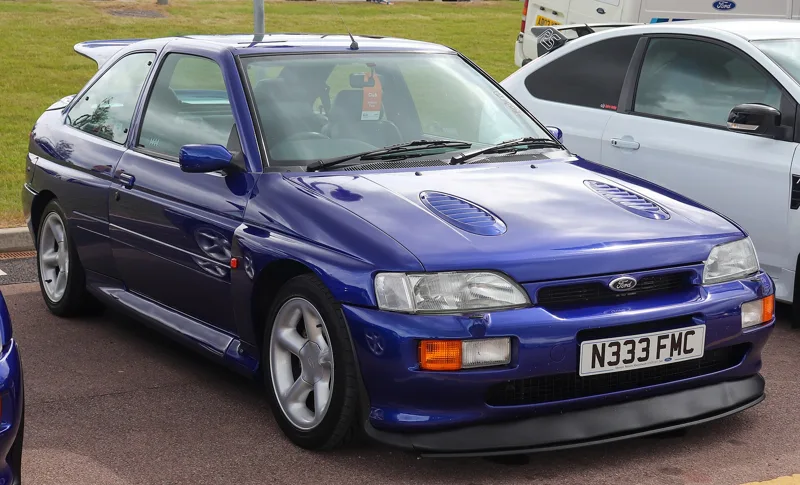
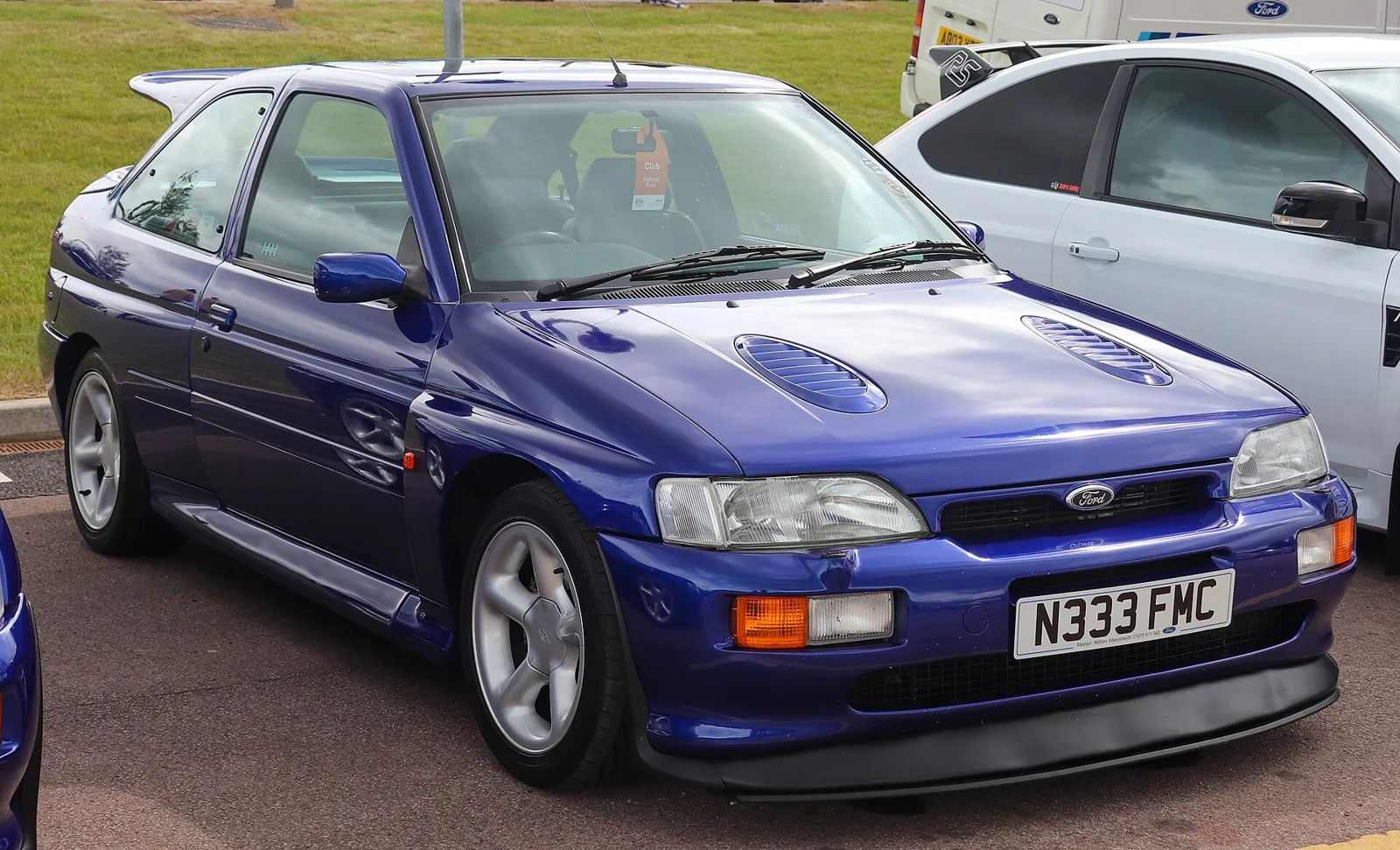
In 1993 he drove the new Ford Escort RS Cosworth, won the Acropolis Rally and led the drivers' standings for part of the season. But he was overshadowed at Ford by the younger Francois Delecour, who was generally faster, especially on tarmac. Delecour's road accident forced him to miss much of 1994 and exposed the team's weaknesses. With too few resources, development of the Escort slipped behind its rivals, Biasion's relationship with Ford worsened and he was dropped for the following year. After a couple of rallies with private teams he retired quietly at the end of 1995. His last WRC event was the RAC Rally of 1994, won by Colin McRae, in a season when Auriol took the drivers' title.
Dakar and trucks
Biasion found another career in cross-country racing. He drove for the Mitsubishi works team on the Dakar Rally in 2003 and 2004. In 2003 he was third after the penultimate stage when his gearbox seized on the podium, and trying to move and repair the car there earned him a 10-hour penalty that dropped him from the podium to outside the top 10. A roll ended his 2004 event in a Pajero.
In 2006 he returned in the truck category for Iveco beside Markku Alen, and in 2007 he drove a small Fiat Panda 4x4, nicknamed the PanDakar, with Bruno Saby. With Iveco again in 2012 he won three stages and finished sixth overall. He had also won the World Truck Championship in 1998 and 1999 driving an Iveco. He was married to Italian rally driver Chantal Galli, who won the Italian women's championship several times. They had four children and are now divorced.
Didier Auriol, the ambulance driver who became champion
Didier Auriol was born in Montpellier on 18 August 1958 and worked first as an ambulance driver. He started rallying at 21 in an old Simca 1000, drove it for two years, then moved to a Renault 5 Turbo in the French Rally Championship. In 1986 he won his first French title in a Metro 6R4, and in the first Group A years of 1987 and 1988 he was French champion again in a Ford Sierra RS Cosworth. His sister Nadine rallied as a co-driver and his brother Gerrard was also a rally driver.
Lancia and the six-win season that lost the title
His first world championship win came at the 1988 Tour de Corse in a works Ford Sierra RS Cosworth, the only time that season that Lancia was beaten in a straight fight. Lancia signed him for the next year, and he stayed four seasons in three successive versions of the dominant Delta Integrale. In 1992, in the final version, he won six events in one season, but poor results on other rounds and a retirement on the last event, the RAC Rally, gave the title to Carlos Sainz.
The 1994 title for Toyota
He joined Toyota in 1993 and won the Monte Carlo Rally on his first event for the team. He did not win again that season. In 1994 he won the Corsica, Argentina and San Remo rallies and arrived at the final round in Great Britain vying with Sainz once more. He had a poor rally, yet became world champion when the Spaniard went off the road on the final day. Auriol was the first French driver to win the championship.
In 1995 he took the first win for the Celica GT-Four ST205 at the Tour de Corse with Denis Giraudet, who had replaced his regular co-driver Bernard Occelli at a time of family trouble. Later that year Toyota was found to have used an illegal device in the turbocharger at the Rally Catalunya to increase engine power. The team was excluded from the 1995 championship and banned for the following year.
SEAT, Peugeot and Skoda
In 1996 Auriol contested only two events, for Subaru in Sweden and Mitsubishi at San Remo, and in 1997 he started Monte Carlo in a private Ford and drove a couple of rallies in Toyota's new Corolla WRC. In 1998 he became a full-time Toyota driver and took one win and four podiums for fifth in the points. In 1999 he had one win and seven podiums, for third.
Toyota left the WRC after 1999, so Auriol moved to SEAT Sport and its Cordoba WRC E2. His experience helped the team to a third place at the Safari Rally in Kenya and to launch a third evolution of the Cordoba later that season, but the Spanish manufacturer withdrew at the end of the year. At Peugeot in 2001 he had a hard season and was quicker than teammate Marcus Gronholm only on asphalt. His one win came in Spain, with three thirds at San Remo, Corsica and Australia. After a gap year in 2002 he signed with Skoda and played a notable part in developing the Fabia WRC, before losing his seat at the end of 2003. He is a six-time winner of the Tour de Corse, a record he shares with Bernard Darniche.
Three champions compared
| Driver | Titles and cars | How the title came | Other marks |
|---|---|---|---|
| Walter Rohrl | 1980 Fiat 131 Abarth; 1982 Opel Ascona 400 | 1982 by consistency in a rear-drive car against four-wheel drive | 14 WRC wins; 1987 Pikes Peak record |
| Miki Biasion | 1988 and 1989 for Lancia | Won almost three quarters of events entered at his peak | 1998 and 1999 World Truck Championship |
| Didier Auriol | 1994 for Toyota | Final-round rival Sainz went off the road | Six wins in 1992; six Tour de Corse wins |
What separated the three titles
Rohrl's second title was won on consistency, with an outmoded rear-drive car against Audi's four-wheel-drive opposition. Biasion's two titles were the opposite, built on near-constant winning in the early years of Group A. Auriol's 1994 title arrived after a rival's mistake, two years after he had lost a championship despite winning six rallies.
The cars changed with the eras. Rohrl moved from Fiat and Opel to the rear-drive Lancia 037 and then to the four-wheel-drive Quattro. Auriol went from Lancia's Delta Integrale to Toyota, SEAT, Peugeot and Skoda, and Biasion, after his Lancia years, finished his world championship career in a Ford Escort RS Cosworth.