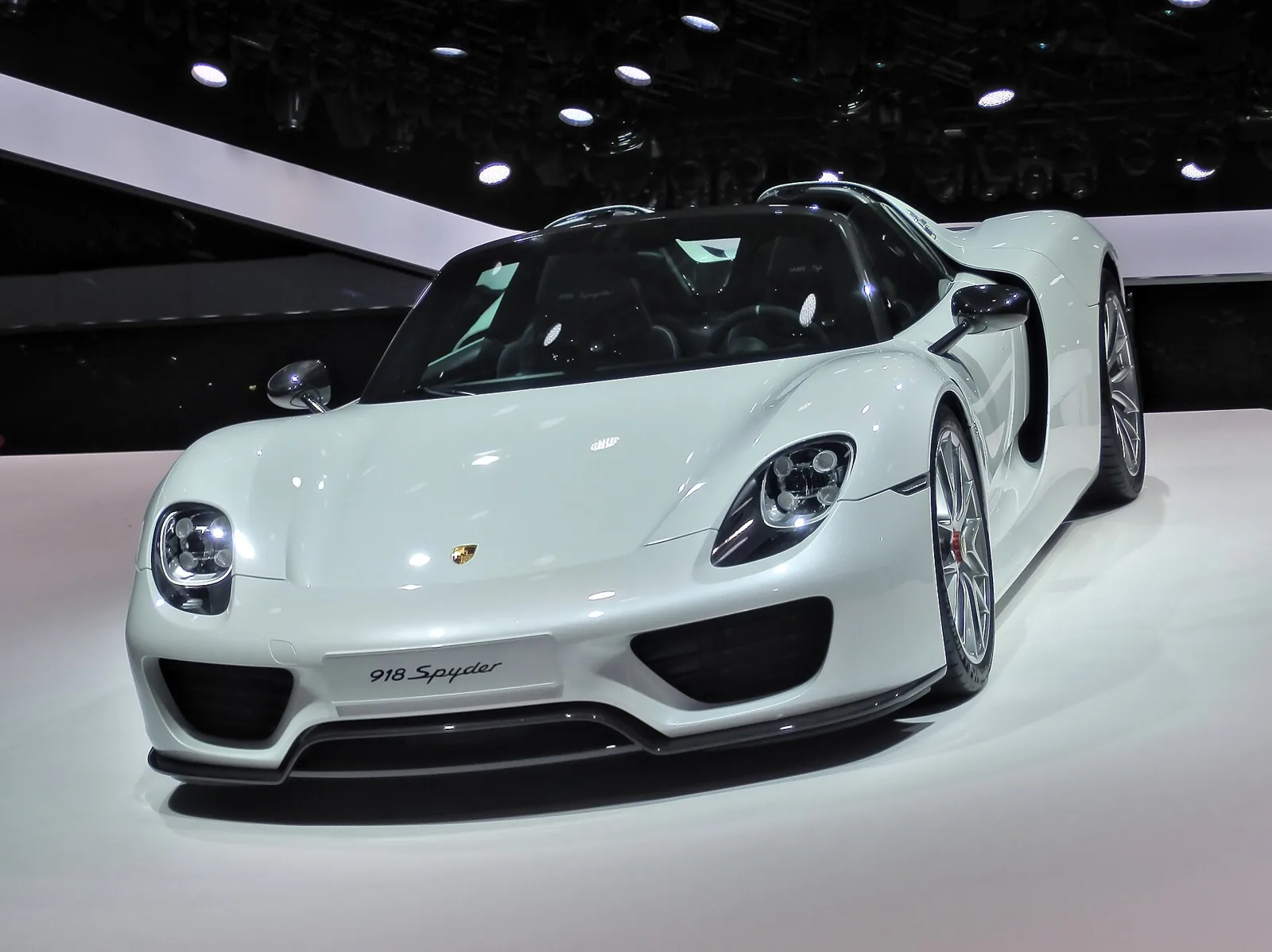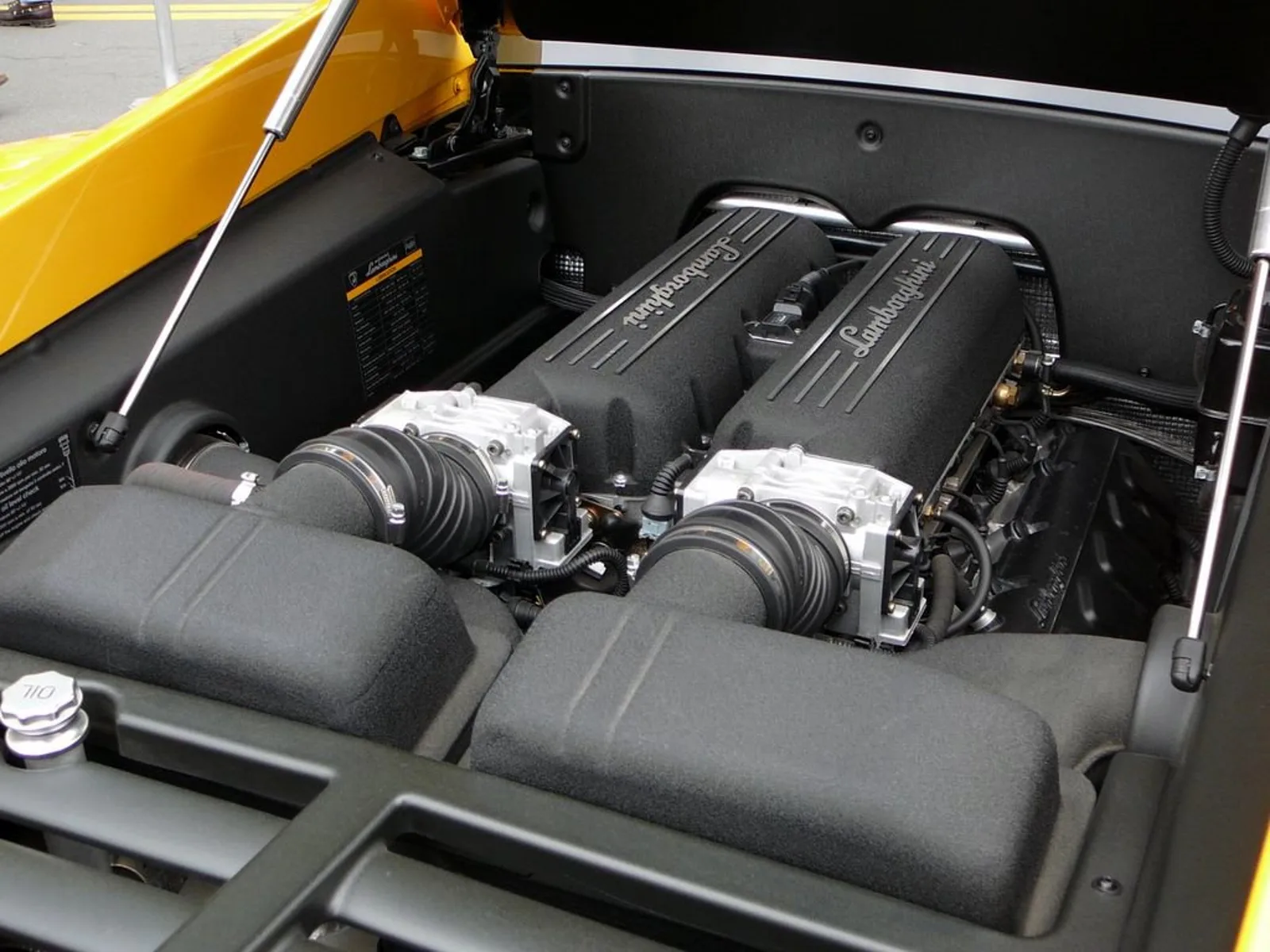
From a hand-built boxer that won the 1962 French Grand Prix to a hybrid 4.6-litre V8, and from Bizzarrini's quad-cam V12 to the Gallardo and Huracan V10: two engine families side by side.
Porsche built flat-eights from 1960, including the 753 that won the 1962 French Grand Prix, and V8s from the 1977 M28 to the M18 and 9RD hybrids. Lamborghini built its quad-cam V12 from 1963, a failed F1 V12, and a 5.0 and 5.2-litre V10 for the Gallardo and Huracan.
Porsche has won a single Formula One race as a constructor, the 1962 French Grand Prix, and it did so with a flat-eight that took at least 100 hours to assemble and sometimes 220. Fifteen years later Porsche built its first V8, and Lamborghini, which had made V12s from 1963, added a V10 for the Gallardo in 2003.
What was the Porsche flat-eight?
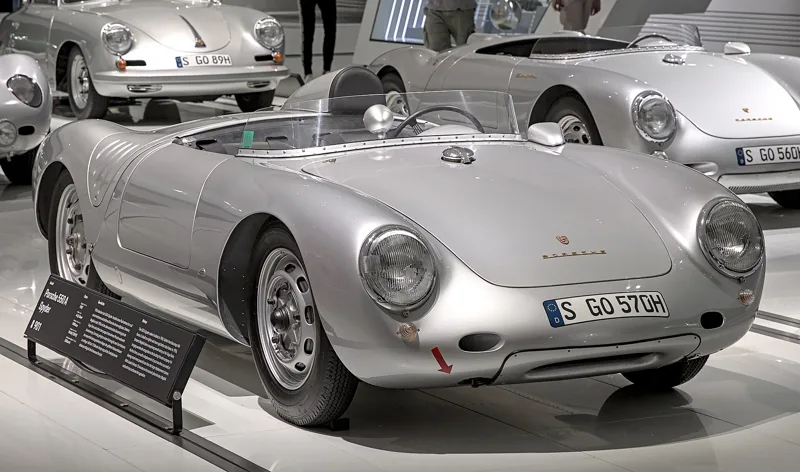
The Type 753 was Porsche's first flat-eight. Work began in 1960 after Formula One announced a 1.5-litre limit for 1961. Hans Honick and Hans Mezger designed it, keeping Porsche's traditional boxer layout and air cooling but with eight cylinders instead of four.
Its bore and stroke of 66.0 by 54.6 mm gave 1,494.38 cc, and the short-stroke dimensions held piston speeds down and kept the engine slim. A magnesium crankcase split vertically carried a one-piece crankshaft on nine main bearings. The barrels had a spray-on molybdenum and steel coating called Ferral, each cylinder had its own aluminium head, and there were two overhead camshafts per bank turned by shafts instead of gears or a chain, much as in Ernst Fuhrmann's Type 547 four. The valvetrain was designed to run at up to 10,000 rpm. Four Weber carburettors fed the engine, and a Bosch system fired two spark plugs per cylinder.
It was a demanding thing to make, needing extensive hand-fitting, and building one took 100 hours at the very least. The first prototype ran on a test bench on 12 December 1960 and gave only 105 hp (78.3 kW), against a target of 200 hp. Mezger and his team worked on reliability and power. Reducing the valve angle from 90 degrees to 84 and then 72, lightening the crank pins and moving to titanium connecting rods eventually lifted output to 185 hp (138.0 kW).
Porsche's only F1 win as a constructor came from a flat-eight that took 100 hours to assemble.
Did the flat-eight ever win?
Once, in 1962. The 753 made its debut in the Type 804 at the Dutch Grand Prix in Zandvoort on 20 May 1962, with 132 kW (177 hp) at 9,200 rpm, short of the new V8s from Coventry-Climax and BRM. Dan Gurney then took an 804 to victory at Rouen-Les-Essarts in the French Grand Prix, Porsche's one constructor win in Formula One.
With a six-speed gearbox from the 718 plus a ZF limited-slip differential, the car topped out at 270 km/h (167.8 mph). The 753 never went into the chassis of the Type 787, which was stretched for it, because that car raced throughout its short life with the older 547. It did influence the engine planned for the 901 project, which became the 911.
How did the flat-eight grow into the 771 and 908?
Porsche developed a second flat-eight alongside the first, aimed at 2-litre sports-racers and GTs. The Type 771 had a bore 10 mm larger, giving 1,982 cc and 240 hp (179.0 kW), and it powered the 718, 904, 906, 910 and 907 and the 909 Bergspyder from 1962 to 1968. Of the 16 904s the factory kept, six had the eight-cylinder engine. A 2.2-litre version was designated the Type 771/1.
The Type 908 was a different animal: the Type 916 quad-cam six with two more cylinders, sharing the internal dimensions of the production 911 engine. With an 84 mm bore and 66 mm stroke it displaced 2,926 cc and made 320 hp (238.6 kW) at first. It first appeared on 6 April 1968, at the Le Mans test weekend, though the race itself was postponed to September. The open 908/02 was successful in the 1969 World Sportscar Championship and finished second at Le Mans, and the compact 908/03 Targa Special of 1970 had about 370 hp. Two VW-Porsche 914/8 cars were built with 908 engines in 1969: one for Ferdinand Piech with 298 hp (222 kW) and one with a detuned 261 hp (195 kW) given to Ferry Porsche for his 60th birthday. Both are in the Porsche Museum.
What happened to later Porsche flat-eight plans?
Ferdinand Piech wanted more. His Type 1966 project, linked to Volkswagen's EA266 Beetle replacement, was meant to underpin a three-tier successor to the 911, using water-cooled boxers of four, eight and twelve cylinders mounted amidships, due in 1973. A prototype flat-eight was built from two water-cooled EA266 blocks on a common crankshaft. According to designer Tony Lapine, all the Type 1966 material, including that engine, was destroyed shortly after Volkswagen cancelled EA266.
In the mid-2010s rumours spread of another one, in the mid-engined Porsche 988, later renamed 960. It was to challenge the Ferrari 458 and Lamborghini Huracan with a 4.0-litre flat-eight with four turbochargers, projected to make more than 450 kW (600 hp). A 2019 release was expected, though some reports suggested it could slip as far as 2026.
When did Porsche build its first V8?
In 1977, with the Type M28 in the Porsche 928. It was an all-alloy engine with a linerless block cast from a hypereutectic aluminium-silicon alloy, its bores prepared by the Alusil process, which etches back the aluminium to expose silicon. One overhead camshaft per bank worked two valves per cylinder.
The 4.5-litre (4,474 cc) engine used a bore of 95 mm and a stroke of 78.9 mm, and its modest 8.5:1 compression let it run on regular fuel. Output was 176 kW (236 hp), peaking at 5,500 rpm, with torque of 350 N m (258 lb ft) at 3,600 rpm, enough for a top speed of 230 km/h (143 mph).
It grew steadily. The 928S of 1980 had a 97 mm bore and 4.7 litres (4,664 cc), 221 kW (296 hp) and more than 250 km/h (155 mph). In 1984 higher compression and electronic injection lifted power to 228 kW (306 hp). A big redesign in 1985 brought four valves per cylinder and two camshafts per bank, with a 100 mm bore and 5.0 litres (4,957 cc). The S4 of 1987 made 235 kW (320 PS), the GT of 1989 made 243 kW (326 hp), and the 928 GTS of 1992 had the largest M28 of all, 5.4 litres (5,397 cc) and 369 PS (271 kW). Production of the family ended in 1995 with the 928.
How did the Cayenne and Panamera shape Porsche's V8s?
The Type M48 debuted in the Cayenne S SUV in 2003. It was a nominal 4.5 litres, like the M28, but with a different bore and stroke of 93 by 83 mm, giving 4,510 cc. Unboosted it made 250 kW (335 hp), and with twin turbochargers 331 kW (444 hp). In 2006 the turbo engine was boosted to 383 kW (521 PS) for the Cayenne Turbo S.
The 2007 update brought gasoline direct injection and a 96 mm bore, taking displacement to 4.8 litres (4,806 cc). The Cayenne S then made 283 kW (380 hp) and the Turbo 368 kW (493 hp). The Panamera launched in 2009 with the same engines, 294 kW (394 hp) and 500 N m unboosted and 368 kW (493 hp) and 700 N m in twin-turbo form, with lighter alloys trimming the engine's mass. The sporting versions went higher still: 316 kW (424 hp) in the Panamera GTS, 405 kW (543 hp) in the Panamera Turbo S and 419 kW (562 hp) in the Cayenne Turbo S.
The 4.0-litre EA825 TT was a Porsche and Audi collaboration, successor to Audi's EA824 and drawing on the group's 90-degree EA839 V6. It was built at Zuffenhausen with equal 86 mm bore and stroke, a linerless block of eutectic aluminium-silicon alloy and two turbochargers in the vee. It arrived in 2017 in the second Panamera and third Cayenne, and joined a hybrid powertrain in the Panamera that year and in the Cayenne in 2019.
Which Porsche V8s were built for racing?
Four stand out. In 1988 Porsche built the Type 9M0, a 2.65-litre 90-degree V8 for Indycar racing led by Hans Mezger. Running on methanol with a single turbocharger, it could make 800 bhp (597 kW) at 11,200 rpm, and it powered the March 88C, 89P and 90P.
The MR6, designed with Penske Racing, is a 3.4-litre V8 with a flat-plane crankshaft and a 95 mm bore and 59.9 mm stroke. It sent power to the rear wheels of the RS Spyder via a six-speed sequential gearbox with electro-pneumatic shifting. It made 478 horsepower (356 kW) in 2005 and 503 PS (370 kW) in the 2007 RS Spyder Evo, gained direct injection in mid-2008, and dropped to 440 metric horsepower (324 kW) in 2009 because of air restrictor rules.
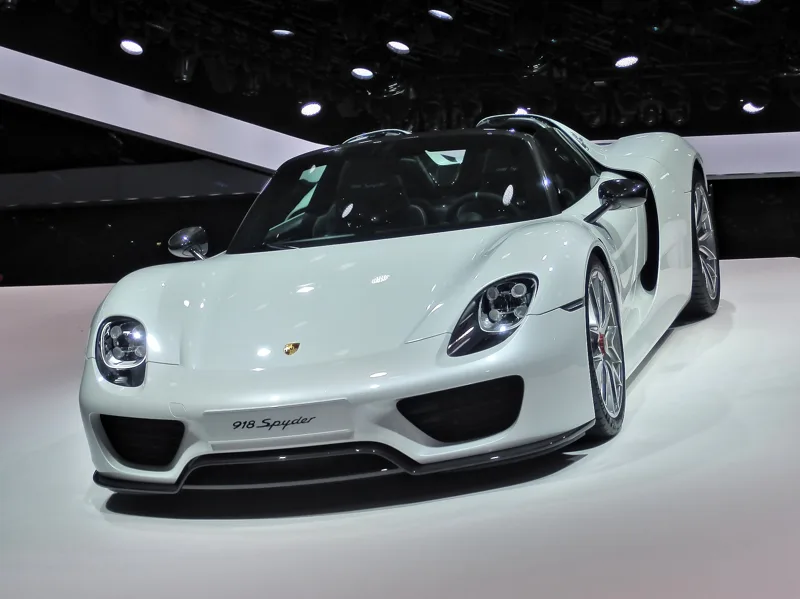
The M18 grew out of the MR6 for the 918 Spyder, which entered production in 2013. The bore stayed at 95 mm and the stroke rose to 81 mm for 4,593 cc. It revs to 9,200 rpm, has direct injection at up to 200 bar (2,901 psi), uses titanium connecting rods and thin-walled castings, and makes 447 kW (608 PS; 599 hp) at 8,700 rpm. Two electric motors add 210 kW (286 PS). At 132 hp per litre it had the best specific output among street-legal naturally aspirated engines of its day, and at only 135 kg (298 lb) it was the lightest naturally aspirated production V8.
Its sound comes partly from the flat-plane crankshaft and partly from the top-pipes exhaust. The engine is a Hot Side Inside design, with intake ports facing outwards and exhaust ports facing the inside of the vee, so the short exhaust sits above the engine and exits through the engine deck lid, which saves weight and keeps heat away from the battery pack.
The fourth, the Type 9RD, powers the 963 in the LMDh class. It shares about 80 per cent of its components with the M18, displaces 4.6 litres and sits in a hybrid system producing 500 kW (671 hp) in total. It weighs 180 kg (400 lb) and, unlike the M18, adds a low-pressure twin-turbo setup from Van der Lee, sitting in the vee.
How do Porsche's V8 families compare?
| Engine | First used | Displacement | Notable output |
|---|---|---|---|
| M28 | 928, 1977 | 4.5 to 5.4 litres | 369 PS (271 kW) in the 928 GTS |
| M48 | Cayenne S, 2003 | 4.5 then 4.8 litres | 419 kW (562 hp) in the Cayenne Turbo S |
| M18 | 918 Spyder, 2013 | 4,593 cc | 447 kW (608 PS) plus 210 kW electric |
| EA825 TT | Panamera and Cayenne, 2017 | 3,996 cc | Twin turbos in a hot vee |
| 9RD | 963 LMDh car | 4.6 litres | 500 kW (671 hp) with the hybrid system |
Where did the Lamborghini V12 come from?
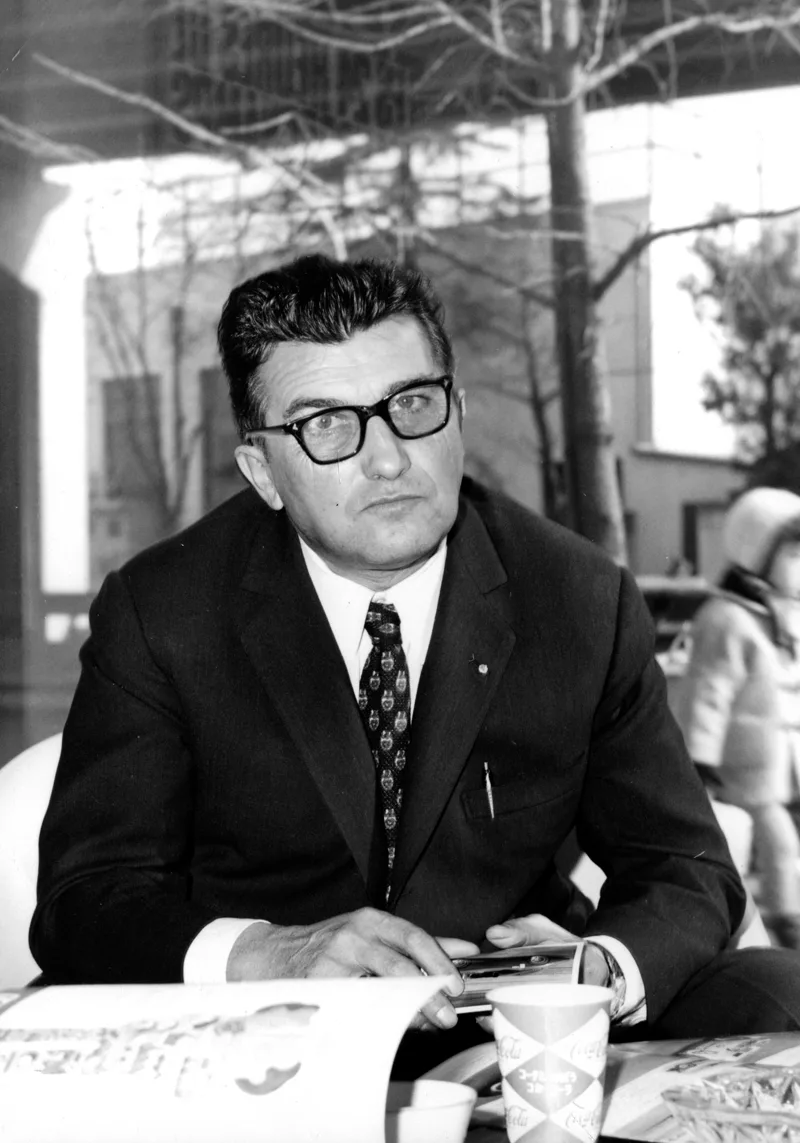
Ferruccio Lamborghini wanted to beat Ferrari, so he hired Giotto Bizzarrini to design the engine; he reportedly offered a bonus on every horsepower beyond Ferrari's V12. Bizzarrini drew a quad-cam 60-degree V12, a deliberate jab at Ferrari, whose V12 had one camshaft per bank.
The 3.5-litre engine, 3,465 cc, entered production in 1963 in the Lamborghini 350GT. It was the first internal combustion engine the firm ever made. The prototype produced 370 brake horsepower (276 kW) at 9,000 rpm in testing, almost 107 bhp per litre, and Bizzarrini insisted it could reach 400 bhp at 11,000 rpm. Detuned for the road, with production carburettors, it still made 280 bhp (209 kW).
The engine stayed in use for almost fifty years, nearly doubling in size to 6,192 cc and then 6,496 cc. Its heads were reworked for four valves per cylinder, Weber carburettors gave way to electronic fuel injection and wet-sump lubrication gave way to dry sump. The last of the line was the 6.5-litre unit in the Murcielago LP 670-4 SuperVeloce.
What changed when Audi bought Lamborghini?
Audi acquired Automobili Lamborghini in 1998, and the V12 kept being upgraded, growing from 5.7 litres in the Diablo VT to 6.5 litres in the last Murcielago. After years of debate, Lamborghini chose to start from scratch, and the all-new engine, codenamed L539, arrived in the 2011 Aventador.
The 6.5-litre second-generation engine makes 700 PS (515 kW; 690 hp) at 8,250 rpm and 690 N m (509 lb ft). It is 18 kg lighter than its predecessor, weighing 235 kg (518 lb), is oversquare with a 95 mm bore and 76.4 mm stroke, and fires in a different order. The third generation raised the compression ratio to 12.6:1, power to 825 PS (607 kW) at 9,250 rpm and torque to 725 N m (535 lb ft), while weight fell to 218 kg (481 lb).
What happened when Lamborghini went Formula One?
Lamborghini came into Formula One in 1989, the year the FIA banned turbos. Mauro Forghieri, once of Ferrari, built the LE3512, an 80-degree V12 of 3,493 cc, for the French Larrousse team. Many reports called it the sweetest-sounding engine of the new 3.5-litre formula.
Early results impressed despite unreliability. Philippe Alliot qualified fifth for the Spanish Grand Prix at Jerez, 1.417 seconds behind Ayrton Senna's pole, and then took the engine's first point with sixth place. The best finish was Aguri Suzuki's third in the 1990 Japanese Grand Prix at Suzuka. Over five seasons the engine took part in 80 races, started 49, and scored 20 points without a win or a pole. Larrousse's sixth place in the 1990 constructors' standings was the best. In 2014 Derek Warwick, who drove it at Lotus in 1990, summed it up as all noise and no go.
In 1993 Chrysler's Bob Lutz struck a deal with McLaren's Ron Dennis to test it. McLaren built a modified MP4/8B, and Senna and Mika Hakkinen drove it at Silverstone and Estoril. Senna asked for a less brutal top end and a fatter mid-range, and Forghieri delivered, lifting power from 710 bhp to about 750 bhp. Reliability was still poor, and McLaren's engineers said the longest any V12 lasted at Silverstone was 19 laps. Dennis chose Peugeot V10 engines for 1994 on a better commercial agreement, and the LE3512 was retired after Chrysler sold Lamborghini to Indonesian investors led by Tommy Suharto.
What is the Lamborghini V10?
It is a 90-degree petrol V10 developed for the Gallardo, first sold in 2003, and the first engine Lamborghini created after its acquisition by Audi. Its roots lie in two concept cars, the 1988 P140 and the 1995 Cala, both with 3.9-litre engines. The crankcase and block are made at Audi Hungaria in Gyor, Hungary, with final assembly at Sant'Agata Bolognese in Italy. Unusually for a production engine, it uses dry sump lubrication to keep the centre of gravity low.
There was speculation that the original 5.0-litre block was closely based on Audi's 4.2 FSI V8. Audi denied it. The Lamborghini's cylinder bore spacing is 88 mm against 90 mm for the Audi, and its heads have four valves per cylinder, where the German group then favoured five. The later 5.2-litre, however, is mechanically identical to Audi's 5.2 V10, with the same Fuel Stratified Injection and 90 mm spacing.
The 5.0 displaced 4,961 cc and the 5.2 displaced 5,204 cc. Outputs rose steadily: 368 kW (500 PS; 493 bhp) at 7,800 rpm in the first Gallardo, 390 kW (530 PS) in the Superleggera, 404.5 kW (550 PS) in the LP550/2, 412 kW (560 PS) in the LP560/4 and 419 kW (570 PS) in the LP570/4 Superleggera. The Huracan LP610/4 made 449 kW (610 PS) at 8,250 rpm, and the LP640/4 made 471 kW (640 PS) at 8,000 rpm with 600 N m. As of 2019 every Lamborghini V10 after the first-generation Gallardo is a 5.2.
The 5.0 split its crankpins by 18 degrees to give even firing intervals of 72 degrees, while the 5.2 has uneven intervals of 90 and 54 degrees. The V10 also went into the Audi R8, S6, S8 and RS 6, though the S6 and S8 version has a less robust crankshaft, cast pistons and wet-sump oiling, which explains the higher redline and specific output of the Gallardo and R8.