Clutches, a dismissed complaint and a raging bull: the real story of Ferruccio Lamborghini, Enzo Ferrari and the 1963 start of the rivalry.
Ferruccio Lamborghini, a tractor maker who owned several Ferraris, grew frustrated with their rough manners, weak clutches and poor service. When Enzo Ferrari dismissed his complaints, he founded Automobili Lamborghini on 7 May 1963 and launched the 350 GT, a refined V12 grand tourer, in 1964.
In 1958 a tractor maker travelled to Maranello and bought a Ferrari 250 GT. He kept buying Ferraris, and kept being irritated by them, until in 1963 he founded a car company of his own.
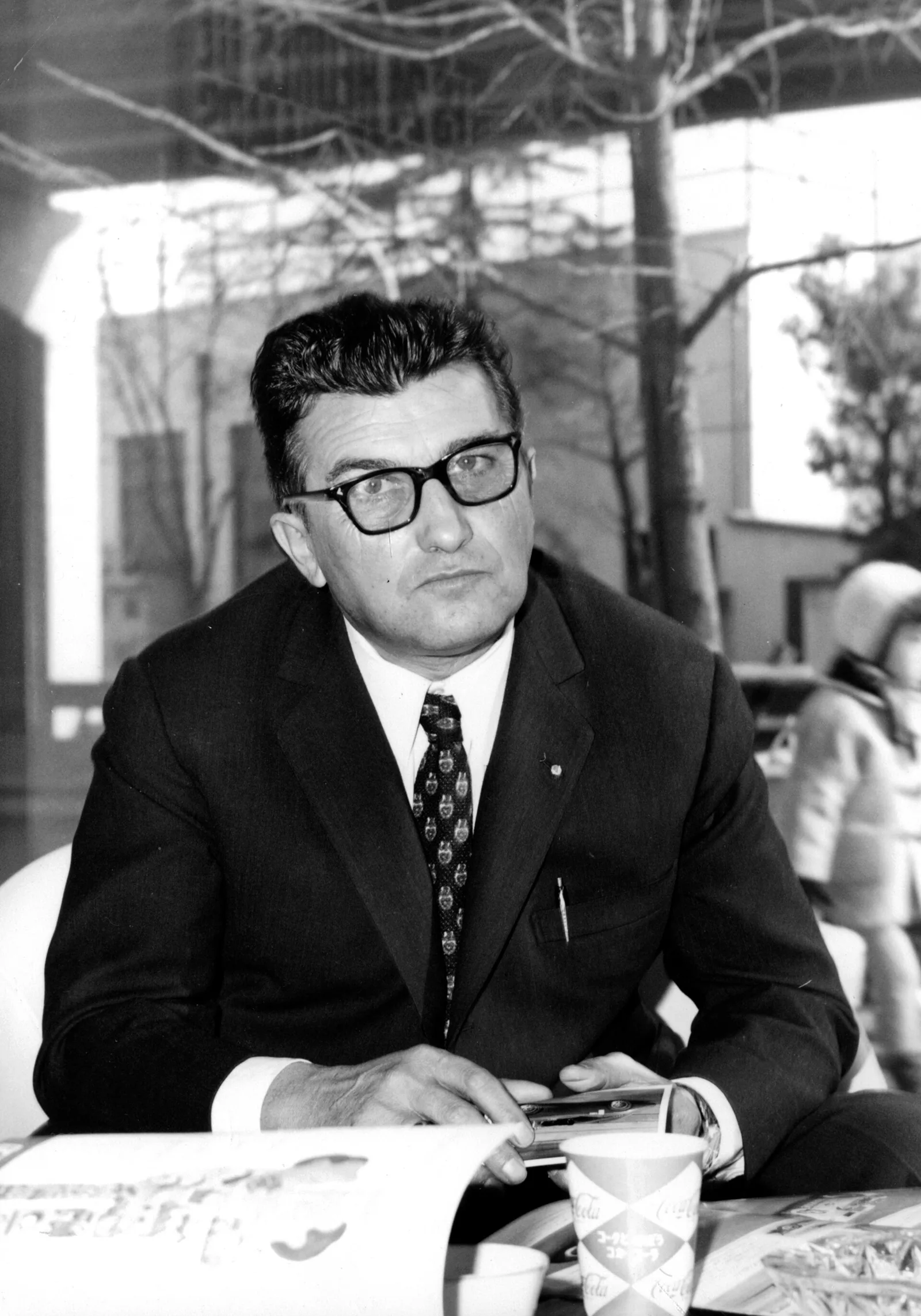
Who was Ferruccio Lamborghini before the supercars?
Ferruccio Lamborghini was born on 28 April 1916 in Renazzo, the son of grape farmers, and was drawn to machines rather than vines. He studied at a technical institute near Bologna, served as an air force mechanic on Rhodes during the war, and reached home in 1946 with a head full of engines.
Peacetime Italy needed tractors, and he supplied them cheaply. He bought surplus military vehicles and turned them into farm machines. His first Carioca tractors of 1947 ran on six-cylinder petrol engines from Morris trucks, and because petrol was prohibitively expensive he built a fuel atomiser that let the engine start on petrol and then switch to diesel. Lamborghini Trattori followed in 1948, and by the end of that boom it was an important name in agricultural equipment. An oil burner factory arrived in 1959, later extended into air conditioning.
He was also a restless driver. In 1948 he rebuilt an old Fiat Topolino into a 750-cc open two-seater and entered it in the Mille Miglia, only to put it into the side of a restaurant in Fano after 1,100 kilometres (680 mi). Money soon bought better machinery. By the early 1950s he owned Alfa Romeos and Lancias, and at one stage had enough cars to use a different one every day of the week. The garage included a Mercedes-Benz 300SL, a Jaguar E-Type coupe and two Maserati 3500 GTs. He respected Maserati's owner, Adolfo Orsi, but found the cars heavy and not very fast.
He knew he could earn triple the profit by putting tractor components into a high-performance exotic.
Why did Lamborghini fall out with Ferrari?
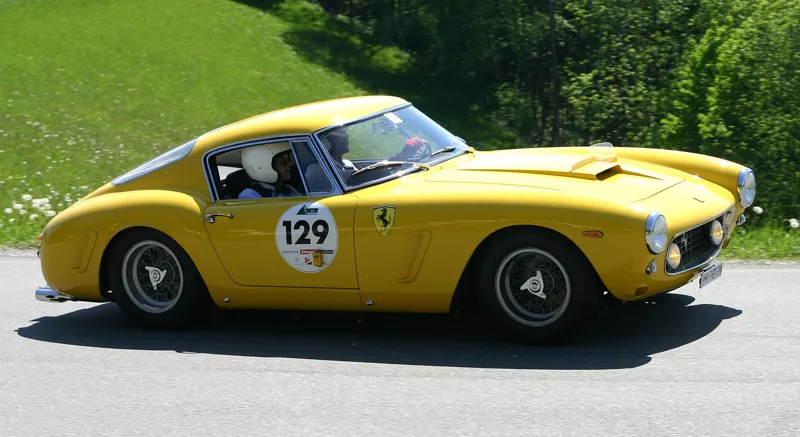
He bought his first Ferrari, a 250 GT with Pininfarina bodywork, in 1958, and went on to own several more. He judged them good cars but too loud and rough for the road, repurposed track machines with poorly built interiors, and he came to resent the servicing that went with them.
The clutch was the sore point. Lamborghini found the Ferraris fitted with inferior clutches, which meant repeated trips to Maranello for rebuilds. Technicians would take the car away for hours at a time, which he disliked. He had already voiced unhappiness about Ferrari's after-sales service, and he took his complaints to Enzo Ferrari himself. Ferrari dismissed them.
Lamborghini's answer was practical. He modified one of his own 250 GTs until it beat the standard cars, and that gave him the push to build something himself. His target was the perfect touring car that nobody would make for him: a grand tourer with high performance but also tractability, ride quality and a properly furnished interior, the things he felt Ferrari had neglected. He had a commercial eye, too. He knew he could earn triple the profit by fitting components from his tractor business into a high-performance exotic.
What kind of man was Enzo Ferrari?
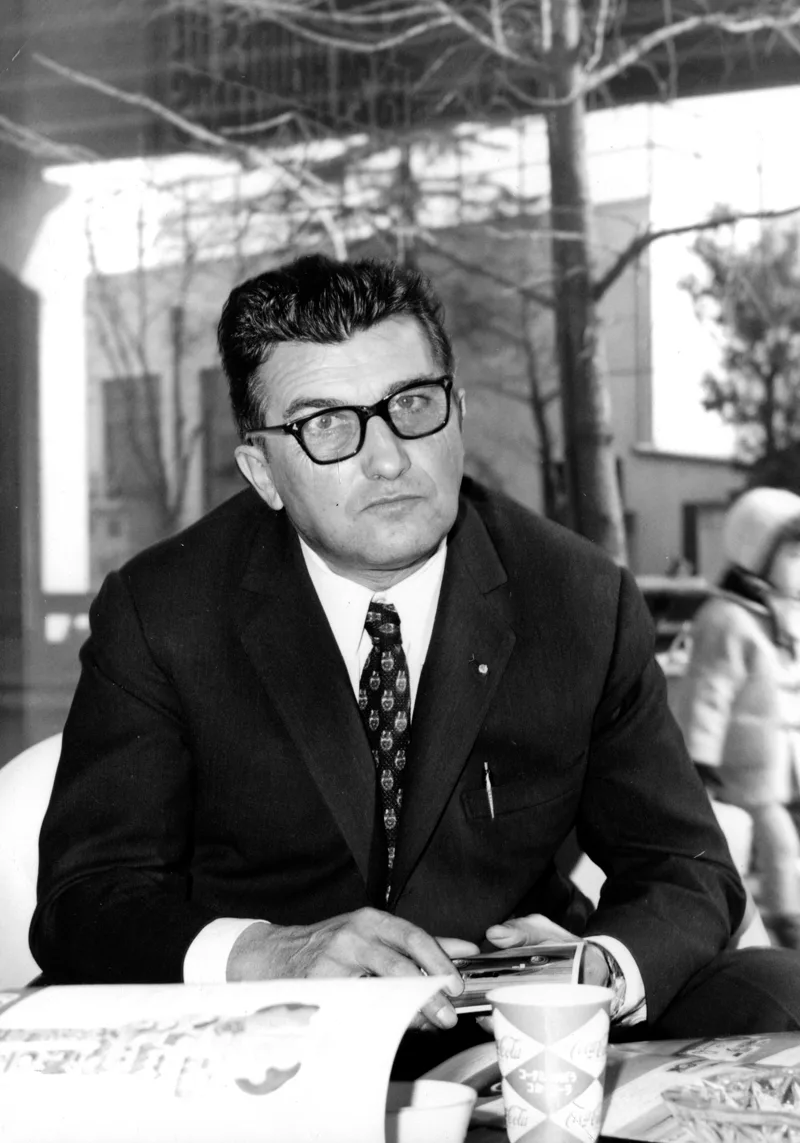
Enzo Ferrari, born in Modena in 1898, was a racing driver turned team owner who treated road cars mainly as a way to fund racing. He founded Scuderia Ferrari in 1929 and Ferrari S.p.A. in 1947, and his team won nine World Drivers' Championships and eight World Constructors' Championships in his lifetime.
The ambition went back to childhood. At ten he watched Felice Nazzaro win the 1908 Circuito di Bologna and decided to become a racing driver. He drove for CMN, then from 1920 for the Alfa Romeo racing department, and won his first Grand Prix at Ravenna in 1923. By the time he stopped driving he had started 41 Grands Prix and won 11. He ran Scuderia Ferrari as Alfa Romeo's racing arm, and the prancing horse that now sits on every Ferrari came from the fighter pilot Francesco Baracca, who was shot down and killed in 1918. The shield first appeared on a factory Ferrari in 1947.
His credo is usually quoted as "Second place is the first loser". Sports cars existed to pay for the racing, and the racing paid back in glory: nine victories at Le Mans, six of them in a row from 1960 to 1965, plus Formula One titles through the 1950s and 1960s. The record also has a dark side. After the 1957 Mille Miglia, when a Ferrari driven by Alfonso de Portago crashed into spectators and killed the driver, his co-driver and nine onlookers, Enzo Ferrari was charged with manslaughter. The case was dismissed in 1961.
What was happening at Ferrari when Lamborghini arrived?
Ferrari was in turmoil. In late 1961, in what became known as the Great Walkout, sales manager Girolamo Gardini, team manager Romolo Tavoni, chief engineer Carlo Chiti, sports car chief Giotto Bizzarrini and other senior figures left the company, and in 1962 they founded a rival firm, ATS.
Ferrari's 1962 Formula One season produced no wins and sixth place among the constructors. In 1963 ATS lured Phil Hill and Giancarlo Baghetti away. Ferrari promoted younger engineers, among them Mauro Forghieri, Sergio Scaglietti and Giampaolo Dallara, and signed drivers including John Surtees, who won the 1964 title. The 250 GTO and the mid-engined 250 P came out of the shake-up. ATS built its own V8 mid-engined road car, the 2500 GT, and folded at the end of 1963. Tavoni said in 1998 that he and his colleagues had been ousted after a disagreement over the role of Ferrari's wife in the company.
The commercial picture was no calmer. In 1963 Ferrari offered Ford the chance to buy the firm for US$18 million, then withdrew when it became clear Ford would not leave him independent control of the racing department. In 1969 he sold half the company to Fiat while keeping full control of racing, and Fiat's holding rose to 90% in 1988.
The overlap with Lamborghini is hard to miss. Bizzarrini, one of the men fired from Maranello, designed Lamborghini's first V12. Dallara, on Ferrari's list of promoted engineers, was by June 1963 developing the production Lamborghini.
How was Automobili Lamborghini born?
Ferruccio Lamborghini founded Automobili Lamborghini on 7 May 1963, in a purpose-built factory at Sant'Agata Bolognese. He gathered a team: Bizzarrini on the engine, Dallara and Paolo Stanzani on the chassis, and Franco Scaglione on the bodywork.
Bizzarrini left in May 1963 after the prototype engine had been tested. In June Lamborghini asked Dallara to turn the prototype grand tourer into something that could be built in numbers, with Stanzani and test driver Bob Wallace helping.
The identity was set against Ferrari's from the start. In 1962 he visited the Seville ranch of the breeder Don Eduardo Miura, and being a Taurus himself, he chose a raging bull as his emblem. The Miura sports car later took the breeder's family name, and the fourth example built was shown to Don Eduardo at his ranch. Later cars kept the bullfighting theme, with a few exceptions. The Countach took its name from a Piedmontese exclamation of astonishment, which according to legend Nuccio Bertone uttered when he first saw the prototype.
What was the first Lamborghini?
The first production Lamborghini was the 350 GT, built from 1964 to 1966 with a 3.5 litre V12 and a Carrozzeria Touring coupe body. It followed a prototype, the 350 GTV, which was shown at the Turin Auto Show in late October 1963 and met a lukewarm reception.
The GTV used Bizzarrini's engine, which was close to a race motor, potentially delivering 400 hp (294 kW) at 11,000 rpm. Lamborghini wanted something smoother and longer-lived, one that could manage 40,000 hard miles between services. Dallara and Wallace de-tuned it: a conventional wet sump instead of a dry sump, compression cut to 9.4:1, cheaper side-draft Weber carburettors that also allowed a very low bonnet line, and softer cam profiles. The first detuned engine ran on 3 October 1963 with 270 hp (199 kW) and could reach 254 km/h (158 mph). A second figure, from dynamometer testing of early production engines, is 280 hp (206 kW) at 6,500 rpm.
The revised car debuted at the Geneva show in March 1964, only months after the GTV had flopped in Turin, and production began in May. Touring of Milan built the bodies using its Superleggera method, fixing aluminium panels to a tubular structure, and sent complete assemblies to the factory. Car No. 101 reached Sant'Agata on 9 March 1964, and the first customer car, No. 104, was delivered on 31 July. The factory had hoped for ten cars a week; it delivered fewer than 25 in 1964.
The car itself matched what its owner had asked for. It had a five-speed ZF manual gearbox, independent suspension at all four corners and Girling disc brakes all round. The quoted figures are 0-100 km/h in 6.8 seconds and a top speed of 254 km/h (158 mph), from a kerb weight of 1,450 kg (3,197 lb). Lamborghini built one hundred and twenty before replacing it with the 400 GT in 1966, and many owners later fitted the 4.0 litre engine for its greater power and better parts supply. The 350 GT's success ensured the company's survival and made it a viable competitor to Ferrari.
How do the two founders and their companies compare?
| Point | Ferrari | Lamborghini |
|---|---|---|
| Founder | Enzo Ferrari (1898-1988) | Ferruccio Lamborghini (1916-1993) |
| Background | Racing driver and team boss | Tractor and industrial manufacturer |
| Car company founded | Ferrari S.p.A., 1947 | Automobili Lamborghini, 7 May 1963 |
| Racing | Road cars funded the racing | No factory racing under the founder |
| Emblem | Prancing horse | Raging bull |
| Founder's exit | Sold 50% to Fiat in 1969, kept control of racing | Sold 51% in 1972 and the rest in 1974 |
| Later ownership | Fiat held 90% from 1988 | Chrysler from 1987; Volkswagen Group, through Audi, since 1998 |
Why did Lamborghini refuse to go racing?
Ferruccio Lamborghini decided early that there would be no factory-supported racing. He saw motorsport as too expensive and too draining on company resources, and the policy set him apart from Ferrari, whose road cars were funding for the track.
The decision caused friction with his engineers, many of them racing enthusiasts, some of whom had worked at Ferrari. Dallara, Stanzani and Wallace spent their spare time on a prototype called the P400, designed as a road car with racing potential. When Lamborghini found out, he let it proceed as a marketing tool while insisting it would never race. It became the Miura, the 1966 coupe with its engine behind the driver. The nearest thing to works racers were a few heavily modified one-offs, including Wallace's Miura SV-based Jota.
The firm did not stay away from motorsport for ever. In the mid-1970s Lamborghini agreed to develop and build 400 cars for BMW to meet Group 4 rules, but shaky finances left it late with prototypes, and BMW took the project in-house. That car became the BMW M1, first delivered in October 1978. From 1989 to 1993 Lamborghini supplied Formula One engines to Larrousse, Lotus, Ligier, Minardi and the Modena team, and its best result was Aguri Suzuki's third place for Larrousse at the 1990 Japanese Grand Prix. The 1992 Larrousse-Lamborghini was largely uncompetitive and sprayed oil from its exhaust, tinting the cars behind yellowish-brown. McLaren tested an engine badged as a Chrysler in 1993; Ayrton Senna was reportedly impressed, but McLaren chose Peugeot instead.
Today the company's Squadra Corse division builds GT3 and Super Trofeo cars, and more than 60 private teams run the Huracan GT3 Evo 2.
What happened to the two founders and their firms?
Lamborghini's businesses ran into trouble in the early 1970s. In 1971 the tractor firm lost its South African importer's orders and a Bolivian order after a coup, and in 1972 he sold his stake in Trattori to SAME. He then sold 51% of the car company to the Swiss businessman Georges-Henri Rossetti for US$600,000.
The 1973 oil crisis hit sales of fast cars everywhere. By 1974 he had cut all ties with the cars carrying his name, selling the remaining 49% to Rene Leimer. He retired to La Fiorita, an estate of 3 km2 (740 acres) by Lake Trasimeno in Umbria, where he made wine, hunted and designed a golf course. He died on 20 February 1993, aged 76, after a heart attack. Enzo Ferrari died on 14 August 1988.
The car company he founded went bankrupt in 1978 and passed through receivership under the Mimran brothers, who had bought it by 1984. Chrysler took over in 1987. In 1998 Volkswagen Group bought it, and Audi runs it. Sales fell nearly 50% during the Great Recession of the late 2000s. Ferrari's story ran differently: Luca Cordero di Montezemolo became president in 1992 and held the post until September 2014.
Where do Lamborghini and Ferrari stand now?
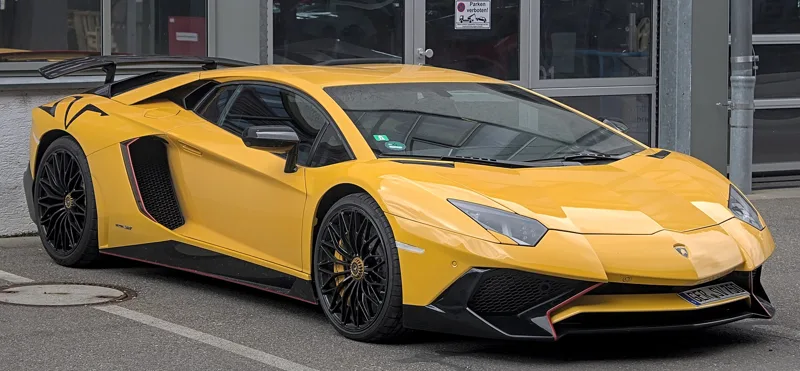
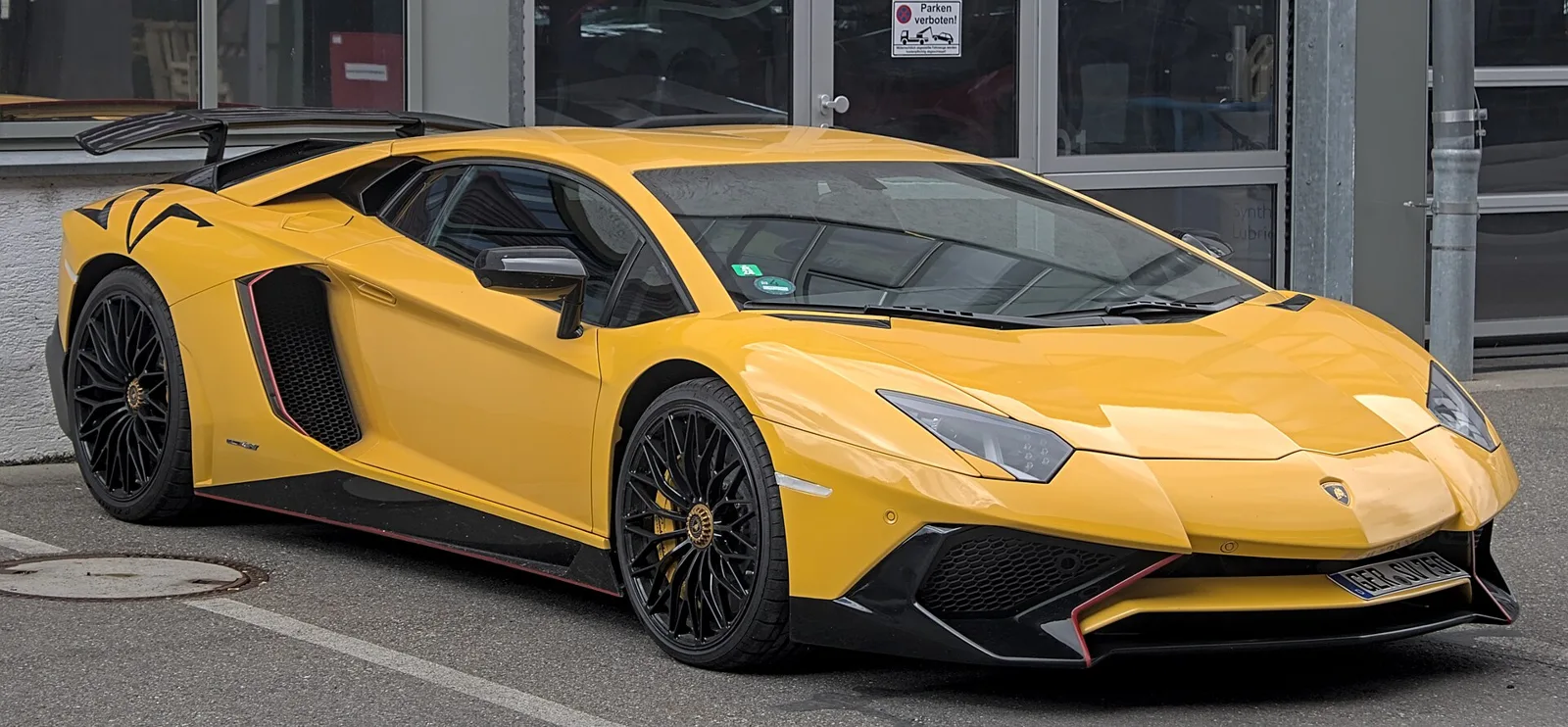
As of 2026, Lamborghini sells three model lines: the Revuelto, the Temerario and the Urus. The Revuelto began production in mid-2023 and pairs a 6.5L naturally aspirated V12 with three electric motors for a combined 1,001 hp (1,015 PS). It replaced the Aventador.
The Temerario is a mid-engined plug-in hybrid, unveiled on 16 August 2024 as the successor to the Huracan. The Urus is a twin-turbo V8 SUV with front engine and all-wheel drive. In 2021 Lamborghini's chief executive said that by 2024 all its models would be hybrid. The company also makes V12 marine engines for offshore powerboat racing, a link back to the Riva Aquarama speedboat that Ferruccio Lamborghini ordered in 1968 with a pair of 350 GT V12s.
Enzo Ferrari's final years were taken up with racing: after Jody Scheckter's 1979 title and a poor 1980, he switched to turbo engines in 1981, and the 126C2 of 1982 showed great promise. The Lamborghini legacy continues in other forms too. His son Tonino opened a museum in his honour, now the Museo Lamborghini in Argelato, near Bologna, and his daughter Patrizia runs the winery on the Umbrian estate. A biographical film, Lamborghini: The Man Behind the Legend, appeared in 2022.