Three oil names, three ways of turning a logo into a colour scheme people remember, from a pump disc and a Texas star to a motorcycle championship debut.
Oil companies used colour to prove their fuel was genuine, then carried it into motorsport. Gulf had its orange disc on pumps and cans, Texaco's Havoline backed NASCAR cars into 2008, and Repsol's logo debuted in the 1971 Motorcycling World Championship, long before the group existed.
Repsol's logo first appeared in the 1971 Motorcycling World Championship, fifteen years before the Repsol group existed. Oil companies have always known that a car or bike in the right colours is a moving advertisement, and the best of them guarded those colours as carefully as their refineries.
Gulf, Texaco and Repsol reached that idea by different roads. Gulf sold fuel from an orange disc, Texaco hung a white star on a red circle and Repsol took a racing paddock as the place to introduce a name.
Why did oil companies care so much about colour?
Because fuel was once a gamble. Early in the twentieth century, petrol sold without a brand in America could be dirty or erratic, so a recognisable colour on a pump told the driver that the product inside met a steady standard. The paint came first as a promise, and only later as a livery.
Gulf was one of the companies that pushed this idea hardest. Its cans and its pumps carried an orange disc, and a customer who saw the disc could be confident about what went into the tank. That is the same logic that makes a team colour work on a race car: spot it from a distance, trust what it stands for.
The paint came first as a promise, and only later as a livery.
How did Gulf use its colours beyond the forecourt?
Gulf grew out of the oil boom at Spindletop, near Beaumont in Texas, where a find in 1901 led investors, led by the Pittsburgh Mellon family, to build a refinery at Port Arthur. Gulf Oil Corporation came together in 1907 from several oil businesses, and its name points at the Gulf of Mexico. It became one of the Seven Sisters, the group of oil majors that dominated the industry.
The company had a taste for firsts that reached ordinary drivers. It opened the first drive-in service station in 1913 and handed out complimentary road maps, and in 1951 it installed the first commercial catalytic cracking unit at Port Arthur. It also earned a name for specialty products, especially lubricants and greases, and for goods built for maritime and aviation use.
Its most striking use of company colours in the 1930s was in the air. Major Alford J. Williams, Gulf's aviation manager, had Grumman build two modified biplanes, cleaned-up versions of a Navy fighter, to carry the Gulf name. The first, the Gulfhawk II, was delivered in December 1936 in Gulf Oil colours and logos. In 1938 Williams took it on a European tour, and an extra scavenger pump plus five drain lines let the engine keep running while the aircraft flew upside down for up to thirty minutes.
The second aircraft, the Gulfhawk III, was delivered on 6 May 1938. The Army Air Force took it over in November 1942 as a VIP transport, and it crashed in the Florida Everglades early in 1943. Washington's National Air and Space Museum preserves the Gulfhawk II.
What happened to the Gulf name?
At its peak, around 1970, Gulf processed 1.3 million barrels of crude a day and employed 58,000 people. As an independent company it ended in 1985, when it joined forces with Standard Oil of California, and both companies rebranded as Chevron in the United States.
The name outlived the company. In the United States the brand rights sit with Gulf Oil Limited Partnership, which runs service stations and terminals from Wellesley, Massachusetts. Outside the United States the network centres on Gulf Oil International, owned by the Hinduja Group, with Spain and Portugal the exception: there the brand belongs to TotalEnergies.
| Brand | Visual mark | Company started | Where the colours were seen |
|---|---|---|---|
| Gulf | Orange disc | Gulf Oil Corporation formed 1907 | Pumps, containers and the Gulfhawk aircraft of 1936 and 1938 |
| Texaco | White star in a red circle; hexagon sign two years after 1964 | Texas Company formed 1 May 1902 | Service stations in all 50 states and Havoline-backed NASCAR cars until 2008 |
| Repsol | Repsol logo, first shown 1971 | REPESA incorporated 1948 | Motorcycling World Championship, 1971 |
Texaco racing livery: the star, the banjo and Havoline
Texaco began as the Texas Fuel Company in Beaumont in 1902, and the red-circle star recalls the lone star of Texas. Its slogans leaned on the symbol, with jingles telling motorists they could rely on the man wearing the star. In 1928 it became the first American oil company to sell petrol across the country under one brand name, covering all 48 states then in the Union, and by 1959 it was the biggest-selling petrol brand in the country with all 50.
The look changed with the decades. Two years after the Matawan station design of 1964, a hexagon sign with a red outline, black TEXACO lettering and a small banjo mark replaced the old banjo sign. The company also hired the industrial designer Walter Dorwin Teague in 1937 to develop a modern service station, which shows how seriously it treated the visual side of the business.
Racing mostly came through Havoline. Texaco acquired the Indian Oil Company in 1931, and with it the rights to Havoline motor oil. Havoline then became the name on the car. By one reckoning the brand sponsored a NASCAR entry continuously from the early 1980s to 2008, while by another Chevron's Texaco Havoline brand pulled out in 2007, so the end date is given two ways. Either way, the roll of drivers who raced under the Texaco banner is long. Juan Pablo Montoya and Casey Mears took their turn, as did Jamie McMurray, Ricky Rudd and Kenny Irwin Jr., along with Dale Jarrett, Ernie Irvan and Davey Allison.
The most celebrated Havoline design is the Battlestar. It dated from 1987 and the Ranier-Lundy team, with the late Davey Allison at the wheel, and it was brought back at the 1997 Coca-Cola 600 and again in the DieHard 500 at Talladega Superspeedway. Before Havoline stepped away, the brand regularly staged such looks back at its own history.
Special paint schemes in racing: where did they come from?
A special paint scheme is a one-off or limited-run variation on a team's normal appearance. Historically they belong mostly to NASCAR, partly because a stock car has far more surface area to paint than an open-wheel machine and partly because the season is so long. They have spread a little into IndyCar, and NASCAR's growing media coverage has made them attractive to fans and sponsors alike.
The tradition goes back to the 1991 Daytona 500. An R. J. Reynolds promotion gave five drivers without sponsors a patriotic design each, honouring the American forces then fighting in Operation Desert Storm: Alan Kulwicki in the number 7 car for the Army, Greg Sacks in the 18 for the Navy, Mickey Gibbs in the 24 for the Air Force, Dave Marcis in the 71 for the Coast Guard and Buddy Baker in the 88 for the Marines.
The idea really took hold in 1995, when Dale Earnhardt arrived at The Winston in a silver car, a tribute to the event's silver anniversary, instead of his normal black. Nicknamed Quick Silver or Silver Select, it was a hit. A year later he came back with an Atlanta Olympics design. Fan reaction was so positive that by the end of the decade almost every race had at least one driver in a special scheme.
Many of these came from sponsorship arrangements lasting a single weekend, and sometimes an existing sponsor simply used the car to push a different product from its range. Several drivers often wore related designs at the same time.
Which themes keep coming back?
A handful of ideas recur. An associate sponsor moves up to primary status for a chosen race. Sports teams, charities, cartoon characters, rock bands and films all make appearances, and films suit the format because a box-office run is short. Dale Jarrett ran a reversed colour scheme in 1999 to raise money for breast cancer research. For the 2010 Winter Olympics, InBev put a white mountain design with the Olympic rings on Kasey Kahne's number 9 Ford Fusion, and it was used only for races held while the Games ran.
One scheme got too good. Jeff Gordon's Jurassic Park car, nicknamed T-Rex, dominated the 1997 All-Star Race and was in effect outlawed by NASCAR after the race.
Beyond NASCAR the format is rarer. Red Bull Racing painted a Star Wars scheme on its Formula One car to promote Revenge of the Sith, followed by a Superman one for Superman Returns. In the Indy Racing League, Panther Racing ran a Pennzoil Platinum design at selected 2005 events in place of its usual yellow, which makes it a rare case of an oil brand rewriting its own look.
Why do famous racing liveries keep returning as throwbacks?
Because a good livery is a time machine. Throwback schemes celebrate the past of well-known drivers and brands, and oil and lubricant names appear throughout. Valvoline and Mark Martin authorised paint schemes recalling his Valvoline-backed cars at Hendrick Motorsports, a sign of how long a lubricant's colours can stay attached to one driver. In 2005, Martin's Salute to You tour painted cars to represent different stages of his career.
The most elaborate throwbacks belong to Gordon. His car at the 2004 Nextel All-Star Challenge was dressed as the DuPont Rainbow Warriors, the design he used from 1992 to 2000. In 2015 Axalta ran the same livery with its own logo for Gordon's final full-time season, and William Byron drove it again in 2018 at Darlington.
Some revivals come with a twist. When Gordon drove a replica of Darrell Waltrip's 1983 yellow Pepsi Challenger at the 2009 Aaron's 499, he crashed on lap eight. Waltrip himself, in the 1983 race, had in fact chosen a white design. Pepsi used the yellow livery elsewhere at the time, among them All American Racers (CART) and Don Prudhomme (NHRA).
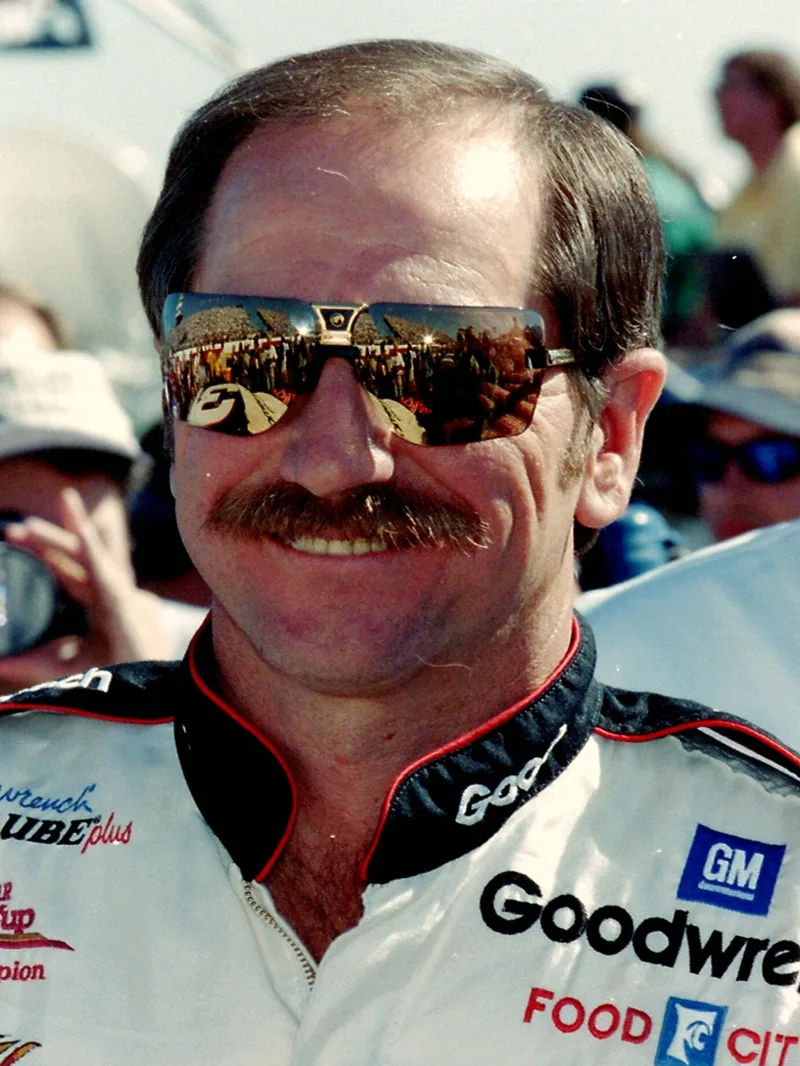
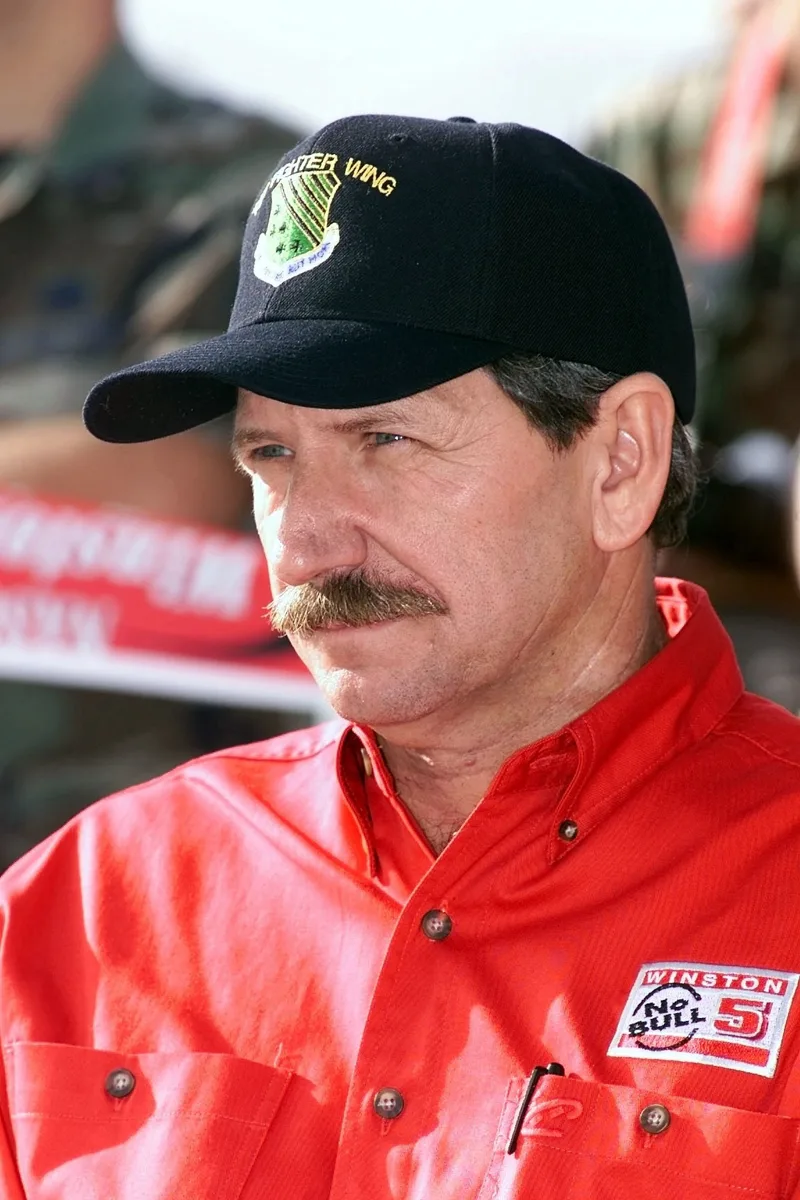
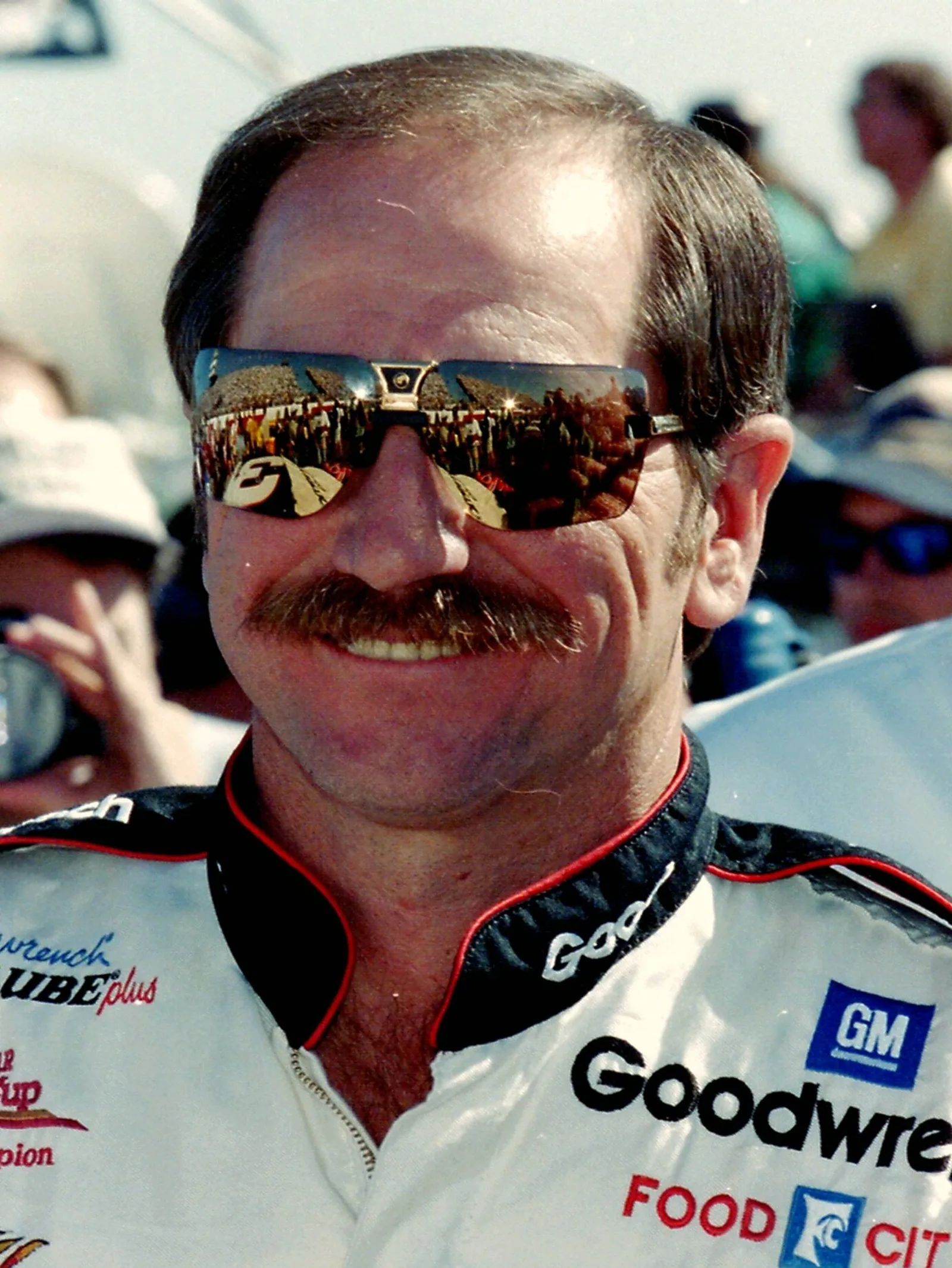
Richard Childress Racing marked 35 years at the 2004 UAW-GM Quality 500 with three throwbacks, recalling its first win in 1983, its 1987 championship and the 1995 silver car. Dale Earnhardt Jr. did something more personal in 2006, running a black and silver design reminiscent of his father's Goodwrench cars and later a cream one echoing his grandfather Ralph's 1956 Sportsman championship.
Repsol: a logo that raced before the company did
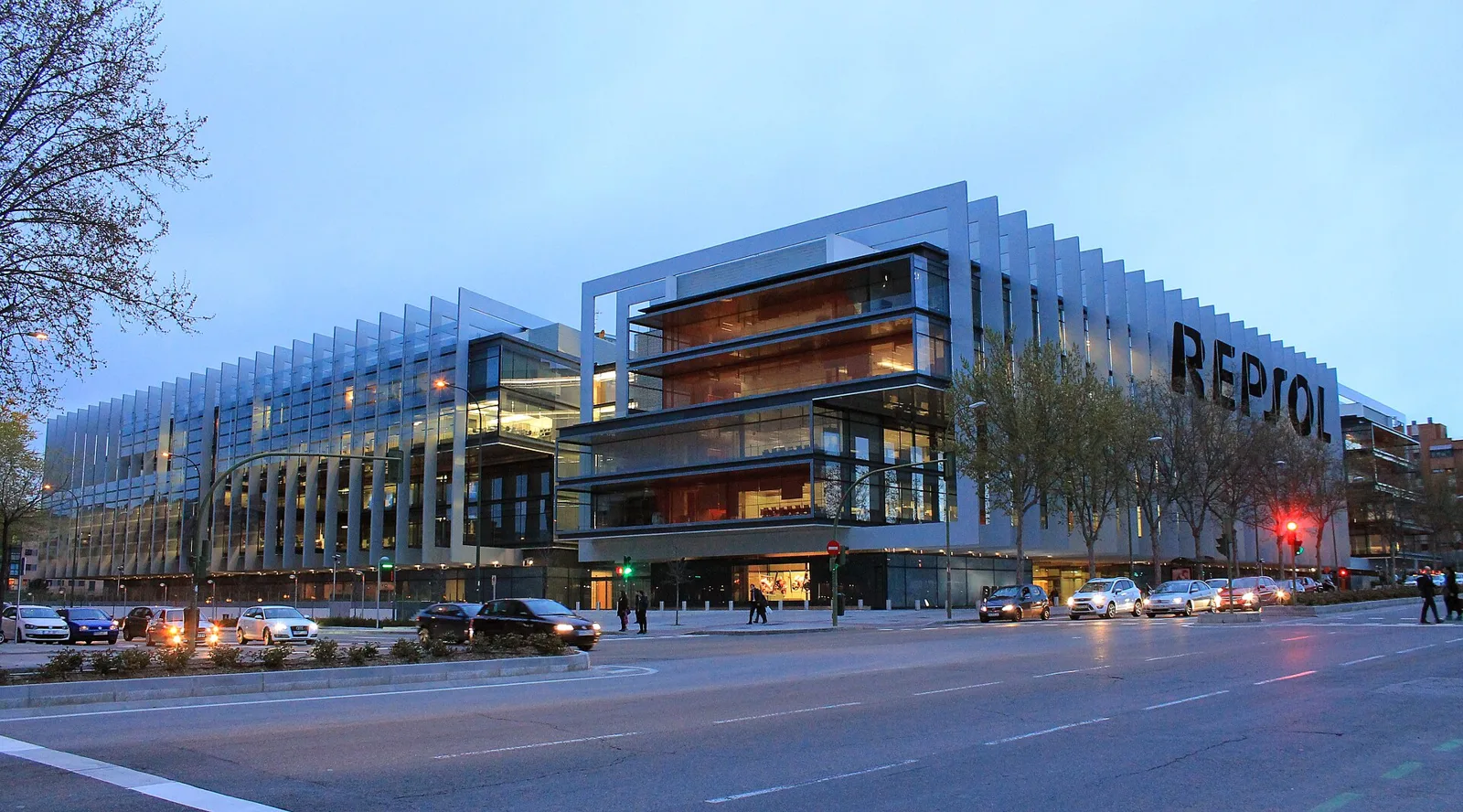
The Spanish story starts with REPESA, short for Refineria de Petroleos de Escombreras S.A., incorporated in 1948 to build a refinery in the Escombreras valley near Cartagena. REPSOL was the lead brand on its petrol, oils and lubricants from the outset, which fits with the mark turning up in motorcycle racing by 1971.
The Repsol group proper arrived in 1986, with the state hydrocarbons institute as its only shareholder. Privatisation began in 1989 with a stock-market listing of 26 per cent and was finished by 1997. In between, in 1991, the institute was hunting for a name for the new mixed public-private company. A street-level survey found that only two words were widely linked with oil in Spain: CAMPSA, the badge of the old monopoly, and REPSOL. The brief had been a short, round, catchy name, and Repsol, built from the first letters of the small lubricant firm Repesa, was not an acronym at all.
By 2022 the company ranked 320th on the Forbes Global 2000 list, with 24,000 employees. It runs five refineries in Spain, at Cartagena, A Coruna, Bilbao, Puertollano and Tarragona, plus one in Peru, and sells through more than 6,900 outlets under the Repsol, CAMPSA and Petronor names, of which over 6,500 are service stations in Europe and Latin America.
What does the livery tell a driver at the pump?
Quite a lot, as it happens, because every one of these paint jobs sits at the end of a supply chain. The forecourt brand is the part drivers see, and each company has built it around something concrete. Texaco has around 980 branded stations in the United Kingdom, and its fuel carries Techron, an additive developed by Chevron, which was introduced into its US and Latin American fuels in August 2005. At the end of 2021 Repsol counted 4,689 stations across Spain, Portugal, Mexico and Peru.
The same principle is behind the oldest bit of this story. When Gulf's orange disc told a motorist that the contents of a can were reliable, it was making the same promise a race livery makes: this brand is what it appears to be.
What the oil brands and the throwbacks do now
For the brands themselves, the direction of travel is already visible in company statements. In May 2018 Repsol announced that it would no longer seek growth in oil and gas, and by the end of 2021 its low-carbon and renewable generation capacity stood at 3,738 MW. Texaco has been owned by Chevron since the 2001 merger, and Gulf's name now belongs to separate owners in each region.
The paint, meanwhile, keeps looking backwards. Darlington runs a retro round at which teams revive old designs, and Valvoline's schemes from Mark Martin's Hendrick days were slated for the 2022 edition, with Alex Bowman driving.