A champion whose wrecked car was rebuilt mid-race, the first man over 200 mph, the oldest Cup winner and the Alabama Gang driver who won in Australia.
Benny Parsons won the 1973 Winston Cup title, Buddy Baker was the first to top 200 mph on a closed course and won the 1980 Daytona 500, Harry Gant became the oldest Cup winner and Mr. September in 1991, and Neil Bonnett won two World 600s before dying in 1994 practice.
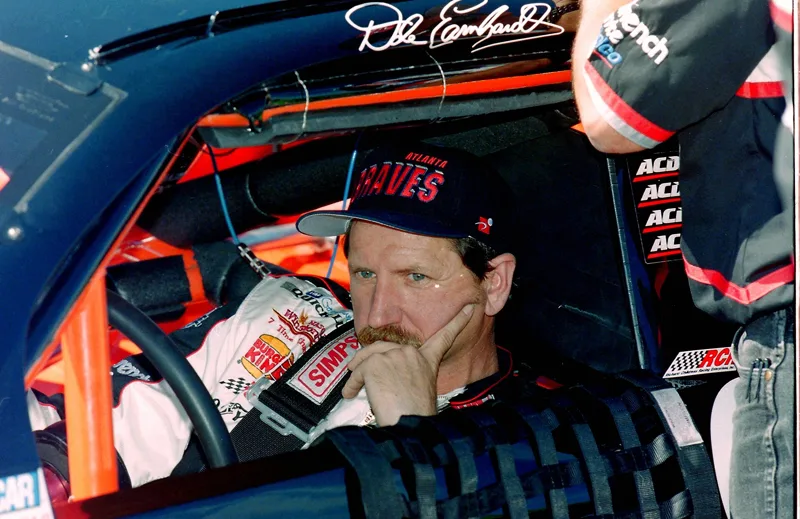
On 24 March 1970, a driver climbed into a winged Dodge Daytona at a test session and became the first man to exceed 200 mph on a closed course. It was the only car to beat that number all year. The driver was Buddy Baker, and he would spend the next two decades building a reputation as a superspeedway specialist.
Baker is one of four drivers who defined the sport on the superspeedways of the 1970s and 1980s. Benny Parsons won a championship by returning to the track after a wreck. Harry Gant won four races in a row at 51. Neil Bonnett came up through the Alabama Gang. Between them they show what the long, high-banked tracks demanded of a driver.
Buddy Baker: the Gentle Giant
Elzie Wylie Baker Jr., known as Buddy, was born in Florence, South Carolina, in 1941, the son of the two-time champion Buck Baker. He started racing in 1958 at the age of seventeen and began his NASCAR career the next year, and as a teenager he studied his father and Fireball Roberts closely. His first victory was the 1967 National 500 at Charlotte.
The 200 mph run in 1970 made his name. He was testing a car from Chrysler Engineering, the number 88 blue 1969 Dodge Daytona, also called DC-93, when he became the first to cross the barrier on a closed course. His reputation as a superspeedway specialist grew from there. Over a 33-year career he won 19 Cup races, four of them at Talladega and two at Daytona, among them the 1980 Daytona 500. That race remains the fastest in the event's history, at an average of 177.602 mph (285.809 km/h).
The Career Grand Slam
Baker belongs to a small group who have won NASCAR's four most prestigious races: the Daytona 500, the Jack Link's 500, the Coca-Cola 600 and the Southern 500. The roll call runs from Richard Petty and David Pearson to Dale Earnhardt and Jeff Gordon, and takes in Bobby Allison, Darrell Waltrip, Jimmie Johnson, Kevin Harvick and Denny Hamlin. Baker is one of two on the list who never won a Cup championship. He raced part-time, with only three full seasons, co-owned his car from 1985 to 1989 and competed in two International Race of Champions series. His 1,099 laps led at Talladega remain a track record.
Broadcaster
Baker retired from NASCAR in 1994 and worked as a television analyst, first for The Nashville Network from 1991 and then for TBS and CBS from 1996. His calls included the first All-Star Race run at night, Dover's final 500-mile event in 1997, Earnhardt's one Daytona 500 victory and Daytona's first prime-time race. From 2007 he co-hosted shows on SiriusXM's NASCAR Radio. On 7 July 2015 he announced he was leaving broadcasting after a lung cancer diagnosis, and told listeners to give a smile when they said his name. He died at home in Catawba County, North Carolina, on 10 August 2015, and at Michigan that month, drivers in all three NASCAR series put stickers on their cars in his memory.
He entered the International Motorsports Hall of Fame in 1997, then the Motorsports Hall of Fame of America (2008) and, in January 2020, the NASCAR Hall of Fame.
Parsons won the 1973 title with a single victory, and Gant won four in a row at 51.
Benny Parsons: the Professor and the 1973 championship
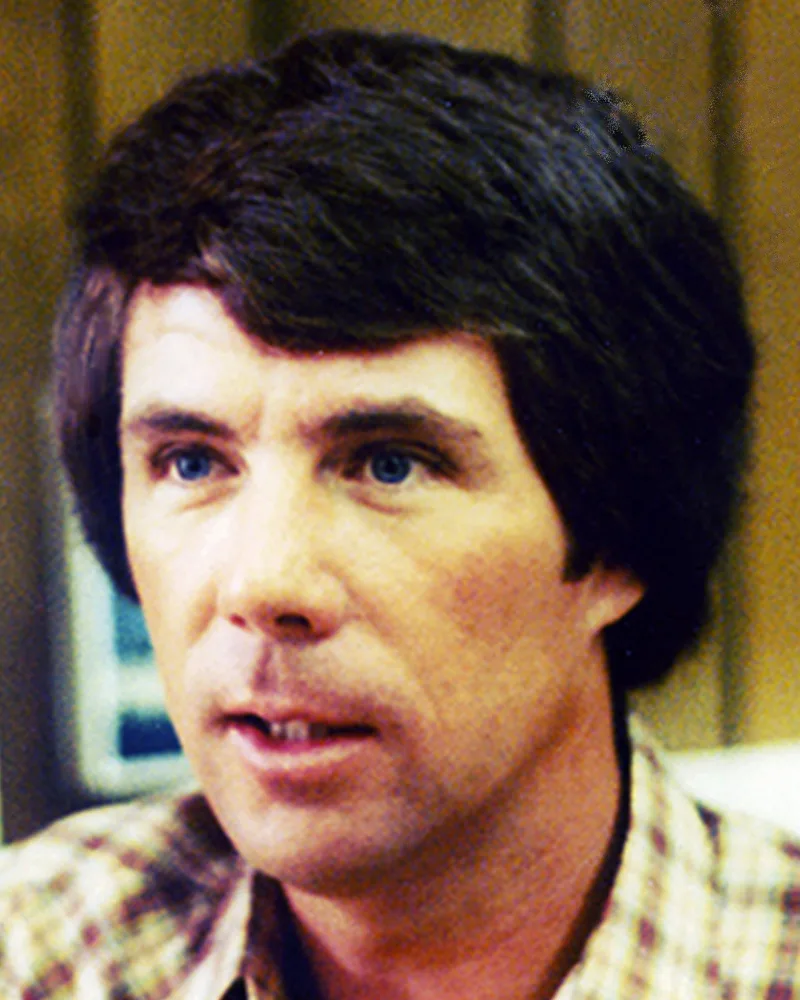
Benjamin Stewart Parsons, nicknamed BP and the Professor, was born in Wilkes County, North Carolina, in 1941. After high school he moved to Detroit, where his father ran a taxicab company and he pumped petrol and drove cabs. One day two customers hauling a race car asked him along to a local track. The scheduled driver did not show, so Parsons drove the car that night.
He ran one NASCAR race for Holman-Moody in 1964 and won the ARCA championship in 1968 and 1969. He went full-time in 1970 with crew chief John Hill, driving the number 72 car for L.G. DeWitt, and finished eighth in points. His first win came in 1971 at South Boston Speedway.
How he won the 1973 title
Parsons took the 1973 Winston Cup championship with a single victory, even though David Pearson won eleven races, because Pearson started only eighteen. Parsons collected 21 top-tens and fifteen top-fives in 28 events. The title came down to Rockingham, where a crash on lap thirteen left his car heavily damaged. Other crews joined his in rebuilding it, hoping to see an underdog beat Richard Petty. He rejoined the race 136 laps later and finished 25th. Petty, who had the pole, suffered engine trouble, took 35th and fell to fifth in the standings, while Cale Yarborough was runner-up, 67 points behind. No one else has held both an ARCA and a NASCAR championship.
From 1974 to 1980 he finished third to fifth in points, and he won the Daytona 500 in 1975. He took the 1980 World 600 and the Los Angeles Times 500, the last major race held at Ontario Motor Speedway. At Talladega in 1982 he qualified for the Winston 500 at 200.175 mph, the first NASCAR qualifying run over 200 mph (322 km/h). His final win came in the 1984 Coca-Cola 500 at Atlanta.
In 1987 Parsons substituted at Hendrick Motorsports for Tim Richmond, who was ill. At Darlington he hit the wall on the first lap, and crew chief Harry Hyde famously refused to let him pit because the crew was on an ice cream break. The film Days of Thunder alludes to the incident. He ended his driving career in 1988 and moved to the broadcast booth, working for ESPN, TBS, NBC and TNT. He won an ESPN Emmy in 1996, and is credited with discovering Greg Biffle at a talent show in Tucson. He died of complications from lung cancer treatment at Carolinas Medical Center on 16 January 2007. His career totals include 283 top-ten finishes, and he led at least one lap in 192 races. He never finished lower than fifth in points between 1972 and 1980. He was voted into the NASCAR Hall of Fame in 2016 for the class of 2017.
Harry Gant: Mr. September
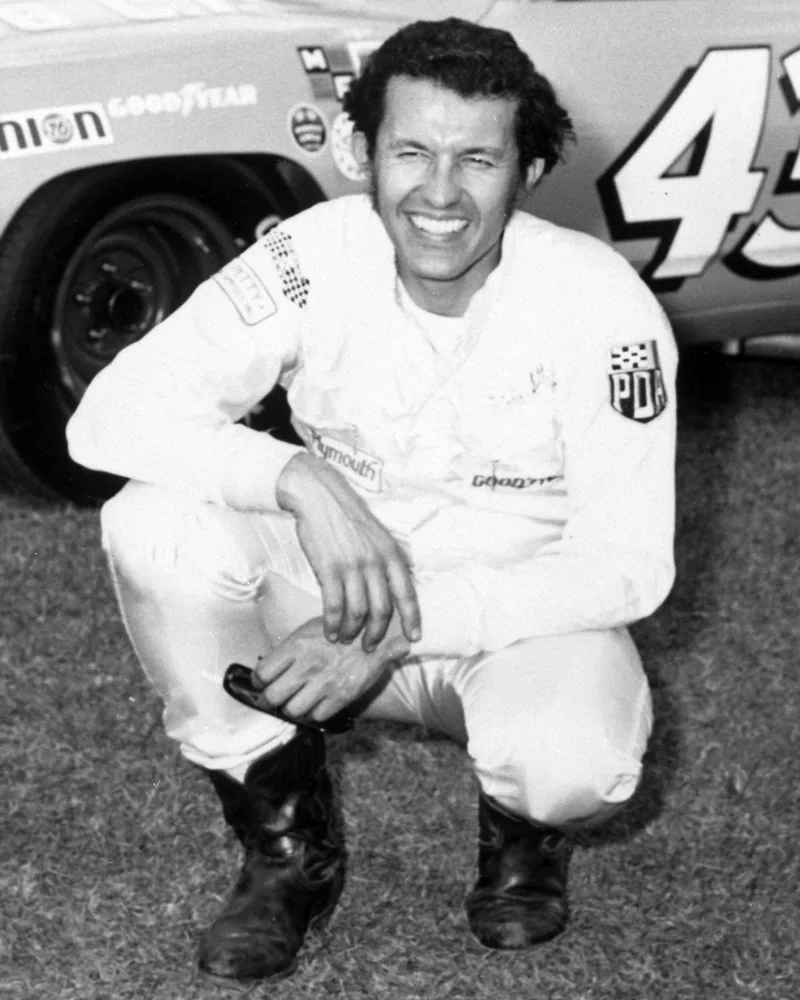
Harry Gant, born in 1940, is best known for driving the number 33 Skoal Bandit car in the 1980s and 1990s. He grew up racing at the old dirt track in Hickory, North Carolina, and won the track championship before the surface was paved in 1967. With the car builder and crew chief Kenneth Sigmon he won more than 300 races and the NASCAR Sportsman national championship in 1972, 1973 and 1974. In 1979 he sold half of his construction business to race full-time in Winston Cup.
His nicknames tell the story. He was the Taylorsville Flash early on, Handsome Harry for his looks, the Bandit after his sponsor, High Groove Harry for the line he took through corners, and Hard Luck Harry after second places and mechanical failures.
The long wait for a first win
Gant made his first Cup start at Charlotte in 1973 and finished 11th. He raced full-time from 1979 and joined the Skoal Bandit team, owned by Hal Needham and Burt Reynolds, in 1981. He finished second ten times before his first win at Martinsville on 25 April 1982, at 42 years old. In 1984 he was runner-up in points to Terry Labonte, his best championship result, and in 1985 he finished third, 259 points behind Darrell Waltrip. That year he also won the International Race of Champions title on a tiebreak, after a photo-finish win over Labonte at Michigan, and drove at Talladega with the first telemetry system installed on a race car, with data sent to CBS.
Mr. September
After three winless years he won at Darlington in 1989 and told victory lane that the Bandit was back. His great year was 1991. He won the Winston 500 by gambling on fuel mileage, and Rick Mast, drafting behind him, eased off in the final laps to save the win. In September, at 51, he took every Cup race that month, at Darlington, Richmond, Dover and Martinsville, plus two Busch races, earning the name Mr. September. The four-race streak equalled a modern-era record from 1972. Dominating the next race at North Wilkesboro, his brakes failed, ending hopes of a fifth. He ended 1991 with five wins and was fourth in points.
His last Cup win came on 16 August 1992 at Michigan, again gambling on fuel, and it was Oldsmobile's final Cup victory. He is the oldest driver to win a Cup race at 52 years and 219 days, and the oldest to take a first victory at 42 years and 105 days. He scored 18 Cup wins and 21 Busch wins. After switching to Chevrolets in 1993 he announced that 1994 would be his last season. Today he works on his 300-acre ranch in North Carolina and says he was a fine driver but a still better carpenter. The International Motorsports Hall of Fame took him in April 2006.
Neil Bonnett: the Alabama Gang's superspeedway winner
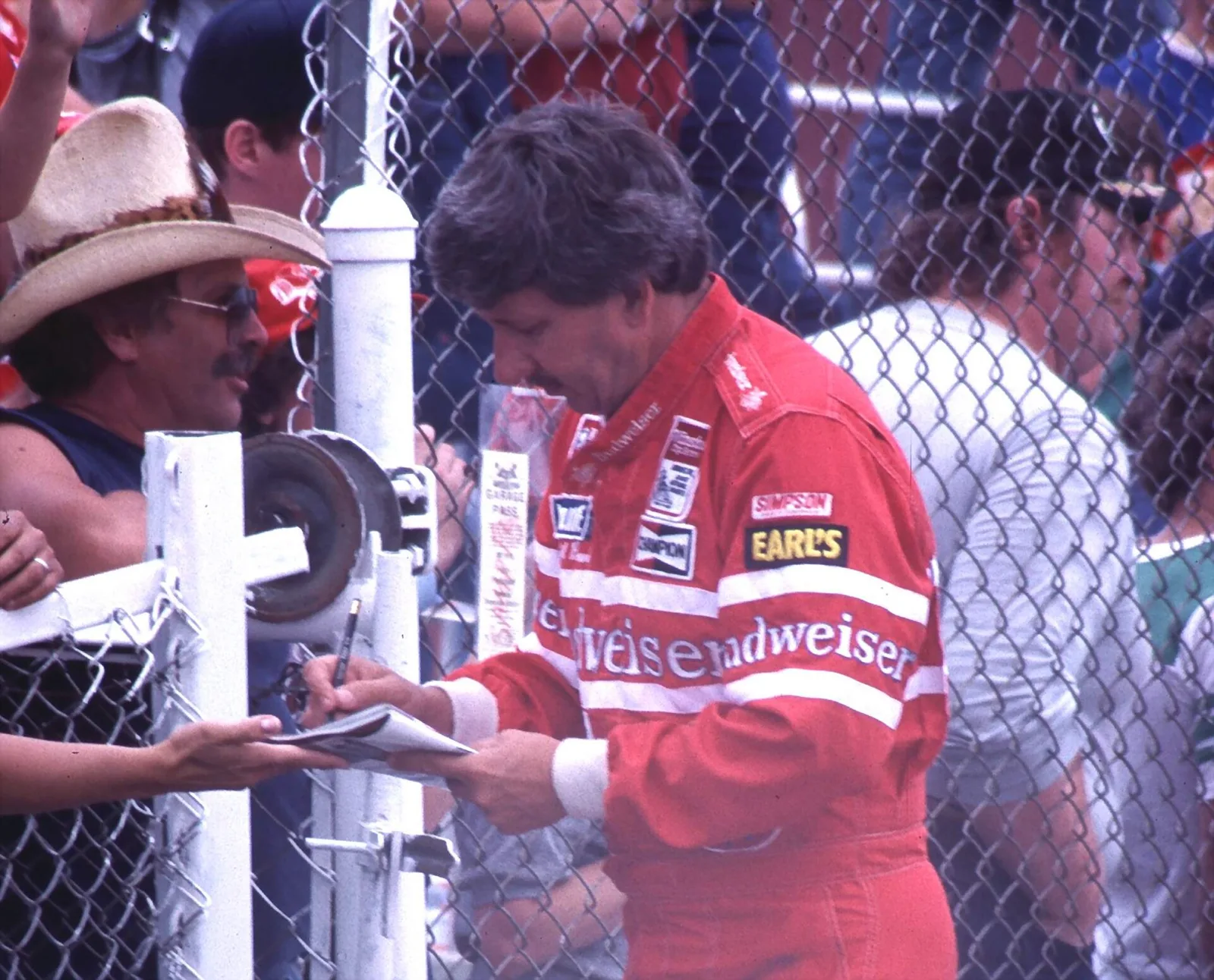
Neil Bonnett was born in 1946 in Hueytown, Alabama. He began as a protege of Bobby Allison and joined the Alabama Gang, which included Red Farmer and the Allison family. He started driving in NASCAR in 1974 and won for the first time in 1977, at the Capital City 400 in Richmond. His other 1977 win, the Los Angeles Times 500, was the last Dodge victory in NASCAR until 2001.
In 1979 he replaced David Pearson at Wood Brothers Racing and won three times. He took back-to-back World 600s in 1982 and 1983, which was then NASCAR's longest race, and the Busch Clash in 1983 and 1984. In 1984 he joined Junior Johnson's team as teammate to Darrell Waltrip, and in 1985 had his best season, fourth in points.
In 1988 he took the Goodyear NASCAR 500 at Melbourne's Calder Park Thunderdome, the first NASCAR race held outside North America. It was not a Winston Cup race, but Bobby Allison, Dave Marcis and Kyle Petty were among the visitors. Bonnett started from pole in a Valvoline Pontiac, and Allison finished second. Cabin temperatures reportedly passed 57 C (135 F).
Comeback and loss
On 1 April 1990 Bonnett was involved in a fourteen-car crash at Darlington's TranSouth 500, which left him with amnesia and dizziness. He moved into television, working for TNN, CBS and TBS and hosting the show Winners. He still wanted to race, and from 1992 tested cars for his friends Dale Earnhardt and Richard Childress. Medically cleared in 1993, he drove the number 31 at Talladega, where his car spun, flew and hit the spectator fence, but he was unhurt and returned to the CBS booth. He started the Atlanta finale and quit after three laps, which was his last Cup start. The team said the engine blew; however, he was teamed with the points leader, Earnhardt, and the car was reportedly retired to help Earnhardt secure the title points.
In 1994 James Finch of Phoenix Racing signed him for at least five races, including the Daytona 500. On 11 February 1994, during the first practice session, a shock mount broke, and Bonnett lost control in turn four and hit the wall nearly head-on. He died of his injuries at 47. Rodney Orr was killed that same weekend. Five years later, broken shock mounts were again an issue, and by 2000 NASCAR built the shocks itself and mandated specification springs.
Bonnett is remembered by Allison-Bonnett Memorial Drive in his home town. Earnhardt dedicated his 1998 Daytona 500 win to him, and Finch dedicated Phoenix Racing's first Cup win, in 2009 at Talladega, to Bonnett. In 2013 Finch gave the number 51 car a paint scheme like Bonnett's 1994 Country Time Chevrolet.
NASCAR superspeedway drivers compared
| Driver | Lived | Cup record | Superspeedway claim |
|---|---|---|---|
| Benny Parsons | 1941 to 2007 | 1973 champion with one win; 1975 Daytona 500 | First NASCAR qualifying run over 200 mph, in 1982 |
| Buddy Baker | 1941 to 2015 | 19 wins, including the 1980 Daytona 500 | Six wins at Talladega and Daytona; 1,099 laps led at Talladega |
| Harry Gant | Born 1940 | 18 Cup wins; second in points in 1984 | Oldest Cup winner at 52 years 219 days |
| Neil Bonnett | 1946 to 1994 | 18 victories and 20 poles | Back-to-back World 600 wins in 1982 and 1983 |
What they left behind
Each of the four is attached to a milestone: Baker to the first 200 mph lap on a closed course, Parsons to the first 200 mph qualifying run, Gant to the oldest Cup win, and Bonnett to the 1988 race in Melbourne. Bonnett's death at Daytona was followed by the specification shocks and springs that NASCAR required by 2000.