Woodgrain, Quadra-Trac and a Toledo plant, then three decades of silence and a long-delayed return as the largest Jeep SUV ever designed.
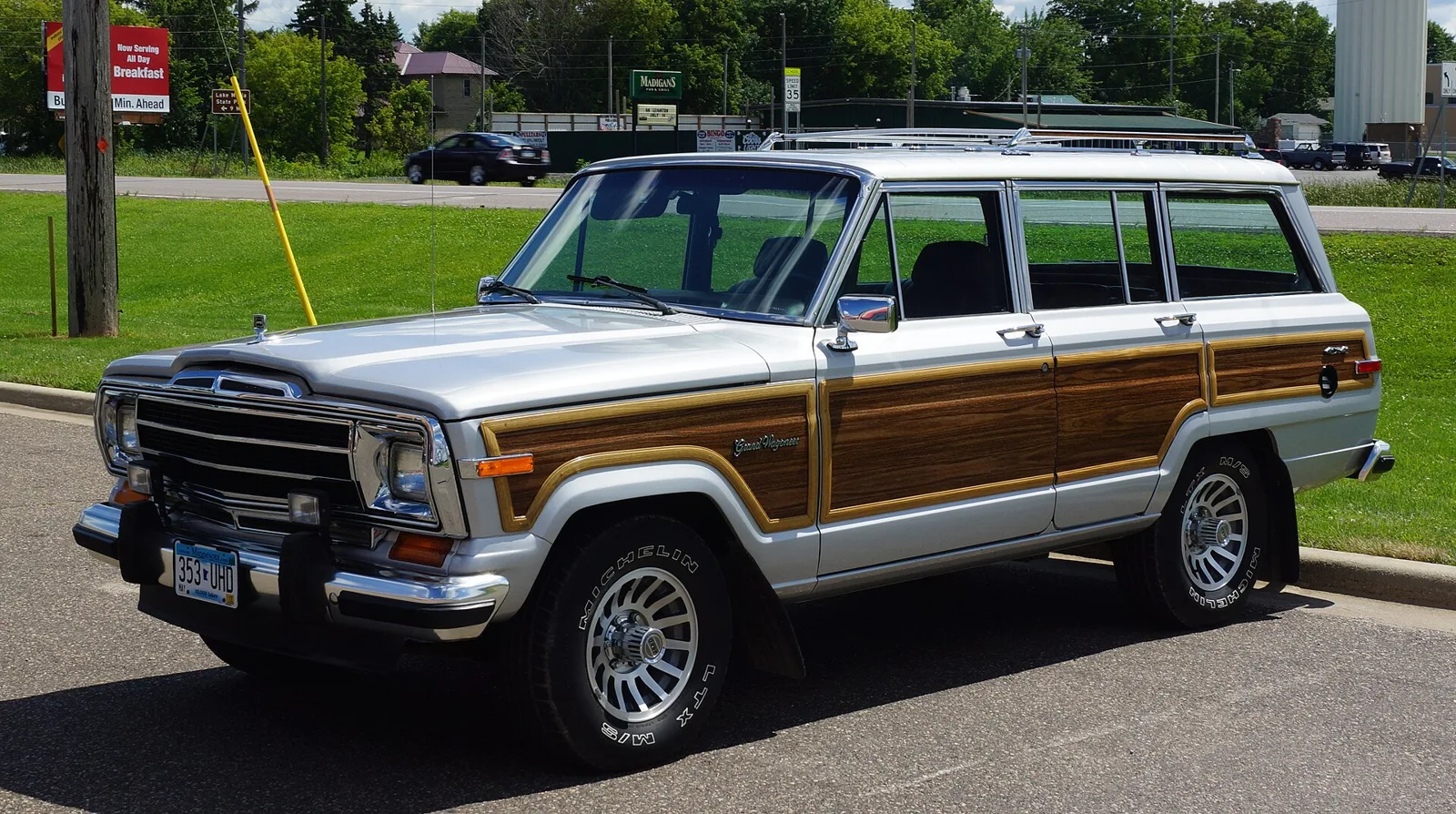
The Jeep Wagoneer SJ was a luxury truck-based station wagon built from the 1963 to the 1991 model years and a forerunner of the modern SUV. The name returned in 2021 on the larger WS Wagoneer and Grand Wagoneer, which were merged into one Grand Wagoneer line in 2026.
The Jeep Wagoneer SJ stayed in production for 29 model years, from 1963 to 1991, and as of 2026 that is the third-longest run in American car history. It passed through three owners, Kaiser, American Motors and Chrysler, and was built throughout at one plant in Toledo, Ohio. Then the name went quiet for three decades.
When it returned in 2021 the new Wagoneer was the largest Jeep SUV ever designed, and it brought a lesson with it: by 2026 Jeep had folded the plain Wagoneer into the Grand Wagoneer because buyers were confused. The two eras share a name and a wood-trimmed reputation, but little else.
Jeep Wagoneer history: why Kaiser built a luxury 4x4
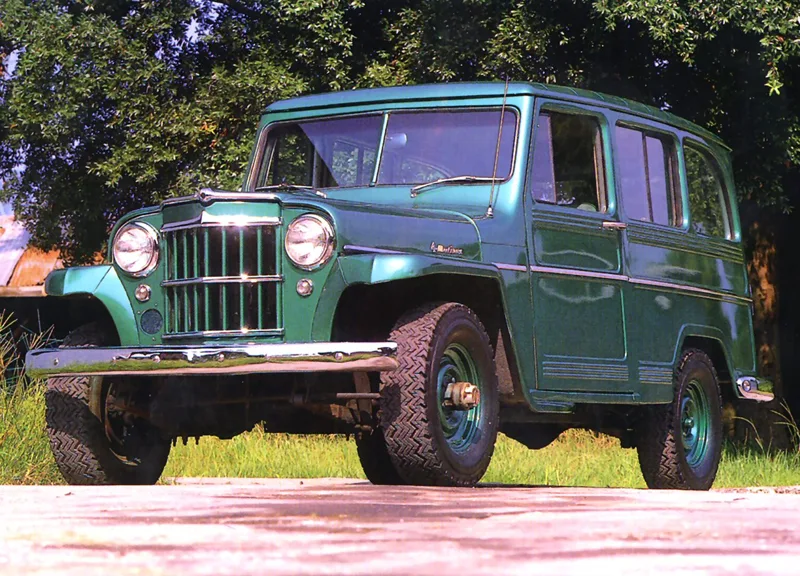
By the early 1960s the big three American makers were closing in on Jeep's four-wheel-drive market. Willys management concluded that a more advanced vehicle was needed. The result, conceived while Willys-Overland belonged to Kaiser Jeep Corporation, was shown in November 1962 as a 1963 model and replaced the Willys Jeep Station Wagon, which had been on sale since July 1946.
It was the first Jeep line completely separate from the CJ. The rivals of the day, from GM, Ford, International Harvester, Toyota, Nissan and Land Rover, were work vehicles with bare, truck-like interiors. The Wagoneer used a pickup chassis, shared with the Gladiator, but wrapped it in a station wagon body that was more like a car than any other 4x4 then on sale.
Industrial designer Brooks Stevens led the styling, while Willys engineers handled the mechanical side. The team kept the stance low and the manners gentle, using a transfer case and compact running gear to lower the step in. It rode well, but because it started life as a truck it could still haul and tow. Development took three years and cost around US$20 million.
It carried an overhead-cam straight-six engine, and offered independent front suspension, power steering, an automatic gearbox, a factory radio and optional air conditioning, a list that no other mainstream four-wheel-drive offered then. It had no direct competitor at launch. Land Rover's Range Rover began eight years later as a two-door only, and the four-door was not developed until 1981, with US sales starting in 1987.
The SJ Wagoneer ran for 29 model years, while its successor spent years in delay before arriving.
Wagoneer SJ in its early years, 1963 to 1971
The original Wagoneer was a full-size, body-on-frame wagon that shared its architecture with the Gladiator. It came as a two-door or four-door wagon, and the two-door could be had as a Panel Delivery with windowless rear sides and double barn doors in place of a tailgate. Early cars used Willys' new Tornado overhead-cam 230 cubic inch (3.8 litre) six, with 140 hp (104 kW; 142 PS) and a name for frugality. A three-speed manual or an automatic could be paired with rear-wheel drive or a part-time four-wheel-drive system with no centre differential and manually locking hubs.
The odd independent front end
Independent front suspension was standard on the rear-drive cars and a $135 or $160 option on four-wheel-drive ones. It used swing axles with torsion bars and short upper A-arms, so the axles also acted as the lower control arms, a kind of double wishbone. On four-wheel-drive models the standard Dana 27AF front axle was replaced by a single-pivot unit that let the differential swing with the kerb-side half. Brakes were 11-inch drums all round, seat belts cost extra and four-wheel-drive cars came with a compass. Front and rear power take-offs were available for work duty.
The 1964 model brought optional air conditioning and a lower-compression Tornado of 133 hp (99 kW; 135 PS), to cure overheating and pinging at altitude. It used less fuel but was phased out within a year. The independent front end, although reviewed well, was unpopular, and was dropped for four-wheel-drive models in 1965.
That year a standard safety package arrived on every model: belts in both rows, a padded dash, an impact-resistant windshield and split braking circuits. Late in 1965 the AMC 327 cubic inch (5.4 litre) V8 became an option with 250 hp (186 kW; 253 PS), and proved popular. The Tornado six gave way to American Motors' 232 cubic inch six, which the press found smooth and reliable, although the likely reason for its arrival was lower cost.
Was the Wagoneer the first luxury SUV? The Super Wagoneer
The Super Wagoneer of 1966 is the nearest claim to that title, and it is widely regarded as the precursor of today's luxury SUVs. It had a full-width grille and a 270 hp (201 kW; 274 PS) four-barrel version of the AMC V8. Equipment included a push-button radio, a seven-position tilt steering wheel, courtesy lights, air conditioning, a rear window that retracted into the tailgate, power brakes, power steering and a console-shifted TH400 automatic, none of which was standard or even offered on similar vehicles then. It ended in 1969, with about 3,989 built.
From 1967 to 1969 Jeep dropped the rear-drive-only models, which the four-wheel-drives had always outsold, and from then on every Wagoneer had solid axles and leaf springs. The slow-selling two-door versions ended with 1968. From 1968 to 1971 a Buick 350 cubic inch (5.7 litre) Dauntless V8 powered the range. It made 230 hp (172 kW; 233 PS), 20 less than the AMC unit it replaced, but had more torque lower down, 350 ft lbf (475 Nm) at 2400 rpm against 340 (461) at 2600. After 1971 only AMC engines were used.
The AMC years: Quadra-Trac, the Limited and woodgrain
AMC bought Kaiser Jeep in early 1970 and began cutting costs through shared parts such as engines, while working to cut noise and vibration. The metal grille gave way to a plastic egg-crate design. A special 1971 model in golden lime with wood-grain side panels cost $1,000 more than the Custom, and from that year until 1991 the line carried simulated woodgrain paneling on its sides. AMC's 360 cubic inch (5.9 litre) V8 replaced the Buick, with a 401 (6.6 litre) available later.
The Quadra-Trac full-time four-wheel-drive system arrived in 1973, giving traction without a manual-shift transfer case or locking hubs. In 1974 AMC took the dead two-door Wagoneer, redesigned its rear glass with wide pillars and long side windows, and reintroduced it as the Cherokee, replacing the Jeepster Commando. The Cherokee appealed to younger buyers than the family-oriented Wagoneer. Front disc brakes became standard on the Wagoneer that year, and stronger frames with boxed side rails followed in 1976.
The Limited and the pig nose
With the Cherokee in place, AMC moved the Wagoneer upmarket. The Limited, launched midway through 1978, was better equipped than the Super Wagoneer, with Quadra-Trac, power disc brakes, air conditioning, power bucket seats, locks and windows, leather, cruise control, a CB radio, forged aluminium wheels and woodgrain trim. At US$10,500 it sat in Cadillac and Lincoln territory, yet buyers responded: 28,871 Wagoneers were built in 1978 and 27,437 in 1979.
In 1979 the Wagoneer, Cherokee and J-Series pickups gained a major restyle with aluminium bumpers, square headlights and a one-piece chrome plastic grille with a protruding centre. It was nicknamed the pig nose grille and stayed on the Wagoneer through 1985.
Demand shifted after the 1979 energy crisis. The 258 cubic inch (4.2 litre) six, dropped in the 1970s, returned as an option, and from 1983 an automatic with Selec-Trac four-wheel drive became standard on it, for EPA figures of 18 mpg-US (13 L/100 km) in town and 25 mpg-US (9.4 L/100 km) on the highway. The 360 V8 stayed popular anyway. Production fell to 10,481 in 1980, then rose to 13,741 in 1981, 18,709 in 1982 and 18,478 in 1983. In 1980 AMC introduced the compact four-wheel-drive Eagle, and in 1981 the Wagoneer line grew to three models.
From Wagoneer to Grand Wagoneer, and a long wait
In 1984 the XJ Cherokee arrived, and its top trim carried wood paneling and a Wagoneer name. The old SJ truck-based wagon then became the Grand Wagoneer for the rest of its life. A 1993 revival made Wagoneer the flagship version of the Jeep Grand Cherokee, again with exterior wood trim, but it was short-lived, and the nameplate lay dormant for three decades.
The Jeep Grand Wagoneer WS: a Wagoneer finally returns
Jeep tried to bring the Wagoneer back from the mid-1990s onwards. In January 2011 Sergio Marchionne said at the Detroit show that the Grand Wagoneer name would return on an SUV sharing the Grand Cherokee and Dodge Durango platform. On September 2, 2013, Chrysler delayed production to 2015 to give the Durango time to find an audience, but said it would use the concept as the basis of a full-size luxury SUV to rival the Cadillac Escalade and Lincoln Navigator.
The delays kept coming. In June 2015 FCA said it would unveil the vehicle at a dealer convention on August 25, but two months later the Grand Cherokee replacement slipped to 2018. Teaser photos on October 18, 2016 pointed to a third-generation Durango base and a 2019 model, and in March 2017 the plan was delayed again. On December 5, 2019, spy shots showed a Wagoneer on a Ram 1500 body-on-frame platform. The 2020 pandemic then pushed production back by at least three months.
Jeep presented the Grand Wagoneer concept on September 3, 2020, with a massive silhouette, oblong headlights, a multi-hole grille and no Jeep badges inside or out. Production models appeared on March 11, 2021, sold at first as Wagoneer by Jeep, a premium extension of the brand. The Wagoneer was the mainstream model and the Grand Wagoneer the luxury one, both in standard and long-wheelbase L forms, built at Warren Truck Assembly. General dealer availability began in October 2021, and the Grand Wagoneer launched in the Middle East on July 3, 2023.
Trims, screens and sound
At launch the Wagoneer came as Series I, Series II, Carbide and Series III, and the Grand Wagoneer as Series I, Series II, Obsidian, Series III and Series III Obsidian. Rear-wheel drive is standard on the Wagoneer with four-wheel drive optional, while the Grand Wagoneer has four-wheel drive as standard, and the Quadra-Trac name returned for the full-time system.
The cabin is full of screens. A UConnect 5 touchscreen measures 10.1 inches in the Wagoneer and 12 inches in the Grand Wagoneer, alongside a digital instrument cluster. A passenger touchscreen set in the dashboard woodgrain lets the passenger send directions to the central display, and its special coating keeps it invisible to the driver. Some models have a dual-screen rear entertainment system, and McIntosh audio comes in 19-speaker (950 watts) or 23-speaker (1,375 watts) forms.
Wagoneer L and the Hurricane engine
The extended-length Wagoneer L and Grand Wagoneer L, unveiled at the 2022 New York show for 2023, are a foot longer. Both use the new 3.0-litre Hurricane twin-turbo straight-six. The standard-output version, in the Wagoneer L, makes 420 hp (313 kW; 426 PS) and 468 lb ft (635 Nm). The high-output version, in the Grand Wagoneer and Grand Wagoneer L, made 510 hp (380 kW; 517 PS) and 500 lb ft (678 Nm) from 2022 to 2024, and rose to 540 hp (403 kW; 547 PS) and 521 lb ft (706 Nm) for 2025. Every version uses the eight-speed TorqueFlite 8HP75 automatic.
| Wagoneer SJ | Wagoneer and Grand Wagoneer WS | |
|---|---|---|
| Model years | 1963 to 1991 | 2022 onwards |
| Owner | Kaiser, AMC, then Chrysler | Stellantis North America |
| Built | Stickney Plant, Toledo, Ohio | Warren Truck Assembly |
| Four-wheel drive | Part-time, then Quadra-Trac and Selec-Trac | Standard on Grand Wagoneer, optional on Wagoneer |
| Engines | Tornado and AMC sixes, Buick and AMC V8s up to 401 cu in (6.6 L) | 3.0-litre twin-turbo six, 420 to 540 hp |
| Woodgrain | Simulated paneling, 1971 to 1991 | Woodgrain inside the dashboard |
Safety, sales and the 2026 facelift
The Wagoneer was named a 2024 Top Safety Pick by the Insurance Institute for Highway Safety, the only one of the three most popular full-size SUVs in the United States to earn the award. It did well in the small-overlap crash test, keeping survival space for occupants.
The commercial story has been harder. The Grand Wagoneer has drawn criticism for its price, and analysts have questioned its place in the full-size luxury market. Reports in December 2024 said more than 100,000 units remained unsold. In late 2024 the National Highway Traffic Safety Administration opened an investigation into reports of engines shutting off at low speed.
Jeep unveiled a facelifted Grand Wagoneer in October 2025. Every model was renamed Grand Wagoneer, absorbing the plain Wagoneer line that had caused customer confusion, and Jeep branding now appears on the outside because plans to turn Wagoneer into a sub-brand were scrapped. The front end has a new grille and headlights, and chrome gives way to silver metallic trim. The 2026 trims are base, Limited Altitude, Upland, Limited Reserve, Summit Obsidian and Summit Reserve. All come in standard and L wheelbases except the Upland, which is standard wheelbase only.
What the Wagoneer name means for a buyer
An SJ buyer today is choosing among eras: the Tornado six cars of 1963 and 1964, the AMC V8 cars with a Buick interlude, the Quadra-Trac cars from 1973, the Limited from 1978, and the economy-minded six with Selec-Trac of 1983. A WS buyer faces a different decision, between a rear-drive Wagoneer with the 420 hp engine and a four-wheel-drive Grand Wagoneer with up to 540 hp, now sold under a single name.