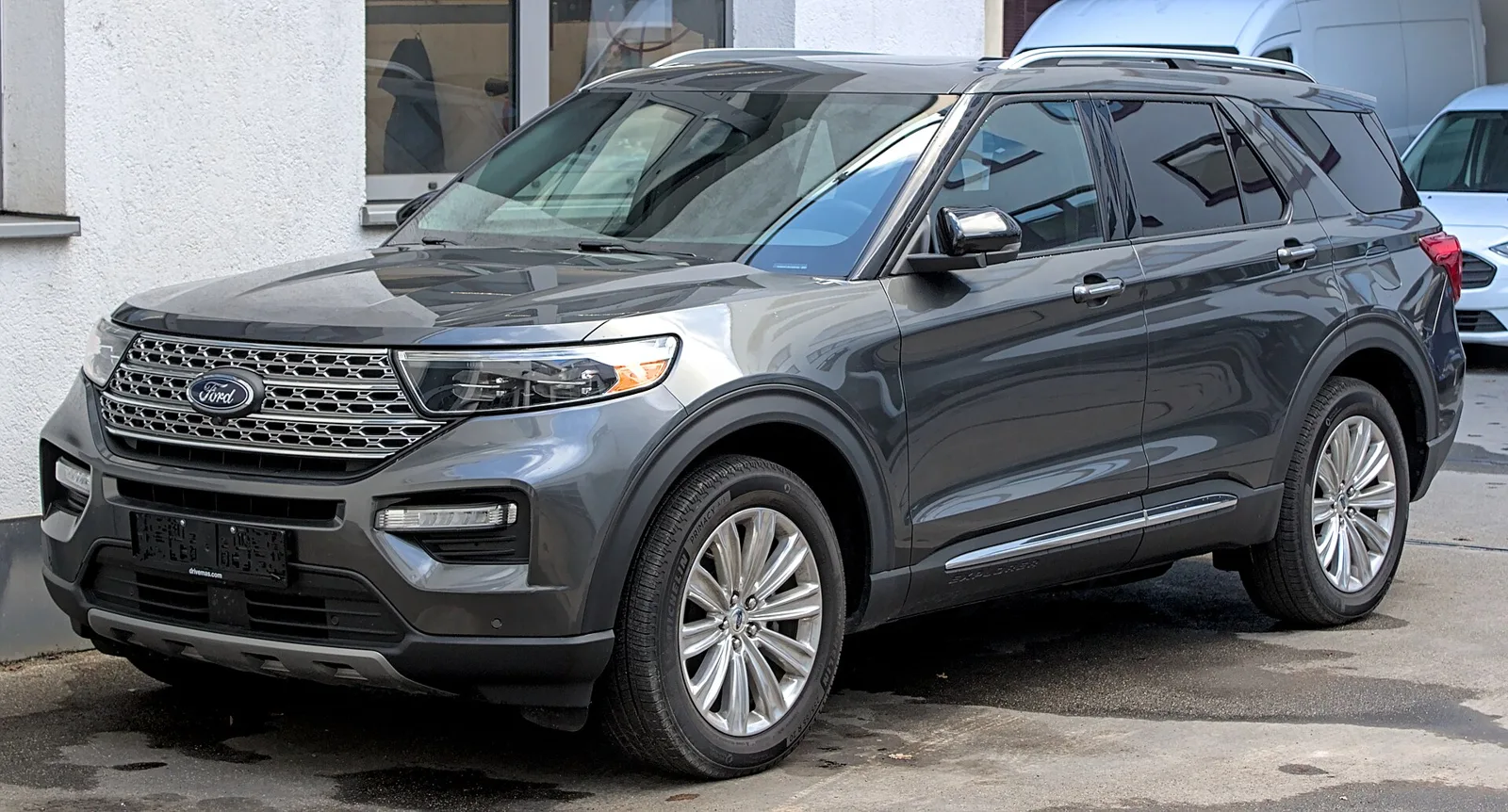
A part-time lever, a viscous coupling, a Torsen gearset and a software-controlled clutch all answer the same question: which wheels get the torque?
Jeep, Audi and Ford each solved four-wheel drive differently: Jeep from lever-shifted Command-Trac to viscous and clutch-based Quadra-Trac, Audi's quattro with locking, Torsen and Crown Gear centre differentials, and Ford's ControlTrac with a software-controlled clutch that replaced the centre differential altogether.
When engineers at BorgWarner began work on an electronically controlled four-wheel-drive system in 1985, the plan called for a geared centre differential and a clutch pack working together. The first prototype was crude, but as development went on they found that clever software could make the clutch do both jobs. The team put it as a question: why did the system need a differential at all, with all that iron, weight and cost? The geared differential was thrown out, and Ford's ControlTrac went into production without one.
That choice sits at one end of a wide spectrum. Jeep's range runs from basic part-time systems with a lever to permanent systems that sense traction at all four wheels, and Audi's quattro has passed through a locking differential, two Torsen designs and a Crown Gear unit. Between them they cover most of the main ideas in four-wheel drive.
What is the difference between part-time and full-time four-wheel drive?
A centre differential lets the front and rear axles turn at different speeds, which they must do on a dry road, as the front wheels travel a different path in a corner. A part-time system has none. Its front and rear axles are simply locked together, so on a low-traction surface they can slip and settle, but on dry tarmac the driveline winds up. Full-time systems add some device between the axles, which may be an open differential, a viscous coupling, a Torsen gearset or a computer-controlled clutch, to manage the difference.
BorgWarner's engineers set out to build a four-wheel-drive system with a geared centre differential, then asked why they needed one.
Jeep Command-Trac and Rock-Trac, the part-time systems
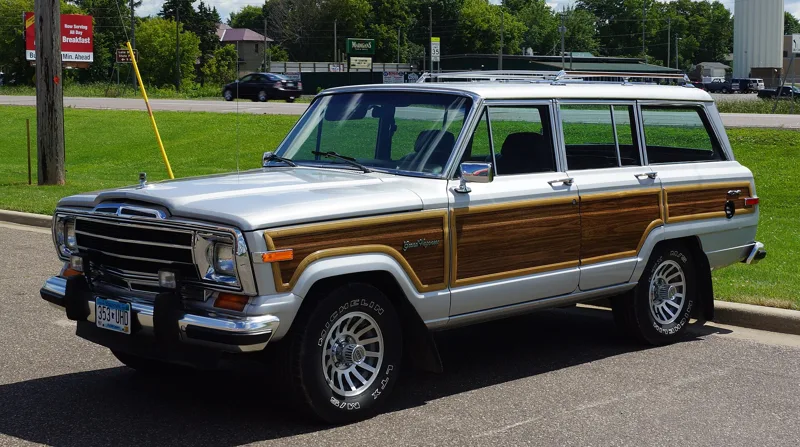
Command-Trac arrived with the NP208 transfer case in the full-size SJ Jeeps in 1980, and ran through at least 1987. More commonly the name refers to the NP/NV-231 or NP-207 cases introduced with the Cherokee (XJ) in 1984: a chain-driven, aluminium, "shift-on-the-fly" transfer case that lets the driver engage 4WD with manual ease and assist.
The rule for owners is firm. Because the axles are locked together with no differential action in the transfer case, Command-Trac should only be driven in 4WD on low-traction surfaces. On dry pavement it causes excessive tyre and drivetrain wear. The modes suit wet or slippery roads and extreme weather (4H), towing (N) and off-roading (4L). The NP/NV-231 takes either 21- or 23-spline input shafts, with a low range of 2.72 and high of 1.00.
Command-Trac II works the same way but uses a console switch for the MP1522 transfer case rather than a floor lever. Rock-Trac builds on Command-Trac with the New Venture Gear NV241OR, locking differentials and a 4:1 low gear. In 2007 it gained an electric front sway-bar disconnect, and the locking differentials changed from air to electric actuation. It appears on the Wrangler Rubicon from 2003 and the Gladiator Rubicon from 2020.
Jeep eventually dropped the part-time option from the Grand Cherokee and Commander range. Poor sales were one reason, along with an improved Selec-Trac that offered the convenience of full-time all-wheel drive that Command-Trac lacked for luxury SUVs.
Selec-Trac and Quadra-Trac, the full-time systems
Quadra-Trac is the older full-time line. The first version used the Borg-Warner BW1339 transfer case from 1973 to 1979, a chain-drive system on full-size Jeeps with a differential and a cone-type slip-limiting clutch. The BW1339 added a 2.57:1 low range, giving five modes. It differed from the plain open NP203 used by Dodge, General Motors and Ford because its centre differential included a clutch pack to limit slip. The NP219 followed in 1980 with a viscous limited-slip coupling and a 2.61:1 low range, and its "N" mode disengaged the drivetrain so a Jeep could be flat-towed.
In 1983 the Selec-Trac replaced it, using the NP228 and NP229 cases. These added a fuel-saving 2WD mode, controlled by a vacuum switch on the dashboard, to Quadra-Trac's full-time and part-time modes. The NP242 Selec-Trac arrived in 1987 with the fuel-injected 4.0L inline-6 in the Cherokee, offering 2WD, 4WD Hi Part-Time, 4WD Hi Full-Time, neutral and 4WD Low from one console lever. In Full-Time, the centre differential is open and distributes torque 48/52% front to rear, so it can be used on dry pavement with only a small fuel penalty. In Part-Time and Low, it is mechanically locked, so those modes are for slippery surfaces only.
Quadra-Trac returned in 1993 on the Grand Cherokee with the NP249 case. A viscous coupler makes it work smoothly: in normal All-Time mode the centre differential is open, but when the axles turn at different speeds heat in the coupler thickens the fluid, progressively locking the differential and moving power to the axle with more traction. The 1996 NV249 added a mechanical differential lock in Low range for serious off-road use.
Quadra-Trac II and Selec-Trac II, when clutches took over
Quadra-Trac II, introduced in 1999, uses a two-speed chain-driven case with modes of "4-All Time", neutral and "4-Lo". The NV247 version, in the 1999-2004 Grand Cherokee WJ, sends torque only to the rear wheels in normal driving. A gerotor pump between the front and rear shafts senses any speed difference and feeds oil under pressure to a wet clutch pack, which locks progressively from 0 to 100%. Because it has no centre differential, locking the shafts on dry pavement would cause driveline binding.
In 2005 Jeep switched to the NV245, which does have a centre differential. Normal torque split is 48% front and 52% rear, and an electronically controlled variable clutch pack can lock across the differential from 0 to 100%. Selec-Trac II, on the MP3022 case, goes back to a clutch-only layout: its electronically controlled clutch pack biases torque from 100% rear to 50/50, and with no centre differential the front axle receives power only once the rear wheels begin to slip. The 2018 and newer JL Wrangler comes with Command-Trac by default, but the Sahara can be upgraded to Selec-Trac II, marketed simply as Selec-Trac.
How does Audi's quattro system work?
Quattro means four in Italian, and it is a registered trademark of Audi AG used for the brand's all-wheel-drive technology. It debuted in 1980 on the permanent four-wheel-drive Audi Quattro, often called the Ur-Quattro, and has been applied to every Audi AWD model since. Other Volkswagen Group brands use different names: syncro and later 4motion at Volkswagen, 4x4 at Skoda, and 4 and later 4Drive at SEAT. None of these names tells you which type of system is fitted.
The group's four-wheel-drive experience goes back to wartime vehicles such as the Kubelwagen and Schwimmwagen, and to the Iltis built for the German military in the 1970s. The original quattro system in road cars had a longitudinal engine and a mechanical centre differential sending torque to both axles, with four-wheel drive permanently active.
From manual lock to Torsen
After 1987 Audi swapped the manually locking centre differential for a Torsen (torque sensing) Type 1. It sends torque automatically to whichever axle has grip. Normally the split is 50:50 in many versions, but in adverse conditions 90-100% of torque can reach one axle. This approach is described as proactive, because the mechanism diverts torque instantly and without electronics, whereas viscous couplings and electronically controlled centre differentials are reactive, acting only after slippage. With no need for wheel speed sensors, it also has a fail-safe element compared with a design such as Haldex.
The Torsen also spreads engine braking across all four wheels, which helps stability when slowing in a fast corner. It has limits. A longitudinal layout puts the front axle behind the engine, and critics call some Audis nose heavy, with a 55:45 front-to-rear weight distribution. The Torsen behaves like a limited-slip differential, so if one axle has no grip, the other gets little torque, however good its bias ratio. Audi responded with a manually locking rear differential and then Electronic Differential Lock, which brakes a spinning wheel using the ABS sensors and works below 80 km/h.
The Type 1 has a torque bias ratio of 2.7-4:1, allowing roughly three to four times more torque to the grippier shaft, a split between 25% and 75%. Because it is locked in most conditions, its static split follows the car's weight distribution, which is good for traction but encourages understeer. Audi therefore adopted the Type 3 (T3). It combines a planetary gear set with the Torsen to give an asymmetric 40:60 front-to-rear split, with handling closer to rear-wheel drive. It debuted in the 2006 B7 Audi RS4, followed by the S4 and RS4 B7 manual cars from 2006 to 2008 and the S6, S8 and Q7 from 2007.
The Crown Gear generation
Audi announced a new generation of quattro with the 2010 RS5, replacing the Torsen Type C with its own Crown Gear centre differential. Two crown wheels meet the spider gears at different diameters to give a 40:60 static split, and a clutch pack on the spider carrier adds control beyond that. If an axle loses grip, the speed difference raises axial forces that close the clutch and lock the output shaft, so up to 85% of torque can flow to the rear and up to 70% to the front. Unlike the Torsen, it can lock fully whatever the bias ratio. It weighs 4.8 kg, some 2 kg less than the Torsen Type C, and fits more easily with electronic torque vectoring.
Ford ControlTrac in detail
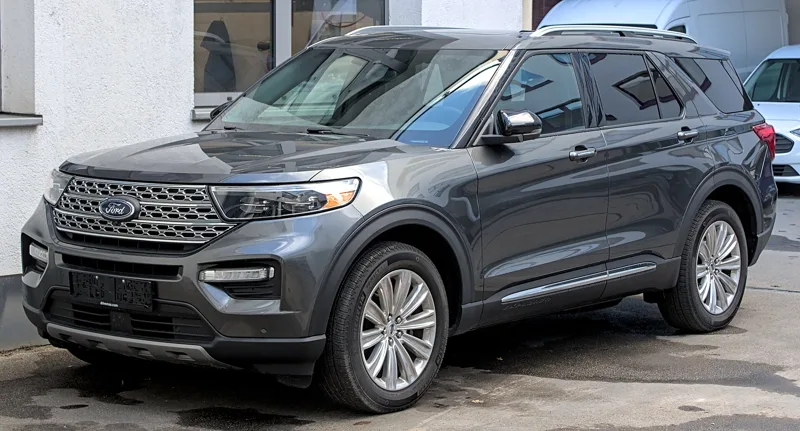
ControlTrac is Ford's selectable automatic full-time four-wheel-drive system, developed at BorgWarner's TorqTransfer Systems division, which calls it Torque-On-Demand. It was the first automatic system to use software control and no geared centre differential, relying instead on a variable intelligent locking multi-disc clutch. It debuted on 12 January 1995 on the second-generation Explorer for the 1995 model year, with a heavy-duty version following on the Expedition in 1996 for 1997.
Development took years. The first prototype's controller was a rheostat, and within a year a breadboard electronic version filled the back end of a station wagon. The breakthrough came in 1989 with closed-loop control: the microprocessor reviews sensor data every 20 milliseconds, and if it senses as little as half an rpm difference between front and rear axles, the clutch engages and sends torque forward in 10 percent increments. The system could control runaway wheel speed in as little as a third of a revolution.
Clutch material proved troublesome. A sintered bronze material suffered stick-slip, so BorgWarner switched to a paper-based material on metal. Heat then burned it out until engineers increased clutch torque capacity and tested a fleet in the Anza-Borrego desert in southern California, making 11 trips through heat, mountains and deep sand. Eventually the test vehicles could be virtually destroyed by hard off-road use while the clutch packs still looked good.
Modes and refinements
In Auto mode, engine torque normally goes to the rear wheels. A common misconception is that the system keeps shifting in and out of four-wheel drive. In fact, the front hubs stay permanently engaged so that the front drive shaft always turns and the computer can compare its speed with the rear. If the rear shaft turns faster, the system reads it as traction loss and sends torque forward through the centre clutch, which behaves like a geared differential so there is no driveline binding or torque windup. A 2002 update added predictive software that could transfer torque before slip occurred and send all 100 percent of engine torque forward if severe loss was expected.
Four High locks the clutch for a permanent 50:50 split, and Four Low also selects low-range reduction gearing for crawling and controlling descents. Neither can be used on pavement. Two High, which sends torque to the rear wheels only, was largely an Expedition feature, with the Explorer having it only in 1995-1996. When it returned on the redesigned 2003 Expedition, it brought a full front axle disconnect with vacuum-operated hubs, which Ford said could add up to half a mile per gallon.
Paired with AdvanceTrac stability control, ControlTrac can use ABS braking to simulate differential locks, sending up to 100 percent of torque to any single wheel. A vehicle so equipped can keep moving with two wheels, one at the front and one at the rear, completely off the ground.
Torque delivery compared
| System | Centre device | Normal behaviour |
|---|---|---|
| Jeep Command-Trac | None; axles locked in 4WD | Low-traction surfaces only |
| Jeep Selec-Trac (NP242) | Open centre differential, lockable | 48/52% front to rear in Full-Time |
| Jeep Quadra-Trac (NP249) | Open differential with viscous coupler | Progressive lock as fluid heats |
| Jeep Quadra-Trac II (NV247) | Gerotor pump and wet clutch, no differential | Rear only until slip, then 0 to 100% lock |
| Audi quattro, Torsen T1 | Torsen centre differential | 50:50 default, up to 90-100% to one axle |
| Audi quattro, Torsen T3 | Torsen with planetary gears | 40:60 front to rear |
| Audi quattro, Crown Gear | Crown wheels plus clutch pack | 40:60; up to 85% rear, 70% front |
| Ford ControlTrac | Software-controlled multi-disc clutch | Rear drive; torque forward in 10% steps |
What this means for someone buying or driving a four-wheel-drive car
The labels matter less than the mechanism. A Command-Trac Jeep is a tool for slippery ground and should not be left in 4WD on a dry road. A Selec-Trac in full-time mode can run on any surface for a small fuel penalty. A Torsen quattro car reacts instantly but cannot send much to an axle that has lost all grip, which is why Audi added electronic brake-based differential locks. And ControlTrac's Four High and Four Low modes are for off-road work, while Auto is the one for rain and snow.
Where are these systems heading?
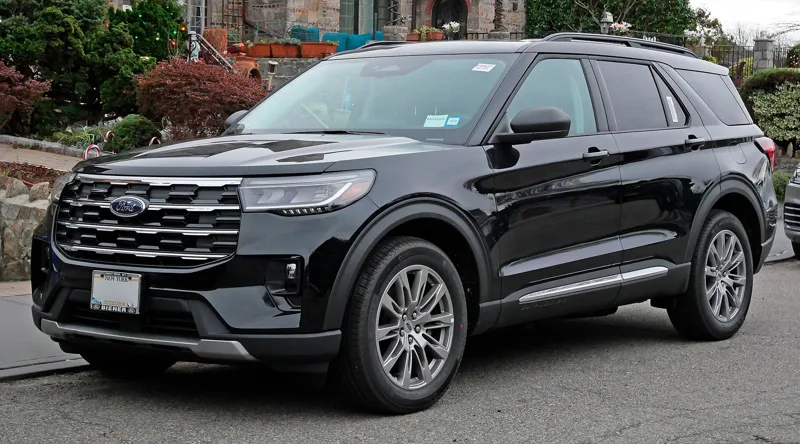
Each system has moved toward electronics. Ford replaced automatic ControlTrac on the 2011 Explorer with automatic Intelligent four-wheel drive and Terrain Management. ControlTrac II, which used a viscous coupling, has also given way to Intelligent 4WD, a similar layout with the coupling replaced by a computer-controlled clutch, driving the front wheels predominantly and lacking the mechanical lock. Jeep still offers Rock-Trac on the Gladiator Rubicon from 2020 and Selec-Trac on the 2021 Gladiator. Audi's Crown Gear, debuted in 2010, was explicitly aimed at letting the vehicle electronics manage dynamics in cornering, acceleration and braking.