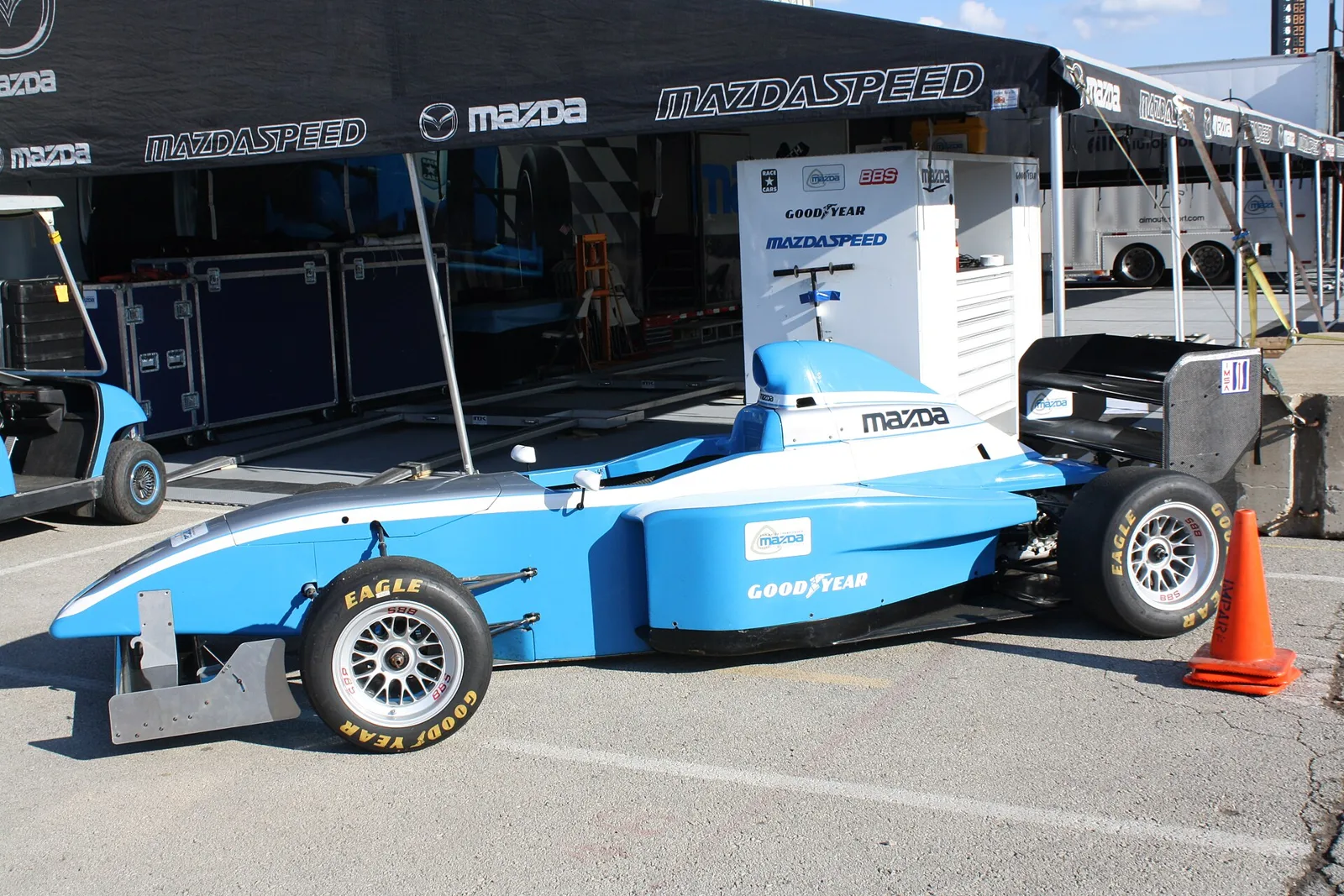
A finish decided by 0.0005 seconds, a $2 million prize one champion turned down and the series that feed drivers to the Indianapolis 500.
Indy NXT is the top rung of the Road to Indy, with USF Pro 2000 and USF2000 below it. The Atlantic Championship was a separate developmental series that fed Indy Lights and Champ Car. Together they give young American open-wheel drivers a route to the IndyCar Series.
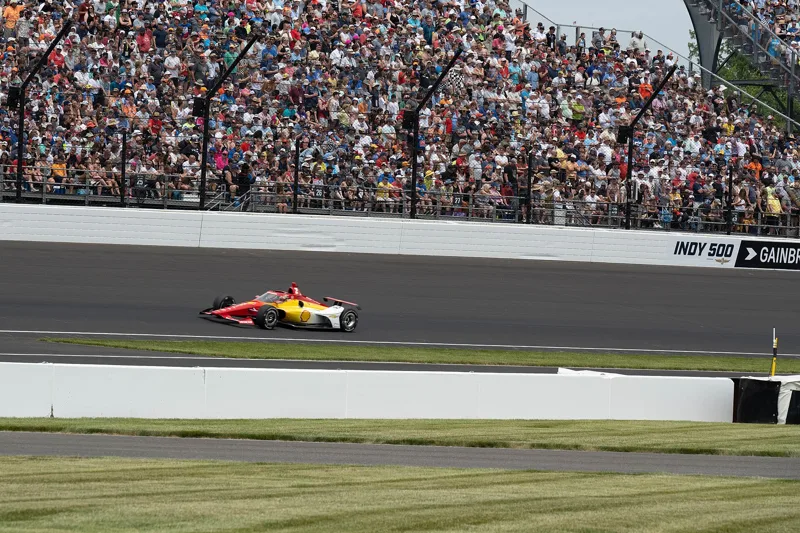
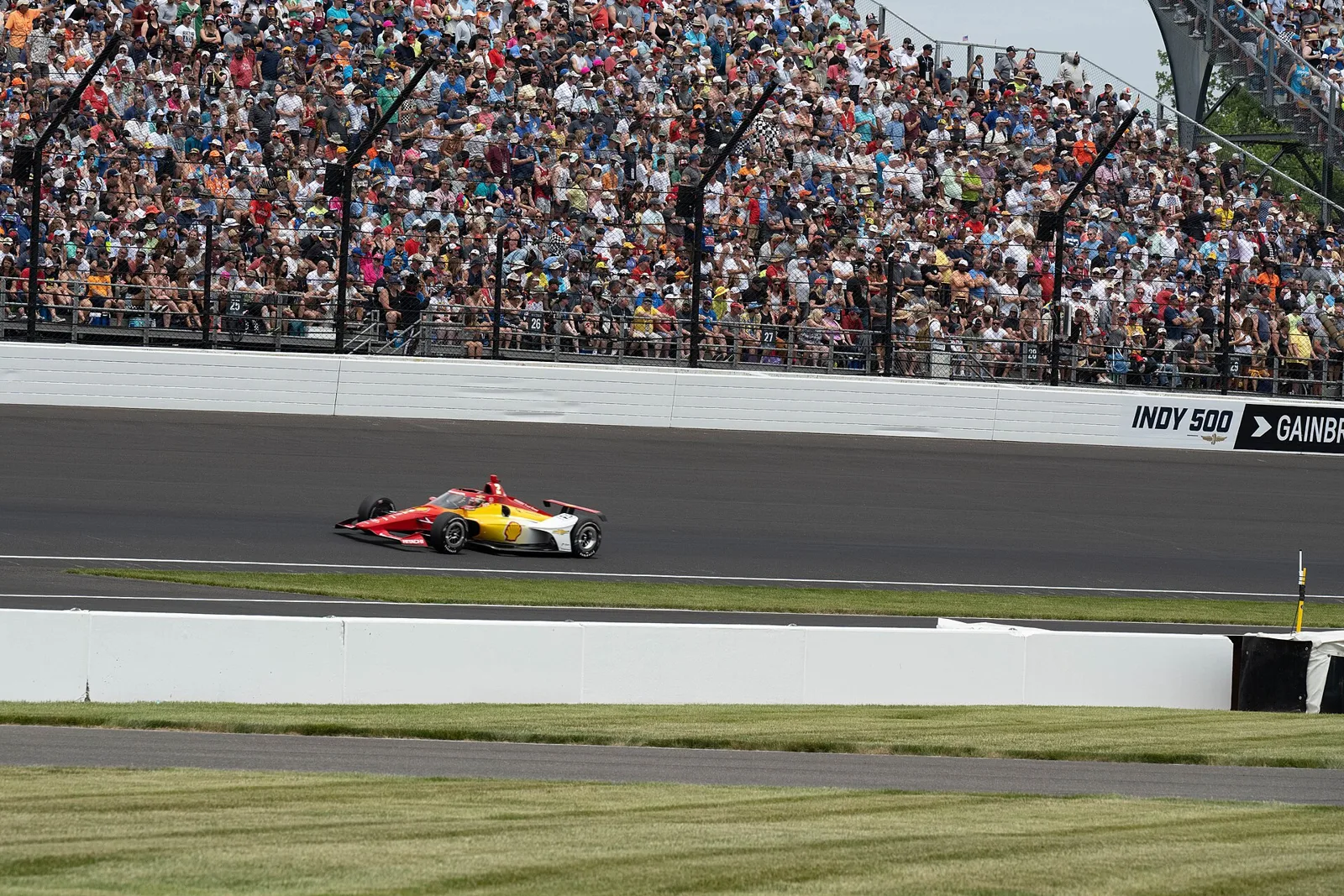
On 9 September 2007, at the Chicagoland 100, Logan Gomez beat Alex Lloyd to the line by 0.0005 seconds, roughly 42 mm at 188 mph. It was the closest recognised finish in the history of organised motor racing until 2018, and in 2008 the Guinness Book of World Records ratified it as the tightest finish ever seen in a car race. The race was part of Indy Lights, the series that now goes by the name Indy NXT, and it sums up the appeal of the whole ladder: young drivers, equal cars, nothing between them.
What is Indy NXT, and how does the Road to Indy work?
Indy NXT, pronounced "Indy Next", is an American developmental series sanctioned by IndyCar, and it tops the Road to Indy, the set of series that carries drivers up toward IndyCar racing. USF Pro 2000 is the third rung, USF2000 the second, and each champion receives a scholarship toward the next level. The current Indy NXT began in 2002 as the Infiniti Pro Series and took the Indy Lights name back in 2008 when CART and IndyCar unified. For 2023 Penske Entertainment rebranded it Indy NXT.
| Series | Chassis | Hardware |
|---|---|---|
| Indy NXT (2015 on) | Dallara IL-15 | Mazda-AER P63 2.0 L turbocharged four, 450 hp plus 50 hp push-to-pass; 1,400 lb (635 kg) |
| USF Pro 2000 | Tatuus PM-18 (2018-2021), Tatuus IP-22 (2022) | Electronic fuel injection, 40 L (11 US gal) tank, Cosworth data logger and ECU |
| USF2000 (2017 on) | Tatuus USF-17 carbon monocoque | Mazda MZR 2.0 L naturally aspirated, Sadev six-speed sequential gearbox |
| Atlantic Championship (2006 on) | Swift 016.a | Mazda-Cosworth MZR 2.3 L four, 300 hp (224 kW); 643 kg (1,418 lb) with driver |
In the early 1980s IndyCar drivers arrived from Super Vees, sprint cars, midgets, stock cars and even off-road racing.
Indy Lights history: from the Mini-Indy to CART
In the early 1980s there was no tidy ladder. Drivers for CART and the Indy 500 arrived from all over, from Super Vees, Atlantics, Can-Am, sprint cars, midgets, stock cars and even off-road racing. USAC had run a Mini-Indy series with Super Vee machines from 1977, but it ended after 1980.
The original Indy Lights began in 1986 as the American Racing Series, became a CART-sanctioned series in 1988 and took the Indy Lights name in 1991 with Firestone as title sponsor, later joined by its subsidiary Dayton. It was a spec series, using March chassis from 1986 to 1992, then Lola, with a refreshed car in 1997, and Buick V6 engines throughout. Among its title winners were two CART champions, two IndyCar Series champions and two Formula One drivers, and seven others won Champ Car races. The races usually ran as the morning undercard to a CART event, and the schedule paused for as long as a month around the Indianapolis 500.
CART's money troubles and the arrival of the rival Indy Racing League in 1996 undermined it, and CART cancelled the series after the 2001 season. By then the Toyota Atlantic series was doing just as good a job of supplying CART with talent, and the Atlantics also sent Richie Hearn, Greg Ray and Sam Hornish Jr. on to the IRL.
How the modern series restarted: the Infiniti Pro Series
The Indy Racing League re-founded the series in 2002 as the Infiniti Pro Series. It was a spec formula with a Dallara chassis and a 3.5-litre V8 developed by TWR from the unit in the Infiniti Q45, giving 420 hp (310 kW). The early years were hard, and some races attracted fewer than 10 entrants. Adding road courses in 2005 brought in prospects such as Marco Andretti and Phil Giebler, and a prize-money boost in 2006 lifted fields to 16 or more, split evenly between six ovals and six road courses.
The series was the Menards Infiniti Pro Series until 2006, then the Indy Pro Series, and on 26 March 2008, when the IRL acquired the records of Champ Car, it became Firestone Indy Lights. Its showpiece was the Freedom 100 at Indianapolis Motor Speedway on the Friday before the Indy 500, and it held a support race for the United States Grand Prix, the Liberty Challenge, from 2005 to 2007. At that time the champion won a $1 million scholarship toward IndyCar racing, plus a guarantee of three starts, the Indianapolis 500 among them.
On 24 May 2013 Peter Dempsey won his first Indy Lights race in the Freedom 100 by 0.0026 seconds in a four-wide dash, the tightest finish the Speedway has seen. That summer it was announced that Andersen Promotions would promote the series from 2014, with Cooper Tire replacing Firestone, so that the three levels of the Road to Indy all ran under one promoter and one tyre brand. The Dallara IL-15 was named as the fourth-generation chassis on 31 October 2013, with a 2.0-litre turbocharged four-cylinder engine producing 450 hp and 50 hp more with push-to-pass.
The 2020 season was cancelled because of thin grids and the COVID-19 pandemic. From 2021 AER prepares the Mazda two-litre engines to run a full season without a rebuild, and a halo was added to the car. Kyle Kirkwood of Andretti Autosport won the 2021 title, with David Malukas second and Linus Lundqvist third. In 2023 Firestone returned as tyre supplier, the series became Indy NXT, and IndyCar took direct operation from Andersen Promotions, which continues to run the lower-tier USF series under IndyCar sanctioning.
The earlier 2002 to 2014 package used a 3.5-litre naturally aspirated V8 of 420 hp (313 kW), a six-speed sequential gearbox and a weight of 1,490 lb (676 kg) on ovals, against 1,400 lb (635 kg) for the current turbocharged car.
Atlantic Championship Series: the other route to Champ Car
The Atlantics started in 1974 as a pro-level take on the Sports Car Club of America's amateur Formula Atlantic category, and for decades they were a stepping stone, first to Indy Lights under CART, and from 2002 to Champ Car. The formula itself grew out of the SCCA's Formula B class of 1965, then evolved in Britain in 1971 under John Webb of Brands Hatch as a category near Formula Two in speed but at or below Formula Three in cost. In North America the first professional races ran in 1974 under the Canadian Automobile Sport Clubs, drawing large fields and national television coverage, and IMSA began its own series in 1976. Guests from Formula One came to the Trois-Rivieres street race, among them Vittorio Brambilla, Didier Pironi, Jacques Laffite, Patrick Depailler, Riccardo Patrese, Jean-Pierre Jarier and James Hunt.
The Canadian and American series merged in 1978, and the combined championship became the Formula Mondial North American Cup in 1983, with Michael Andretti winning, and was cancelled for 1984. It came back as a West Coast Pacific series in 1985 and an East Coast Atlantic series in 1986. Vicki O'Connor started the East Coast series, and the first race was at Summit Point in West Virginia on 7 July 1985. The two series were merged under her management in 1991, with Toyota supporting with 1600 cc engines from 1990 to 2005. The standing start after a group warm-up lap was a signature of the series.
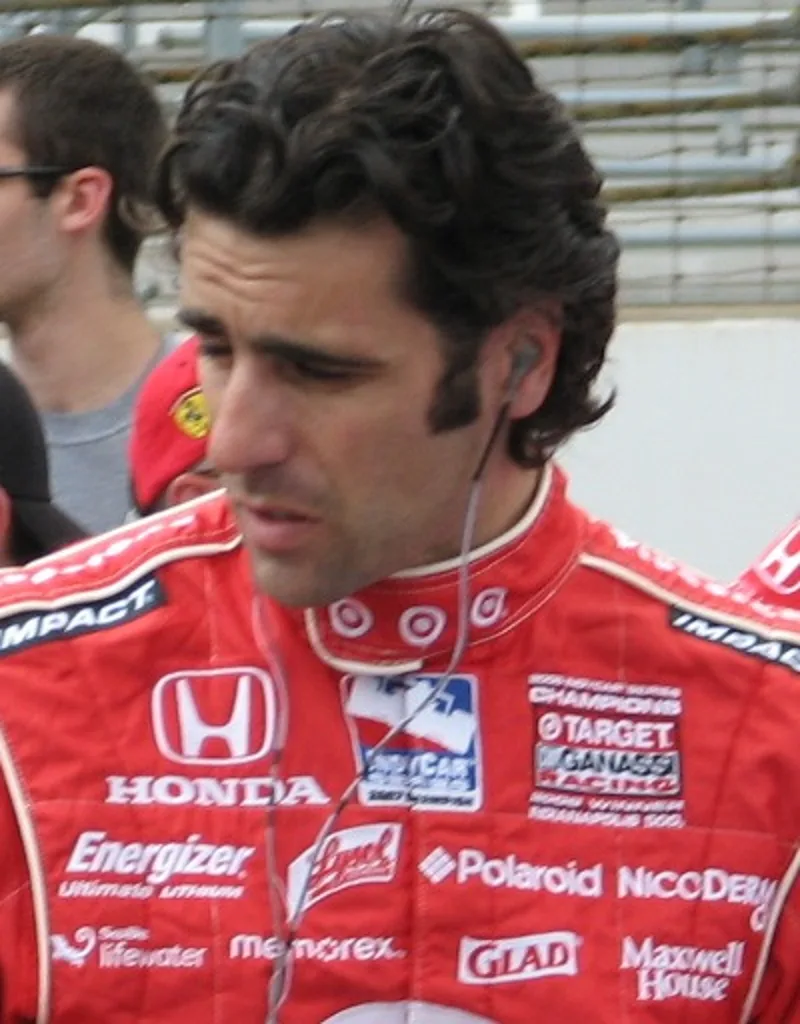
Its list of graduates is long: Michael Andretti, Jacques Villeneuve and Scott Goodyear, then Joey Hand, Buddy Rice and Dan Wheldon, and later Ryan Hunter-Reay, Alex Tagliani, Sam Hornish, Danica Patrick, Simon Pagenaud, A. J. Allmendinger, Graham Rahal and Katherine Legge. Danica Patrick raced in 2003 and 2004, becoming the first woman to take a pole position and to finish on the podium. Legge won at Long Beach in 2005, the first woman to take a professional open-wheel victory on the continent, and added two more wins that season.
In 2005 the series announced a $2 million prize for the 2006 champion, usable only toward a Champ Car drive. Simon Pagenaud won it and moved to Walker Racing in 2007. The 2007 champion, Raphael Matos, turned the prize down, feeling that without other sponsorship he would drive for an uncompetitive team, and took a deal with Andretti Green Racing in Indy Lights instead. The runner-up, Franck Perera, signed with Conquest Racing. By 2009 the prizes were $1 million for the champion, $500,000 for the runner-up and $250,000 for third.
From 2006 every car was a Swift 016.a with a 2.3-litre Mazda-Cosworth MZR four-cylinder rated at 300 bhp (224 kW), good for more than 175 mph (280 km/h). The change cut the cost of a season to around $500,000 to $600,000, and the 2007 championship attracted 30 drivers. After Champ Car merged with IndyCar in 2008, the series ran independently in 2009 under IMSA sanctioning and then shut down. Formula Race Promotions revived it in 2012 under SCCA Pro Racing sanction, and it moved to USAC in 2017 and returned to SCCA Pro Racing in 2019.
USF Pro 2000 championship: from Mazda rotary Formula Fords
The USF Pro 2000 Championship, formerly the Star Mazda, Pro Mazda and Indy Pro 2000, sits third on the ladder, sanctioned by USAC and operated by Andersen Promotions. Its line goes back to 1983, when Hayashi Racing in Japan built Formula Fords with Mazda rotary engines for the Jim Russell Racing School, and the Mazda Pro Series first raced at the 1984 Long Beach Grand Prix. The Star Mazda Championship debuted at Willow Springs in 1991 with Mark Rodrigues winning the first race. In 1999 Joey Hand won five of seven races, including four in a row, and collected a Mazda Miata as part of his prize.
The 2004 Star Mazda Pro car had a carbon fibre chassis built by Elan and a Renesis rotary engine with 250 hp (190 kW), and the early champions were Michael McDowell, Raphael Matos and Adrian Carrio. A Mazdaspeed driver development ladder began in 2007. In 2008 the series switched to standing starts and Goodyear radial tyres, and in 2010 it joined the IRL's Mazda Road to Indy program, with all three series racing at St. Petersburg. In December 2012 founder Gary Rodriguez sold the series to Dan Andersen's Andersen Promotions, which renamed it the Pro Mazda Championship. It became the Indy Pro 2000 after Mazda left the program at the end of 2018.
The title fights are memorable. In 2014 Spencer Pigot took the title by 10 points over Scott Hargrove after the lead changed hands three times in the final race, and in 2016 Aaron Telitz beat Pato O'Ward with nine straight podiums to end the season and a $601,700 scholarship. For 2017 the scholarship rose to $790,300, and Victor Franzoni won by 18 points over Anthony Martin. The Tatuus PM-18 car arrived in 2018, derived from the USF-17, and the Tatuus IP-22 with a halo replaced it in 2022. Graduates include Scott Speed, Marco Andretti, Graham Rahal, James Hinchcliffe and Michael McDowell.
USF2000: the entry point to the Road to Indy
The USF2000 Championship uses an American version of the Formula Ford F2000 standard, and as of 2022 it runs under USAC sanction and Andersen Promotions management as the second rung. It was founded by Doug Powell in 1990 and often had more than 60 entries per race. Divisions were split in 1992, merged in 1994, and the SCCA series joined in 1995. Dan Wheldon, an Indy 500 winner, was one of its graduates. A change of promoter in 2001 led to rule changes, a Ford Zetec engine and a dwindling grid, and the series ended by folding after 2006.
It returned in 2010 under Dan Andersen, with Van Diemen and later Elan DP08 chassis and a sealed Mazda MZR engine. The 2017 car was unveiled during the 100th Indianapolis 500 in 2016: the Tatuus USF-17, the first car in the series with a carbon monocoque rather than a spaceframe, based on the Tatuus F4-T014 Formula 4 car. The champion receives a Mazda scholarship into USF Pro 2000. Along the way the series ran an Oval Crown from 1996 to 2002 and a constructors' championship from 1997 to 2002.
Where the ladder stands now
The most recent structural change came in 2023, when IndyCar took direct operation of Indy NXT while Andersen Promotions kept the USF series, and Firestone came back as tyre supplier. At the lower levels the USF Pro 2000 car carries a halo from 2022, and the Atlantic Championship returned to SCCA Pro Racing sanctioning in 2019.