Founded in 1980 for Italian Formula Monza racing, Tatuus grew into a chassis builder for Formula Renault, USF2000, Formula 4 and Formula Regional, now part of the Korus group.
Tatuus is an Italian chassis manufacturer founded in 1980 that became known for Formula Renault cars. It has since supplied USF2000, Toyota, Formula 4 and Formula Regional chassis and now sits in the Korus group.
Tatuus is an Italian chassis manufacturer for a range of formula racing series. It was first founded in 1980 and is best known for its association with Renault Sport and its Formula Renault chassis, which built a long run of title-winning cars.
What is Tatuus?
Tatuus is an Italian chassis manufacturer that has supplied cars for formula racing series across several decades. The company began as Tatuus Racing SpA, founded in 1980 by Artico Sandona. Its design work was based in Italy, first at Concorezzo and later at Lainate, Its business model combined in-house design with customer sales, so one chassis could be bought by a factory team or an independent entrant.
Its name is linked above all with Formula Renault, where its chassis were the ones to beat in several championships. The business later moved into motorsport engines, equipment and a wider group of brands, which is now trading under the Korus name.
An Italian chassis builder that began with Formula Monza in 1980 and went on to supply the junior ladders of three continents.
How did Tatuus start in Formula Monza?
Tatuus Racing was founded by Artico Sandona in 1980, and the first cars were built for the 500cc and 1000cc Formula Monza championships. Sandona himself raced in the series, and he finished second in the 1983 Formula Panda Monza championship that Luca Melgrati won for Tatuus.
Melgrati won that title for the company again in 1985 and 1986, and Tatuus became the team and chassis to beat. The series was an important early proving ground for the company's engineering.
In 1988 the Italian manufacturer was contracted to build cars for the new Formula Konig. The car was a tube-framed racer with wings and slick tyres, and the first season was won by Michael Schumacher, later a seven-time Formula One champion.
How did the Formula 3 team perform?
Although it was not a Formula Three constructor, Tatuus fielded a team in the Italian Formula Three championship from 1989. Fabrizio Bettini was named rookie of the year in his debut season, with two podiums in seven races in an Alfa Romeo powered Dallara.
In 1991 Niko Palhares scored one pole position and one podium, and the team also entered the Monaco Grand Prix Formula Three support race for the first time. Palhares finished second in the championship in 1992, and the team made its first appearance in the Masters of Formula 3 that year.
In 1993 Fiat appointed Tatuus as its official factory team. Gianantonio Pacchioni won at the Monaco support race, and Tom Coronel joined the team for the Masters at Zandvoort. Tony Kanaan joined later after winning the Formula Alfa Boxer title with a Tatuus chassis, and he scored one win and finished fifth in the Italian standings.
Those years were a learning period, and the company later refined its approach to customer teams.
How did Tatuus become a Formula Renault champion?
Gianfranco De Bellis became co-proprietor in 1993, and Tatuus turned its full attention to Formula Renault cars. The RC95 was its first Formula Renault car. The factory team fielded Rino Mastronardi, Tommy Rustad and Enrique Bernoldi in the Eurocup, and Rustad won three races in the first Eurocup season.
The first title for the factory team and chassis came in 1996, when Enrique Bernoldi won six of ten races to take the Eurocup crown. In the same year David Cook beat Darren Turner to the British Formula Renault title in a Tatuus customer car, and Antoine Brousseau finished second in France. Those 1996 results came from both factory and customer cars, which helped spread the brand across national championships.
The 1997 season was a triumph for the company. Jeffrey van Hooydonk and Max Busnelli took the top two places in the European championship, and seven of the top ten were Tatuus cars. Customer entries also filled the podium in Germany, where Robert Lechner won the title, and Marc Hynes won the British title.
In France the story was harder, because the series had strong Mygale, Martini and Renault cars. Benoit Treluyer finished sixth in the French standings, and Lucas Lasserre took third in 1998 behind two factory Mygales.
In 1999 Tatuus dominated British racing, winning 12 of 13 races with Antonio Pizzonia taking the title. Customer entries also won the European and German championships, and Lasserre took the French title, The customer model meant a Tatuus could win a title without the factory team, a pattern that repeated in several countries.
What happened in the USF2000 and Formula Ford years?
In 1997 Tatuus made its debut in USF2000 with a factory team. Rino Mastronardi won the second race of the season on the streets of St. Petersburg, though it was his only outing. The team finished second among the manufacturers with 40 points, behind Van Diemen on 93.
In 1998 Ryan Hampton was second in the standings for the factory team, and Robby McGehee was the best customer driver in third. For 1999 Tatuus did not field a factory team, although some teams chose its chassis, including A. J. Foyt Enterprises. Various RC98 chassis are still raced in the SCCA Formula Continental class.
Tatuus was selected as the spec chassis for the U.S. F2000 National Championship from 2017, and a derivative with more power and downforce became the Pro Mazda spec chassis from 2018. Spec status means teams buy a common chassis, a model that suits series that want cost control. In Formula Ford Zetec, the company entered the market in 1998, and Timo Bernhard scored four podiums for Jenzer Motorsport in 1999.
How did the company become a race car manufacturer?
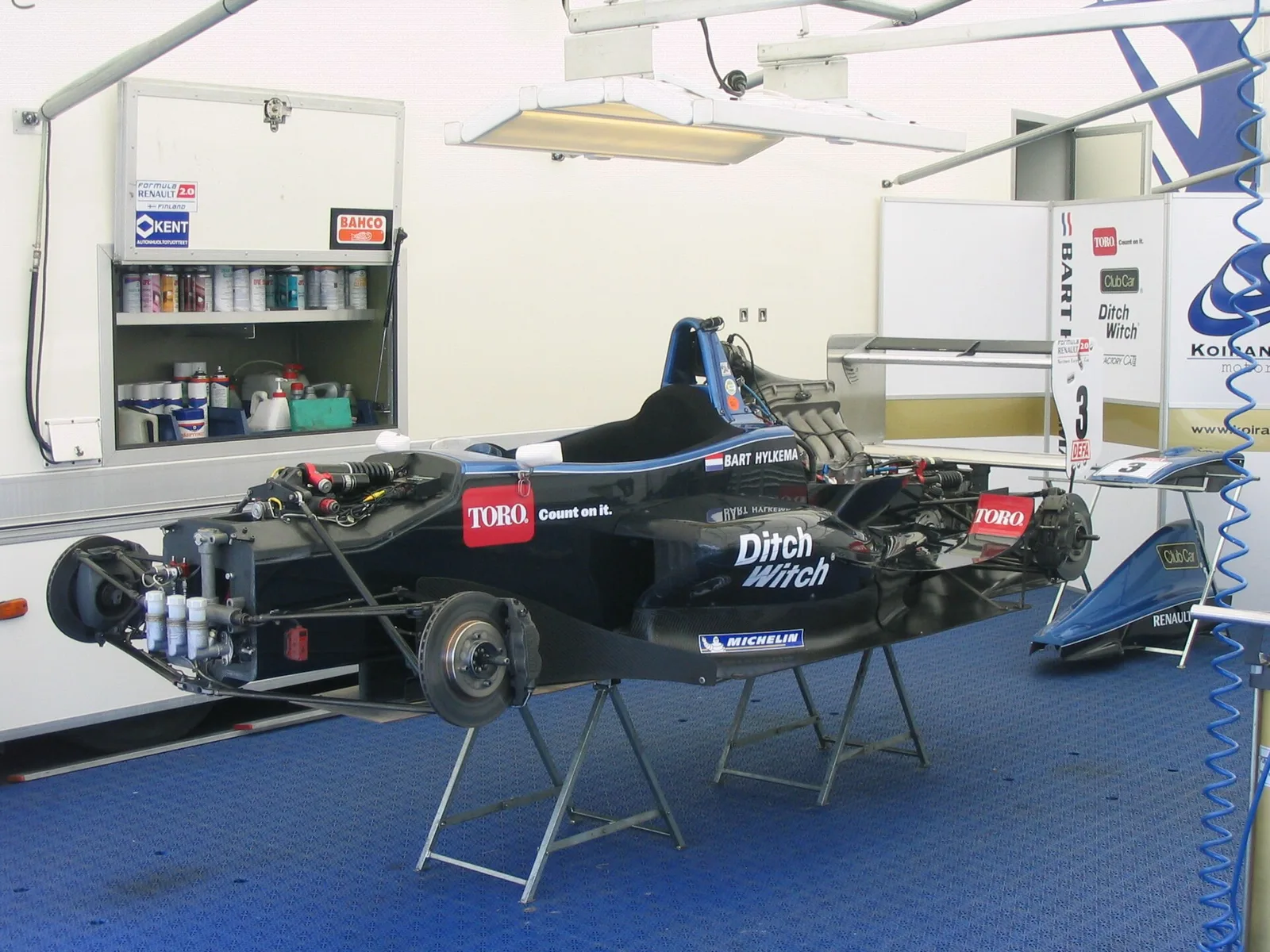
Tatuus was contracted to design and build the new specification Formula Renault cars, and the FR2000 debuted in 2000 in various championships. It stayed in use until 2010, when it was replaced by the Barazi-Epsilon. In 2002 the FR1600 was introduced for Formula Renault 1.6. That shift required a different kind of engineering team, since designing a spec car for a series is not the same as building a team's cars each weekend.
As spec formula classes took over, the racing team ceased to exist and the brand became a proper race car manufacturer. For the 2003 Formula Renault V6 Eurocup the Tatuus FRV6 was introduced, and after the European championship folded the car raced in Formula V6 Asia from 2006 to 2009.
What did the Toyota Racing Series add?
Tatuus was contracted by Toyota New Zealand to design the Formula Toyota racing car. The Toyota FT40 arrived in the Toyota Racing Series in 2005, and after ten seasons it was retired at the end of 2014. Its last race, the New Zealand Grand Prix, was won by Nick Cassidy.
The Tatuus-built Toyota FT50 followed for the 2015 season. The contract gave Toyota New Zealand a dedicated car for its national series, showing how a national series could rely on a specialist builder rather than a major manufacturer. Nick Cassidy tested it at Adria International Raceway in July 2014, and the new car kept the same engine but moved to a six-speed gearbox in place of the five-speed unit.
How did the junior and sportscar programmes grow?
For 2006 Tatuus introduced the FC106 for Formula Challenge Japan, which ran through 2013. The N.T07 was the sole car for the International Formula Master in 2007, 2008 and 2009. The FA010 Formula Abarth used a 1.4L Fiat-FPT engine and later appeared in Formula Masters China, Panam GP and Formula Russia.
In 2012 Tatuus announced its first Group CN sportscar, and the factory team ran a partial schedule with the PY012 in 2013. Brandon Maisano and Sebastian Merchan won the six-hour race at Magny-Cours that year, and the car was used by several teams. Those junior and sportscar programmes show how the company spread its designs across many categories rather than relying on one.
In 2014 Tatuus became the sole supplier of the Italian Formula 4 Championship, using a detuned Formula Abarth engine limited to 160hp. ADAC Formula 4 adopted the Tatuus car in 2015, and the BRDC Formula 4 Autumn Trophy followed. Tatuus cars now appear in many F4 series around the world. The company's spread across formulae reflects how junior categories multiplied in the 2000s and 2010s.
What are the key Tatuus results?
The main results are the Formula Renault titles of 1996 and 1999, the 1997 European one-two and the USF2000 spec role from 2017. The table below lists the headline results by series and year. Several entries are customer results, which shows how far the company's chassis travelled beyond its own factory teams.
| Series | Result | Year |
|---|---|---|
| Formula Monza | Title for Tatuus, Luca Melgrati | 1983 |
| Formula Monza | Title for Tatuus, Luca Melgrati | 1985 |
| Formula Konig | First season won by Michael Schumacher | 1988 |
| Italian Formula Three | Rookie of the year, Fabrizio Bettini | 1989 |
| Eurocup Formula Renault | Title, Enrique Bernoldi | 1996 |
| European Formula Renault | One-two finish, van Hooydonk and Busnelli | 1997 |
| British Formula Renault | Title, Marc Hynes | 1997 |
| British Formula Renault | Title, Antonio Pizzonia, 12 of 13 races won | 1999 |
| French Formula Renault | Title, Lucas Lasserre | 1999 |
| USF2000 | Second among manufacturers, 40 points | 1997 |
| Toyota Racing Series | FT40 last race win, Nick Cassidy | 2014 |
What is the legacy of Tatuus?
Tatuus's legacy is a chassis business that built the feeder ladder for a generation of drivers. Its Formula Renault cars won titles across Europe, and its modern spec chassis now sit in the USF Pro Championships, the Formula Regional series and many Formula 4 championships. Its chassis remain a common sight on European and American junior grids.
The move to a new headquarters in Lainate in 2023 and the 2025 T-326 Formula Regional car show a company still developing new generations of junior cars. The Korus name now covers a wider group of brands. Its engineers have tied the company to the junior ladder from Formula Monza to Formula Regional, a span of more than four decades. Its move into Formula 4 and Formula Regional shows how it keeps adapting its portfolio to new categories.