From a bankrupt Kia in 1997 to the world's third-largest car group, plus what US tariffs and a 31 trillion won investment pledge mean next.
Hyundai Motor Group was formed in 1998 when Hyundai bought 51 per cent of bankrupt Kia, and Genesis became a luxury brand in 2015. From 2022 to 2024 it ranked third among automakers worldwide, trailing Toyota and Volkswagen, and it now invests heavily in America amid tariff pressure.
Kia went bankrupt in 1997, and a year later the company that bought control of it was on the way to building one of the biggest car groups in the world. From 2022 to 2024 Hyundai Motor Group was the world's third-largest automaker by sales, behind only Toyota and the Volkswagen Group.
What is Hyundai Motor Group?
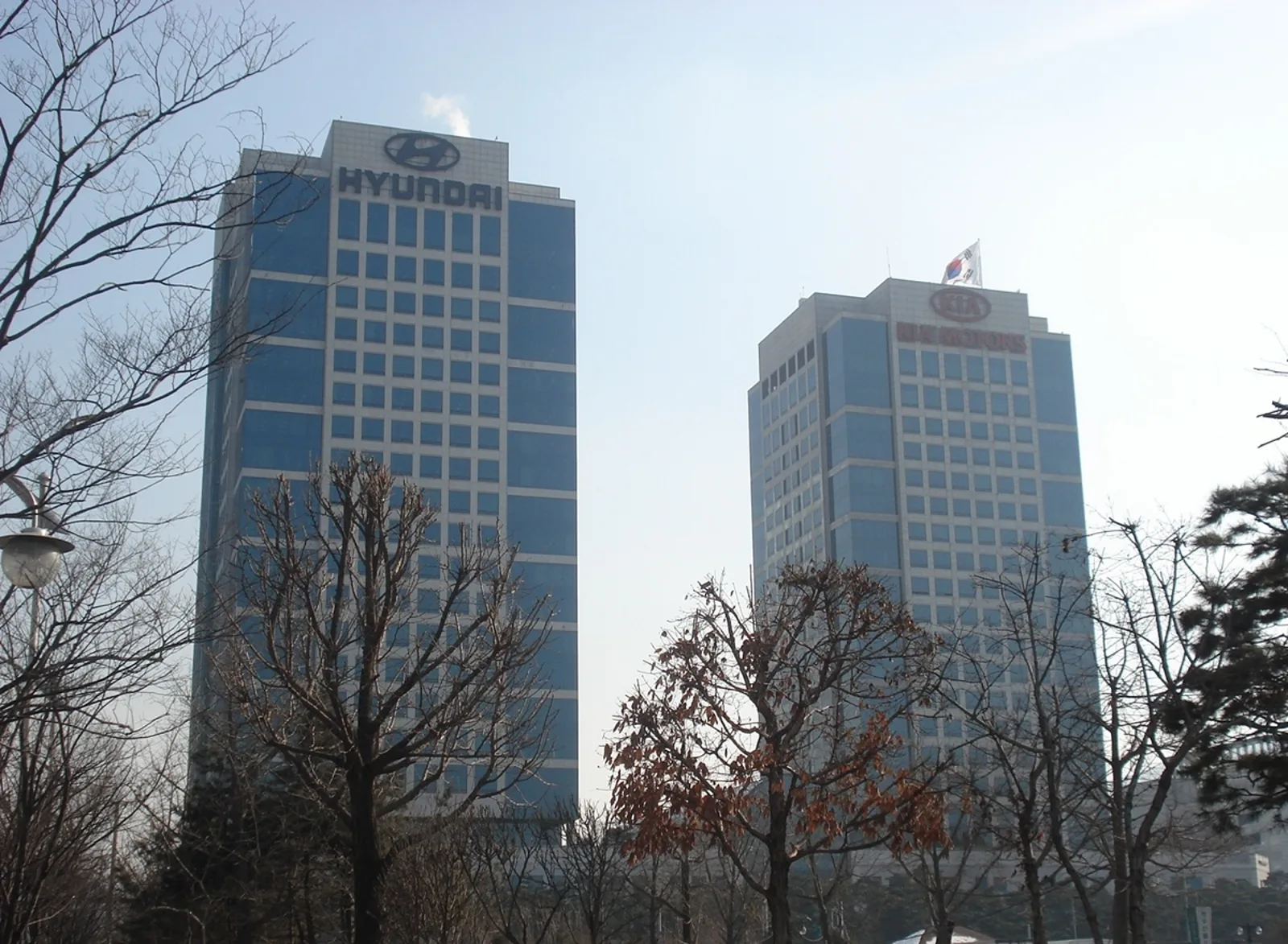
Hyundai Motor Group is a South Korean chaebol headquartered in Seoul, a conglomerate with no central holding company. It is the third-largest chaebol in the country after Samsung and SK Group, and Hyundai Motor Company is its de facto representative. The car brands are Hyundai, Kia and the luxury marque Genesis.
The group itself came into being in 1998, when Hyundai Motor Company bought 51 per cent of Kia. Hyundai's stake has since fallen to about one third. The stake stood at 33.7 per cent in 2011 and 35.17 per cent as of 2025, with Hyundai and related parties holding 36.99 per cent together. Kia, for its part, still owns shares in some 22 Hyundai subsidiaries.
The group that gave the world a Pony in 1975 ended 2024 selling 7.23 million Hyundais and Kias in a single year.
How did Hyundai become a global carmaker?
Chung Ju-yung founded Hyundai Engineering and Construction in 1947. His car company followed in 1967, started with his brother Chung Se-yung, and in 1968 it built the Ford Cortina in cooperation with Ford. When Hyundai decided to design its own car it hired George Turnbull, formerly of Austin Morris at British Leyland, in February 1974, and he in turn recruited five more British engineers.
The result, the Pony of 1975, was the first South Korean car. Giorgio Giugiaro of Italdesign styled it and Mitsubishi supplied the powertrain technology. Exports began the following year to Ecuador and soon reached the Benelux countries, and in 1982 Hyundai sold 2993 cars in Britain. In 1984 it began shipping the Pony to Canada, though not the United States, where the car would not meet emissions rules. Canadian sales beat all expectations. The one millionth Hyundai was built in 1985.
The United States came next. Hyundai Motor America began selling the Excel on 20 February 1986 and sold 168,882 cars that year, more than any other brand had managed in its first year there. Then the quality problems surfaced. Cost-cutting damaged reliability, sales plummeted and the company became the butt of jokes.
How did Hyundai fix its reputation?
It spent heavily on quality, design and research. From the 1992 model year Hyundai offered free maintenance for two years or 24,000 miles, and it added a ten-year or 100,000-mile (160,000 km) powertrain warranty on US cars. Chung Mong-koo took over from his father in 1999.
The effort paid off. In 2004 Hyundai tied with Honda in J.D. Power's initial quality survey with 102 problems per 1000 vehicles, second only to Toyota. In 2006 it placed third overall behind Porsche and Lexus. The Hyundai Genesis luxury sedan was named North American Car of the Year in 2009, the first win of its kind for the company, and the Elantra followed in January 2012.
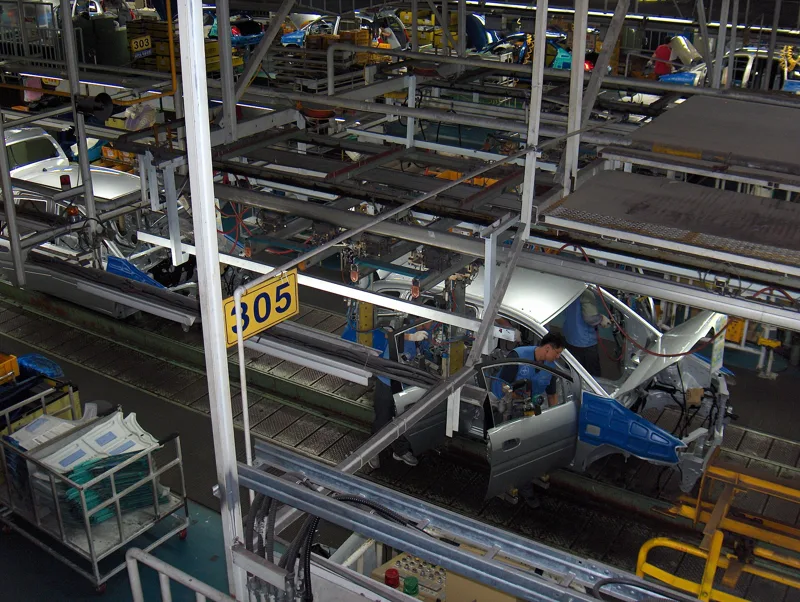
Technology came in steps. The Sonata of 1988 was the first model on the company's own technology, and in 1991 it finished its first proprietary petrol engine, the four-cylinder Alpha, along with its own transmission. A plant at Irungattukottai near Chennai started in 1996, and a $1.7 billion factory in Montgomery, Alabama, began production in May 2005. In 2011 Hyundai sold 4.05 million cars, and the group ranked fourth in the world behind GM, Volkswagen and Toyota. In 2014 Hyundai hired Albert Biermann, formerly of BMW M, to direct chassis development.
Not everything ran smoothly. In 2006 Chung Mong-koo was arrested and charged with embezzling 100 billion won (US$106 million), and Kim Dong-jin took over as head of the company. Euisun Chung became chairman on 14 October 2020, with his father made honorary chairman.
Why did Kia fall, and how did Hyundai rescue it?
Kia began in May 1944 as Kyungsung Precision Industry, making steel tubing and bicycle parts. It produced South Korea's first domestic bicycle, the Samchuly, in 1951, and became Kia Industries the next year. Licensed Honda motorcycles arrived in 1957 and Mazda trucks in 1962. The Sohari Plant, its first integrated assembly plant, opened in 1973, and the Mazda-based Brisa went on sale in 1974.
Then politics intervened. In 1981 the military ruler Chun Doo-hwan forced industry consolidation, and Kia had to give up passenger cars for light trucks. It built none in 1984 or 1985. It returned in 1986 with Ford as a partner, making only 26 cars in the first year and more than 95,000 in the second. The Kia Pride, based on the Mazda 121, was sold in North America as the Ford Festiva. The Sephia reached the United States in 1993 through four dealerships in Portland, Oregon, and by 1995 Kia had more than one hundred dealers across thirty states.
Kia declared bankruptcy in 1997 during the Asian financial crisis. In 1998 it agreed a deal with Hyundai that swapped ownership between the two companies, and Hyundai took 51 per cent. Since 2005 Kia has concentrated on Europe, treating design as its main growth engine; it hired Peter Schreyer as chief design officer in 2006, and he created the Tiger Nose grille. Kia Motors became Kia Corporation in January 2021.
What does Kia build, and where?
Kia's global sales topped 3.1 million vehicles in 2025. Its US arm sold 852,155 cars that year, a record and the first time it passed 800,000, up 7 per cent on 2024. Kia Canada sold 94,622, up 9.2 per cent.
Its factories now spread across continents. The West Point, Georgia, plant, a US$1 billion investment that broke ground in October 2006, builds the Telluride and Sorento and has a capacity of 340,000 vehicles a year. In Slovakia, near Zilina, the plant began making cars in December 2006 and has capacity for 350,000 vehicles and 540,000 engines; it has built more than five million vehicles and exports to 83 countries. On 20 August 2025 it started mass production of the EV4 hatchback, Kia's first fully electric car made in Europe, after a 108 million euro upgrade. In Mexico a US$1 billion plant in Pesqueria makes 300,000 cars a year.
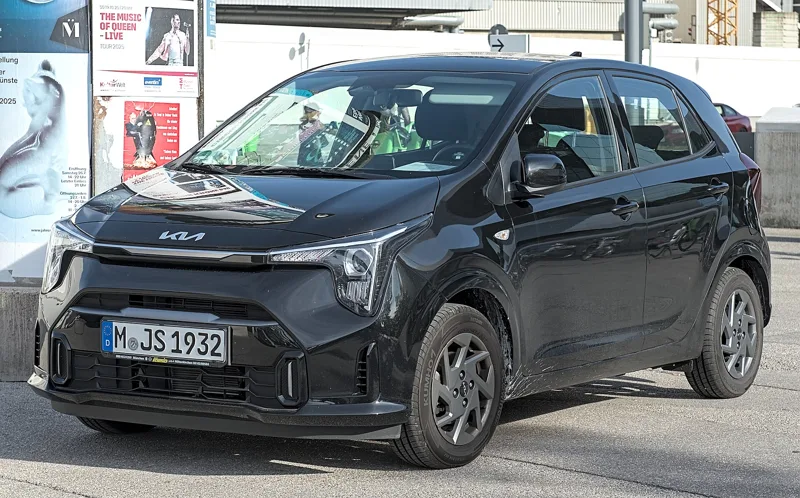
The British story is a good illustration. Kia started in Europe in 1991 with the Pride and, in 1998, sold fewer than 3,000 cars in Britain, its worst full year. By 2009 sales broke 50,000 for the first time, with nearly 17,000 of them Picantos.
How did Genesis become a brand of its own?
Hyundai conceived the Genesis in 2003 and launched it in 2007 as a rear-wheel-drive sports sedan. The programme cost $500 million over 23 months, and reliability testing covered 800,000 miles (1,300,000 km). It reached the 2008 North American International Auto Show as a Hyundai. There was debate about whether it should wear the Hyundai badge at all.
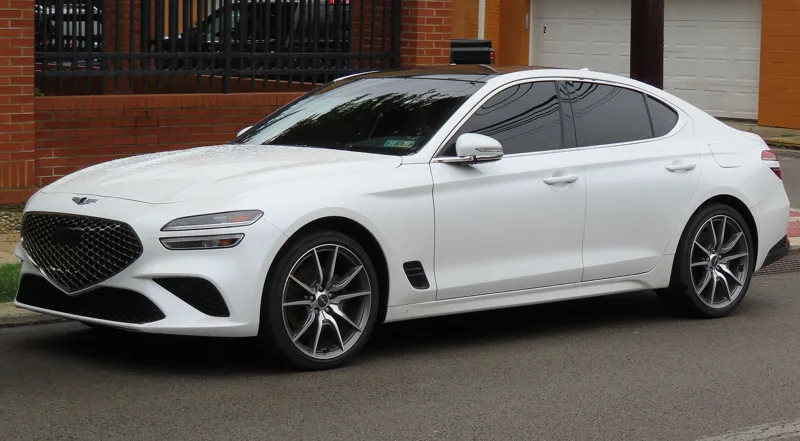
On 4 November 2015 Genesis was announced as an independent brand, the first luxury division created by a South Korean carmaker. Hyundai's US spokesman Chris Hosford gave three reasons: seven successful years in the luxury market, a place among the top three sellers in its segment and customer interest in a separate division. The G90 was announced on 9 December 2015 and the brand reached the United States in late 2016, through selected Hyundai dealerships with separate space in the showroom. Europe followed in May 2021 with the G70.
Naming is tidy. Sedans carry a G and a number, crossovers GV and a number, and battery-powered versions are labelled Electrified. The GV80, the first SUV, debuted on 14 January 2020. The Electrified G80 was the first production electric Genesis in April 2021, and the GV60 electric SUV followed in August that year.
Volume has grown fast. Between November 2015 and October 2018 Genesis sold 206,882 cars, of which 127,283 were G80s, 52,417 G90s and 27,182 G70s. By November 2025 cumulative sales stood at 1,510,368 units, and the G80 alone had passed 501,517. The brand operated in 20 major markets by October 2025.
Genesis also recruited senior designers and engineers from rivals. Luc Donckerwolke, previously design director at Bentley, Lamborghini and Audi, is chief creative officer. Filippo Perini, a former Lamborghini head of design, is chief designer, and Albert Biermann oversees performance.
Genesis also races. Genesis Magma Racing was founded in December 2024 to run the GMR-001 LMDh car. At the 2026 24 Hours of Le Mans its No. 19 car ran 372 laps to finish 13th overall, and the other entry, the No. 17, was forced out by a suspension failure.
How do the three brands compare?
| Brand | Starting point | Latest volume quoted | Notable fact |
|---|---|---|---|
| Hyundai | Motor company founded 1967 | About 4.14 million vehicles in 2025 | Sells in 193 countries; Ulsan is its largest single plant |
| Kia | Founded May 1944 as Kyungsung Precision Industry | Over 3.1 million vehicles in 2025 | Bankrupt in 1997; Hyundai took 51 per cent in 1998 |
| Genesis | Independent brand announced 4 November 2015 | 1,510,368 cumulative units by November 2025 | First South Korean luxury division |
How are tariffs shaping Hyundai's next move?
The group's response includes investing more in America. Chairman Chung Eui-sun announced plans to put 31 trillion won into the United States across four years. Trump replied that he would exempt the company from tariffs. Earlier, in May 2022, the group had promised an additional $5 billion in the US by 2025, in areas that included autonomous driving, robotics and urban air mobility.
The financial results show why. In 2025 Hyundai sold about 4.14 million vehicles and reported record annual revenue of 186.3 trillion won, but operating profit declined to 11.47 trillion won amid tariff and competitive pressures. Pressure is also building closer to home: in August 2026 about 40,000 union members at Hyundai Motor in South Korea held a one-day strike seeking higher pay.
The US footprint keeps growing. In May 2023 Hyundai set up a joint venture with LG Energy Solution to make electric vehicle batteries in America. Its air-mobility subsidiary Supernal announced a US plant for flying taxis in November 2023. The group bought 80 per cent of Boston Dynamics in June 2021. And since December 2024 customers have been able to buy Hyundai cars on Amazon and collect them from a local dealership.
What does the group's research cover beyond cars?
Hydrogen is the clearest example. The group set out Hydrogen Vision 2040 and, at a forum on 7 September 2021, showed the Vision FK, a high-performance fuel cell vehicle with two 2 kg hydrogen tanks above the rear axle. Its second-generation fuel cell stacks produce an average 85 kW and up to 95 kW, and two rear motors deliver more than 500 kW in total. In December 2021 however, Hyundai suspended development of hydrogen cars under the Genesis name and possibly others.
What does it mean for someone buying a car?
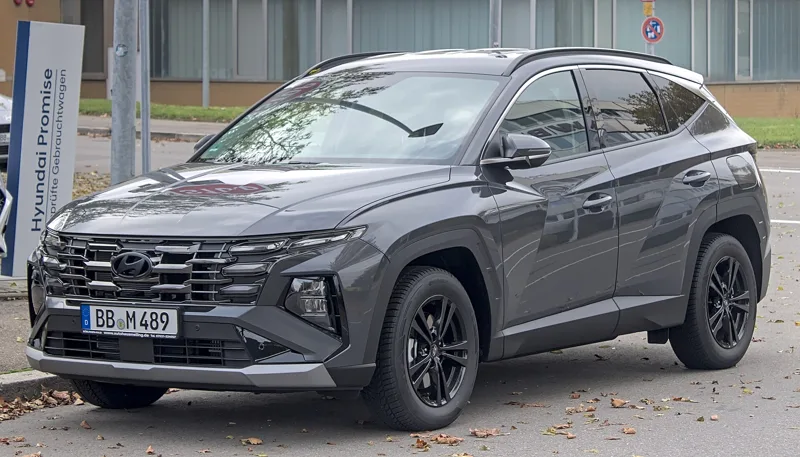
The warranty and quality history matter to many shoppers. In the United States Hyundai added a ten-year or 100,000-mile powertrain warranty in its quality push, and Kia America was ranked by J.D. Power as the highest mass-market brand for initial quality each year from 2015 to 2019. Hyundai's range spans passenger cars, SUVs, commercial vehicles and hydrogen fuel cell models, plus the Ioniq and N sub-brands, and its battery-electric cars sit on the Electric-Global Modular Platform.
Where this goes next
Plans stated by the group point to electrification. Genesis said in September 2021 that all new vehicles launched from 2025 would be fuel cell or battery electric, with carbon neutrality by 2035, then revised the plan in August 2024 to include a push for hybrids. Kia, according to its November 2021 roadmap, aims for carbon neutrality across its value chain by 2045 and for a fully electrified European line-up by 2035. In racing, the GMR-001 entered the World Endurance Championship in 2026, and the programme is due to join the IMSA series in 2027.