A flagship sedan that took 4,342 orders in a day, a compact sedan sharing a Kia platform and two SUVs with electric and coupe spin-offs.
Genesis, Hyundai's luxury division, built its range from the G90 flagship sedan, launched in December 2015, through the G70 compact executive sedan of 2017 to the GV80 and GV70 SUVs. Each has since gained facelifts, and the GV70 now has an electric version.
The day after pre-orders opened in South Korea in November 2015, Genesis had 4,342 orders for its new flagship sedan. By December the total was past 10,000. That car, the G90, was the first flagship sedan the Genesis brand had ever introduced.
The compact G70 sedan and the GV80 and GV70 SUVs followed it, and the later years brought electric power, new screens and a change in where the cars are built.
How do the Genesis G70, G90, GV70 and GV80 fit together?
Genesis is the luxury division of Hyundai Motor Group. The G90 is its flagship sedan, the G70 is the compact executive sedan at the bottom of the car range, and the GV80 and GV70 are its mid-size and compact SUVs. The GV80 was the brand's first SUV and the GV70 its second.
The sedans and SUVs split cleanly. On the car side the G70 sits below the larger G80 and G90. On the SUV side the GV70 sits in the compact D-segment, below the mid-size GV80.
| Model | Type | First shown | Engines at launch | Standout detail |
|---|---|---|---|---|
| G90 | Full-size flagship sedan | 9 December 2015, as the EQ900 | 3.3-litre turbo V6, 5.0-litre V8 | Successor to the Hyundai Equus |
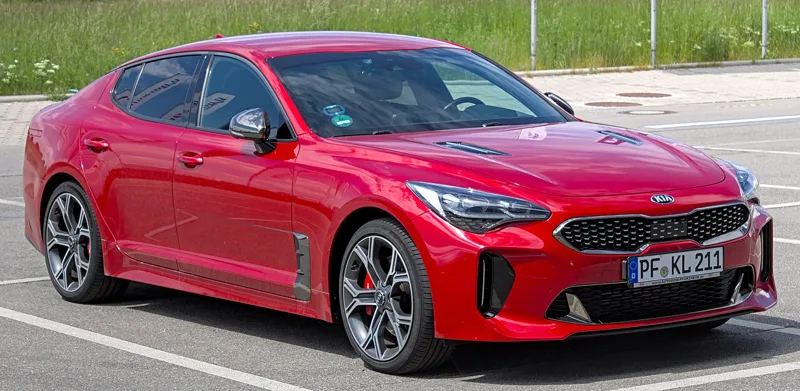
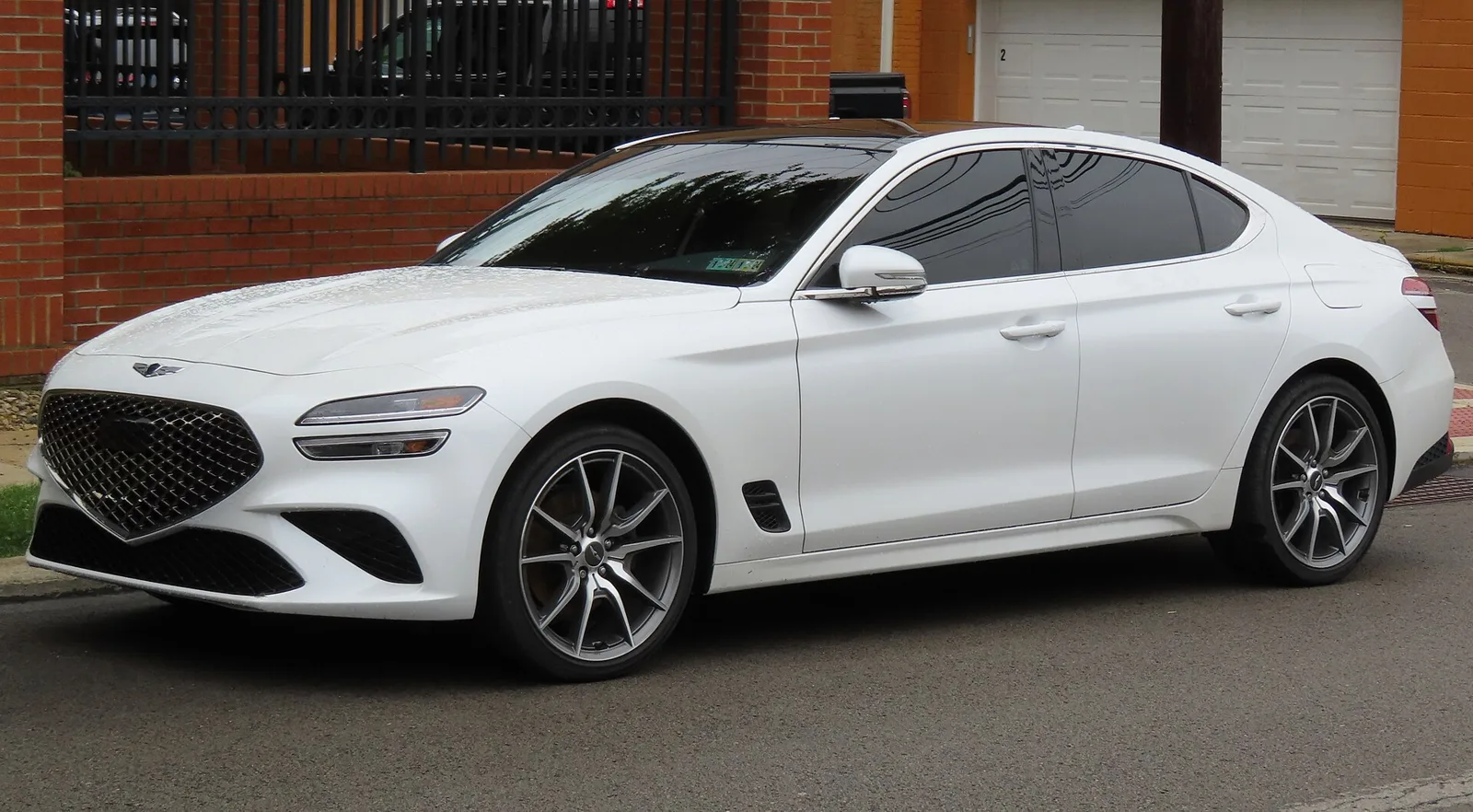
| G70 | Compact executive sedan, later a shooting brake | 15 September 2017 | 2.0-litre turbo, 3.3-litre twin-turbo V6, 2.2-litre diesel | Shares a platform with the Kia Stinger |
| GV80 | Mid-size luxury SUV | January 2020 | 2.5-litre turbo, 3.5-litre turbo, 3.0-litre diesel | Genesis's first SUV |
| GV70 | Compact luxury SUV | 8 December 2020 | 2.2-litre diesel, 2.5-litre turbo, 3.5-litre twin-turbo | Electric version released in 2022 |
Genesis had 4,342 orders for a flagship sedan the day after pre-orders opened.
Genesis G90: the flagship that started it
The G90 is a full-size four-door sedan and the first flagship sedan the Genesis brand introduced. It replaced the Hyundai Equus and was sold in South Korea as the Genesis EQ900 from 2015 to 2019. Development began in 2012 under the project name HI and ran for four years, with about 1,200 dedicated researchers working on design and mass production.
The car debuted in South Korea on 9 December 2015. Its US debut came at the 2016 North American International Auto Show, and it reached dealers in September 2016 as a 2017 model, with sales in Russia and the Middle East starting in the second half of that year.
What the first G90 offered
Buyers chose between a 3.3-litre turbo V6 making 272 kW (365 hp) and 510 Nm (376 lb ft), or the G90 Ultimate with a 5.0-litre V8 producing 313 kW (420 hp) and 519 Nm (383 lb ft). Both used an eight-speed automatic, with rear-wheel drive or HTRAC all-wheel drive.
The cabin used leather made in collaboration with Italy's Pasubio, alongside real wood and metal switchgear. Genesis described it as a car at the preliminary stage of full autonomy, with a highway driving assistance system that adjusted speed section by section using navigation data on speed limits. It also introduced the Genesis Adaptive Control Suspension.
Restyle, renaming and the G90L
Genesis presented a restyled car on 27 November 2018, and the EQ900 became the G90 in Korea too. The crest grille changed from a pentagon to a grid, and quad lamps appeared at the front. It was the first Genesis with automatic wireless navigation updates, and an Active Noise Control system was added, while a coasting function that puts the transmission in neutral improved fuel efficiency by 2 to 3 percent.
The long-wheelbase G90L, first sold as the EQ900L, was available only with the 5.0-litre V8 and all-wheel drive.
The second-generation Genesis G90
Genesis showed the exterior of the second-generation G90 on 30 November 2021. The family two-line lamp was applied, and the front uses roughly 200 micro optic lenses per low-beam module. The car comes in a regular and a long-wheelbase body, the latter adding 190 mm (7.5 in) over the standard car.
The base engine is a 3.5-litre twin-turbo V6 with 279 kW (380 PS) and 530 Nm (391 lbf ft). The long-wheelbase car adds a 48-volt mild hybrid system with an electric supercharger, a first for Genesis, and all-wheel drive is standard there. A multi-chamber air suspension adjusts stiffness in three stages.
Active rear-wheel steering turns the rear wheels 4 degrees against the fronts in a U-turn and 2 degrees during lane changes. Inside, the car has a 23-speaker Bang and Olufsen system with a function called Virtual Venue, a global first for virtual 3D surround sound.
Genesis G70: the compact executive sedan
The G70 debuted on 15 September 2017 at a launch event in Olympic Park in Seoul. It was the brand's third model, and its job was to take on compact executive sedans from the entry point of the range. It was previewed by the Genesis New York Concept at the 2016 New York show and developed at Hyundai's Namyang R&D Center in Hwaseong.
Design was led by Peter Schreyer, who also oversaw the Kia Stinger. The two cars share a rear-wheel-drive platform and engine range, though the G70 has a shorter wheelbase and a conventional sedan body where the Stinger has a liftback.
Genesis G70 engines and gearbox
The launch line-up, depending on the market, included a 2.0-litre turbo four with 188 kW (252 hp) and 353 Nm (260 lb ft), a 3.3-litre twin-turbo V6 with 272 kW (365 hp) and 510 Nm (376 lb ft), and a 2.2-litre turbodiesel with 148 kW (199 hp) and 441 Nm (325 lb ft). Genesis estimated that a rear-drive 3.3-litre car with a limited-slip differential could reach 100 km/h in 4.7 seconds.
Rear- and all-wheel drive were available. A six-speed manual was offered only on the rear-drive 2.0-litre in North America and was discontinued for the 2022 model year. In South Korea the 2.0-litre was replaced by a 2.5-litre turbo Smartstream engine in 2023.
Facelifts and the shooting brake
A facelift was announced on 8 September 2020 and reached Korean showrooms on 20 October 2020, carrying design cues from the GV80 and second-generation G80. It made the G70 the last Genesis sedan to adopt the brand's crest grille and two-line quad lamps. Not everyone was won over: many evaluators preferred the earlier design, and the taillights were criticised for looking forcibly inserted.
In May 2021 Genesis introduced the G70 Shooting Brake for European customers. It is a five-door station wagon with a longer, gently sloping roofline, and its luggage capacity is 40 percent bigger than the sedan's. European buyers could choose a 2.0-litre turbo petrol or a 2.2-litre diesel with an eight-speed automatic. The Korean car launched on 27 June 2022 with a 465-litre boot that grows to 1,535 litres with the rear seats folded.
On 19 May 2023 Genesis released an updated G70 and Shooting Brake in Korea, now with the 2.5-litre Smartstream engine, Brembo brakes as standard and a touchscreen climate panel. In January 2026 a head-up display, driver's seat memory and a power-adjustable steering wheel became standard in Korea, and a Graphite Edition based on the 3.3-litre turbo arrived. North America received a Prestige Graphite trim for the 2026 model year.
How the G70 was received
The G70 was named North American Car of the Year at the Detroit Auto Show in January 2019 and earned Motor Trend's 2019 Car of the Year, a place on the Car and Driver 10Best list and an IIHS Top Safety Pick+. Eighteen awards in all were recorded between late 2018 and April 2020, from AutoGuide, Roadshow by CNET, Cars.com, MotorWeek, Esquire, Autotrader, Popular Mechanics and Good Housekeeping among others.
Genesis GV80: the first SUV
The GV80 is a mid-size luxury crossover, internally coded JX1. It leaked in 3D in October 2019 and was officially unveiled in January 2020. Design teams in Korea, Europe and the United States worked on it, and it sits on a new rear-wheel-drive architecture with an aluminium bonnet, doors and tailgate.
Three engines were offered: a 2.5-litre turbo with 224 kW (304 PS), a 3.5-litre turbo with 279 kW (380 PS), and in select markets a 3.0-litre diesel with 204 kW (278 PS). Equipment includes an NFC digital key, remote smart parking assist, 22-inch wheels, Nappa leather, a 14.5-inch touchscreen and a 21-speaker Lexicon audio system. Ten airbags are fitted, along with forward collision-avoidance assist and blind-spot assist.
A hydrogen concept and the diesel problems
A GV80 Concept with an electric powertrain and hydrogen fuel cell appeared at the 2017 New York show. It was the first project at Genesis for designer Luc Donckerwolke after he moved from Bentley. Hyundai suspended hydrogen car development in 2021.
The production car's launch had problems. In June 2020 Hyundai suspended deliveries of the diesel GV80 after finding engine vibration caused by carbon buildup. In September 2020 it recalled 8,783 GV80s over engine stall, and since the January launch there had been eight recalls, four involving the engine.
GV80 markets, coupe and refresh
In the United States the GV80 launched in November 2020 as a 2021 model, with rear-wheel drive on the 2.5-litre turbo and all-wheel drive with the 3.5-litre twin-turbo V6. In Korea the August 2021 update added a six-seat layout with individual second-row seats.
Genesis unveiled a refreshed GV80 on 27 September 2023, with Korean sales from 11 October 2023. It has a 27-inch OLED screen, dual 14.6-inch rear-passenger screens and a Bang and Olufsen system in place of the Lexicon one. The GV80 Coupe appeared the same day with a coupe-style roofline, a flat-bottom steering wheel and carbon trim, with an optional higher-powered 3.5-litre engine that adds a 48-volt electric supercharger.
Genesis GV70: the compact SUV
The GV70 is a compact luxury crossover coded JK1, and it was launched globally on 8 December 2020 through a live-streamed film. It brought Genesis into the luxury compact crossover segment. The engines are a 2.2-litre diesel for markets outside the United States, a 2.5-litre turbo and a 3.5-litre twin-turbo. At launch Genesis highlighted a fingerprint authentication system.
Production started in 2021 for the 2022 model year, in South Korea and at the Hyundai plant in Montgomery, Alabama for North America. The GV70 won Motor Trend's 2022 SUV of the Year and was on the Car and Driver 10Best Trucks and SUVs list in 2023 and 2024.
The Electrified GV70
The battery-electric version was revealed at Auto Guangzhou on 19 November 2021 and released on 16 March 2022. It has dual motors and all-wheel drive, and Genesis says it can charge from 10 to 80 percent in 18 minutes on a 350 kW charger. The boot holds 503 litres, with a further 22 litres under the bonnet.
A refreshed version was unveiled on 19 November 2024, with the battery increased from 77.4 kWh to 84 kWh and the charge port changed from CCS to NACS. Genesis will include an adapter, and the car was due in American showrooms in early 2025 as a 2026 model year car.
The petrol GV70 refresh
The facelifted GV70 was unveiled on 26 April 2024 and reached Korean showrooms on 8 May 2024. It has new headlamps, grille and wheels, along with redesigned climate controls and centre console. One 27-inch OLED screen took over from the 12.3-inch cluster and the 14.5-inch infotainment display.
The Genesis range today
The range now covers two sedans, one offered as a shooting brake and the other with a long wheelbase, two SUVs, one with a coupe sibling, and an electric GV70. Engine choices vary by country: the diesels appear only in select markets, and the G70's manual gearbox was North American and has gone.
The G70 shares its platform with the Kia Stinger and the G90 sits at the top with its four-year development. The GV80 is the larger SUV, with a six-seat option in Korea, and the GV70 is the compact one that also comes in an all-electric form.
Where this goes next
One change is already dated. From the 2027 model year Hyundai Motor Group will stop building Genesis models at its Alabama plant and move all Genesis production to South Korea, citing growth and demand for Hyundai models in North America.
For the cars themselves, January 2026 brought the latest G70 updates in Korea, and the refreshed Electrified GV70 with the larger 84 kWh battery was planned for the United States as a 2026 model-year car.