A family of all-aluminium engines launched in 2018, running from a 998 cc three-cylinder to a twin-turbo V6 and spanning city cars, SUVs and luxury sedans.
Introduced in 2018, Smartstream is Hyundai's engine name for gasoline, LPG, diesel and hybrid units. The range runs from a 998 cc three-cylinder G1.0 to the 3.5 litre G3.5 V6, with turbocharged, hybrid and plug-in variants.
The Hyundai Smartstream is a family of gasoline, LPG, diesel and hybrid engines that Hyundai has used since 2018. The family opened with an all-aluminium engine in the third-generation i30 hatchback, and its members now run from a 998 cc three-cylinder to a twin-turbocharged V6.
Where did the Smartstream engine come from?
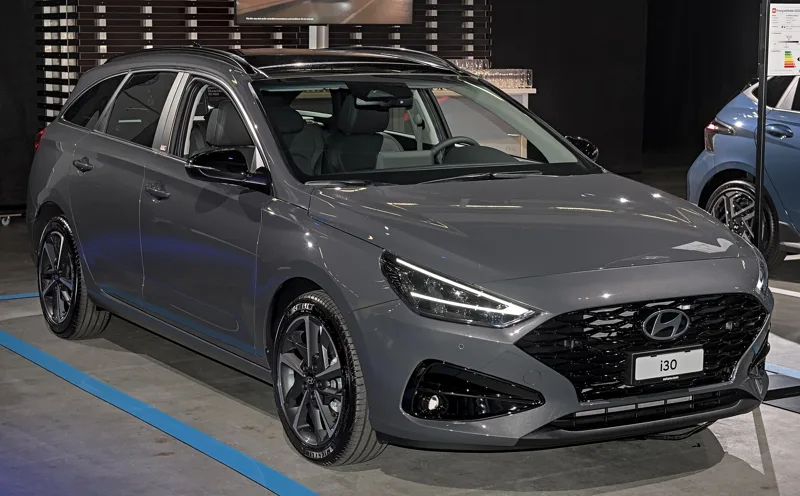
Hyundai Motor Company introduced the Smartstream branding with its all-aluminium engines in the third-generation i30 hatchback, codenamed PD. That car was unveiled at the Paris Motor Show in 2018, and it gave the new engines their first showcase.
The name covers far more than one design. Gasoline units share the branding with LPG engines, diesels and a range of hybrid systems, so a single badge can describe anything from a city car engine to a rear-drive luxury unit.
One engine name, from a 998 cc three-cylinder to a twin-turbo V6, bridging city cars, SUVs and rear-drive Genesis models.
What are the small Smartstream gasoline engines?
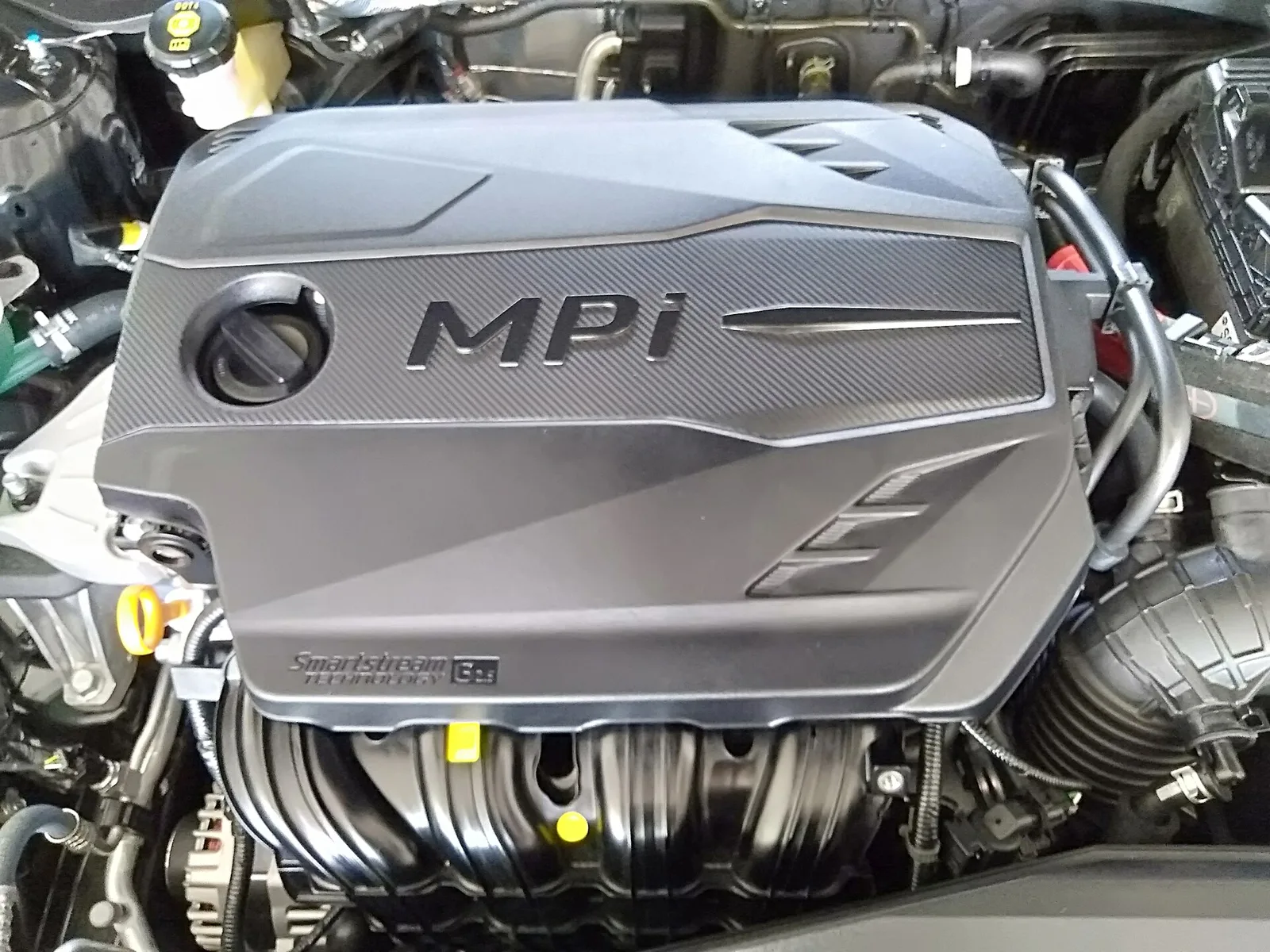
The smallest members are the G1.0 and G1.2, both developed from the Kappa II predecessors. The G1.0 MPi packs 998 cc into an inline three with multi-port injection, and it produces 76 PS (75 hp; 56 kW) at 6,200 rpm.
Torque peaks at 70 lb-ft (95 N-m) at 3,750 rpm. Hyundai added dual port injectors for each cylinder and swapped the thermostat for an integrated temperature controlled valve, which the company calls ITM. The Casper, i10 and Picanto all use this unit.
The G1.0 T-GDI turns the same three-cylinder layout into a turbocharged unit with gasoline direct injection. The G3LE version delivers 120 PS (118 hp; 88 kW) at 6,000 rpm, and it is available in a detuned 100 PS form for some applications. The G3LF variant adds CVVD and mild hybrid support.
The G1.2 MPi is a 1,197 cc inline four without forced induction. Its 83 PS (82 hp; 61 kW) peaks at 6,300 rpm, and torque spans 85 to 87 lb-ft (115 to 118 N-m) at 4,200 rpm.
How did the G1.4 and G1.5 engines differ?
The G1.4 T-GDI is a turbocharged inline four with gasoline direct injection. It delivers 140 PS (138 hp; 103 kW) at 6,000 rpm, and its 179 lb-ft (242 N-m) of torque arrives between 1,500 and 3,200 rpm, serving the Elantra, Creta, Carens and Seltos.
The G1.5 MPi, coded G4FL, is a 1,497 cc inline four with bore and stroke of 75.6 mm and 83.4 mm. With a 10.5:1 compression ratio, output is 115 PS (85 kW; 113 hp) at 6,300 rpm. Hyundai markets it as the Gamma II engine because it was developed from the Gamma family.
The G1.5 DPi, coded G4LG, runs 1,498 cc with both direct and multi-port injection from the Kappa family. The engine develops 110 PS (81 kW; 108 hp) at 6,000 rpm, and Kia Slovakia builds it in Zilina.
Turbocharged versions followed. The G1.5 T-GDI G4LH is a 1,482 cc unit measuring 71.6 mm by 92 mm, and it produces 160 PS (118 kW; 158 hp) at 5,500 rpm. The G4FS version reaches 170 PS (125 kW; 168 hp), and a high-output form reaches 200 PS (147 kW; 197 hp) for some applications.
What did the 1.6 engines bring?
The G1.6 MPi (G4FM) is a 1,598 cc unit with an 11.2:1 compression ratio. Its 123 PS (90 kW; 121 hp) arrives at 6,300 rpm, with 114 lb-ft (154 N-m) of torque at 4,500 rpm, and the DPi variant reaches 122 PS (90 kW; 120 hp) from the same displacement.
Both naturally aspirated versions carry CVVT, DPFI, HTCS and ITMS technology. CVVT is continuously variable valve timing, DPFI is dual-port fuel injection, HTCS is a high tumble combustion system, and ITMS is an integrated thermal management system.
The G1.6 T-GDI, coded G4FP, replaced the earlier 1.6 Gamma T-GDI. It is a 1,598 cc turbocharged inline four with gasoline direct injection, with 75.6 mm bore and 89 mm stroke. Its base output is 180 PS (178 hp; 132 kW) at 5,500 rpm, and torque is 195 lb-ft (265 N-m) from 1,500 to 4,500 rpm.
The i20 N uses the G4FV version of the G1.6 T-GDI, and higher output variants reach 204 PS (201 hp; 150 kW) on some applications.
Why was CVVD significant?
CVVD, or Continuously Variable Valve Duration, lets the G1.6 T-GDI adjust how long its intake valves stay open, independently of timing and lift. Hyundai describes the G1.6 T-GDI as the first production engine to use it, and it is also fitted to the G1.0 T-GDI G3LF and the G1.5 T-GDI G4LK.
Hyundai says the technology adds 4 percent to performance, 5 percent to efficiency and cuts tailpipe emissions by 12 percent. Those figures come from the manufacturer, so they should be read as company claims rather than independent results.
The feature sits alongside the other valve work in the family, including the CVVL variable lift system on the G2.0 MPi CVVL.
What were the G2.0 and G2.5 engines?
The G2.0 MPi, coded G4NJ and G4NL, is a G2.0 inline four fed by multi-port injection, with a 10.3:1 compression ratio. Its 152 PS (150 hp; 112 kW) arrives at 6,200 rpm, and it builds on the Hyundai Nu design.
The G2.0 MPi CVVL, coded G4NM, adds variable valve lift, and its 160 PS (158 hp; 118 kW) peaks at 6,500 rpm. The Atkinson-cycle G2.0, coded G4NS, has a 12.5:1 compression ratio and is rated at 149 PS (147 hp; 110 kW) at 6,200 rpm.
The turbocharged G2.0 T-GDi, coded G4NN, delivers between 233 and 247 PS (230 to 244 hp; 171 to 182 kW) at 6,000 rpm. Its torque of 260 lb-ft (353 N-m) arrives between 1,500 and 4,000 rpm, and Hyundai Wia Shandong builds the unit.
The G2.5 comes in two forms. The MPi, coded G4KM, measures 88.5 mm bore by 101.5 mm stroke, and it makes 179.5 PS (177 hp; 132 kW). The GDi, coded G4KN, has a 13.0:1 compression ratio and is good for 194 PS (191 hp; 143 kW) at 6,100 rpm, rising to 198 PS in the Azera and Cadenza.
How big are the G2.5 T-GDi and the rear-drive FR engine?
The G2.5 T-GDi, coded G4KP, is a turbocharged inline four with both direct and multi-port injection. It makes 281 PS (277 hp; 207 kW) at 6,000 rpm in SUV applications, and 290 to 294 PS (286 to 290 hp; 213 to 216 kW) at 5,800 rpm in other applications.
Its torque is 311 lb-ft (422 N-m) in both forms, arriving between 1,650 and 4,000 rpm for the higher-output version. The 10.0:1 and 10.5:1 compression ratios separate the two tunes.
The FR G2.5 T-GDi, coded G4KR, is built for rear-wheel drive. It produces 304 PS (300 hp; 224 kW) at 6,000 rpm, with 43 kg-m torque between 1,650 and 4,000 rpm. A detuned 281 PS version serves the Kia Tasman.
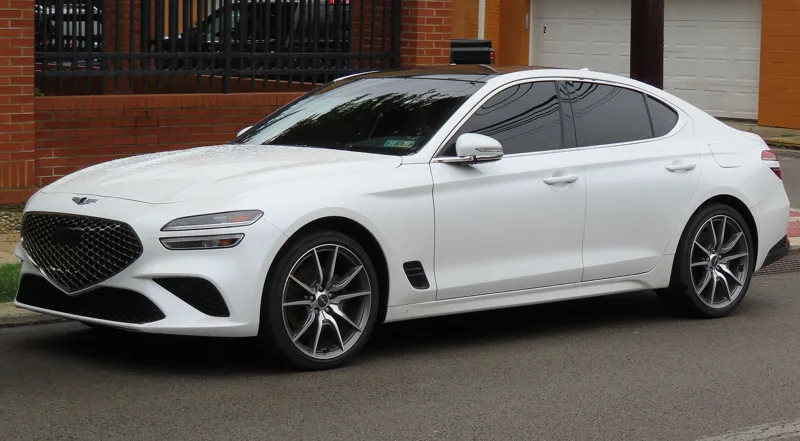
The Genesis G70, G80, GV70 and GV80 use the rear-drive version, and the Kia Stinger used it until 2023. The Kia Tasman continues to use the detuned form from 2025.
What did the G3.5 V6 offer?
The G3.5 is a V6 for front-drive applications, bored to 92 mm and stroked to 87 mm. The GDi version, coded G6DT, has a 12.3:1 compression ratio and produces 294 PS (290 hp; 216 kW) at 6,400 rpm.
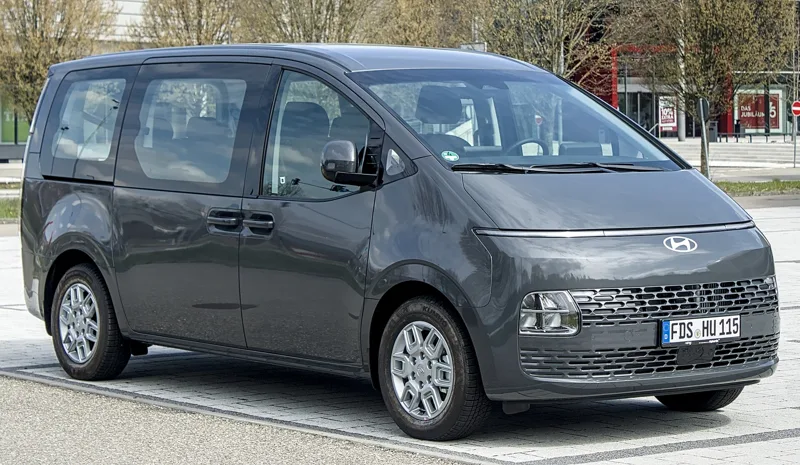
Kia's K8 used a tuned G6DT making 300 PS (296 hp; 221 kW), while the MPi variant, coded G6DU, peaks at 272 PS (268 hp; 200 kW) at 6,400 rpm. The Kia Carnival and Sorento fit the G6DU, and the Hyundai Staria uses it too.
The FR G3.5 T-GDI, coded G6DS, is a twin-turbocharged six for rear-wheel drive applications with an 11.0:1 compression ratio. The top figure of 380 PS (375 hp; 279 kW) comes at 6,000 rpm, while torque of 391 lb-ft (530 N-m) spans 1,300 to 4,500 rpm.
Hyundai moved this engine to dual fuel injection, combining direct and port injection, and upgraded it to a water-cooled intercooler. The FR unit is rated ULEV50, against the ULEV70 standard of its Lambda II RS predecessor, and it is exclusive to Genesis.
A 48V electric supercharger turns the G6DV variant into the most powerful engine in the family. It develops 415 PS (409 hp; 305 kW) at 5,800 rpm and 405 lb-ft (549 N-m) of torque.
How do the hybrid Smartstream engines work?
The G1.6 GDI Hybrid, coded G4LE, pairs a 105 PS gasoline engine with a 44 PS electric motor and a small battery. The combined system delivers 141 PS (139 hp; 104 kW). A plug-in version of the same engine uses a larger battery.
The turbo G1.6 T-GDi Hybrid combines the turbocharged engine with an electric motor and a battery pack, for a combined output of 230 PS (227 hp; 169 kW). The Staria Hybrid lifts that to 245 PS (242 hp; 180 kW) with a stronger motor.
The G2.0 GDi HEV pairs a 152 PS engine with a motor for a total of 195 PS (192 hp; 143 kW). Its plug-in variant reaches 205 PS (202 hp; 151 kW), and the G2.5 T-GDi Hybrid combines a 262 PS engine with a motor to reach 334 PS (329 hp; 246 kW).
What LPG and diesel options existed?
The LPG range starts with the L2.0, which is similar to the G2.0 MPi but uses LPi injection. Its 146 PS (144 hp; 107 kW) arrives at 6,000 rpm. The turbocharged L2.5 T-LPDi uses LPi as well, rated at 159 PS (157 hp; 117 kW) at 3,800 rpm, and it also comes in a lower power version for manual gearboxes.
The L3.5 is an LPG version of the G3.5 V6, delivering 240 PS (237 hp; 177 kW) at 6,000 rpm. Its applications include the Hyundai Grandeur, Staria and Kia K8.
The diesel line begins with the D1.5, whose VGT version produces 115 PS (113 hp; 85 kW) at 4,000 rpm, while the WGT version manages 100 PS (99 hp; 74 kW). The D1.6 was lighter than its predecessor thanks to an aluminium block and a long-life timing belt, and it develops 136 PS (134 hp; 100 kW).
The D2.0 rates 186 PS (183 hp; 137 kW) at 4,000 rpm. The D2.2 uses an aluminium block, and it is 38 kg lighter than the older R II unit. It switched back to a timing belt, raised fuel pressure to 2,200 bar, and produces 202 PS (199 hp; 149 kW) at 3,800 rpm in the D4HE and D4HH forms.
The D3.0 is a turbocharged inline six with EGR and SCR systems, and it is 32 kg lighter than its predecessor. Originally rated at 277 PS (273 hp; 204 kW), its power was revised to 272 PS (268 hp; 200 kW) from 2022, and its torque of 434 lb-ft (588 N-m) sits between 1,500 and 3,250 rpm.
How do the main Smartstream engines compare?
| Engine | Layout and capacity | Output | Torque |
|---|---|---|---|
| G1.0 MPi (G3LD) | 998 cc, three-cylinder, naturally aspirated | 76 PS (75 hp; 56 kW) at 6,200 rpm | 70 lb-ft (95 N-m) at 3,750 rpm |
| G1.0 T-GDI (G3LE) | Three-cylinder, turbocharged | 120 PS (118 hp; 88 kW) at 6,000 rpm | 127 lb-ft (172 N-m) |
| G1.6 MPi (G4FM) | 1,598 cc, four-cylinder, naturally aspirated | 123 PS (90 kW; 121 hp) at 6,300 rpm | 114 lb-ft (154 N-m) at 4,500 rpm |
| G1.6 T-GDI (G4FP) | 1,598 cc, four-cylinder, turbocharged | 180 PS (178 hp; 132 kW) at 5,500 rpm | 195 lb-ft (265 N-m) |
| G2.0 MPi (G4NJ) | Four-cylinder, naturally aspirated | 152 PS (150 hp; 112 kW) at 6,200 rpm | 142 lb-ft (192 N-m) at 4,000 rpm |
| G2.0 T-GDi (G4NN) | Four-cylinder, turbocharged | 233-247 PS (230-244 hp; 171-182 kW) at 6,000 rpm | 260 lb-ft (353 N-m) |
| G2.5 GDi (G4KN) | Four-cylinder, naturally aspirated | 194 PS (191 hp; 143 kW) at 6,100 rpm | 181 lb-ft (245 N-m) at 4,000 rpm |
| G2.5 T-GDi (G4KP) | Four-cylinder, turbocharged, SUV tune | 281 PS (277 hp; 207 kW) at 6,000 rpm | 311 lb-ft (422 N-m) |
| G2.5 FR T-GDi (G4KR) | Four-cylinder, turbocharged, rear-drive | 304 PS (300 hp; 224 kW) at 6,000 rpm | 311 lb-ft (422 N-m) |
| G3.5 FR T-GDI (G6DS) | Six-cylinder, twin turbocharged, rear-drive | 380 PS (375 hp; 279 kW) at 6,000 rpm | 391 lb-ft (530 N-m) |
The spread runs from 76 PS at the bottom of the range to 380 PS at the top, with the G2.5 FR and G3.5 FR serving rear-drive cars. The G1.6 T-GDi occupies the middle, where most front-drive models sit.
What is the legacy of the Smartstream range?
Smartstream is now the umbrella for a wide range of engines, and it is used by Hyundai, Kia and Genesis. Applications run from the Casper and i10 city cars to the Palisade and Telluride large SUVs, with sedans, hatchbacks and vans in between.
Several engines were detuned for particular markets or models, so a single engine code may appear with more than one output. The G1.5 T-GDI G4FS, for example, is mainly used in the Chinese market, and the G1.5 MPi has more than one name in use.
Production is spread across several plants. Kia Slovakia builds some G1.5 variants in Zilina, and Hyundai Wia Shandong handles the G2.0 T-GDi, so the family has a broad manufacturing footprint.