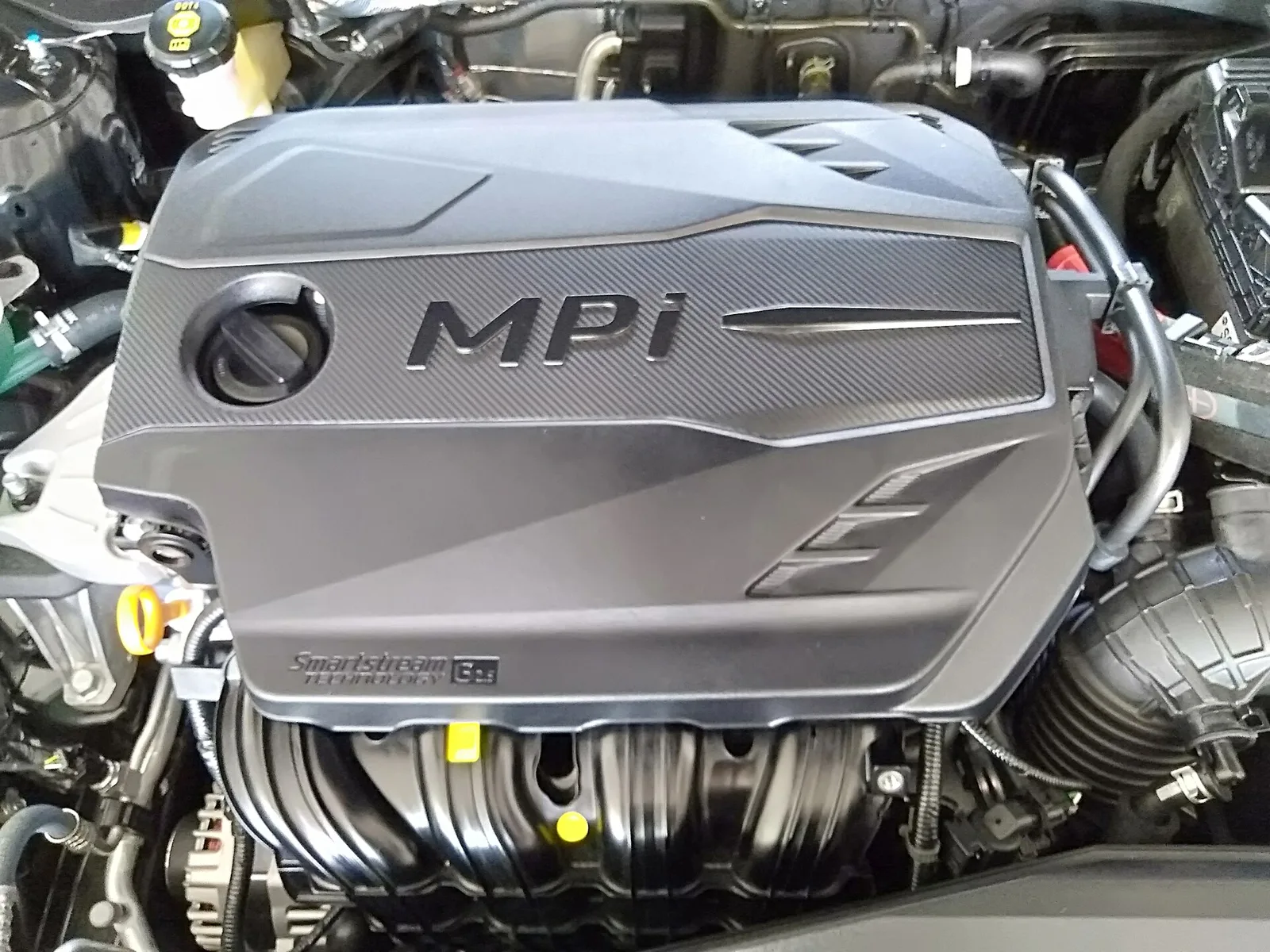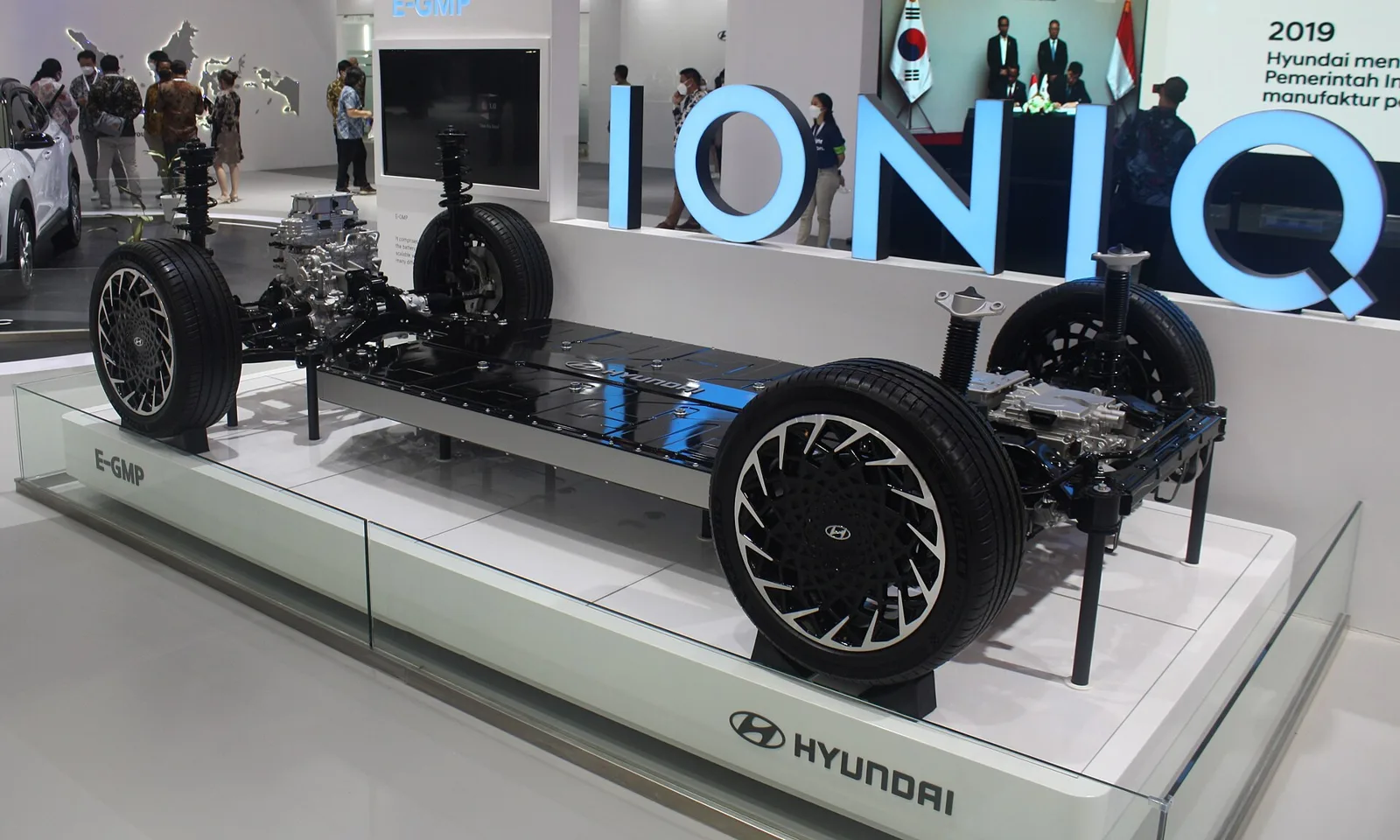
The K platforms sort Hyundai and Kia models by segment, from the Santro to the Seltos, while the 800-volt E-GMP carries the electric range.
The K platforms are shared front-drive underpinnings Hyundai and Kia have developed since 2017, sorted by segment from K1 to K3/K4. The E-GMP is Hyundai's first dedicated electric platform, in use since 2021, with an 800 V architecture and a 400 V variant used by cars such as the Kia EV3.
The Hyundai E-GMP platform runs an 800-volt electrical system, yet its cars can still plug into the 400-volt fast chargers that most of the world uses. The trick is that the vehicle's own motor and inverter step incoming 400 V direct current up to 800 V. It is a small detail that says a lot about how the Korean group has organised its engineering: one electric platform for the cars of tomorrow, and a family of shared K platforms underneath the cars on sale today.
Between them, the K platforms and the E-GMP underpin a wide span of Hyundai, Kia and Genesis cars, from entry-level models such as the Santro to large electric SUVs.
What are the Hyundai and Kia K platforms?
The K platform series is a set of underpinnings that Hyundai and Kia have developed since 2017 for their ranges. They are sorted by segment: K1 for the smallest cars, K1/K2 for B- and C-segment cars, and K3/K4 for the compact class and beyond. Hyundai and Kia models that look quite different on the road often share one of them, which is why the same code names recur across the two brands.
K1: the entry platform
The K1 platform is used for entry subcompact models in the A-segment. It was introduced in 2018 with the second-generation Hyundai Santro, replacing the SA and BA platforms. It is a modified version of the SA platform, and Hyundai claims it is 63 percent more rigid than its predecessor. Two wheelbases are offered, 2,400 mm (94.5 inches) and 2,450 mm (96.5 inches).
Many of Hyundai's most familiar small cars sit on it. The Santro, Atos and Eon (2018-2022) were joined by the Grand i10 Nios (2019 onward), the Aura and Grand i10 sedan (2020), the Casper (2021), the Exter (2023) and the Hyundai Venue and Kia Syros (both 2025). A K1 BEV platform followed in 2024: a dedicated battery electric platform for the small segment, derived from the K1 and from Hyundai's E-GMP approach. It carries the Casper Electric, sold as the Inster (2024), and the Kia Syros EV (2026).
K1/K2-P2 and P3: the B and C segments
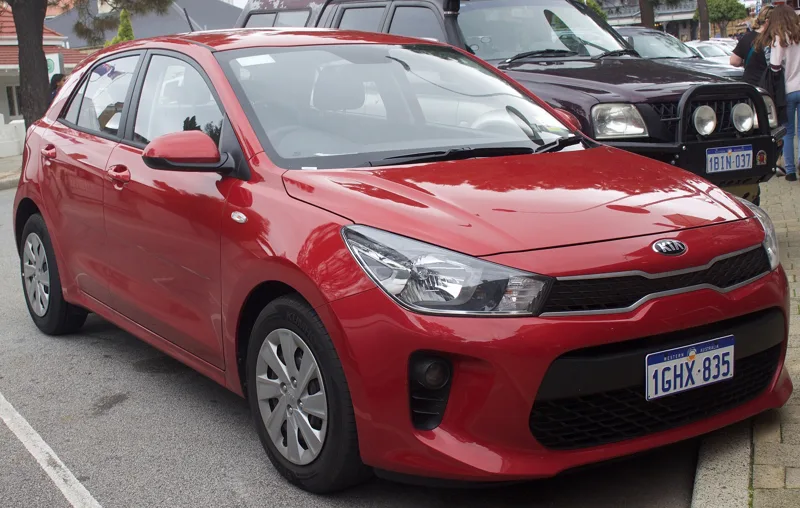
Introduced in 2017, the K1/K2-P2 platform is mainly for B-segment vehicles, and it carries a long list: the Hyundai i20 (from 2020), the Accent, Verna and Solaris (2017-2023), the Kia Stonic (2018 onward), the Kia Rio (2017-2023), the Hyundai Kona (2017-2023), the Hyundai Venue (2019-2026), the Creta and Cantus (2019 onward), the Alcazar (2021), the Kia Carens (2022), the Kia Seltos (2019 onward), the Sonet (2020) and the Hyundai Bayon (2021).
The K1/K2-P3 platform dates from 2015 and mainly serves the C-segment. It can support three-row seating and succeeds the HD platform. It underlies the Hyundai i30 (from 2016), the Stargazer (2022), the Kia Forte (2018) and the Kia Ceed, ProCeed and XCeed (2018). A K2 BEV platform arrived in 2025, derived from the K2, carrying the Hyundai Creta Electric and the Kia Carens Clavis EV, also sold as the Hyundai Neira.
K3/K4: the third generation
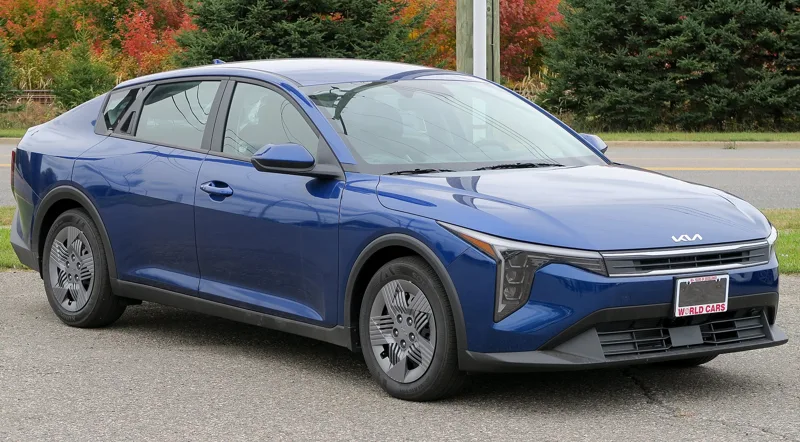
The K3/K4-P2 platform arrived in 2020 as an all-new design for C-segment cars, succeeding the J platform series. Hyundai calls it the third generation and says it let engineers lower the centre of gravity for more agile handling. A multiload path structure is meant to improve safety. Cars on it include the Accent and Verna (BN7, 2020), Kona (SX2, 2022), Elantra and Avante (CN7, 2020), Kia Niro (2021), Kia K3 (2023), Kia K4 (2024) and the next Hyundai i20 and Kia Seltos (both 2026). The K3 BEV platform, introduced in 2024, is the dedicated electric version that underpins the Kia EV3.
The E-GMP platform runs an 800-volt system but can still use 400-volt chargers, turning the motor and inverter into a converter.
The K platforms by segment
| Platform | Introduced | Segment | Example cars |
|---|---|---|---|
| K1 (KP1) | 2018 | A-segment entry subcompacts | Santro, Grand i10 Nios, Casper, Kia Syros |
| K1/K2-P2 (KP2) | 2017 | Mainly B-segment | i20, Accent, Stonic, Kona, Creta, Seltos |
| K1/K2-P3 (KP3) | 2015 | Mainly C-segment; three-row capable | i30, Stargazer, Forte, Ceed |
| K3/K4-P2 | 2020 | C-segment | Elantra, Niro, Kia K3, Kia K4 |
Nameplates move between platforms from one generation to the next. The Hyundai i20 sat on the K1/K2-P2 platform from 2020, and its successor (BC4) is listed on the K3/K4-P2 from 2026. The Seltos appears on both too, as do the Accent, Verna and Kona. The Venue shows up twice as well: the QX version ran on the K1/K2-P2 from 2019 to 2026, and a new QU2 Venue joined the K1 in 2025. A model name, in other words, does not identify a platform; the generation does.
What is the Hyundai E-GMP platform?
E-GMP, short for Electric Global Modular Platform, is a dedicated battery electric platform for Hyundai Motor Group, and the first electric-only platform Hyundai built. It has underpinned Hyundai, Kia and Genesis cars since 2021. It follows the company's earlier Power Electric System, or PE System, a name for the electric drivetrain including motor, battery and power electronics.
The PE System does for an electric car what the engine and gearbox do for a petrol one. It has gone through three generations. The first used a separate traction motor and inverter linked by an orange three-phase cable. The second integrated the two and eliminated the cables and connectors. The third combines the traction motor, reduction gear and inverter in a single compact module, with four-wheel drive made by putting a motor on the front and rear axles. Integrating the motor and inverter housing lowered the inverter height by about 30 mm (1.2 in). In 2017, when only a few manufacturers had one, Hyundai confirmed it was developing a dedicated electric platform. The same PE System has also been fitted to the Hyundai Vision FK concept, an eco-friendly hydrogen electric vehicle, where it is combined with a hydrogen fuel cell system.
A standardised battery system can be tuned and fitted to suit a particular vehicle segment, which Hyundai says lets the platform either maximise driving range or meet a customer's needs. Rivals exist: the Volkswagen Group's MEB is a similar multi-vehicle electric platform, and Hyundai's own Purpose-Built Vehicle platform does the same job for commercial vehicles.
800 volts, and what it buys
The E-GMP is an 800 V architecture with a scalable wheelbase, and it supports batteries from several suppliers. Single motor rear-drive and dual motor all-wheel drive are both available. Hyundai claims the motor is about 10% more efficient than a conventional one, thanks to "hairpin winding", which packs the coils more densely, and better cooling. The reduction gear slows the motor's speed and multiplies torque at the wheel. An EV Transmission Disconnector, on all-wheel-drive versions only, can decouple the motor and drive axle to shift freely between two- and four-wheel drive.
The battery is a pouch-format lithium-ion pack designed to be 13 cm (5.1 in) tall. E-GMP vehicles are expected to manage at least 500 km (310 mi) on the WLTP test cycle, and support 200 kW fast charging. Hyundai claims an 18-minute charge restores 80% of a 77.4 kWh battery, and five minutes adds 100 km (62 mi) of range, when using a high-power 800 V/350 kW supply. Standardising the battery type and size means repairs can replace a single module rather than the whole pack. Hyundai also claims a 10% increase in power density.
The charging network as of 2022 offers 50-350 kW at 400-920 V, and E-GMP electronics cope with both 400 V and 800 V systems. The platform also supports bidirectional charging: vehicle-to-load at 110/230 V and up to 3.7 kW, vehicle-to-vehicle and vehicle-to-grid.
Silicon carbide and the inverter
The inverter converts the battery's direct current to the alternating current that the traction motor uses. Its power module uses silicon carbide (SiC) semiconductors, which are more efficient than plain silicon partly because they handle heat better: thermal conductivity is 1490W/m-K, against 150 W/m-K for silicon. SiC serves the rear, main motor, where it cuts conversion losses and suits high-voltage, high-current circuits. The front motor, on cars that have one, used silicon electronics to save cost until Hyundai announced in 2022 that it would switch the front inverter to SiC too, improving efficiency and range by about 5%.
Chassis
The platform supports wheelbases beyond 3,000 mm (118.1 in) and a variety of body styles, including C-segment, E-segment, crossovers, sedans and SUVs, up to seven-seat three-row SUVs. The rear suspension is a five-link design, and an integrated drive axle combines the drive shaft and wheel bearings into one unit, cutting parts and boosting rigidity. The battery bolts to a full-perimeter frame with eight bolts running through the pack. Front and rear crumple zones absorb impact energy, and high-strength steel protects the battery and cabin. Albert Biermann has indicated that smaller electric cars would continue to use a front-wheel-drive platform.
Which cars use E-GMP?
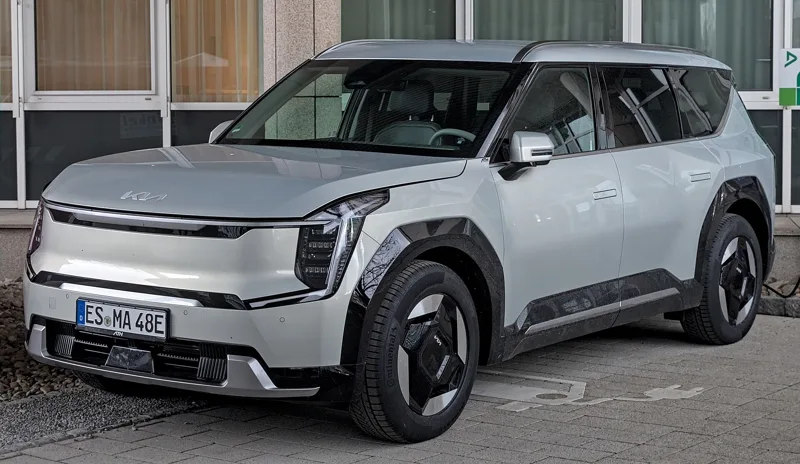
The 800 V cars are the Genesis GV60 (2021 onward), Hyundai Ioniq 5 (2021), Kia EV6 (2021), Hyundai Ioniq 6 (2022), Kia EV9 (2023), Hyundai Ioniq 9 (2025) and the Hyundai Elexio (2025). The 400 V group comprises the Kia EV3 (2024), EV4 (2025), EV5 (2025), and the 2026 arrivals Kia EV2 and Hyundai Ioniq 3. In China the Hyundai Ioniq V (2026) is listed separately.
The Kia EV3 turns up in two lists at once, as the car on the K3 BEV platform and as a 400 V E-GMP model. Kia markets the EV3 and EV5 as being based on the 400 V version of E-GMP. Their chassis come from the front-wheel-drive K3 and N3 platforms, with body structures redesigned for battery power. That link joins the two halves of this story: the cheapest cars on the electric platform inherit their bones from the K family.
E-GMP.S for commercial bodies
E-GMP.S, with S for service, is based on the E-GMP but configured so that various upper bodies can be fitted to its flat platform. It first appeared in Kia's Purpose-Built Vehicle model, the PV5 (2025 onward), and the PV7 (2026) follows.
What this means for someone buying a Hyundai or Kia
A buyer comparing two cars can use these platform names to see what is shared. A small Hyundai or Kia may share its underpinnings with a car from the other badge, so a platform name tells more than a model name does. On the electric side, the key difference is voltage: the 800 V cars use the full E-GMP architecture and its fast-charging claims, whereas the 400 V models, such as the EV3 and EV5, are based on K-family chassis. The standardised battery is meant to let a single module be replaced in a repair.
Where this goes next
Hyundai plans to release 23 battery electric vehicles using E-GMP, 11 of them exclusively electric. The roster already lists models with 2026 start dates: the Ioniq 3, the Kia EV2, the Ioniq V in China, the PV7 and, on the K platforms, the Kia Syros EV, the next i20 and the Seltos on the K3/K4-P2 platform. The front-motor SiC inverter switch announced in 2022 targets an efficiency and range gain of about 5%.