A small Hyundai hatchback launched at the 2008 Paris Motor Show, then grew into a rally-bred performance model and a fourth generation in 2026.
The Hyundai i20 is a supermini Hyundai has built since 2008, sitting between the i10 and the i30. It has four generations, a 1.6-litre turbo N performance model and a WRC rally history, and a fourth generation was unveiled in Brazil in June 2026.
The Hyundai i20 is a supermini that Hyundai has built since 2008, when it debuted at the Paris Motor Show. It sits between the i10 and the i30, and it replaced the Getz in nearly all of its markets. Over four generations it became Hyundai's main small hatchback in Europe and India, and in its most recent form it has a performance N variant with 201 hp (204 PS; 150 kW).
What is the Hyundai i20?
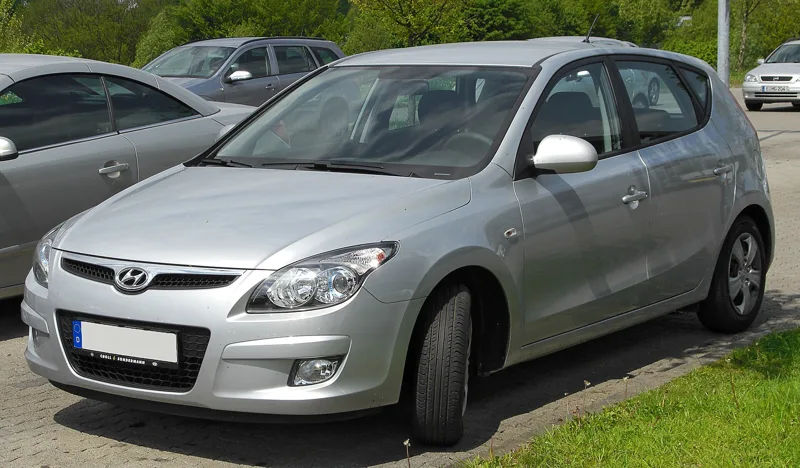
The i20 is a supermini in the B-segment that Hyundai introduced in October 2008, a little larger than the i10 and smaller than the i30. Hyundai used it to replace the Getz across most markets, while several countries received the slightly larger Accent or Verna hatchback instead. The model's two biggest markets today are Europe and India, where separate variants are developed.
The first car used a new platform created at Hyundai's European technical centre in Russelsheim, Germany. The purpose was to give Hyundai a competitive entry into Europe's highly contested B-segment, and the 2,525 mm (99.4 in) wheelbase gave the cabin plenty of room for a car of its size.
A small Hyundai that grew up in rallies, in tests and in tax rules, and still ended as a performance car.
Where was the first i20 built and sold?
The first-generation i20 was produced in Sriperumbudur, near Chennai, for sale in Asia and Oceania. It was also assembled in Turkey at the Izmit plant for the European market, using complete knock-down kits from India. Hyundai did not sell the i20 in South Korea, North America or the Philippines, because the Accent covered those markets.
In Indonesia the i20 was discontinued in 2012 when the Accent hatchback, known there as the Grand Avega, took its place. The model was refreshed in India with the iGen i20 in March 2012, which brought tweaked headlamps, a new grille, new tail lamps and fog lamps, following the brand's Fluidic Sculpture design language.
What engines did the first-generation i20 offer?
The first-generation i20 had seven four-cylinder engine options. Four were petrol, including the 1248 cc Aditeya 16-valve unit, and three were diesel. Two diesels were 1396 cc, with 75 PS (55 kW; 74 hp) and 90 PS (66 kW; 89 hp), and two were 1582 cc, with 115 PS (85 kW; 113 hp) and 128 PS (94 kW; 126 hp).
Hyundai claimed that the 115 PS diesel could manage 23.25 km/L (65.7 mpg-imp; 54.7 mpg-US) on the European combined cycle. The diesels and the smaller petrol engines came with a five-speed manual, while some 1.4-litre petrols could be ordered with a four-speed automatic.
Indian buyers had a different range. The 1.2-litre Kappa engine made 79 horsepower at 5200 rpm and 114 Nm (84 lb ft) at 4,000 rpm, and a 1.4-litre Gamma petrol made 100 PS (74 kW; 99 hp). The Indian CRDi diesel made 90 PS (66 kW; 89 hp) with a six-speed manual.
How safe was the first-generation i20?
The first-generation i20 earned a maximum five-star rating from Euro NCAP. In the safety assist section it collected six of seven possible points, with top marks for belt reminders and its Electronic Stability Programme. Euro NCAP also named it one of its top five safest cars for 2009, based on its five-star awards and overall score.
Standard equipment included six airbags, with side and curtain airbags for rear passengers, plus anti-lock brakes with electronic brake-force distribution. Later models added rain-sensing wipers, automatic headlamps, central locking and an advanced engine immobiliser.
Real-world results were less impressive. Monash University's Used Car Safety Ratings, which studied more than 8 million crashes, gave the Accent i20 for 2010 to 2015 a two-star driver protection rating. The gap between laboratory and road results is a useful reminder that five stars describe a test, not every collision.
How did the second generation change the i20?
The second generation brought fresh styling inside and out, plus a 1.4-litre diesel. India received it first, in August 2014, and Europe followed that November. Its design followed Hyundai's Fluidic Sculpture 2.0 philosophy, with the work carried out at Hyundai's design facilities in Russelsheim.
Details included trapezoidal fog lamps, a black C-pillar block, wraparound tail lamps and a hexagonal front grille. Inside, the car had a black and beige dual-tone dashboard, steering-wheel audio controls, a Bluetooth-integrated audio system with 1 GB of internal storage, rear air vents and a dedicated engine start/stop button.
In India the second generation was sold as the Elite i20, and it won the 2015 Indian Car of the Year award after its launch in December 2014. The Indian car had a higher ground clearance than before, 170 mm against the old 165 mm, and 326 litres of boot space. Its engines were a 1.2-litre Kappa Dual VTVT petrol and a 1.4-litre U2 CRDi diesel.
What was the i20 Active?
The i20 Active was a crossover-styled variant. India saw the i20 Active on 17 March 2015, and Frankfurt hosted its European debut that September. It added black plastic cladding, roof rails, a rugged fuel cap, and front and rear aluminium skid plates, along with cornering lamps and aluminium pedals.
The Indian i20 Active's ground clearance rose to 190 mm, which is 20 mm more than the standard i20. It stayed in the range alongside the regular hatchback.
What is the third-generation i20?
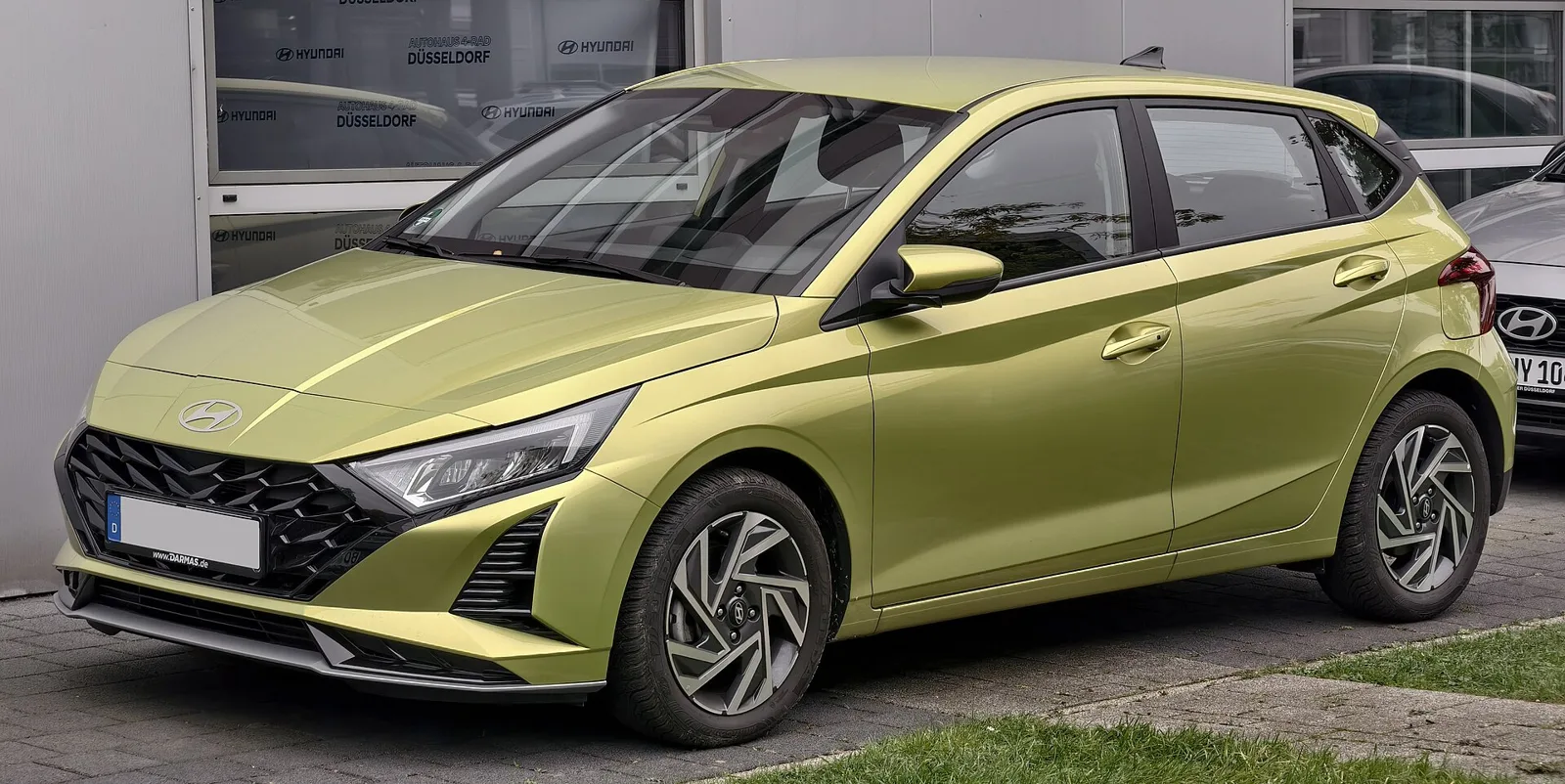
Hyundai revealed the third generation online for Europe on 19 February 2020. It was due to debut at the Geneva Motor Show that March, but the show and the launch were cancelled because of the COVID-19 pandemic. The car is larger and lower than the model it replaced, and it uses Hyundai's Sensuous Sportiness design philosophy.
European production started at the Izmit plant in Turkey in August 2020. The plant was expected to build about 85,000 units a year, covering about 50% of global i20 production. The top European specification has two 10.25-inch displays, one for the instrument cluster and one for the infotainment system.
The European car's 1.0-litre GDI engine comes with a 48V mild hybrid system, which cuts fuel consumption by 3-4%. In 2021 Hyundai sold a France-only i20 N Line Michel Vaillant limited edition with optional blue and red stickers. The European model was facelifted and revealed on 10 May 2023, and the mild hybrid was discontinued in the UK for that facelift.
How does the Indian third-generation i20 differ?
The Indian third-generation i20 was launched on 5 November 2020. It dropped the Elite prefix and became simply the Hyundai i20. Codenamed BI3, it is 45 mm (1.8 in) shorter than the European car to suit Indian tax rules, which favour vehicles below 4,000 mm (157.5 in). Against the European model it gains 25 mm of width and 55 mm of height.
The Indian car is built on the Hyundai-Kia K2 platform, which is shared with other recent Hyundai-Kia compact cars, and it uses 66 percent high-strength steel. An N Line variant arrived on 24 August 2021, and the facelifted Indian i20 launched on 8 September 2023, followed by the facelifted N Line on 22 September 2023.
What is the i20 N?
The i20 N broke cover for European buyers in October 2020, sitting below the i30 N in Hyundai's N range. It is the most performance-focused car in the i20 family. It uses a 1.6-litre turbocharged GDi engine with 201 hp (204 PS; 150 kW) and 275 Nm (203 lb ft) of torque, mated to a six-speed manual with automatic rev matching. At 1,190 kg (2,620 lb) it reaches 100 km/h from rest in 6.2 seconds and tops out at 230 km/h (143 mph).
Peak torque arrives between 1,750 and 4,500 rpm, and peak power between 5,500 and 6,000 rpm. Hyundai fitted a bespoke turbocharger and intercooler system, along with a mechanical limited-slip differential. The Smartstream engine used elsewhere in Hyundai's range gets its own turbo for the N. The chassis was reinforced at 12 points, the brakes were considerably larger than the base car's, and the torsion beam received new springs, shock absorbers and a sway bar.
Production of the European i20 N ceased in February 2024, and Hyundai N then offered only electric models in the region. The facelifted i20 N still sells in the Australian market.
How did the i20 score in Global NCAP?
In India the i20 comes with two frontal airbags, anti-lock brakes, front seatbelt reminders and ISOFIX anchorages as standard across the range. On the regular car, stability control, tyre pressure monitoring and extra airbags cost extra, and the i20 N includes them all.
Global NCAP tested the i20 in the first half of 2022 under its version 1.0 protocol. The car was penalised for an unstable passenger compartment and a ruptured driver footwell, which meant it could not score points for seatbelt reminders. Hyundai was not allowed to demonstrate the car's knee protection, because the unstable structure prevented it.
Did the i20 compete in the World Rally Championship?
The i20 WRC car, built for the 2014 season, first appeared at the 2012 Paris Motor Show, signalling Hyundai's return after a decade away from the championship. Hyundai Motorsport ran it from Frankfurt, and its first rally was Monte Carlo in January 2014.
From 2017 to 2022 the i20 Coupe WRC was used in the championship, and Hyundai won the manufacturers' title in 2019 with a car built by Hyundai Shell Mobis WRT. From 2022 the i20 N Rally1 replaced it, and Thierry Neuville and Martijn Wydaeghe won the 2024 World Rally Championship in one. Hyundai's i20 R5 and i20 N Rally2 cars also compete in WRC-2.
The i20 also appeared in rallycross. Two cars were entered in the 2018 FIA World Rallycross Championship, with Niclas Gronholm finishing 7th overall. Four cars were entered in 2019, and Timur Timerzyanov won in Belgium.
What is the fourth-generation i20?
Hyundai showed the fourth generation in Brazil on 12 June 2026. It is offered in five trim levels, Comfort, Limited, X Line, Platinum and Ultimate. The i20 has been on sale since 2008, through four generations that each changed its size, styling and engine line-up.
Specifications
| Generation | Launch | Engine highlight | Market note |
|---|---|---|---|
| First (PB) | October 2008 | 1.4-litre and 1.6-litre petrol, diesels from 75 PS | Replaced the Getz in most markets |
| Second (GB/IB) | August 2014 India | 1.2-litre Kappa and 1.4-litre U2 CRDi | Elite i20 won Indian Car of the Year 2015 |
| Third (BC3/BI3) | February 2020 Europe | 1.0-litre GDI mild hybrid | Built at Izmit for Europe |
| Fourth (BC4) | 12 June 2026 Brazil | Five trims at launch | Unveiled in Brazil |
Which i20 won awards in India?
The Elite i20 won the 2015 Indian Car of the Year title, a result announced in December 2014. It was the second-generation car, and the award came only months after its August 2014 launch in India.
India also received the i20 Active and, later, the N Line trim. The Indian models were shaped by local tax rules, which is why the BI3 is shorter than the European car while being wider and taller.