A 2007 Geneva debut, a Czech-built hatch with a Kia cee'd twin, a 2010 facelift and crash results that climbed to five stars.
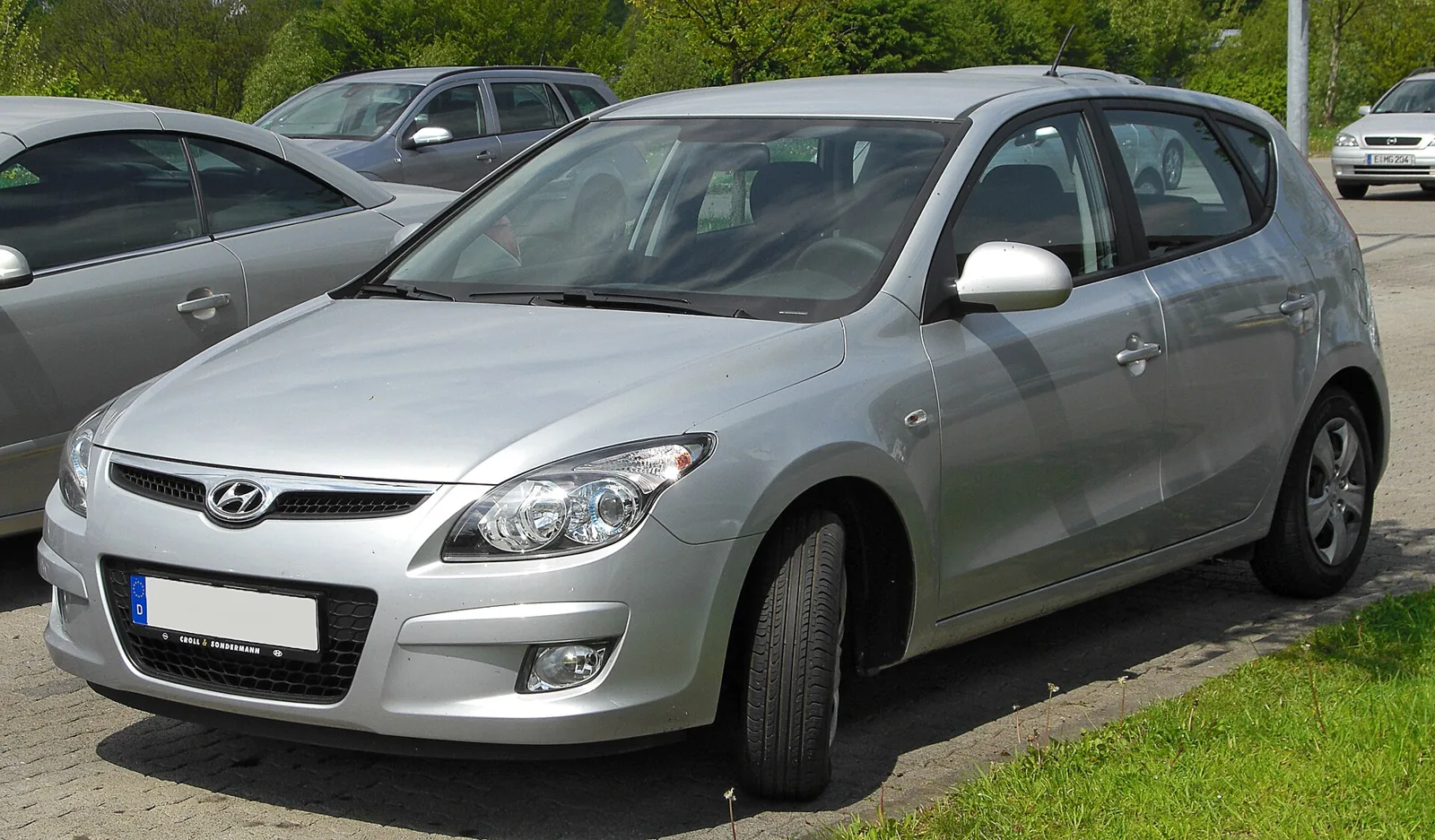
The Hyundai i30 was a compact five-door hatchback that Hyundai Motor Company offered in Europe from 2007. Built in the Czech Republic from late 2008, it was the brand's volume car and shared its platform with the Kia cee'd.
The Hyundai i30 is a compact five-door hatchback from Hyundai Motor Company, and it made its debut in Geneva in March 2007. Developed for Europe, it shared its underpinnings and its Czech production line with the Kia cee'd, and it was meant to be the brand's volume model.
Where did the Hyundai i30 come from?
Hyundai introduced new European model names in summer 2007, and the i30 took over from the Elantra mid-size saloon in the European range. It sat between the Accent small car and the Sonata mid-size saloon. The German launch followed in July 2007, a few months after the Geneva debut.
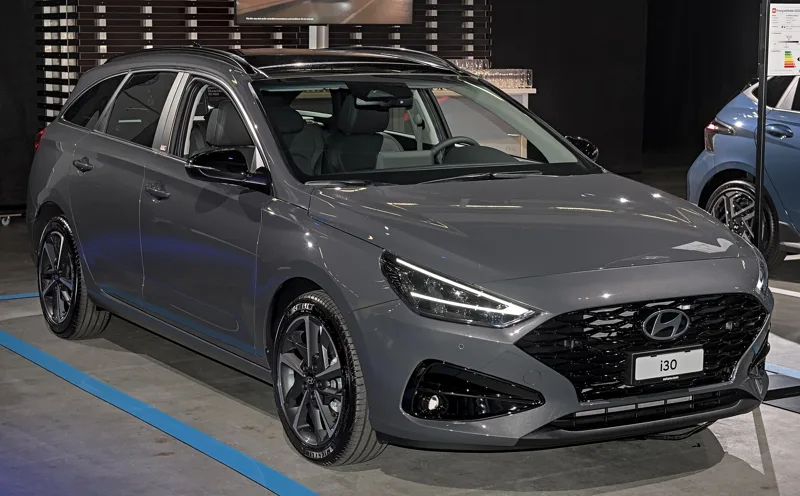
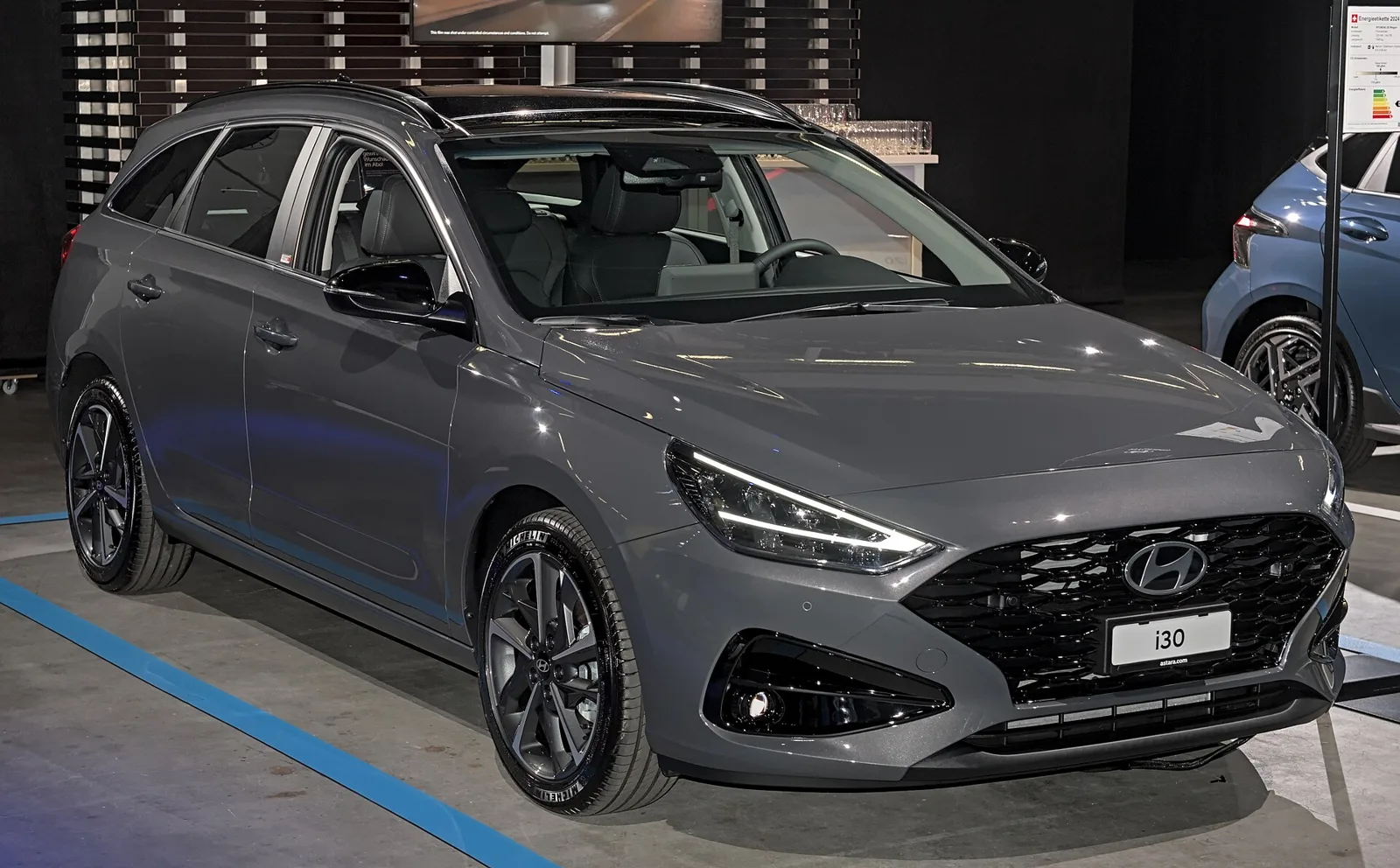
An estate, the i30cw, arrived in spring 2008. In autumn 2008 the model reached the USA as the Elantra Touring. The car was developed specially for Europe, and the first examples were made in Korea under the internal code FD.
A Czech-built volume hatch that aimed to lose its budget image, with a crash retest that reached five stars.
Why was the i30 built in the Czech Republic?
Production moved to Hyundai's Nosovice plant in the Czech Republic from November 2008. Before that, European cars came from the Ulsan works in South Korea, where they were badge-engineered alongside the Elantra Touring. Australia continued to receive its i30 from Ulsan.
The i30 and the Kia cee'd are close relatives, with the same technology and similar dimensions and styling. Kia had added an estate, the cee'd SW, in the same way that Hyundai added the i30cw.
The design came from Hyundai's European design centre in Ruesselsheim. Around 130,598 i30 and i30cw were built at Nosovice in 2010, and the Czech-built i30 and the Kia cee'd came off the same line with the same engine options.
According to the German Federal Motor Transport Authority (KBA), 134,385 of the model were in use in Germany on 1 January 2013.
How did the design evolve from the concept studies?
Two concept cars shaped the production i30. The Arnejs concept, shown in Paris in 2006, and the Genus supplied the basic design, and the production saloon took elements from both. The Genus also introduced the hexagonal front intended for coming generations of Hyundai vehicles in Europe.
The Arnejs was finished in ice blue, with LED lights all round, 19-inch chrome wheels and turquoise brake calipers. Four individual seats sat inside a body with no B- or C-pillars, and a glass roof ran from the windscreen to the tailgate, narrowing as it went.
The Genus took a crossover approach, combining the appeal of a sporty estate with the space of a van. Its extendable rear lower section, in the manner of the FlexFix of the Opel Corsa, could carry a bicycle. Cameras replaced the exterior mirrors, and a concave D-pillar gave the car a strong identity.
The Genus was developed entirely at the Ruesselsheim centre, under chief designer Thomas Burkle, with Thomas Salzle leading exterior design and Eduardo Marchena the interior. It was also the model for the i40cw of summer 2011.
For the production car the designers kept some Arnejs and Genus elements. The result was a sharper, more modern look, and Hyundai expected it to lift sales by breaking with the cheap Korean image.
What did the 2010 facelift change?
The June 2010 facelift reworked the front, which gained a hexagonal radiator grille of a kind already seen on the ix35, and it revised the rear apron. In Germany the trim levels were upgraded at the same time, and the warranty stretched from three years to five.
The Premium trim was dropped, and its features passed into the other trims. Two add-on packs also appeared: the Trend, aimed at the Classic, and the Plus, aimed at the Comfort.
The Classic gained fog lights, a gearshift indicator and a new shift knob for the manual gearbox. Later cars received an alarm and an immobiliser to meet EU requirements. The Comfort gained exterior mirrors that folded electrically, air conditioning that regulated itself, a rear armrest with drinks holders and a light that stayed on after leaving the car. The Style had cruise control, a reverse alert, a rain sensor and a de-icer for the wipers.
What engines and running gear did the i30 use?
The i30 used four-cylinder engines with 16 valves and aluminium heads, all driving the front wheels. Engines of 1.4 to 1.6 litres (85.4 to 97.6 cu in) were brought up to Euro 5 standard in August 2010, and every current engine could be had with the Idle Stop and Go system as the i30 Blue.
Every engine in the range met the Euro 4 standard, and the 1.4 to 1.6-litre units went on to meet Euro 5.
The 2.0-litre engines were dropped in 2010. Coming from older model series, they could not meet the Euro 5 rule that became mandatory in January 2011.
Rack-and-pinion steering with speed-dependent assistance was standard. The 90 kW version (122 PS; 121 hp) had electric assistance, while the others used an electro-hydraulic setup. The front suspension used MacPherson struts with an anti-roll bar, the rear a multi-link axle, and the dual-circuit brakes had discs on all four wheels.
Traction control was part of the standard ESP. Parts approved for the original FD code cannot automatically be used on the later FDH cars, a point that matters mainly for accessories.
What did the i30 cost in Germany?
Between March 2007 and June 2010 buyers could pick Classic, Comfort, Style or Premium trims. Starting prices began at EUR 15,140 for the 1.4 Classic and climbed to EUR 24,250 for the 2.0 CRDi Premium.
Every trim had six airbags, ABS and ESP, plus an on-board computer, an MP3-capable CD radio with USB and AUX sockets, electric front windows and central locking. Higher trims added extras that were not sold separately, and the heated seat was offered solely on the Style and Premium.
The Trend pack, EUR 690 extra for the Classic, added an adjustable safety steering column, heated mirrors, a radio remote for the central locking, front reading lamps, tweeters and a front heated seat. The Plus pack, EUR 850 for the Comfort, brought a leather steering wheel and gear knob, light and rain sensors, a windscreen de-icer and an automatically dimming interior mirror.
Imports from other EU markets often differed from the German cars with the same names, and the base variant frequently lacked ESP. Solid paints came at no extra cost, while metallic and mineral-effect finishes were optional.
Apart from the trim level, the customer could choose only the paint. Hyundai also sold accessories for fitting later, among them parking sensors, alloy wheels and navigation units.
How did the i30 fare in Euro NCAP crash tests?
The first Euro NCAP test in 2007 gave the i30 33 points, four stars for adult occupants, three for children and two for pedestrians. The frontal result stopped it short of the five-star minimum, which led Hyundai to rework the lower dashboard.
In the 2007 test the i30 scored 12 points for the frontal impact and 16 for the side impact, 2 in the pole test and 3 for the seatbelt reminder. Hard structures behind the dashboard raised loads on the front occupants' legs, and that cost the car a star.
In the second test, in 2008, the car reached 34 out of 37 points and five stars for adults. Child protection improved to four stars, and pedestrian protection stayed at two. The result matched the Kia cee'd and was the best Euro NCAP outcome for a Hyundai to that date.
Did the i30 hold its value?
The i30 1.4 Edition Plus was named the value champion in the compact class for 2010. In a calculation run by Auto Bild and Eurotax Schwacke, it recorded the lowest loss of value in euros.
Across four years the car lost just EUR 6,686 in value. A separate forecast commissioned by Focus Online also projected the lowest depreciation for the 1.4 Edition Plus up to 2014 and 2015.
Awards followed in other markets. In Australia the i30 won the mid-size prize for cars priced below 30,000 dollars in 2008 and 2009, the NRMA motoring club gave the SX the lowest running costs in its class in 2010, and Spain chose it as Car of the Year in 2008. In Britain, over 23,000 voting readers of Auto Express, which belongs to the same group as Auto Bild, named it the most dependable car of 2010 on the Driver Power list.
What changed with the second-generation i30?
The second generation, the GD, was shown at the IAA in 2011 and went on sale in spring 2012. The GD grew in both size and load space. Its standard kit now included a knee airbag for the driver, cornering lights that swing into the bend, a high-definition LCD instrument display and an electrically operated parking brake.
From April 2012 the German registration figures counted the GD as the successor model.
Specifications at a glance
| Specification | Hyundai i30 FD |
|---|---|
| Body | Five-door hatchback, with estate (i30cw) from 2008 |
| Debut | Geneva Motor Show, March 2007 |
| Engines | 1.4 to 2.0 litres, four-cylinder, 16 valves |
| Drive | Front-wheel drive, transverse engines |
| One engine option | 90 kW (122 PS; 121 hp), with electric power steering |
| Estate length | 4.48 m (14.7 ft) |
| Estate luggage volume | 415 to 1,395 litres |
| Euro NCAP, 2007 test | Four stars for adults, three for children |
| Euro NCAP, 2008 test | Five stars for adults, four for children |
| List prices | EUR 15,140 to EUR 24,250 |