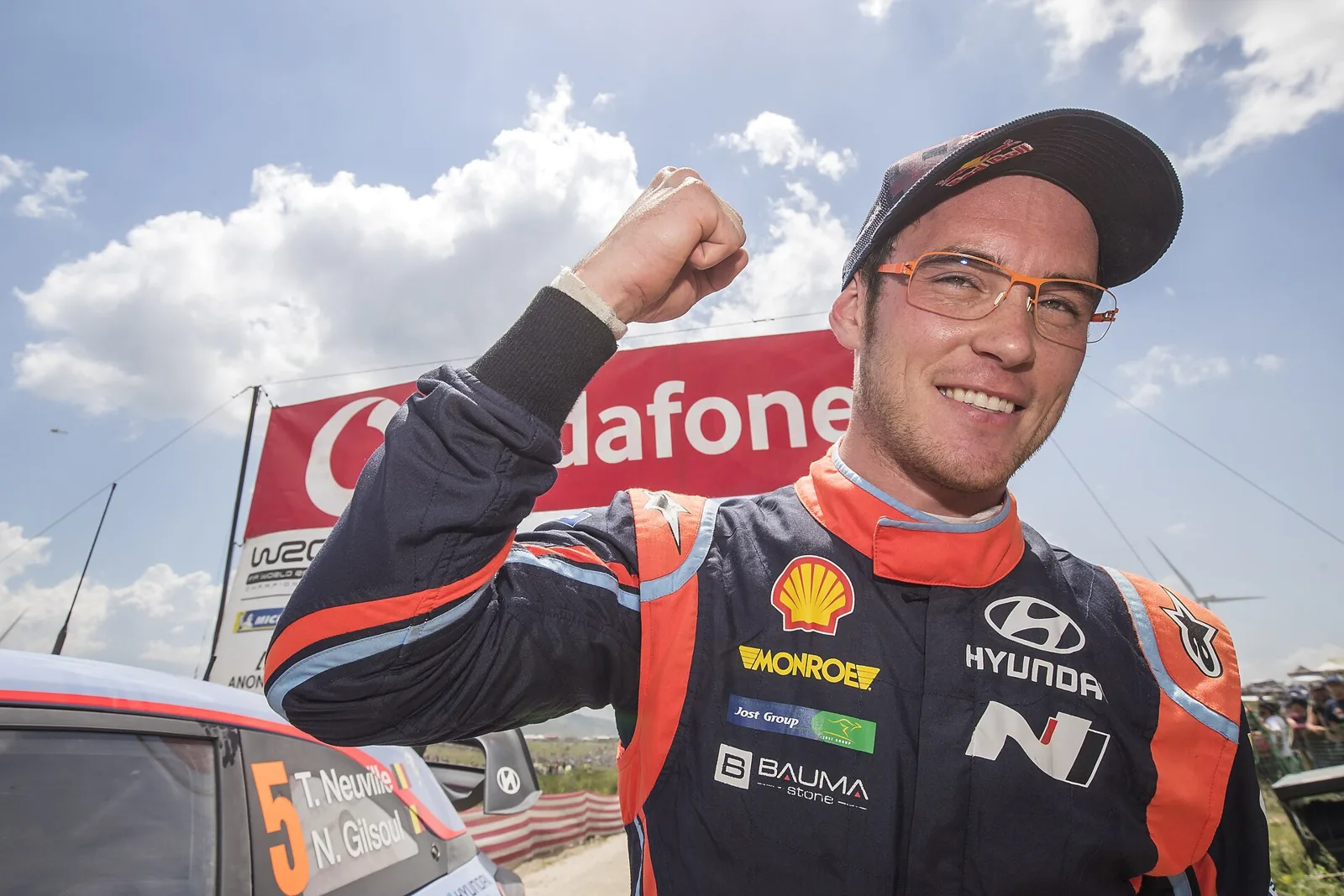
Thierry Neuville takes his first drivers' title in the final round, while Toyota holds off Hyundai by three points in the manufacturers' table.
The 2024 FIA World Rally Championship, the 52nd season, ran thirteen rounds between January and November. Neuville claimed the drivers' crown for the first time, and Toyota kept the manufacturers' title by three points over Hyundai.
The 2024 season was the 52nd of the World Rally Championship, and it was decided in the final round. Thierry Neuville and Martijn Wydaeghe won their first world titles, while Toyota Gazoo Racing WRT held off Hyundai Shell Mobis WRT by just three points in the manufacturers' table. A revised points system and a reshaped calendar shaped the year.
What was the 2024 World Rally Championship?
It was the 52nd season of the championship, with thirteen rounds that began in Monte Carlo and closed in Japan. Only manufacturers running Rally1 cars could score manufacturer points, while crews could enter cars across the Rally1 to Rally5 groups.
Kalle Rovanpera and Jonne Halttunen were the reigning champions, having taken their second titles at the 2023 Central European Rally. Rovanpera signed a multi-year contract with Toyota but contested only a partial programme, which left the title race open to others.
Neuville's first title came in the final round, and Toyota's manufacturers' crown was decided by three points.
What calendar changes came in 2024?
The championship had been expected to grow to fourteen rounds, but WRC Promoter GmbH kept thirteen events, arguing that the smaller calendar would encourage more Rally1 cars to enter. Rally Liepaja stepped up from the European Rally Championship and ran as Rally Latvia, on gravel roads around Riga, Liepaja and the regions of Talsi, Tukums and Kuldiga.
Rally Latvia took the place of Rally Estonia for 2024, and Estonia returned in 2025. Rally Poland came back for the first time as a WRC event since 2017, while Rally Mexico dropped off the calendar.
The Kenyan rally, which had run in June for the previous three seasons, moved to March at the Easter weekend and became the third round. Monte Carlo's headquarters went back to Gap in France, and the Central European Rally moved two weeks earlier to avoid a clash with All Saints' Day.
Future expansion was also under discussion. Rally China, last held in 1999, was a candidate, and it had been planned for 2016 before the floods of that year forced its cancellation. A Saudi Arabian desert event was aimed at a 2025 slot, and Rally Argentina was bidding to return.
How did the points system change?
The points system was revised to stop crews holding back tyres for the Power Stage. The top ten crews at the end of Saturday scored 18, 15, 13, 10, 8, 6, 4, 3, 2 and 1 points, provided they finished the rally. The top seven on Sunday's stages scored 7, 6, 5, 4, 3, 2 and 1 points, and Power Stage points stayed unchanged.
Sardinia also served as a trial of a shorter 48-hour weekend format, which the FIA had proposed as a compact model.
Which crews changed for 2024?
M-Sport ran two full-time crews led by Adrien Fourmaux and Gregoire Munster, while Pierre-Louis Loubet moved to WRC2 with Toksport. Latvian driver Martins Sesks made his top-tier debut with the team as part of a collaboration with WRC Promoter GmbH.
Hyundai kept Neuville and Wydaeghe, while Ott Tanak and Martin Jarveoja rejoined the team after a year with M-Sport. Esapekka Lappi's programme was reduced, and his co-driver Janne Ferm announced that he would end his WRC career after the Rally Chile round. Andreas Mikkelsen returned to Hyundai, sharing a third car with Dani Sordo and Lappi.
At Toyota, Elfyn Evans and Takamoto Katsuta were the two full-time crews, and Rovanpera contested only a partial programme. Sebastien Ogier competed at selected events and did not share a third car. Sami Pajari and Enni Malkonen made their top-class debut at Rally Finland.
Round-by-round results
| Rally | Winner | Note |
|---|---|---|
| Rallye Monte Carlo | Thierry Neuville | Season opener, maximum thirty points |
| Rally Sweden | Esapekka Lappi | Ended a winless run of six and a half years |
| Croatia Rally | Sebastien Ogier | Took the lead after leaders made mistakes |
| Rally de Portugal | Sebastien Ogier | His sixth Portugal win |
| Rally Italia Sardegna | Ott Tanak | Won after a puncture at the Power Stage |
| Rally Poland | Kalle Rovanpera | Replaced Ogier, who had withdrawn |
| Rally Latvia | Kalle Rovanpera | Led from start to finish, 200th stage win |
| Acropolis Rally Greece | Thierry Neuville | Hyundai took all three podium places |
| Rally Chile | Kalle Rovanpera | Toyota took the top three places |
| ADAC Rallye Deutschland | Ott Tanak | Cut the driver gap to 25 points |
| Rally Japan | Elfyn Evans | Toyota 1-2 as Tanak crashed while leading |
How did the opening rounds go?
Neuville and Wydaeghe won the season opener in Monte Carlo, taking the maximum thirty points under the new system after leading at the end of Saturday and winning the Power Stage. Evans and Martin outscored them in the rally that followed, and the gap closed to three points.
Lappi and Ferm won Sweden, ending a winless run of six and a half years, and Fourmaux and Coria recorded their first podium. Toyota then responded with a 1-2 finish at the Safari Rally, which extended its manufacturers' lead to four points.
In Croatia, Ogier and Landais took the rally lead when the crews ahead made mistakes, and they won. Neuville and Wydaeghe rebuilt their driver's lead to six points after a difficult weekend in Kenya.
How did the gravel rounds shape the title fight?
Ogier and Landais won Portugal, which was Ogier's sixth win there. They were on course for a hat-trick in Sardinia when a puncture at the Power Stage let Tanak and Jarveoja overtake them. The winning margin was only 0.2 seconds, which matched the 2011 Jordan Rally as the closest win in WRC history.
Ogier and Landais withdrew from Poland before it began, after a road accident during recce. Rovanpera and Halttunen replaced them for Toyota and won the rally despite limited preparation. They then won Latvia, leading from start to finish and taking their 200th stage victory.
In Latvia, the home crew of Sesks and Francis won an early stage, and they were on course for a maiden podium before a differential problem on the final day ended their chances.
What happened in Finland, Greece and Chile?
Rovanpera and Halttunen were leading their home event in Finland, but they rolled their car on the penultimate stage. Tanak and Jarveoja withdrew after a violent crash that hospitalised Jarveoja, and Evans and Martin dropped out of the top ten before crashing out. Neuville and Wydaeghe extended their championship lead to 27 points.
Pajari and Malkonen made their WRC debut in Finland, and a stage win came on their ninth try.
At the Acropolis Rally, the Toyotas of Ogier and Landais and of Evans and Martin both suffered turbocharger problems. Katsuta and Johnston crashed out while chasing the lead, and Hyundai took the top three places after the first day. Neuville and Wydaeghe won Greece, with Hyundai taking all three podium places, as they had done at the same event two years earlier.
Hyundai's dominance in Greece built a 35-point lead in the constructors' table. Toyota responded in Chile, where it took the top three places for a maximum haul that halved the lead. Rovanpera and Halttunen were the winners in Chile.
How did the final rounds decide the titles?
Tanak and Jarveoja won Germany, the penultimate round, after Ogier and Landais crashed out while leading. The victory reduced the drivers' gap to 25 points, which meant the title would be decided in Japan.
In Japan, Tanak and Jarveoja crashed out on the final day while leading, which handed the drivers' title to Neuville and Wydaeghe. An engine problem had already left Neuville outside the top ten at one stage, but the crash of the Estonian pair was decisive. Evans and Martin then led a Toyota 1-2 finish.
What were the final standings?
Neuville and Wydaeghe won the drivers' and co-drivers' titles, while Evans and Martin finished second, 32 points behind. Tanak and Jarveoja were third, a further ten points back.
The manufacturers' title was far tighter. Hyundai and Toyota were level on 553 points before the Power Stage, and Toyota's Power Stage result and its 1-2 finish in Japan gave it the title by three points. It was Toyota's fourth straight manufacturers' championship, and the tightest margin since 1983, when Lancia won by two points.