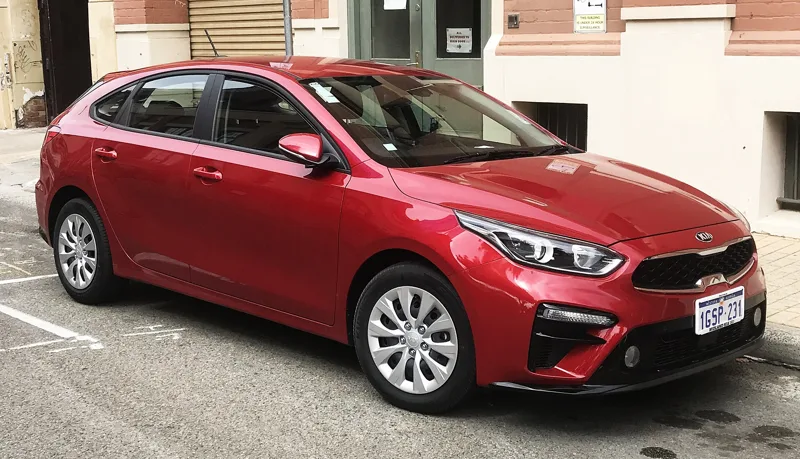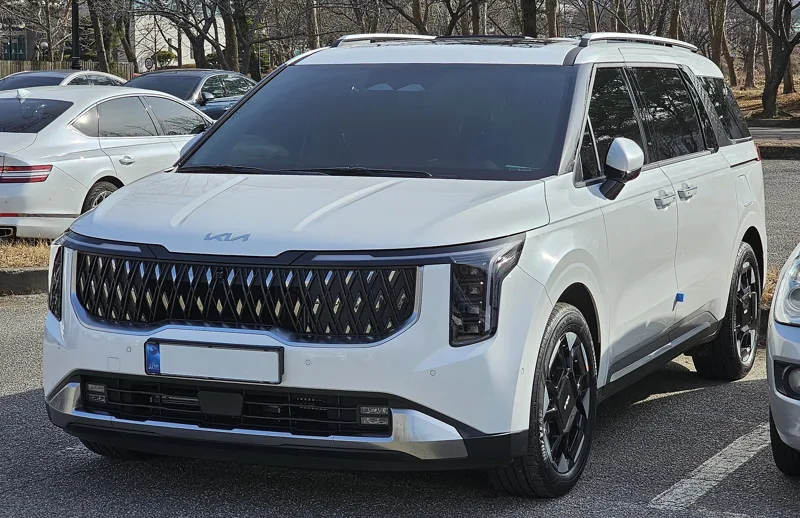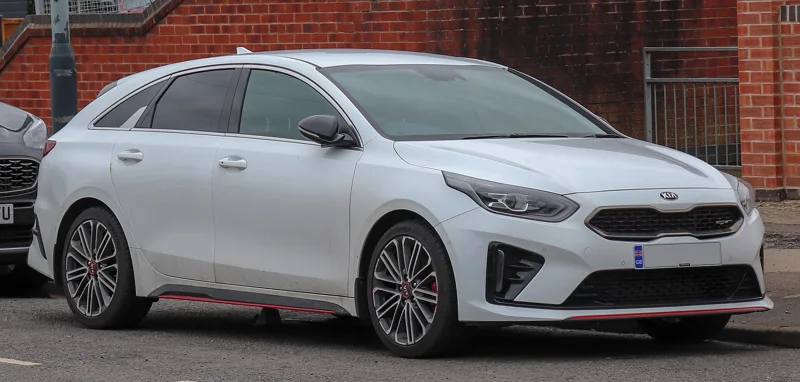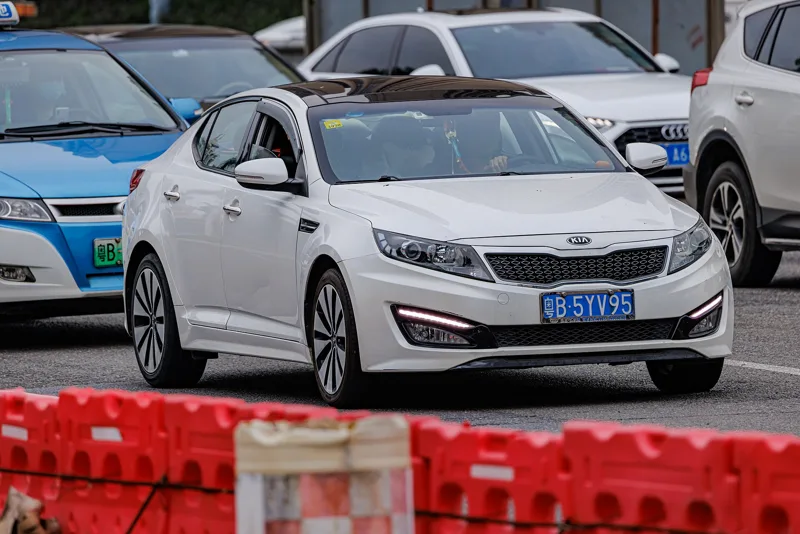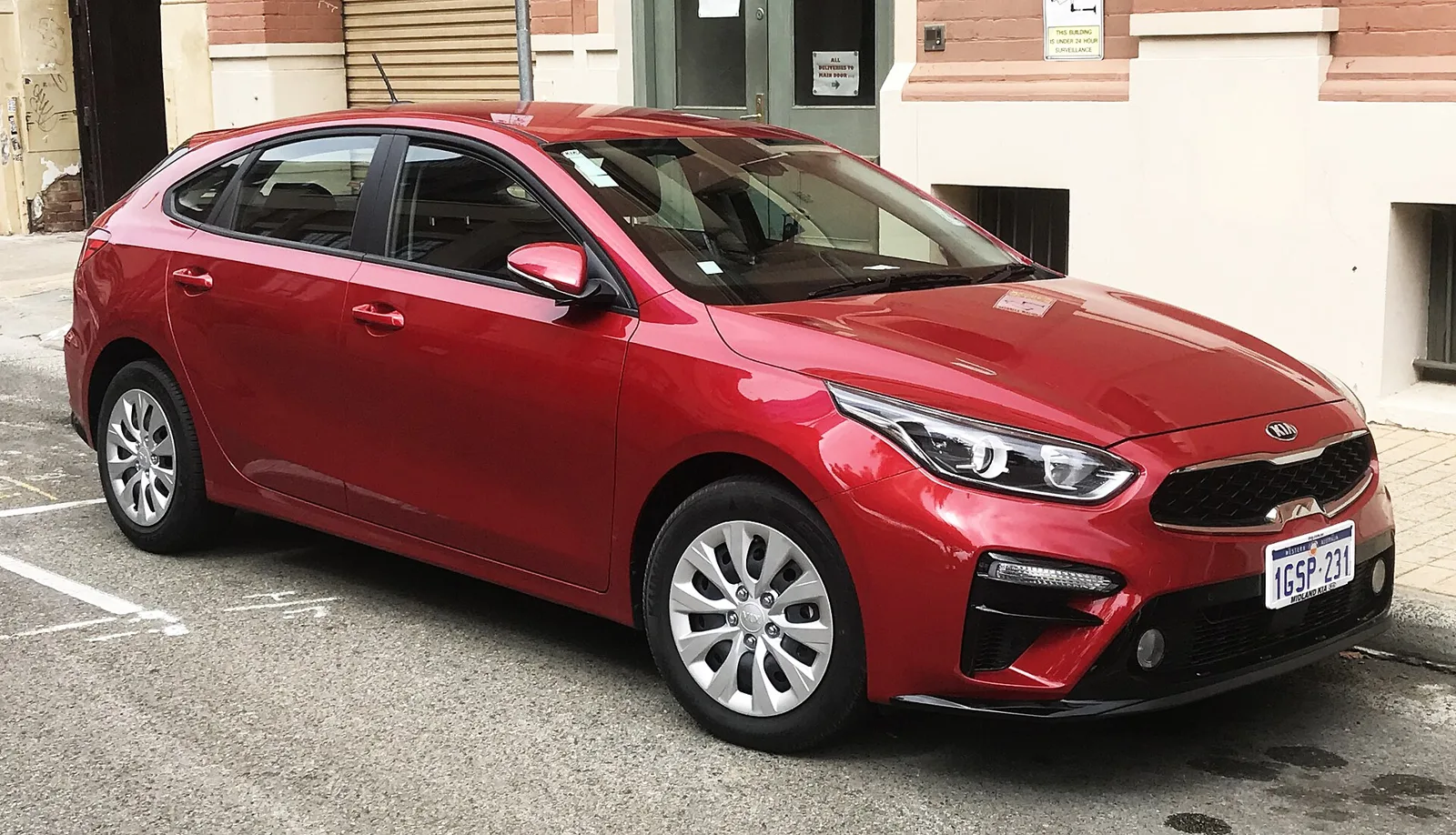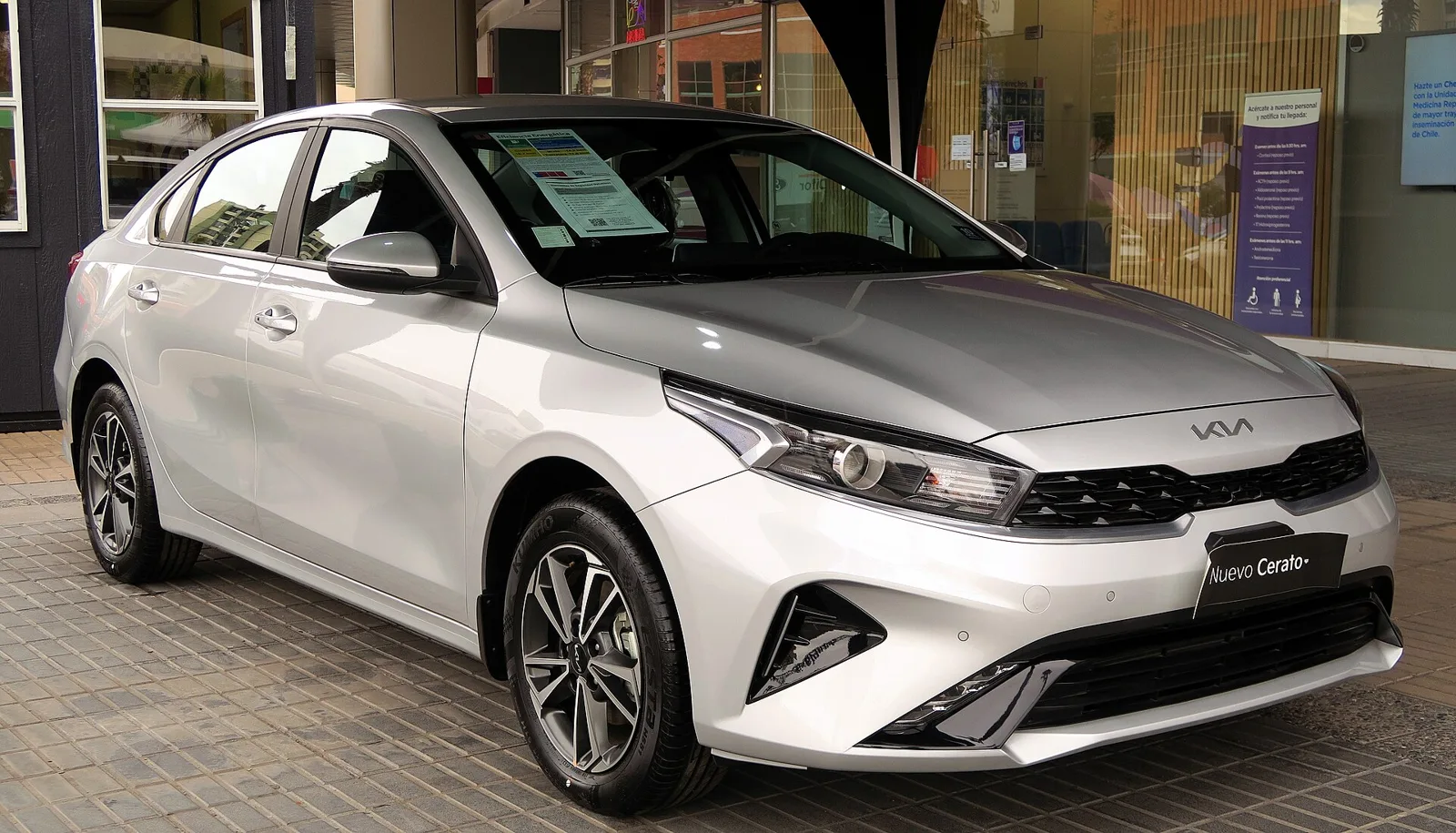
A compact sedan, coupe and hatchback that Kia sold from 2008 to 2024 under the K3, Cerato and Shuma names, with a hybrid and a turbo Koup along the way.
The Kia Forte was a compact car built from 2008 to 2024 and sold as the K3, Cerato or Naza Forte depending on the market. It came as a sedan, hatchback and coupe, and it went through three generations before the K4 replaced it.
The Kia Forte was a compact car that Kia built from 2008 to 2024, replacing the Spectra. It came as a coupe, a sedan and a five-door hatchback, and it carried several different names around the world. Production ended in 2024, when the K4 took over the passenger-car line-up.
Where did the Forte sell under other names?
Across much of Asia the model appeared as the K3, while Chinese buyers knew it as the Forte K3 or Shuma. The Cerato label covered South America, Australia, New Zealand and Russia. Korea, Australia and Brazil also used the Cerato name, replacing the earlier car bearing it.
Malaysia's Naza group put the car together from 2009 under the Naza Forte name. Singapore used the Cerato Forte label for the newer car. Europe was largely left out, since the Ceed covered that size bracket. The exception was Russia and Ukraine, where the two models sold side by side.
A compact that carried the Cerato, K3 and Shuma names across the world, with a hybrid, a turbo coupe and three generations.
How did the first generation arrive?
The first generation, codenamed TD, was introduced in 2008. In North America it replaced the Spectra, while in many other markets it kept the Cerato name. Kia aimed it at younger buyers who wanted sharper styling than the outgoing cars offered.
The platform was shared with the Hyundai Avante and Elantra, though the Forte used a torsion-beam rear suspension rather than the Elantra's multi-link layout. The body was 4 cm wider and 3 cm longer, and the wheelbase grew by 4 cm. The track gained 7 cm, while ground clearance dropped by a centimetre.
Three body styles arrived together: a compact four-door sedan, a five-door hatchback and a two-door coupe. The sedan was styled at Kia's California design studio under Tom Kearns, and the two-door Koup was designed there too.
Korean customers could buy the sedan from 22 August 2008. The American version was shown at the 2009 Chicago show, while the hatchback followed at the 2010 New York show. The Koup concept had appeared at New York in March 2008 with a twin-scroll turbo on the 2.0-litre Theta II four.
What was the Forte Koup?
Badging read Cerato Koup in Australia and South Africa, and also in Costa Rica and Russia. China used Shuma, while Chile used Koup.
The Koup range later grew with a turbocharged 1.6-litre model. North American tuning gave that engine 150 kW (201 hp), with 264 N-m (195 lb-ft) of torque. The Koup was dropped after the 2016 model year because of slow sales, along with the Hyundai Genesis Coupe.
Did the Forte ever run on LPG?
Yes. Kia unveiled a mild hybrid at the 2009 Seoul Motor Show for the Korean market. It used underpinnings from the Hyundai Elantra LPI Hybrid and ran on liquefied petroleum gas through a 1.6-litre engine that produced 85 kW (114 hp).
An electric motor rated at 15 kW (20 hp) and a lithium-polymer battery pack supported the petrol unit. The car was the first production model to use lithium-polymer batteries.
What engines did the first generation use?
The main petrol unit was the 1.6 GDi Gamma II. Its rating was 140 PS, equal to 138 hp (103 kW) at 6,300 rpm, while torque was 123 lb-ft (167 N-m) at 4,850 rpm. US cars of 2010 used a 2.0-litre CVVT engine with a standard five-speed manual.
For the 2011 model year the manual became a six-speed, and a six-speed automatic became an option. The optional Fuel Economy Package added low-resistance tyres, a more efficient alternator and a five-speed automatic, and the EX with that package was rated at 27 mpg-US in the city and 36 mpg-US on the highway. Canadian cars used a six-speed automatic instead.
How did the Forte fare on safety tests?
The 2010 Forte earned a Top Safety Pick from the Insurance Institute for Highway Safety. A later small overlap test, run in 2013, placed the Forte at the bottom of its group. That test simulates the front corner of a car striking a tree, a utility pole or another vehicle at 40 mph.
The redesigned 2017 car earned a Top Safety Pick for the compact segment, and the 2022 Forte was also tested by the IIHS.
What did the second generation bring?
The second generation, codenamed YD, was revealed in July 2012 for the 2014 model year. Its Korean counterpart was the K3, and the car was first shown outside Korea at the Santiago Motor Show in Chile, as the Kia Cerato, on 3 October 2012.
The redesign made the car lower, wider and longer, with LED headlights and tail lights as standard. Two new Nu engines were offered: a 1.8-litre MPI four with 148 hp (110 kW), and a 2.0-litre direct-injection four with 173 hp (129 kW).
The second generation came to US buyers in LX, S, EX, EX Premium and SX forms, and the SX later became the SX Turbo. The entry LX carried a four-speaker stereo, Bluetooth, USB and auxiliary inputs, plus a six-speed manual and a 2.0-litre inline four.
How did the Forte Koup return in the second generation?
The Koup came back for the 2015 model year, arriving in mid-2014. Abroad it was often the Cerato Koup, while in Korea it was the K3 Koup. The base EX ran a 2.0-litre direct-injection four, while the SX used the 1.6-litre turbo.
The Koup EX had 16-inch alloy wheels, Bluetooth, a leather-wrapped steering wheel with audio controls and LED positioning headlights. The SX added 18-inch wheels, UVO eServices with a rear camera display, larger brakes and sport pedals.
Malaysia received the second generation as the Kia Cerato from July 2013, with a 1.6-litre and a 2.0-litre Nu engine on offer. A Koup variant joined the Malaysian range in November 2015, and a facelift followed in December 2016.
What changed for the 2017 model year?
Restyled headlights, a new grille and a reworked bumper arrived in 2016 for the 2017 car. The S trim gained a six-speed automatic, a seven-inch touchscreen with Apple CarPlay and Android Auto, and a six-speaker audio system.
The EX became the top sedan, with power-folding mirrors, heated front seats and perforated leather on the models from 2016. The SX, which was only available on the Koup and the Forte5, added the seven-speed dual-clutch automatic from 2017.
What did the third generation look like?
Kia unveiled the third-generation Forte on 15 January 2018 at the North American International Auto Show in Detroit. Its styling took cues from the Kia Stinger, and the body took a fastback profile with a short trunk lid. The car used 54% advanced high-strength steel.
The engine was the 2.0-litre inline four carried over from the second generation. Buyers could choose a six-speed manual, a six-speed automatic, a seven-speed dual-clutch unit or Kia's first CVT, which the company calls the IVT.
Later in 2018 a hatchback appeared in South Korea and in a number of other markets, among them Australia, Canada, Mexico, New Zealand and Argentina. The lead designer was Peter Schreyer, who had also drawn the Stinger, and the floating centre touchscreen and round air vents carried over from that car.
How was the third generation sold in North America?
In the United States the Forte went on sale in late 2018 as a 2019 model, offered only as a sedan. Trim levels were FE, LXS, S and EX. The Forte5 hatchback had already been dropped there because of low sales.
Base cars also came with automatic headlamps and a column that tilts and telescopes. Rear seat heat ducts were fitted, and an eight-inch screen supported Apple CarPlay and Android Auto. Forward Collision Avoidance was standard, with Lane Departure Warning and Lane Keeping Assist alongside. Higher trims added a Harman Kardon system with 320 watts and eight speakers.
Canada took the sedan for the 2019 model year, offered in five trims, and the earlier Forte5 hatchback continued there until 2020. Mexico's facelift came on 11 June 2021, styled after the Korean K3, and brought GT Line and GT trims.
How did the Cerato differ in Australia?
Australia received the Cerato as a sedan in mid-2018, with trims named S, Sport and Sport+. A hatchback and a GT with a 1.6-litre turbo petrol engine followed later in 2018. The turbo made 150 kW and 265 N-m of torque, while the lower trims used a 2.0-litre Nu engine.
The entry-level S and Sport lacked advanced emergency braking as standard, so the Cerato received a split ANCAP rating. Those two trims earned four stars, while the others earned five. A fleet-only Si trim with the advanced braking arrived for the 2019 model year.
What happened in the 2020s?
In Mexico, the 2020 update added the GT and GT-Line trims, dropped the S and renamed the LX as the LXS. The 6-speed manual was also discontinued there.
South Korea saw the facelifted K3 on 20 April 2021, offered with a 1.6-litre petrol engine or a GT with a 1.6-litre turbo. Mexico built the facelifted car from 11 June 2021, US sales followed on 11 October 2021, and Canada took both body styles from 6 December 2021.
In China the Kia K3 was launched in June 2019 by Yueda Kia, with a 1.5-litre inline four, a 1.4-litre turbo four and a plug-in hybrid option. A mid-cycle refresh followed in 2023 for the Chinese car only.
Kia Forte specifications at a glance
| Feature | First generation (TD, 2008) | Second generation (YD, 2012) | Third generation (BD, 2018) |
|---|---|---|---|
| Body styles | Sedan, hatchback and coupe | Sedan, hatchback and Koup coupe | Sedan and hatchback (hatchback in selected markets) |
| Main engines | 1.6 GDi Gamma II; 2.0 L CVVT in the US | 1.8 L Nu MPi (148 hp); 2.0 L GDI (173 hp) | 2.0 L inline four carried over |
| Gearboxes | Five-speed manual; six-speed from 2011 | Six-speed manual or automatic | Six-speed manual or automatic, seven-speed DCT, IVT CVT |
| Steel content | Not given | Not given | 54% advanced high-strength steel |
| Safety recognition | Top Safety Pick (2010) | Lowest in the 2013 small overlap test; Top Safety Pick for the 2017 car | Not given |
| Production | 2008 onward | Revealed July 2012 | Unveiled January 2018 |