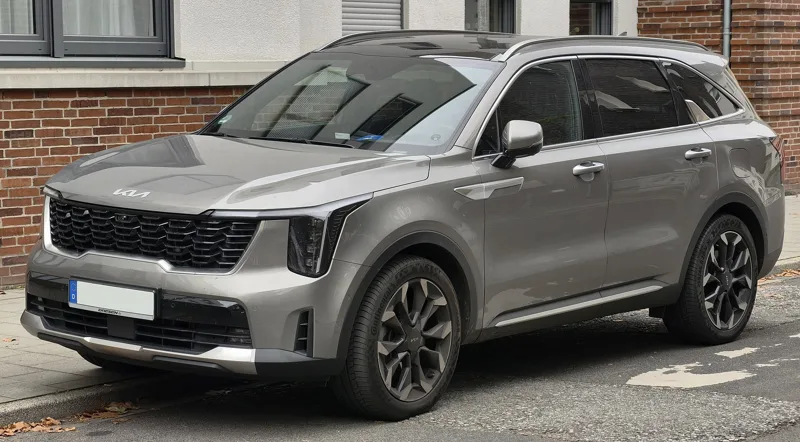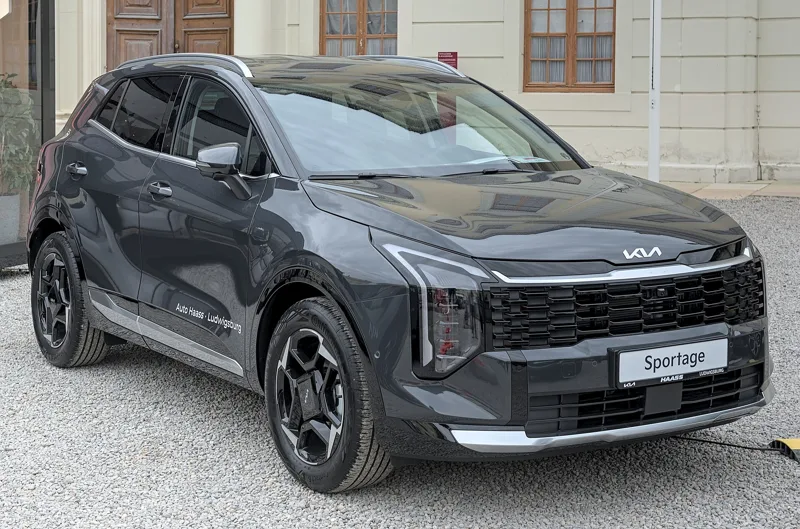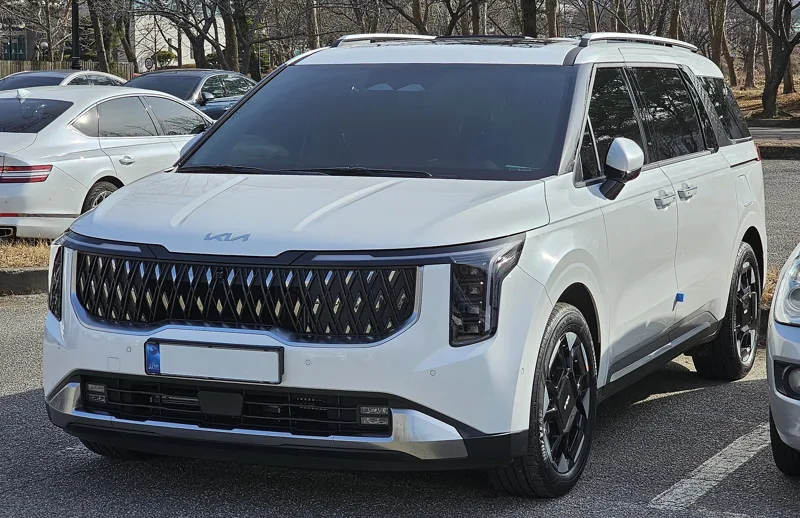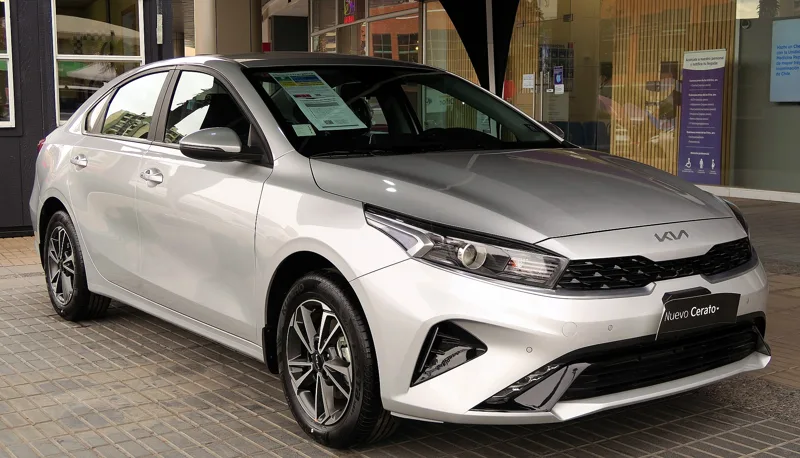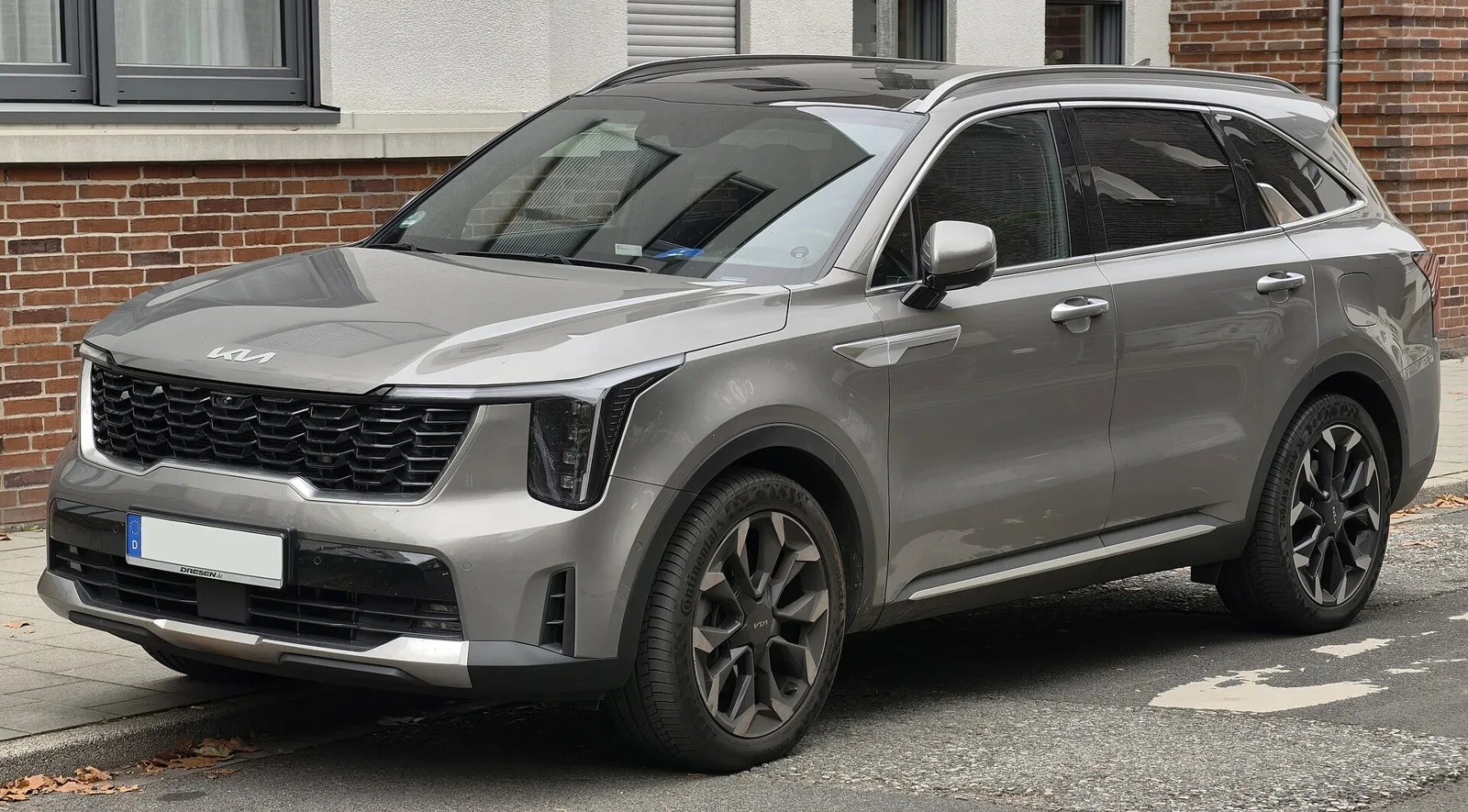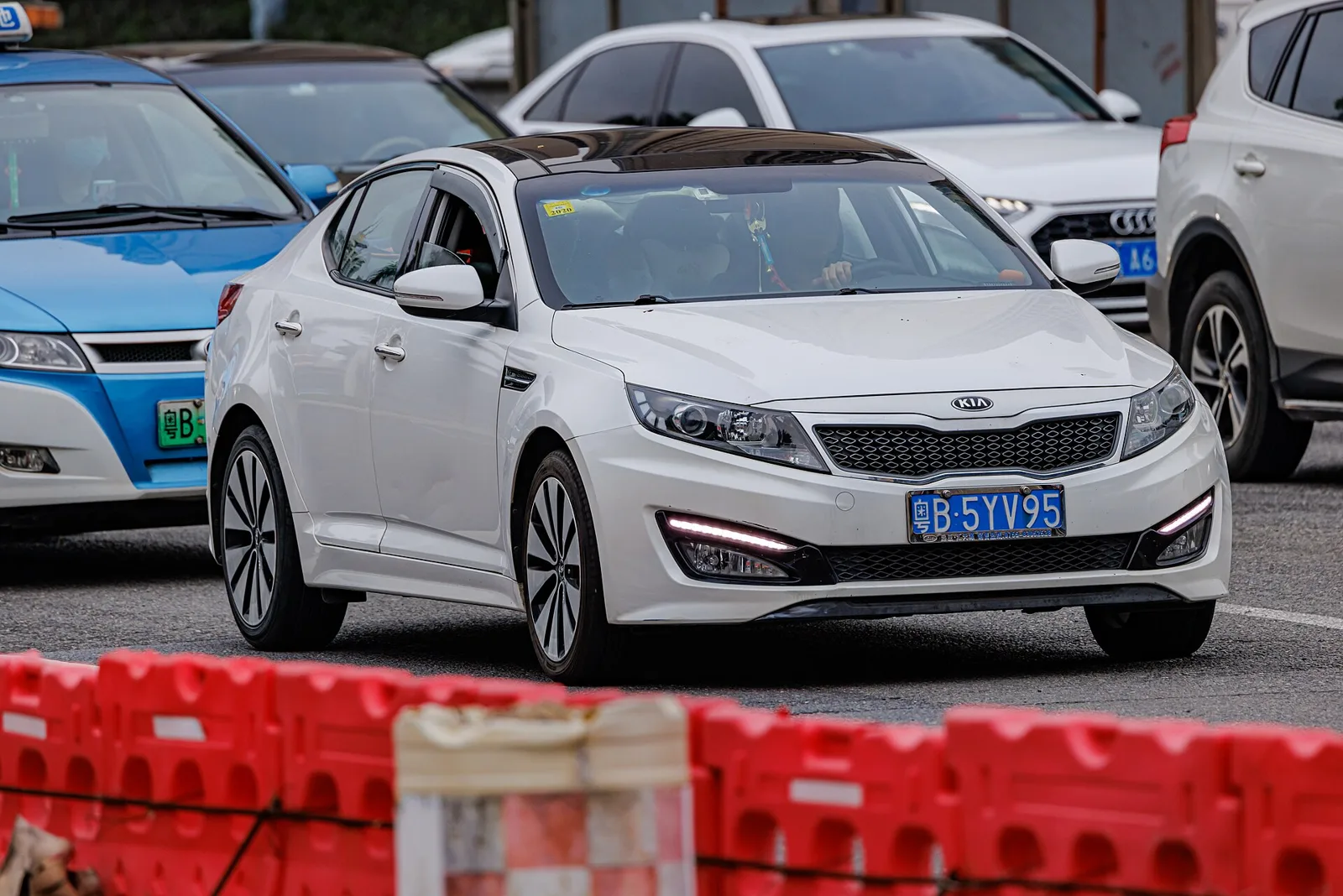
From a rebadged Hyundai Sonata in 2000 to the fifth-generation K5 of 2019, Kia's mid-size sedan changed names, gained hybrid power and raced in the Pirelli World Challenge.
The Kia K5, formerly known as the Kia Optima, is a mid-size car that Kia has built since 2000 under several nameplates. The first generation was a rebadged Hyundai Sonata, and the fifth generation has carried the K5 name in every market since 2019.
Kia's mid-size sedan has worn several names since it first appeared in 2000, from the Optima to the Magentis and finally the K5. Along the way it picked up hybrid and turbo versions, a plug-in model and a racing career in the Pirelli World Challenge. The car remains the same basic idea, a family sedan sold in markets that each chose their own badge.
Where did the Kia Optima start?
The first generation was mostly sold as the Optima. It was first shown in South Korea in July 2000, and it was the first product of the Kia-Hyundai platform integration plan. For 2000 to 2005 the Optima was a rebadged Hyundai Sonata, differing only in minor exterior styling and equipment.
In Australia the Optima was introduced in May 2001. Sales there rose to 41,289 units in 2005, an all-time high for the car. The Optima was sold in Australia until 2006, when it was replaced by the Magentis.
A mid-size sedan that spent its first years as a Sonata twin, then went through three names and a hybrid before becoming the K5.
Why did the name change so often?
Europe and Canada knew the car as the Magentis from 2002, when sales began there. For the second generation Kia used the Lotze and K5 names in South Korea and the Magentis name in most other places. The Optima name stayed in the United States until the 2021 model year.
The K5 name is used in every market since the fifth generation arrived in 2019. Kia therefore ended a long run of regional names, and the car is now sold under one badge worldwide.
What changed in the second generation?
The second-generation Optima, known as the Magentis in most places, was launched in South Korea in November 2005. It moved to the global MG platform, which was unique to Kia, and it differed further from the Hyundai Sonata than the first generation had.
Engines included a 2.4-liter inline-four and a 2.7-liter V6 in North America, plus smaller 1.8- or 2.0-liter fours and a 2.0-liter turbodiesel in other markets. South Korean buyers could also specify an LPG version of the 2.4. The Malaysian launch came on 15 August 2007 with a 2.0-liter Theta engine.
How did the 2008 update change the car?
The Optima was revised in 2008, and the updated car debuted in New York as a 2009 model. The update brought new front-end styling and tail lamps, and the car grew by roughly 70 millimetres (2.8 in) in length to about 4,800 mm (190 in).
The new Theta II 2.4-liter engine produced 131 kW (176 hp) and 229 N m (169 lbf ft) of torque. The 2.0-liter model made 164 hp (122 kW) at 6200 RPM, and the 2.7-liter V6 rose to 144 kW (193 hp) with 249 N m (184 lbf ft) of torque.
Performance figures showed the range of the update. The 2.0-liter took 9.2 seconds to reach 100 km/h with a manual, and 10.1 seconds with an automatic. The V6 was quick for its class, with a top speed of up to 220 km/h (137 mph).
What did the third generation bring?
The third-generation Optima marked the introduction of the Kia K5 name, although only in South Korea and China for that generation. It debuted at the 2010 New York show. The design was led by Peter Schreyer, who also created the Tiger Nose grille that Kia adopted as its corporate face.
Sales began in fall 2010, and the K5 was released in South Korea on 29 April 2010. The car shared its platform with the Hyundai i40, and it used a 2.4-liter GDI four-cylinder with either a 6-speed automatic or a 6-speed manual.
Trim lines were the base LX, the upscale EX and the sporty SX. The SX added a rear spoiler, metal pedals and paddle shifters, while the EX offered a panoramic moonroof and heated and cooled front seats.
Did the Optima offer hybrid and turbo versions?
A Hybrid model and a Turbo model were released alongside the third generation. The hybrid was unveiled at the 2010 Los Angeles Auto Show and reached the US market in June 2011, when 524 units were sold in its first month.
Through December 2011 the US figure reached 19,672 units. Together with the Hyundai Sonata Hybrid, the Optima Hybrid ranked second in hybrid sales for 2011, behind only the Toyota Prius.
The hybrid used a 2.4-liter MPI engine, a 6-speed automatic and a 30 kW electric motor with lithium polymer batteries. Its estimates were 37 mpg-US (6.4 L/100 km; 44 mpg-imp) in town and 39 mpg-US (6.0 L/100 km; 47 mpg-imp) on the highway. It could also travel up to 100 km/h (62 mph) in full electric mode.
The North American turbo model produced 204 kW (274 hp) and 365 N m (269 lb ft) of torque. The hybrid was lowered by roughly 1 in (25 mm) and carried its own badging, wheels and a light platinum graphite paint colour.
How did the Optima fare in reviews and safety tests?
The 2001 car drew Poor to Average ratings from the Insurance Institute for Highway Safety. Later the second generation earned five stars from the NHTSA and four stars from Euro NCAP, while the 2006 car received Marginal to Good ratings from the IIHS.
The 2011 Optima earned a Top Safety Pick rating from the IIHS. In a March 2012 comparison test by Car and Driver, the Optima placed third of six cars, behind the Volkswagen Passat and the Honda Accord.
The 2017 Optima received a Top Safety Pick+ rating, and the 2021 to 2022 K5 was also awarded a Top Safety Pick+. The car has won the International Car of the Year award twice, and it took the 2016 Red Dot Best of the Best award.
What did the fourth generation add?
Sales of the 2016 Kia Optima began late in 2015. It used the platform of the 2015 Hyundai Sonata and kept Peter Schreyer as its design chief. The new K5 was released in South Korea on 15 July 2015 after being unveiled at the 10th Seoul Motor Show in April 2015.
At the 2016 Geneva Motor Show, Kia revealed a Sportswagon estate. Kia said estates made up two thirds of the segment and that the estate could outsell the sedan six to one in Europe. A plug-in hybrid was unveiled at the 2016 Chicago Auto Show.
The plug-in used a 9.8 kWh battery pack for an all-electric range of 27 mi (43 km). Its drag coefficient of 0.24 Cd matched the all-electric Tesla Model S, and retail deliveries began in the United States in January 2017 with 40 units sold.
What is the fifth-generation K5?
Unveiling came in November 2019, with South Korean sales from 12 December 2019. Its profile resembles the Sonata, but the styling is distinct, with Z-shaped running lights and a chrome strip along the window line. Inside, a 12.3-inch digital cluster and a 10.3-inch centre screen sit alongside an optional 12-speaker Bose audio system.
The base engine was a 1.6-liter turbo with 180 hp and 195 lb ft of torque, while the GT used a 2.5-liter turbocharged four with 286 hp and 311 lb ft. All-wheel drive became available on some trims, which set the K5 apart from its Sonata sibling. Kia said the car would not be offered in Europe or in right-hand-drive markets.
The 2023 facelift was revealed on 25 October 2023 in South Korea, with a rotary selector replacing the gear lever. Changes included two 12-inch screens, a rotary selector in place of the gear lever and a naturally aspirated 2.5-liter four making 191 horsepower.
How did the K5 reach North America?
Kia unveiled the US-market K5 in June 2020, renaming the car from the Optima. Its engines were a 1.6-liter turbocharged four and a 2.5-liter naturally aspirated four, while the 2.5-liter turbo was offered only with front-wheel drive and an eight-speed dual-clutch transmission.
US models were assembled at the West Point, Georgia plant. The third generation had been built there from 2011 with the 2012 model, and production of the K5 in the United States ended in 2024. Canadian availability ended with the 2025 model year.
How far did the Optima Hybrid go on one tank of fuel?
In September 2011 the Optima Hybrid set a Guinness World Record for the lowest fuel consumption in a hybrid gasoline vehicle. The car made a 7,899-mile, 14-day crossing of the United States, starting from the West Point, Georgia plant.
Across that drive the car averaged 64.55 miles per gallon while using five and a half tanks of gasoline in total. Two people and their luggage travelled in the car for the whole trip, as the record required.
Did the Optima race?
The third-generation Optima was an official entry in the Pirelli World Challenge. In June 2012 Michael Galati gave Kia its first win of the 2012 season, in round 8 at Canadian Tire Motorsport Park near Bowmanville, Ontario.
Kia Racing won the 2014 Pirelli World Challenge GTS Manufacturer Championship in only its third season, finishing with 13 podium finishes and 5 wins. The race car weighs 2,950 pounds (1,338 kg) and produces 368 horsepower from its inline four. It reached 0 to 60 miles per hour (0 to 97 km/h) in 4.7 seconds, with a top speed of 160 miles per hour (257 km/h), and it used a 6-speed sequential gearbox.
What are the Kia K5 specifications?
| Specification | Detail |
|---|---|
| Launch | South Korea, July 2000 |
| Australian sales peak | 41,289 units in 2005 |
| Second-generation launch | South Korea, November 2005 |
| Theta II 2.4-liter | 131 kW (176 hp); 229 N m (169 lbf ft) |
| 2.7-liter V6 | 144 kW (193 hp); 249 N m (184 lbf ft) |
| Hybrid (US, 2011) | 37 mpg-US (6.4 L/100 km; 44 mpg-imp) city; 39 mpg-US (6.0 L/100 km; 47 mpg-imp) highway |
| Third-generation engine | 2.4-liter GDI four-cylinder |
| Fifth-generation base engine | 1.6-liter turbo, 180 hp; 195 lb ft |
| Fifth-generation GT engine | 2.5-liter turbo, 286 hp; 311 lb ft |
| Plug-in hybrid electric range | 27 mi (43 km) |
| US production end | 2024 |