A team of 25 to 40 people, more than 24 months and a block of plasticine: inside the car design process, and why the clay model has outlasted the computer.
A new car starts as sketches and drawings, moves to digital models and then quarter-scale and full-size clay models, and ends as Class-A surface data for engineering. A team of 25 to 40 usually spends more than 24 months on it. Clay remains the key tool for judging the exterior.
Car makers routinely destroy the sketches and models their designers produce, so that rivals never get to see them. The work behind a new car is some of the most closely guarded in any industry. A design runs from a first pencil line to a full-size clay model and the digital surface that goes to the factory, and clay is still there at every stage.
What happens inside a car design studio?
A studio splits its job into three parts: exterior design, interior design, and colour and trim. Graphics are shared among the team as the lead designer sees fit. Everything starts from the vehicle package, and the shape has to work as form and function together, not as sculpture alone.
The people are often artists first. Many car designers come from art, with a degree in industrial or transportation design, and unlike the engineers who share the building they are not required to hold professional or chartered engineer status. A chief designer leads, with an exterior and an interior designer beneath, though one person sometimes covers all three roles. Junior designers contribute pieces of the work, and the colour and trim designer works alongside everyone.
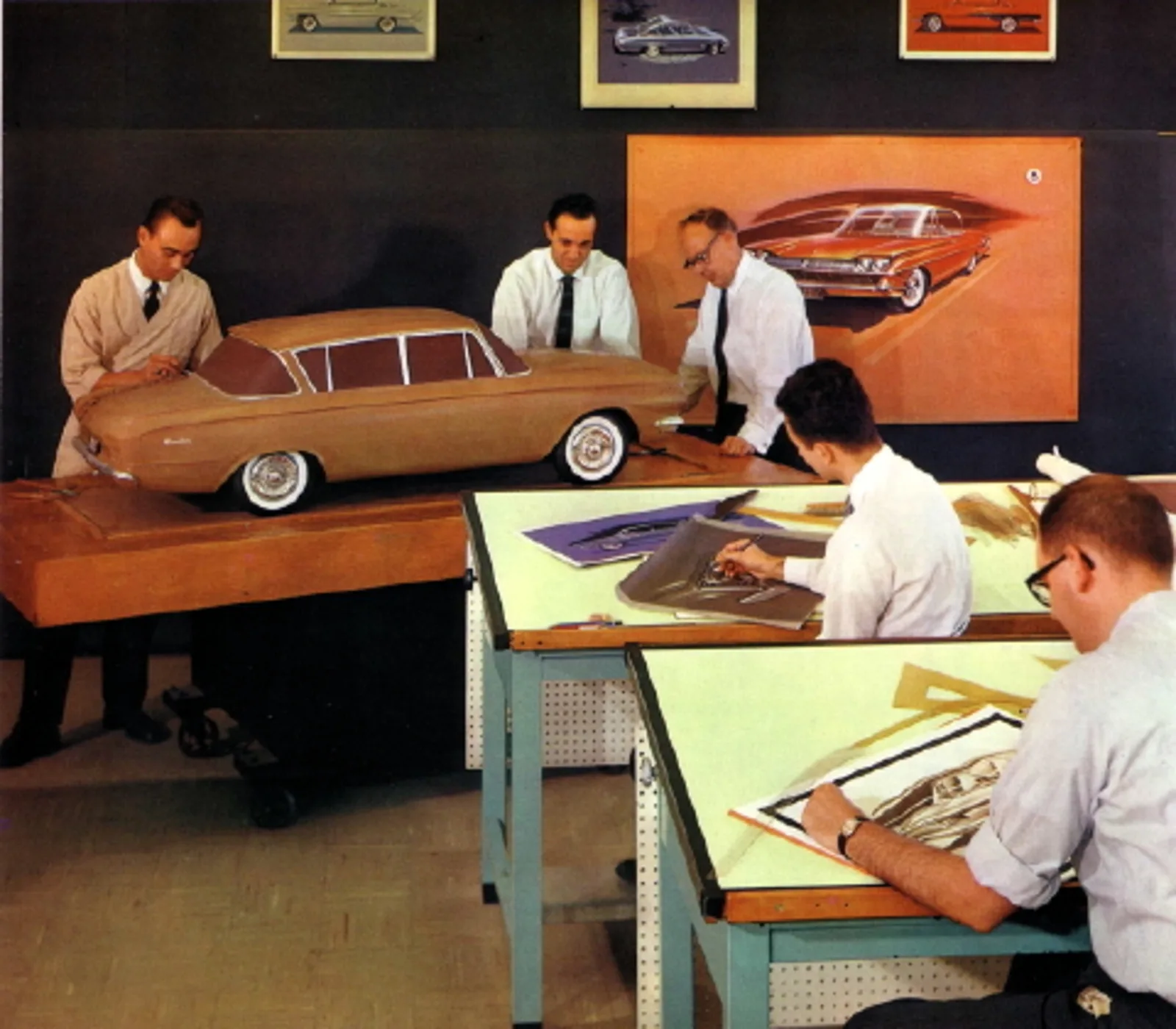
The clay and digital modelling teams work in the same studio as the stylists. Studio heads, managers and prototype engineers move across all of them. The full team for one car usually numbers 25 to 40 people, and the work lasts more than 24 months before it is signed off for tooling and production. A smaller group carries on until the car launches.
Even with virtual models on giant screens, the clay model is still the tool for a final judgement of the exterior.
How does a design get from sketch to clay model?
Exterior design begins with manual sketches and digital drawings, which grow steadily more detailed. Managers at several layers approve them, and the favoured ideas are rendered digitally as images. This is usually the point where customer feedback is sought, so that concepts can be sharpened for the target market, and the questioning continues as the design is refined.
Next come models. Industrial plasticine, digital models or both are built from the drawings and images, and the data from them feeds quarter-scale and then full-size mock-ups. Today the process is partly mechanical. The shape is drawn first in a computer program, and a three- or five-axis CNC milling machine then carves it out of a large quantity of clay.
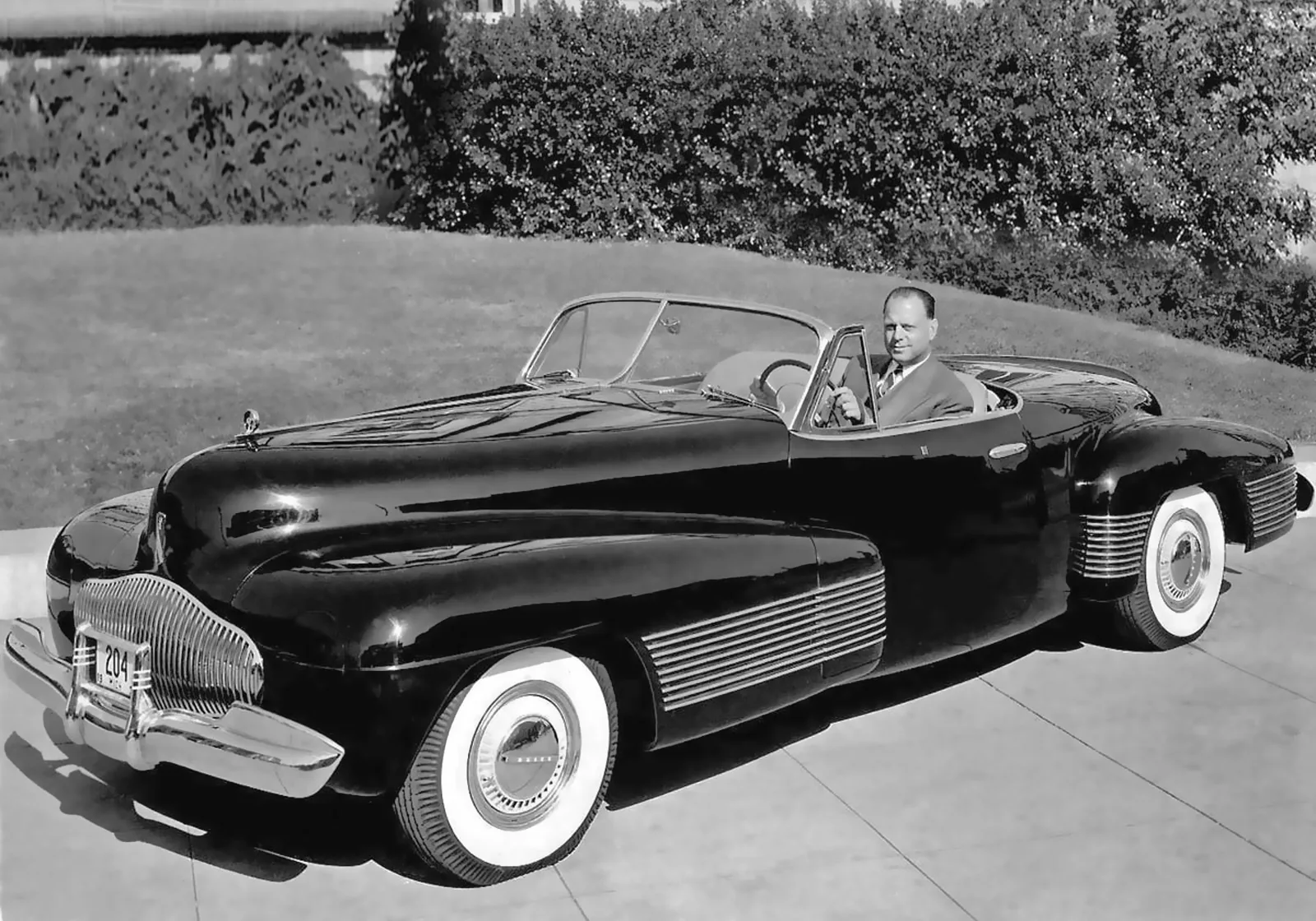
It is a very old idea in a very new setting. Harley Earl, who ran the General Motors styling studio, brought clay modelling of prototypes into car design in the 1930s. His department started life as the Art and Color Section before becoming the Design and Styling Department. What came before was wood and metal, a slower route.
Why do car makers still use clay models?
Because, even with photorealistic software and virtual models on giant screens, the clay model remains the most important tool for the last judgement on an exterior. Designers and modellers use it to refine their ideas, and company leaders use it to make decisions, under high levels of confidentiality. The material is industrial plasticine, which is easy to shape.
Think of the difference between looking at a photograph of a statue and walking around it. A screen shows a surface as it was drawn, while a full-size model can be circled and judged as an object. Because the plasticine is easy to shape, designers can keep reshaping it as they refine their ideas.
How are interiors, colours and badges designed?
The interior designer develops the proportions, shape, placement and surfaces of the instrument panel, seats, door trim panels, headliner, pillar trims and more. The emphasis is on ergonomics and passenger comfort. The method matches the exterior: sketch, digital model, clay model. The development cycle also lists an interior buck model as its own step.
The colour and trim designer, sometimes called the colour and materials designer, handles all interior and exterior colours and materials: paints, plastics, fabric designs, leather, grains, carpet, headliner and wood trim. Colour, contrast, texture and pattern must be combined carefully to give the car its character. Inspiration comes from industrial design, fashion, home furnishing, architecture and sometimes product design.
These designers look ahead. They research global trends for projects two to three model years in the future and track them on trend boards. Themes and concepts drawn from that research are then refined and tested on the vehicle models. A separate strand covers graphics for badges, decals, dials, switches, kick or tread strips and liveries.
What is Class-A surface development?
It is the stage where a stylist's shape becomes a manufacturable surface. Sketches and renderings are turned into three-dimensional digital surface models, which are evaluated in real time. In later phases the model must satisfy the designer's aesthetic aims and all engineering and manufacturing requirements. The finished styling model is rebuilt to meet Class-A standards, which are both technical and aesthetic.
Modellers who do this work usually have a background in industrial design or, for some, tooling engineering. Autodesk Alias and ICEM Surf are the two most widely used tools. Uniform surface continuity is what defines the standard, graded from G0 to G3, and G3 guarantees the cleanest transitions from one surface patch to the next. A product engineering team then develops the data further.
What are the stages of the design development cycle?
| Stage | What it covers |
|---|---|
| Design and consumer research | Feedback sought from the target market |
| Concept development sketching | Manual and digital drawings of the exterior |
| CAS (Computer Aided Styling) | Three-dimensional digital surface modelling |
| Clay modelling | Quarter-scale and full-size physical models |
| Interior buck model | Interior model |
| Vehicle ergonomics | Comfort and functionality for occupants |
| Class-A surface development | Production-quality surfaces, graded G0 to G3 |
| Color and trim | Paints, plastics, fabrics, leather, carpet, wood |
| Vehicle graphics | Badges, decals, dials, switches, liveries |
How do engineering limits shape what stylists can draw?
From the first sketch, the design runs alongside engineering that fits it to performance, manufacturing and safety regulations. From mid-phase, designers and product engineers swap changes back and forth until the result is ready to build. Elsewhere in the building, teams work on body-in-white sheet metal and plastics, noise and vibration, prototypes, the powertrain, physical validation, tools and dies, and the manufacturing process.
The look must also match ergonomics and practical features. Electronics add to the burden, because designers have to keep up with navigation, satellite and HD radio, mobile television, music players, video playback and smartphone interfaces. Some of those gadgets will never be standard equipment, yet some may shape the future of a model line.
Aerodynamics has been a design argument for decades. Chrysler's work in the 1930s led to the Airflow of 1934, radical next to its contemporaries. Buyers did not accept the advanced look, and later models had to be redesigned, a lesson the whole industry noted about the risks of putting major design advances into production cars. Exner later pointed to wind tunnel testing to justify tailfins. Personal injury litigation has also left its mark on the look of the car during the twentieth century.
Where do concept cars fit in?
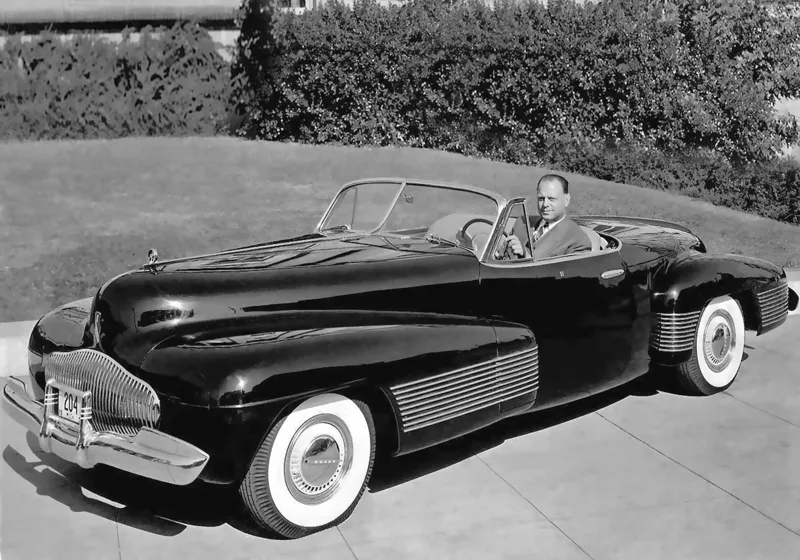
A concept car exists to show off new styling or technology, and it often appears at a motor show so the maker can read public reaction to designs that may or may not reach production. The idea is usually credited to Harley Earl, who made it popular through the travelling Motorama shows General Motors ran in the 1950s.
A concept never goes straight into production. In modern times it would need many changes for practicality, safety, regulatory compliance and cost, and a production-intent prototype does that job. Concepts can use paper, carbon fibre or refined alloys, and they can have gullwing doors or three, five or more wheels. Many never get past scale models or drawings. Mock-ups are made of wax, clay, metal, fibreglass or plastic.
Drivable concepts often borrow a drivetrain from a production car made by the same company. Only a very small share are functional to any useful degree, and some are unsafe above 10 miles per hour (16 km/h). At the other end, the Cadillac Sixteen from General Motors was quite refined.
How did car design become a discipline?
In the early days of the car, makers put function before form. Artists were then brought in to join styling to engineering, and the 1930s became a high point of creative coachbuilding despite financial hardship. The Second World War halted the momentum, and the industry restarted in the late 1940s under the influence of the Jet Age.
The American turning point came in the 1920s, when the national market began to saturate. Alfred P. Sloan Jr., who ran General Motors, proposed a new look every model year so owners would feel they had to replace their cars, an idea taken from the bicycle trade. Critics called it planned obsolescence, while Sloan preferred dynamic obsolescence. Smaller manufacturers could not afford the pace, and Henry Ford, who clung to simplicity and economies of scale, disliked it. General Motors passed Ford in sales in 1931. The constant changes also favoured body-on-frame construction over the lighter, less adaptable monocoque used by most European makers.
Earl also brought the tailfin and other aeronautical references into car design, starting with the rear fenders of the 1948 Cadillac. At Chrysler, Virgil Exner developed the Forward Look in the mid-1950s. Raymond Loewy was responsible for Studebaker models such as the Avanti, and Gordon Buehrig for the Auburn 851 and the Cord 810 and 812. In the 1960s Dick Teague of American Motors began using interchangeable body panels to make a range of cars from the same stampings. His designs included the AMX, the Gremlin, the Pacer, the Matador coupe and the original Jeep Cherokee. The first Ford Mustang achieved record first-year sales and founded the pony car segment.
In Europe, until the First World War most makers cared about mechanical reliability more than appearance. After the early 1950s, Italian designers set the trend and stayed the driving force until the early 1980s. France produced Bugatti and Avions Voisin, and Citroen's innovative cars were styled with the help of Flaminio Bertoni, as the DS shows. Renault built a strong design identity in the 1980s under Patrick Le Quement, while Peugeot, which had depended on Pininfarina since the early post-war years, developed its own identity from the 1980s. Britain was Europe's leading car producer until the late 1960s, with more British-based makers than the rest of Europe put together.
What does this mean when you buy a car?
The car on the showroom floor is the end of a long queue of decisions. Its shape went through customer feedback early on and again during refinement. Its colours and materials were chosen from trend research that looked two to three model years ahead. And its design was signed off for tooling after more than 24 months of work by dozens of people.
The history adds a few lessons about what buyers do with design. The Chrysler Airflow showed that an advanced look can be rejected, while the first Ford Mustang set a sales record in its first year and defined a segment. Annual restyling, introduced by General Motors, made a new look part of what customers expected. And interchangeable body panels, pioneered by Dick Teague, let one set of stampings serve a wide array of different vehicles.
Where this goes next
Studios already plan well ahead: colour and trim teams research trends for models two to three years away, and the engineering of in-car gadgets keeps shifting the brief. Neither the clay model nor the shielding of sketches has gone away.