From a 1949 hotel show that grew into a Motorama seen by 10.5 million people to an orange wedge driven under a factory barrier, a look at what show cars do and where they lead.
Concept cars are built to show new styling or technology and gauge customer reaction, but they never go straight into production. General Motors' Motorama (1949 to 1961) drew 10.5 million visitors, and Bertone's Stratos Zero of 1970 led to the Lancia Stratos, which won the World Rally Championship in 1974, 1975 and 1976.
To win business from Lancia, Nuccio Bertone took a low orange show car to the factory gates and passed it under the barrier, to applause from the workforce. That car, the Stratos Zero, led to a rally car that won three World Rally Championships.
What is a concept car actually for?
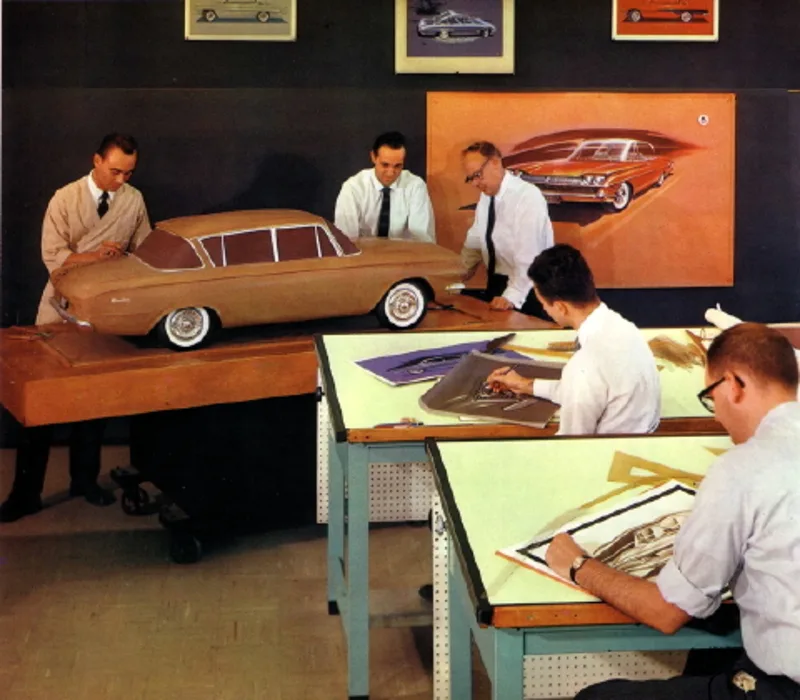
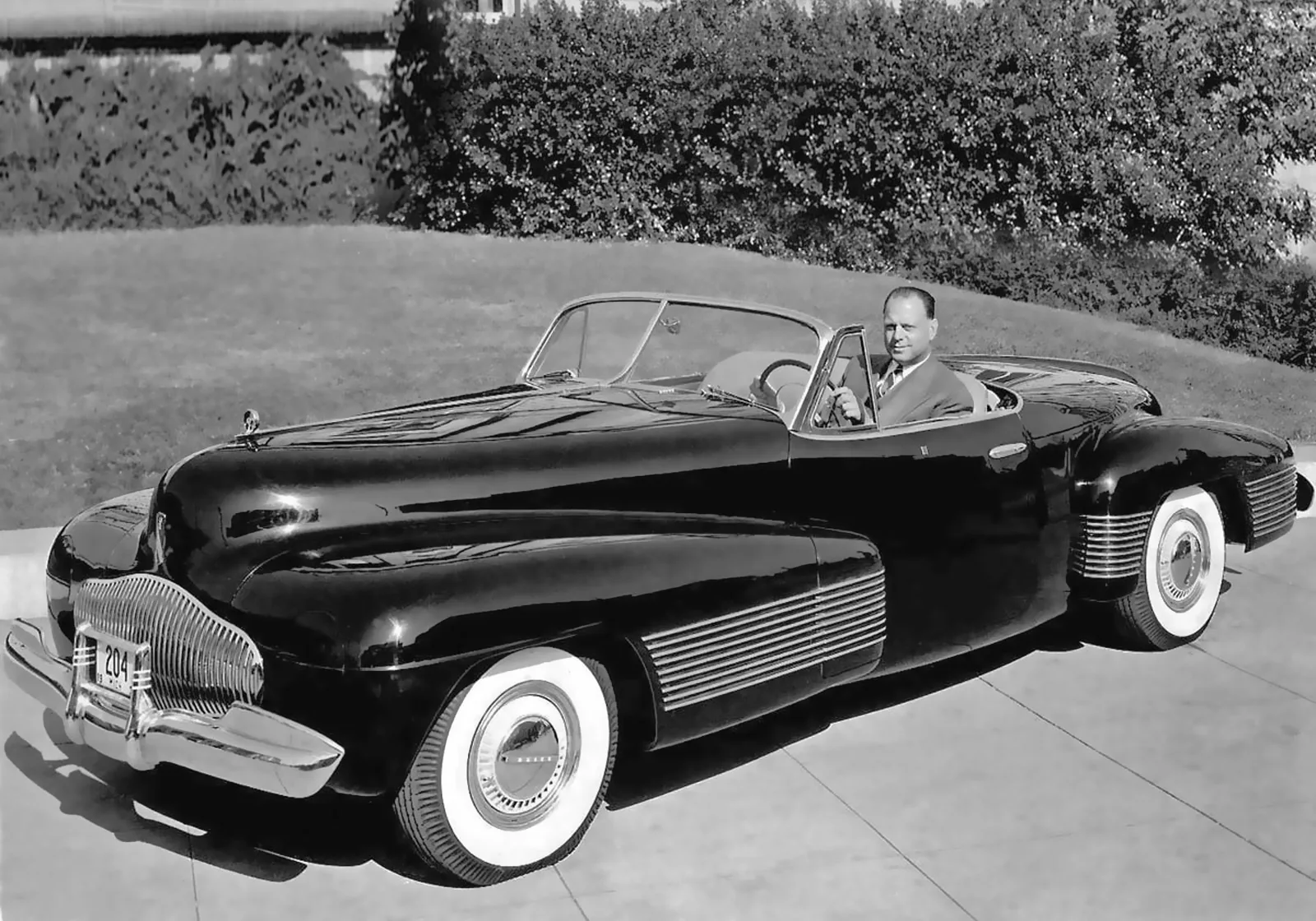
A concept car, also called a show vehicle, is built to present new styling or technology. Makers put them on motor show stands to learn how customers respond to radical ideas that might never be built. The idea is usually credited to Harley Earl of General Motors, who made it popular through the Motorama shows of the 1950s.
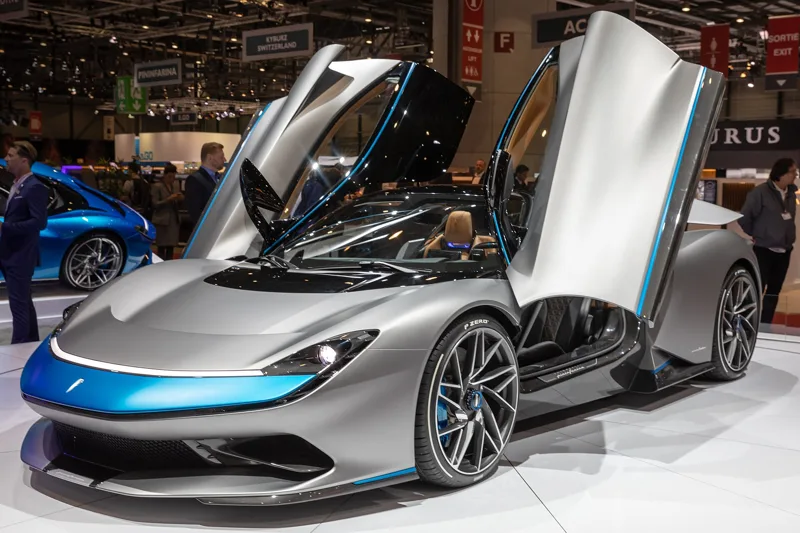
A concept never goes straight into production. Practicality, safety, regulations and cost all force changes before a design is settled, and that work falls to a separate production-intent prototype. Concepts are free to be radical. Their materials can range from paper to carbon fibre to refined alloys, and their layouts can include gullwing doors or three, five or even more wheels.
Those impractical leanings explain why so many never get beyond scale models or drawings. Only a tiny proportion work in any useful way, and a few are unsafe above 10 miles per hour (16 km/h). Mock-ups that cannot move are generally built from wax, clay, metal, fibreglass or plastic, or a mixture. Drivable ones often borrow the drivetrain of a production car from the same maker, though some are well finished, such as the Cadillac Sixteen from General Motors.
A concept tests the reaction, and a prototype with production intent follows.
What was the General Motors Motorama?
It was a show General Motors ran from 1949 to 1961, built around elaborate concept cars and other special halo models, to stir public appetite and lift sales. Its roots lay in the annual industrial luncheons that Alfred P. Sloan hosted at New York's Waldorf-Astoria from 1931, which fell in the first week of January next to the New York Auto Show.
The first postwar show, called Transportation Unlimited Autorama, opened at the Waldorf-Astoria in January 1949, and between New York and a Boston extension nearly 600,000 people saw it. Seven special Cadillacs were on display. The 1950 show drew over 320,000 people, who came to look at the Cadillac Debutante, a convertible trimmed with leopard skins. Nothing was staged in 1952, the year Cadillac marked half a century of production, though one of its show cars that year, the Eldorado special convertible, was put into limited production in 1953.
The show took the name Motorama in 1953 when it began to travel the country. That year it attracted more than 1.4 million visitors, and 45,000 came on opening day in New York, where an orchestra, singers and dancers performed a revue beside the cars. Over 100 trucks carried the show from city to city, timed to arrive in an exact order, and the cars rotated on raised platforms the crew called grass-hoppers.
| Year | Visitors | Notable cars shown |
|---|---|---|
| 1949 | Nearly 600,000 | Seven special Cadillacs |
| 1950 | More than 320,000 | Cadillac Debutante |
| 1953 | More than 1.4 million | Buick Wildcat, Oldsmobile Starfire, Chevrolet Corvette, Cadillac Orleans |
| 1954 | More than 1.9 million | Oldsmobile F-88, Firebird XP-21, Chevrolet Nomad |
| 1956 | Over 2.2 million | Buick Centurion, Firebird II, Oldsmobile Golden Rocket |
| 1961 | More than one million at the final show | Exhibit also taken to Basel |
Which Motorama cars pointed the way?
The 1954 show carried experimental cars with fibreglass bodies throughout, among them the Oldsmobile F-88 and Cutlass, the Buick Wildcat II, the Chevrolet Nomad station wagon, the General Motors Firebird XP-21 and the Pontiac Bonneville Special. Several Cadillacs joined them: the El Camino, the La Espada and the Park Avenue.
The 1955 edition ran in five cities, and the cars included the Buick Wildcat III, the Chevrolet Biscayne, the Pontiac Strato Star, the Oldsmobile 88 Delta, the LaSalle II and the Cadillac Eldorado Brougham. That show also gave the public its first look at pillarless four-door hardtops from Oldsmobile and Buick. In 1956 more than 2.2 million people came, and the Buick Centurion, the Firebird II, the Oldsmobile Golden Rocket and the Pontiac Club de Mer appeared. That year's show is the one filmed in the short Design for Dreaming.
The last years were thinner. No shows were held in 1957 or 1958, though Cadillac displayed the Director and the Eldorado Brougham town car in 1957. A special Eldorado Biarritz convertible toured in 1958 with a rain sensor that automatically raised the top and all the window glass in a shower. The show billed as 1959 ran from 16 to 22 October 1958, with the Firebird III and the Cadillac Cyclone. A final show in 1961 visited New York, San Francisco and Los Angeles, then Basel in Switzerland from 21 to 23 November. In all, 10.5 million people saw Motorama between 1949 and 1961.
How did the Lancia Stratos Zero win over a car maker?
Lancia's design partner had always been Pininfarina, never Bertone. Bertone wanted an opening, and he knew Lancia needed a rally successor to the ageing Fulvia. So he had an eye-catching car built around the running gear of a friend's Fulvia Coupe and brought it to the factory. Slipping beneath the gate barrier won the workforce's applause, and the two firms agreed to develop a new rally car based on ideas from Bertone's designer Marcello Gandini, creator of the Lamborghini Miura and, at that moment, busy with the Countach.
The Zero was shown at the Turin Motor Show in 1970, with a 1.6-litre Fulvia V4 engine and futuristic bodywork by Gandini. The body is a wedge in distinctive orange, very short at 3.58 metres (141 in) and just 84 centimetres (33 in) tall, and it has little in common with the production Stratos. The Zero had a glamorous afterlife. It featured in Michael Jackson's 1988 film Moonwalker, fetched 761,600 euros at an Italian auction in 2011, and has since been exhibited in Los Angeles at the Petersen museum and, in 2014, in Atlanta.
How did the Stratos go from show car to rally winner?
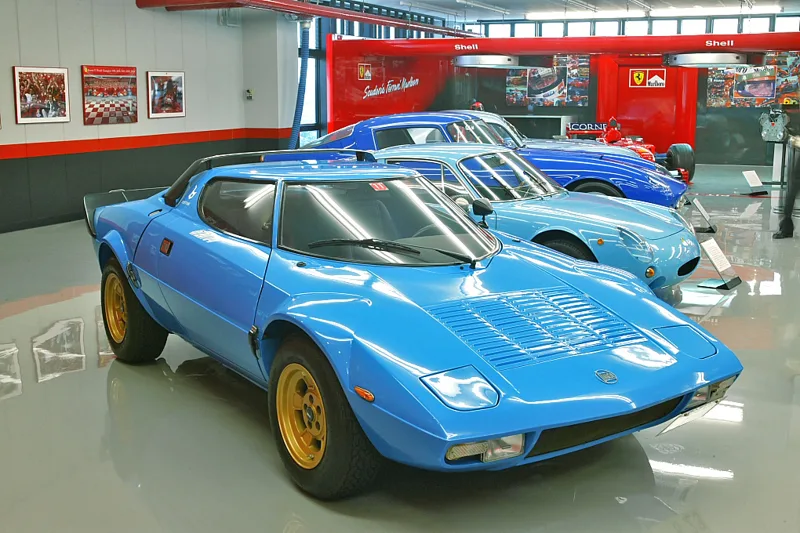
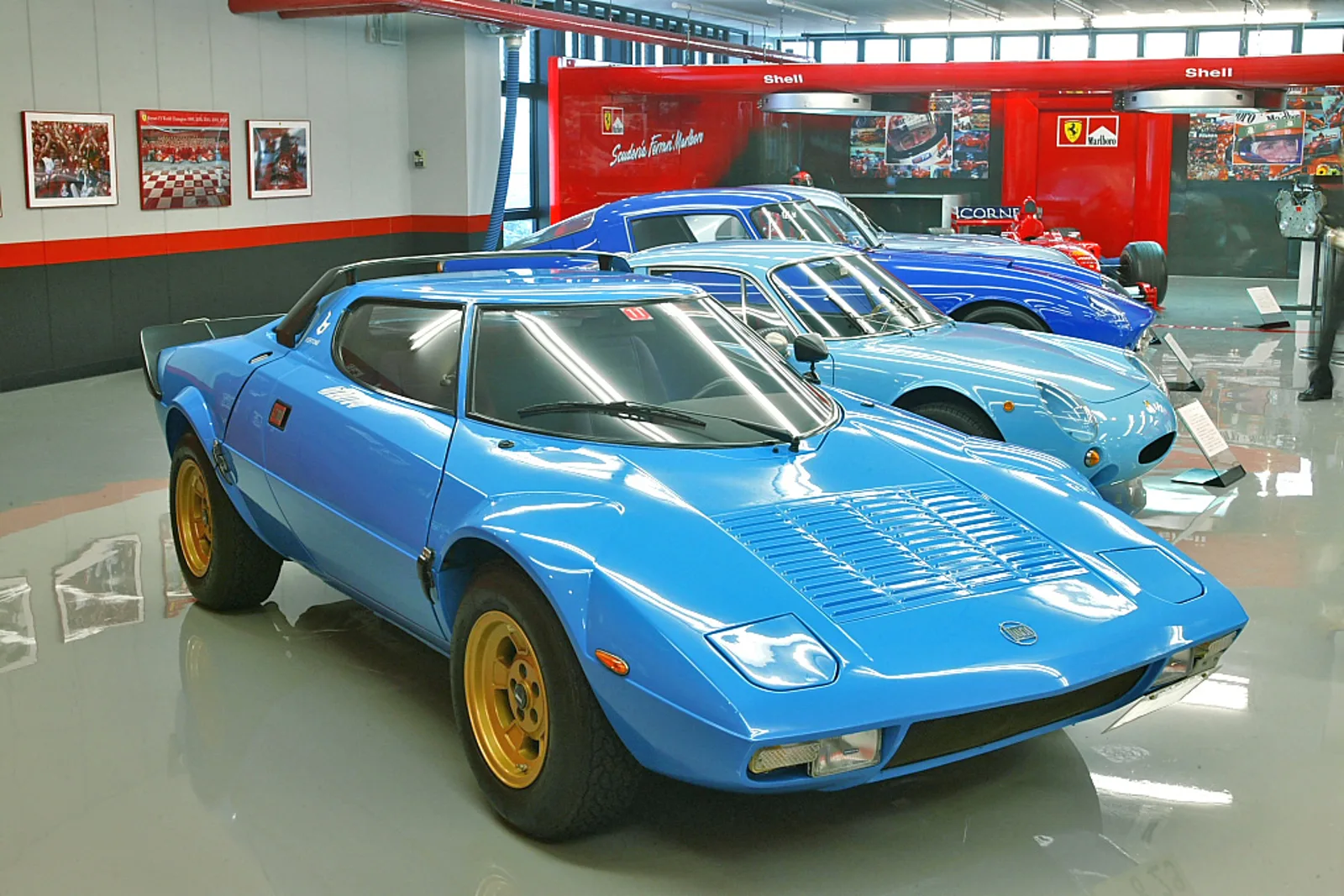
Quickly. A year after the Zero, Lancia unveiled the Bertone-designed Stratos HF prototype at the 1971 Turin Motor Show. It was fluorescent red, with a crescent-shaped wrap-around windshield that gave the driver a superb view ahead and almost none behind. Early on it ran three different engines, from the Fulvia, then the Beta, and finally for the public launch the mid-mounted Dino V6 from Ferrari, rated at 190 hp (142 kW). That choice had been planned from the start, but Enzo Ferrari hesitated, since he considered the car a rival to his own Dino. Once Dino production had ended he relented, and 500 engines arrived at Lancia.
The finished car echoes Gandini's Miura in its pair of clamshell hoods and in the way the lower edge of the door glass sweeps upward. Yet the Stratos body is a short, wide wedge of its own, so extreme that the nose sits lower than the top of the front wheel arches, and seen from above the windshield and door glass form a single semi-elliptical shape.
No car had been drawn from a blank sheet for rallying before. Three men drove the project: Lancia team manager Cesare Fiorio, the British racer and engineer Mike Parkes and the factory driver Sandro Munari. Gandini took a personal interest in the bodywork, while Nicola Materazzi, an engineer at Lancia, ran the calculations for chassis, steering, suspension and engine parts. The car raced in Group 5 during 1972 and 1973, and in 1973 the 500 cars Group 4 demanded went into production, clearing it for the 1974 season. Output stopped in 1975, with 492 thought to have been built. Bertone made them, and Lancia finished them at Chivasso.
| Version | Debut | Engine and key figures |
|---|---|---|
| Stratos Zero concept | Turin, 1970 | 1.6 L Fulvia V4; 3.58 m long, 84 cm high |
| Stratos HF prototype | Turin, 1971 | Dino Ferrari V6, 190 hp (142 kW) |
| Stratos HF Stradale (road car) | Homologated for 1974 | 190 PS at 7,000 rpm; 0-100 km/h in 6.8 seconds; 232 km/h (144 mph) |
| Rally car, 12-valve | 1970s | Around 275 hp (205 kW); weight 900 to 950 kg |
| Rally car, 24-valve | 1970s | 320 hp (239 kW); heads banned from Group 4 from 1978 |
How well did the Stratos do in competition?
Superbly. Sandro Munari and Bjorn Waldegard took it to the World Rally Championship in 1974, 1975 and 1976. The car also won the 1974 Targa Florio, five editions of the Tour de France Automobile and three of the Giro d'Italia automobilistico, and Munari won the Monte Carlo Rally in it three years running from 1975. The private Chardonnet Team was still winning the Monte with one in 1979.
Internal politics in the Fiat group then handed rallying duty to the Fiat 131 Abarth, and the Stratos might have won more titles without that decision. It stayed dangerous for years, and in the hands of an experienced private team with a talented driver it could still beat the factory cars. The last victory came at the Tour de Corse in 1981, driven by Bernard Darniche. In 1976 a Stratos crewed by Christine Dacremont and Lella Lombardi came 20th overall at Le Mans and second in the GTP class.
What came after the Stratos Zero?
Bertone built the Lancia Sibilo in 1978, a concept based on the Stratos with its wheelbase lengthened from 2180 to 2280 mm. In 2000 Gandini designed a modern reading of his own Stratos, built by Stola of Turin and called the S81. It debuted at the 2000 Turin show, thirty years after the Zero appeared at the same event, in an orange close to that of the 1971 prototype, with the wedge shape and wraparound windshield of the original. It began as a static model, was envisioned with a Maserati V8, and received an electric motor in 2014. Lancia asked not to see its logo on the nose, so Gandini's own badge took its place.
A British design firm, Fenomenon, held the rights to the Stratos name and showed a retro-modern concept at the 2005 Geneva show, drawn by Chris Hrabalek and powered in theory by a mid-mounted V8 of 419 hp (312 kW). That project stalled. A backer then funded a one-off: the New Stratos, ordered by the rally driver Michael Stoschek and his son Maximilian, announced in 2010 and developed by Pininfarina. It used a Ferrari 430 Scuderia as donor, with the chassis cut by 200 mm to a 2,400 mm wheelbase. The 4.3-litre V8 was tuned to 540 hp (403 kW) at 8,200 rpm, and the car weighs 1,247 kg (2,749 lb). Its claimed 0-100 km/h time is 3.3 seconds, and its top speed is put at nearly 320 km/h (200 mph).
Do concept cars really change what ends up on the road?
Sometimes, but rarely in a straight line. The Eldorado special convertible from 1952 did reach limited production in 1953, and the Motorama gave the public its first sight of pillarless four-door hardtops in 1955. The Stratos Zero shares little with the production Stratos, yet it opened the door to it. The pattern is that a concept tests reaction, and a prototype with production intent follows.
Most concepts sit somewhere between a mock-up and a runner, and they do not represent the final product. What the Motorama achieved was attention, with 10.5 million visitors in 12 years, and a place to try ideas such as the rain sensor on the 1958 Eldorado Biarritz.
Where this goes next
The Stratos story is still running. There were reports that a run of up to 25 New Stratos cars was possible, given enough interest. Ferrari did not agree and told its suppliers not to help. On 10 February 2018 the Italian coachbuilder Manifattura Automobili Torino said it would go ahead and build the 25 cars that had been planned.