Two Turin designers born in 1938, one studio chair handed from the first to the second, and the straight-lined cars that filled the 1970s.
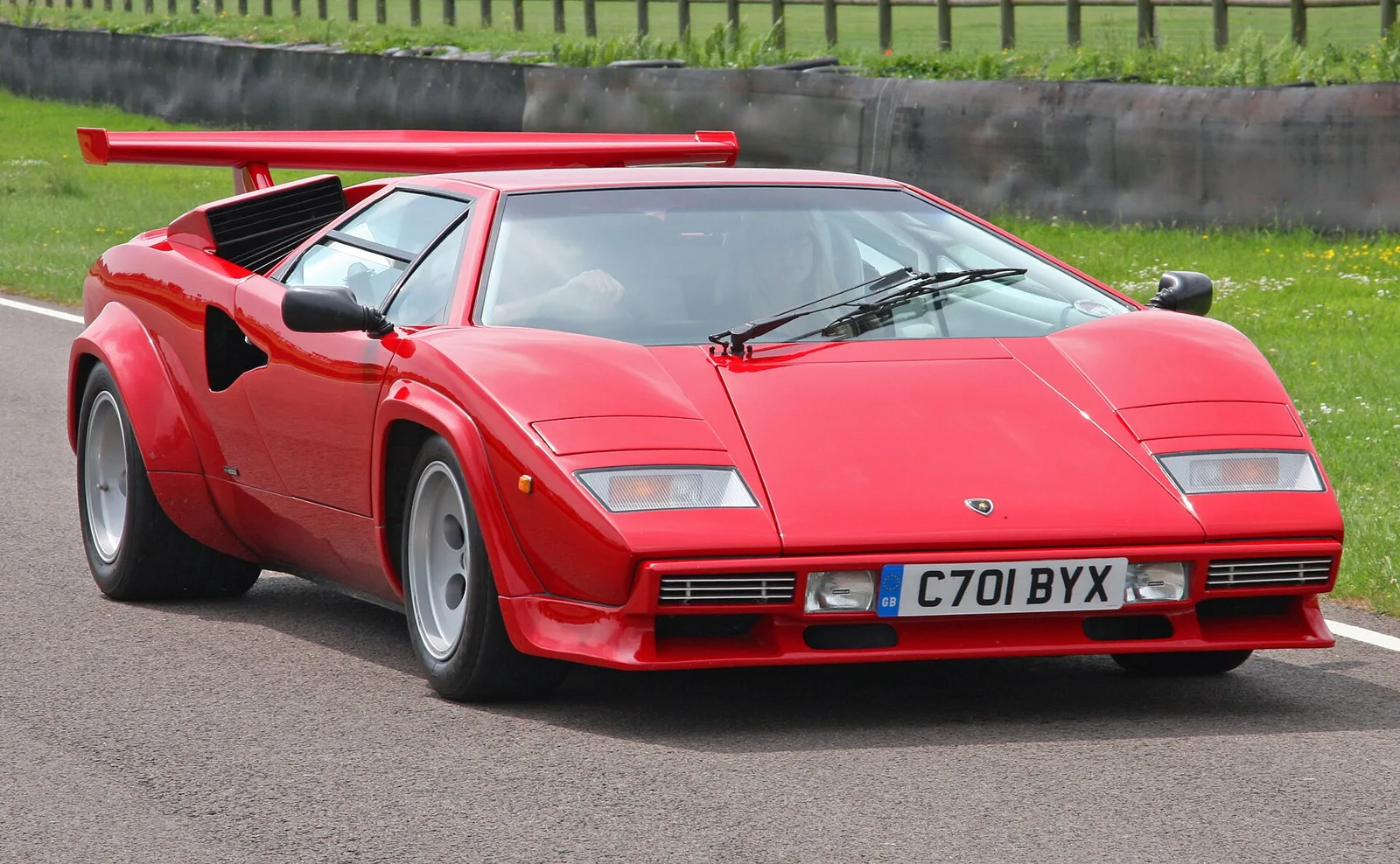
Two Italian designers born in 1938, Giorgetto Giugiaro and Marcello Gandini, drew the straight-lined cars of the 1970s: Giugiaro the Golf, Esprit S1, M1 and DeLorean, Gandini the Miura, Countach and Stratos. Giugiaro's angular phase ran through the 1970s and 1980s before he moved to curvier shapes.
In 1965 Marcello Gandini, aged 27, took the chair at Bertone that Giorgetto Giugiaro had just left, and went on to produce the Lamborghini Miura, taking it from first sketch to a finished prototype in just three months. Between them the two Turin designers produced the straight-lined, folded-paper look of the 1970s.
Who were Giorgetto Giugiaro and Marcello Gandini?
Both were Italian car designers born in 1938. Giugiaro, born on 7 August, took the Car Designer of the Century title in 1999 and went into the Automotive Hall of Fame in 2002. Gandini, born in Turin on 26 August, died on 13 March 2024, aged 85. Between them they drew supercars, family hatchbacks and rally specials.
Giugiaro's range went well beyond cars. He designed camera bodies for Nikon, watches for Seiko, office furniture for Okamura, a pasta shape called Marille, and in 2003 the organ of Lausanne Cathedral, with about 7000 pipes. Six times he collected the Compasso d'Oro for industrial design, one of them a lifetime award in 1984.
Gandini grew up in a household steeped in classical music. His father, a former orchestral conductor and composer, wanted him to become a pianist, but the boy was drawn to engines and left school at 18, which led his parents to turn him away. In 2012 Car Design News gave him its first Lifetime Achievement Award. Ferrari's chief design officer Flavio Manzoni called him probably the greatest car designer ever. Gandini himself put architecture, construction, assembly and mechanisms ahead of styling.
Giugiaro's folded-paper phase ran for two decades, through the 1970s and 1980s.
How did two designers end up at the same Turin studio?
Through Bertone. Gruppo Bertone began in 1912 as Carrozzeria Bertone under Giovanni Bertone, and worked for other carmakers, rather like an architecture firm, and also built special editions in small numbers. Unlike Lotus in Britain or Porsche in Germany, it never combined that work with making cars under its own name. After the Second World War Nuccio Bertone ran the firm, which he divided into a manufacturing arm and a styling arm called Stile Bertone.
Giugiaro began in 1959 as a stylist in Fiat's special vehicle design department, then moved to Bertone, where he stayed until 1965. In 1964 the young Gandini approached Nuccio Bertone, who liked his zeal and meant to apprentice him to Giugiaro, his chief designer. The next year Giugiaro left to start on his own, and Gandini was hired in his place. He stayed fourteen years.
Giugiaro moved to the design studio Ghia from 1965 to 1967 and spent a short spell at a prototype company in 1968. That same year he founded Italdesign Giugiaro. Gandini left Bertone in July 1979 to set up his own house, Clama.
What did the wedge look like before and after?
Giugiaro did not start with angles. His first cars, among them the Alfa Romeo 105/115 Series Coupes, were arched and curving, in the manner of the De Tomaso Mangusta, the Iso Grifo and the Maserati Ghibli. From the late 1960s his work turned increasingly angular. The 1971 Maserati Bora marked the transition, with gentle bends, and the era culminated in the straight-lined, folded-paper cars of the 1970s and 1980s.
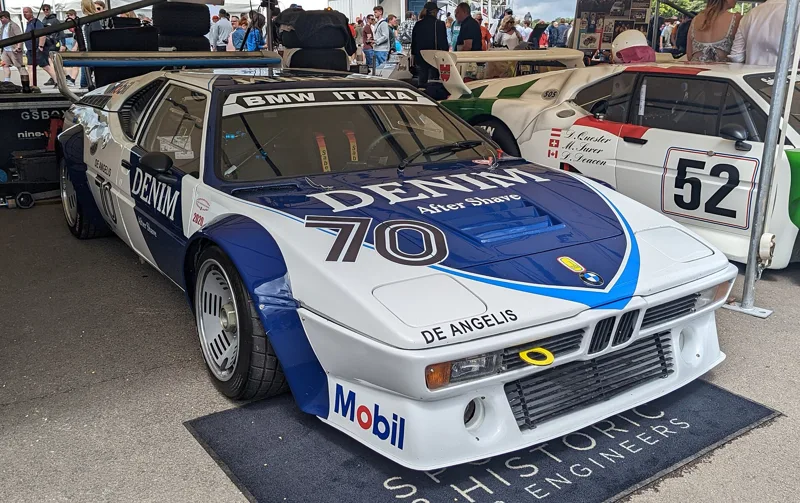
The key examples are the first Volkswagen Golf of 1974, the Lotus Esprit S1 of 1976, the BMW M1 and the DMC DeLorean of 1981. By the early 1990s he had moved with the times and was drawing more curvaceous cars, among them the Lamborghini Cala concept of 1995, the Maserati Spyder of 2001 and the Ferrari GG50 concept of 2005.
| Designer | Car | Year |
|---|---|---|
| Giugiaro | Maserati Bora | 1971 |
| Giugiaro | Volkswagen Golf (first generation) | 1974 |
| Giugiaro | Lotus Esprit S1 | 1976 |
| Giugiaro | BMW M1 | 1978 |
| Giugiaro | DMC DeLorean | 1981 |
| Gandini | Lamborghini Miura | Mid-1960s |
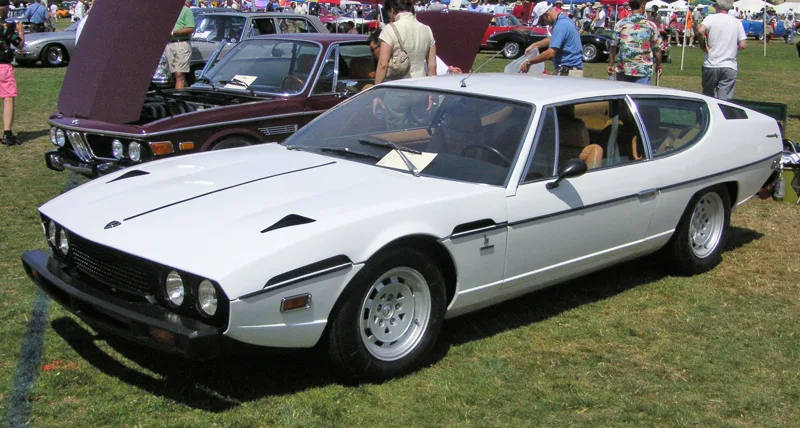
| Gandini | Lamborghini Espada | 1968 |
| Gandini | Maserati Khamsin | 1972 |
| Gandini | Fiat X1/9 | 1972 |
| Gandini | Citroen BX | 1982 |
What did Marcello Gandini draw?
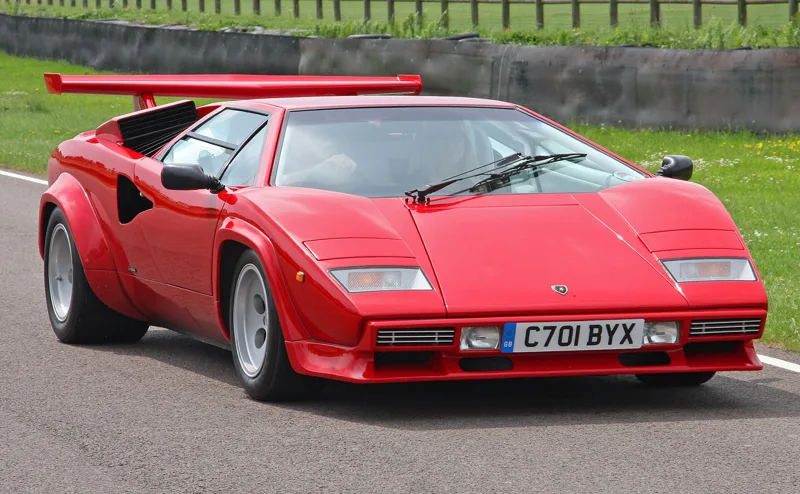
Gandini is best known for Lamborghinis. The Miura of the mid-1960s was a groundbreaking rear mid-engined car with a transversely mounted V12, and he went on to design the Espada, the Urraco and the Countach, along with the original proposal for the Diablo and concept cars such as the Marzal and the Bravo. Bertone's own history dates the Marzal to 1967 and the Espada to 1968.
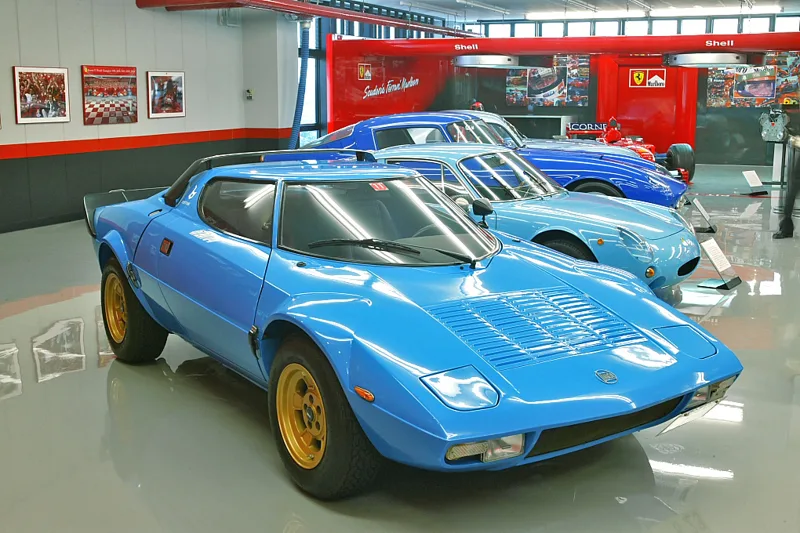
For Alfa Romeo he drew the Montreal and the Carabo, the latter a concept shown at the 1968 Paris Motor Show on an Alfa 33 chassis. The Lancia Stratos Zero, the Maserati Khamsin and the Ferrari GT4 are his as well, and so is the Lancia Stratos rally car, which has an unbroken semi-elliptic windshield and door glass in one sweep.
He drew everyday cars too: the Innocenti Mini, the first Volkswagen Polo, the first BMW 5 Series and the Citroen BX. The Fiat X1/9, built on the Fiat 128 chassis with the engine moved behind the seats, stayed in production from 1972 to 1988, and 160,000 were made.
After leaving Bertone he worked exclusively for Renault for five years, which brought the second-generation Renault 5, the Supercinq, and the Renault Magnum truck. Later clients included Maserati, Nissan, Toyota and Subaru, and he returned to Lamborghini for the Diablo in the 1990s.
Why did the sharp-edged look last so long?
The record shows it spreading across price brackets at once. The same period gave the supercar silhouettes of the Esprit, the M1 and the DeLorean, and the family cars of the first Golf and the first Polo. The folded-paper phase of Giugiaro's work ran across the 1970s and 1980s, and only in the early 1990s did he adapt again.
Part of the answer is in the working lives of the two men. Giugiaro designed cars at every level, from the Fiat Panda of 1980 to the Fiat Uno of 1983 and the Lancia Delta of 1979. Gandini's list runs from the Miura to the Innocenti Mini. Studios like Bertone and Italdesign served many carmakers, so one hand could shape cars for different brands in the same decade.
The commercial record points the same way. The Volkswagen Golf Mk1 is Giugiaro's most commercially successful design. The Fiat 850 Spider, launched by Bertone in 1965, sold nearly 140,000 between 1965 and 1972, mostly in the United States. Fiat's Panda from 1980 and Punto from 1993 both won the Compasso d'Oro.
Which cars did people actually buy?
The mass-market ones. Italdesign's work for Volkswagen goes back to the early 1970s, and the studio is credited with the first Golf and the Scirocco in 1974, the Passat in 1973 and the Audi 80. Ferdinand Piech, a later Volkswagen Group chairman, apprenticed at Italdesign in the summer of 1972.
The DeLorean is the best known of the lot, thanks to its starring role in the Back to the Future films. Not every project paid off. The ASA 1000 GT, nicknamed the Ferrarina, was a commercial failure, and Fiat decided the 1978 Lancia Megagamma concept was too risky to build, although it is considered the conceptual origin of the minivan movement. It later influenced the Nissan Prairie, the Renault Espace, Chrysler's minivans and the Fiat 500L.
Which carmakers hired Giugiaro?
Almost everyone. At Alfa Romeo he drew the Giulia Sprint GT of 1963, the Alfasud of 1972 and the Alfetta GT of 1974, and at Maserati the Ghibli of 1966, the Merak of 1972 and the Quattroporte of 1976. Lancia received the Delta in 1979 and the Thema in 1984, and Fiat the Panda, the Uno and the Croma.
The list runs wide around the world. Hyundai's Pony Coupe concept came in 1974, followed by the production Pony in 1975, the Stellar in 1982, the Excel in 1985 and the Sonata in 1988. Isuzu had the 117 Coupe in 1968 and the Piazza and Impulse in 1981, while Saab received the 600 in 1980 and the 9000 in 1984. Renault's 21 and 19 followed in 1986 and 1988, SEAT's Ibiza in 1984 and Toledo in 1991, and Lexus's GS in 1993. Others include the Subaru Alcyone SVX of 1991, the Daewoo Lanos of 1996 and, in the United States, the AMC Eagle Premier of 1987.
Which concept cars came from the same hands?
The concept list is just as long. Giugiaro's studio built the AMC AMX/3 and the Porsche Tapiro in 1970, a Skoda 720 in 1972, and the Maserati Boomerang in the same year. The Maserati Medici concepts of 1974 and 1976 followed, then the Lancia Megagamma of 1978. In the 1980s came the Lancia Orca in 1982, plus the Lotus Etna and the Ford Maya in 1984. The Bugatti EB 112 appeared in 1993.
Gandini's concept work for Bertone includes the Marzal, the Bravo, the Carabo and the Lancia Stratos Zero. Away from cars he also took on home architecture, a nightclub interior and the styling of the Heli-Sport CH-7 helicopter.
How big had Bertone grown by the time of the wedge?
Quite large. The Fiat 850 Spider of 1965 sold so well that Nuccio Bertone raised capacity to 120 units a day. Annual production climbed from 13,000 cars in 1966 to almost 30,000 two years later. In the same decade Bertone built the Chevrolet Testudo, which Nuccio drove to the Geneva Motor Show in 1963, and the Alfa Romeo Canguro in 1964. It also worked on the BMW 3200 CS and the Simca 1000 Coupe.
The Lamborghini partnership of the late 1960s brought the Miura, the Marzal and the Espada, with the Jarama and Urraco to follow. By 1970 the workforce was 1,500 and the Grugliasco factory sprawled across 267,000 square metres (2,870,000 sq ft).
What happened to Italdesign and Bertone?
Giugiaro and Aldo Mantovani founded the firm that became Italdesign on 13 February 1968 in Moncalieri. It offers styling, packaging, engineering, modelling, prototyping and testing, and had 917 employees in 2019. Lamborghini, part of the Volkswagen Group through Audi, bought 90.1% of the shares on 9 August 2010. The rest followed on 28 June 2015, when Giugiaro resigned. In 2025 Lamborghini sold its stake to the American technology company UST.
In 2017 Italdesign formed Italdesign Automobili Speciali for collector vehicles in ultra-low series. The first, the Zerouno, was built in a run of only five. Earlier, in 1992, it had set up a Barcelona company after years of work with SEAT.
Bertone fared worse. The firm sold its Grugliasco plant to Fiat in 2009 and was declared bankrupt in 2014. Its brand has since passed through several owners. Mauro and Jean-Franck Ricci revived it in 2022 and showed the GB110 in December of that year, with a public unveiling at Top Marques Monaco in June 2024.
Where this goes next
Giugiaro works on in Turin at GFG Style, the studio he founded in 2015 with his son Fabrizio. Bertone's newest car, shown in 2026, is the Runabout: a sports car with its engine behind the seats and a V6 sourced from Toyota. Production stops at 25, and the design takes its cue from a 1969 concept, the Autobianchi A112 Runabout. At Italdesign, the 2025 sale of Lamborghini's stake to UST opens a new chapter.