Weight balance, traction, cabin space and the sudden spin: what separates the three layouts and why Ferrari, Porsche and Chevrolet used more than one.
A front engine gives the most cabin and boot space but loads the front wheels and causes understeer. A mid-engine car sits between the axles, aiming for about 50% weight front and rear, at the cost of seats and sudden spins. A rear engine adds traction on loose surfaces and can oversteer.
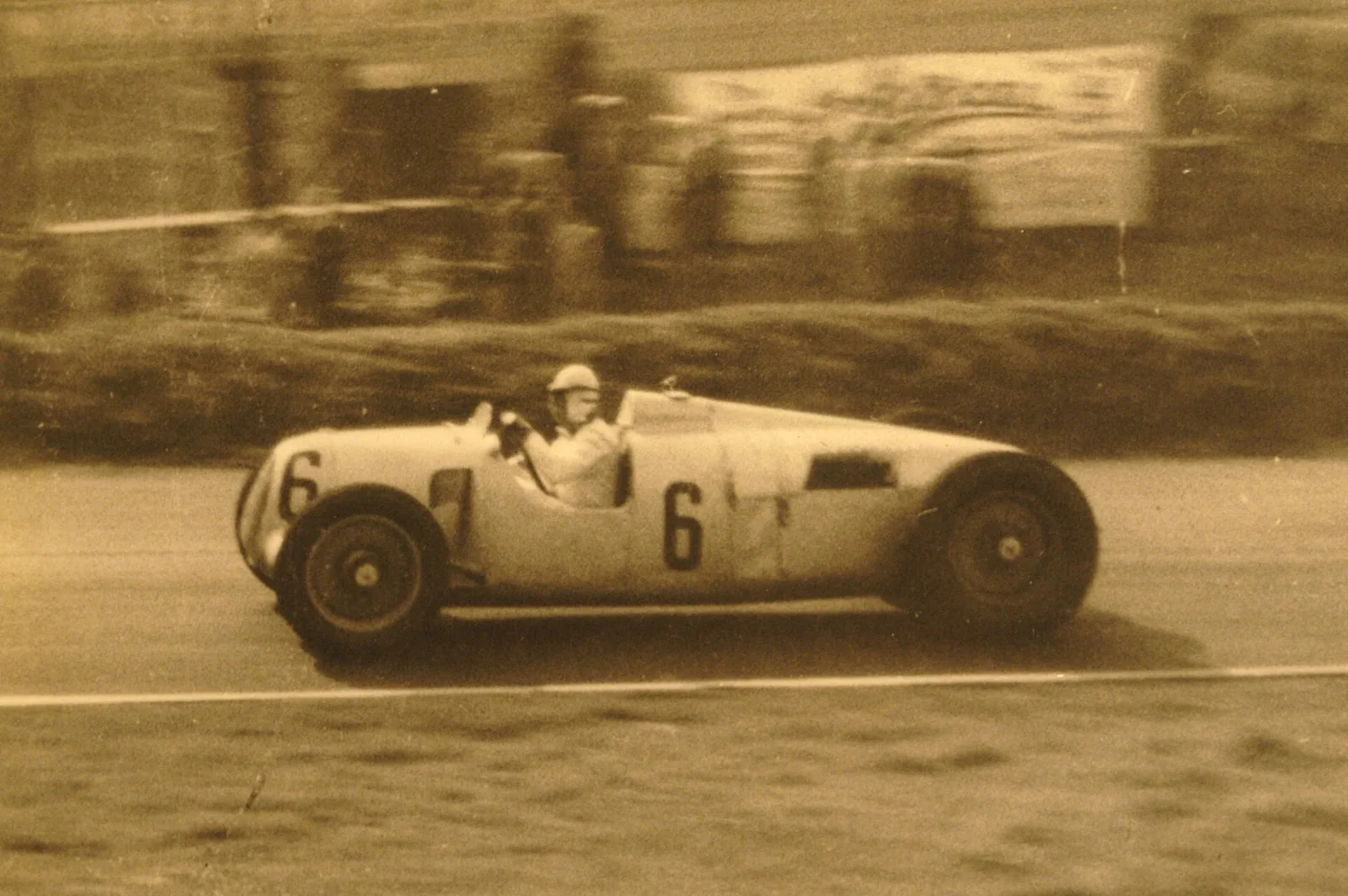
Before the front-engine car became the default, the mid-engine car was the car. Both Daimler and Benz used a mid-engine, rear-wheel-drive layout in their vehicles of the 1880s, and a 1901 Autocar, now in the Smithsonian Institution, was the first petrol car to use a drive shaft and put the engine under the seat. The supposedly exotic layout is older than the supposedly normal one.
The three layouts differ in weight balance, traction and cabin space, and in what the cars built around them are like to live with. Ferrari, Porsche and Chevrolet, three makers famous for sports cars, each ended up using more than one answer.
What do front-engine, mid-engine and rear-engine actually mean?
The names describe where the engine sits relative to the axles. A front-engine car has it at the front, sending power to the wheels through a drive shaft. A mid-engine car has it somewhere between the two axles instead of over one or past it. A rear-engine car places it behind the rear axle, which is exactly where the Porsche 911 keeps its engine.
The wording gets slippery in everyday use. People often say mid-engine to mean an engine behind the driver, although a mid-engine can sit in front of the driver and still be between the axles. Engineers tidy this up with shorthand: FMR for front mid-engine and rear-wheel drive, where the engine is ahead of the driver but behind the line of the front axle; RMR, usually just called MR, for the classic supercar layout with the engine between driver and rear axle; FM4 and M4 when four-wheel drive is added; and FMF for front-wheel-drive cars with the engine in front of the driver, usually mounted longitudinally. The line between plain front-engine and FMR is fluid, since makers push engines as far back as they can. Ford's Model T and Model A would qualify as FMR, and most pre-war front-engine, rear-wheel-drive cars did too.
The supposedly exotic layout is older than the supposedly normal one.
How does a front engine car handle?
The front-engine layout has two great virtues. The cabin and the boot get more room, because nothing intrudes behind the passengers. And it is the layout that dominated: front-engine, rear-wheel drive was the traditional layout for most of the 20th century, and front-engine, front-wheel drive took over most passenger cars towards the end of that century, with four-wheel drive a third option.
The cost is balance. More of the car's weight lands on the front wheels, less on the rear, and that produces understeer, the tendency to run wide when the front tyres run out of grip. Some designers fight this by moving heavy parts, putting the gearbox and battery at the rear, but they are working against the engine's mass.
There is a gentler side to the same trait. As the tyres lose traction, a front-engined car is likelier to slide away in a progressive, controllable way.
Adding four-wheel drive to a front-mid layout brings an engineering puzzle, which is how to get power past the engine to the front wheels. Usually the engine is raised to let a propshaft run beneath it. The Ferrari FF solved it differently by drawing power off both ends of the crankshaft, using two separate gearboxes.
Why do mid-engine cars handle so well?
Moving the engine from the nose to the middle shifts weight over the rear tyres. Those tyres gain traction and do more of the braking work, so there is less chance of the rear wheels locking and of a skid or spin. If the car is also rear-wheel drive, the extra rear weight helps acceleration on slippery surfaces, which delivers a good part of what all-wheel drive offers, minus its added weight and expense. ABS and traction control work better too, because they have more grip to manage.
The deeper reason is balance. Good handling in a bend needs the front and rear tyres to share the load fairly evenly, so the car can carry the most speed without sliding. That is harder when the engine's weight sits far forward or far back. Dedicated sports cars often chase a distribution of about 50% front and rear, and that target is typically reachable only by putting the engine between the axles. This is why super, sport and race cars are so often mid-engined.
There are quieter benefits. Mounting the engine, gearbox and differential as a single unit, with independent suspension on the driven wheels, means the chassis no longer has to carry engine torque reaction. A mid-engine car can also leave empty crush space between the bumper and the windscreen, which can be designed to absorb frontal impact and limit intrusion into the cabin. With the mass close to the back of the seats the suspension can soak up bumps more easily, but in sports cars that potential comfort is usually cancelled out by stiffer dampers.
What is the catch with a mid-engine car?
Space is the big one. The engine pushes the rear seats forward towards the front axle, so most mid-engine cars are two-seaters. Bigger vehicles are the exception, such as vans, trucks and buses, where passengers can share the space between the axles. Single-decker buses of the 1950s and 1960s often carried a horizontal engine amidships, the AEC Reliance among them. Among sports cars, the Ferrari Mondial stands alone so far as a successful true mid-engined convertible with four seats and supercar pace.
Cooling is harder when the engine is not facing the wind. This has caused problems in some cars but looks largely solved in newer designs. The Saleen S7 has big vents along its flanks and tail to shed heat from a very high-output engine.
The other catch is what happens at the limit. Because the mass is gathered between the axles, a mid-engine car has a low moment of inertia about its centre of gravity. Think of a skater who pulls her arms in: she spins faster. A mid-engine car that starts to spin does the same. The spin comes on suddenly, the car rotates quickly and it is harder to recover, although the good balance means it may take more to provoke in the first place. A front-engined car tends to give a gentler warning. This is the context in which mid-engined cars are called more dangerous than front-engined ones if the driver loses control.
Why do rear engine cars exist, and why did most disappear?
A rear-engine layout has real advantages. Without a transmission tunnel, the floor can be flat. The engine sits over the driven wheels, which adds downward pressure and helps on loose surfaces, though it can make a car prone to oversteer. And it is simple to manufacture: the engine is close to the driven wheels, so the gearbox can be combined with the differential, which saves room.
Its most successful applications were the Volkswagen Beetle and the Porsche 911, both of which paired the rear engine with a flat boxer layout to cut its length and lower the centre of gravity of the engine and the car. Both also used air cooling to save weight.
For decades it was a favourite for cheap small cars and light vans. Think of the Fiat 500, the Renault 4CV, the Hillman Imp, the Skoda 1000 and, much later, the Tata Nano. Today most car makers have abandoned it. It carries on in expensive cars like the 911 and in some racing cars. It also survives in low-floor buses, coaches, Class A motorhomes, front-discharge cement mixers and some school buses, and in microcars such as the Smart Fortwo.
Rear-engine cars are also a long way from a single recipe. The family runs from the Benz Patent-Motorwagen to the Chevrolet Corvair, the DeLorean, the Tatra 603 and the Tucker 48, and it includes Renault's Alpine A110 and the many Renault, Fiat, Skoda and Subaru small cars. The Volkswagen family alone spreads from the Beetle through the Karmann Ghia to the Type 2.
Layout by layout
| Layout | Engine position | What it does well | What it costs |
|---|---|---|---|
| Front-engine | At the front, driving through a shaft | Cabin space, boot space, progressive breakaway | More weight on the front wheels, which causes understeer |
| Mid-engine | Between the axles | Balance near 50% front and rear, traction, braking | Two seats, cooling, sudden spins |
| Rear-engine | Behind the rear axle | Flat floor, grip on loose surfaces, simple to build | Prone to oversteer; mostly abandoned |
Why did Ferrari, Porsche and Chevrolet each pick a different answer?
The more accurate answer is that each of them has picked several. Ferrari built front-mid cars such as the 250 GTO, 599 GTB Fiorano, 812 Superfast and Roma. It built a long line of mid-rear cars, from the 250 LM, 308 and Testarossa to the F40, Enzo, 458 and LaFerrari. It has also made four-wheel-drive versions of both layouts, the front-mid FF, GTC4Lusso and Purosangue on one side and the mid-engined SF90 Stradale on the other.
Porsche is the rear-engine name. The 356, every generation of the 911 and the 959 all put the engine behind the rear axle. Yet the 550, 914, Boxster and Cayman, Carrera GT and 911 GT1 are mid-rear, and the 918 Spyder is a mid-engined four-wheel-drive car.
Chevrolet covers the whole range. The Corvair was rear-engined. The Corvette, from its second through seventh generations, was a front-mid car, with the engine ahead of the driver but behind the front axle line. The eighth-generation Corvette, the C8, is mid-rear.
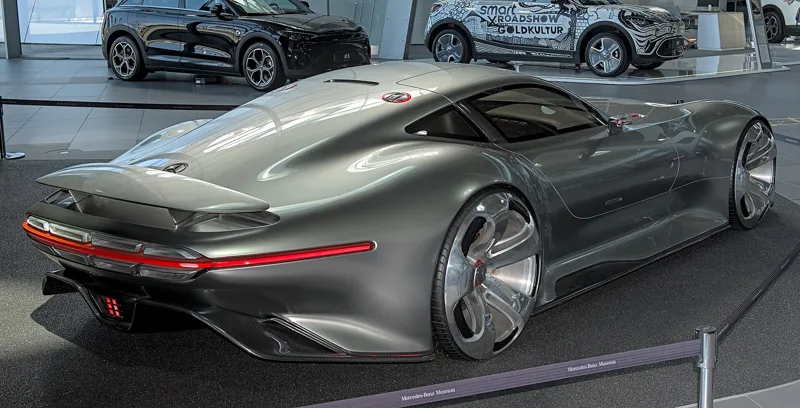
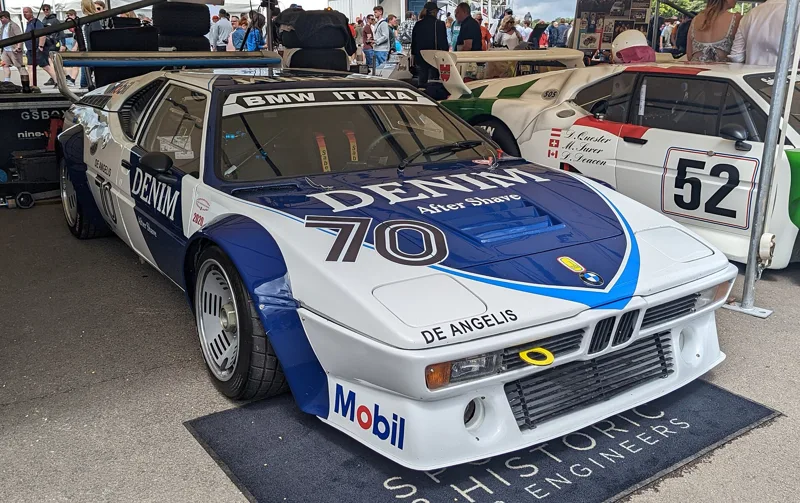
The pattern holds more widely. Lamborghini, McLaren, Pagani, Koenigsegg, Ford with the GT40 and BMW with the M1 all built mid-rear cars. Four-wheel-drive mid-engine cars include the Audi R8, Bugatti Chiron, Lamborghini Aventador and Huracan, Mercedes-AMG ONE and Koenigsegg Gemera, and also the Group B rally cars Ford RS200, Lancia Delta S4, Peugeot 205 Turbo 16 and MG Metro 6R4. Even cheap and cheerful cars have used the middle: the Fiat X1/9, Toyota MR2, Pontiac Fiero, Honda Beat and Smart Roadster are all mid-rear.
What does it mean for someone buying or driving a car?
If you need rear seats and a useful boot, the front-engine layout is the sensible one, and you will meet understeer before anything else at the limit. If you want the sharpest balance and are happy with two seats, a mid-engine car gives it, with the warning that a slide that starts will develop quickly. A rear-engine car such as a 911 puts its engine over the driven wheels for traction, and brings a flat floor, with a tendency to oversteer thrown in.
Four-wheel drive changes the sums. In a front-engine car the engineers must route power past the engine to reach the front wheels. In a mid-engine car it sends power to all four wheels, as in the supercars named above.
Where this goes next
Some electric cars already feature both rear and front motors, driving all four wheels, which sidesteps much of the old argument over where one engine should live. Recent supercars show the other direction of travel in combustion cars: the Ferrari SF90 Stradale, Mercedes-AMG ONE, Koenigsegg Gemera and Porsche 918 Spyder are all mid-engined with four-wheel drive, and cooling, once a standing problem for the layout, has been largely solved in newer designs.