A chemical group's spin-off, an electronics maker's pivot, a Swedish start-up that ran out of cash and a Ford joint venture that was taken apart.
EV cells come mainly from specialist makers: LG Energy Solution and Samsung SDI in South Korea, the failed Swedish start-up Northvolt, and BlueOval SK, a Ford and SK On joint venture divided in December 2025. Each entered the business differently, from spin-off and electronics pivot to start-up and partnership.
On 21 November 2024 Northvolt filed for Chapter 11 protection in the United States with $30 million in cash, enough to run for one more week, and $5.8 billion in debts. Five years earlier, BMW Group and Volkswagen Group had been among its backers.
Northvolt is one of four routes into the business of making the cells that power electric cars. LG Energy Solution grew out of a chemical group, Samsung SDI out of an electronics maker, Northvolt out of an ambitious start-up, and BlueOval SK out of a partnership between a carmaker and a Korean cell maker. Each took a different road, and the outcomes have been very different.
Who makes EV batteries: cells, packs and four routes in
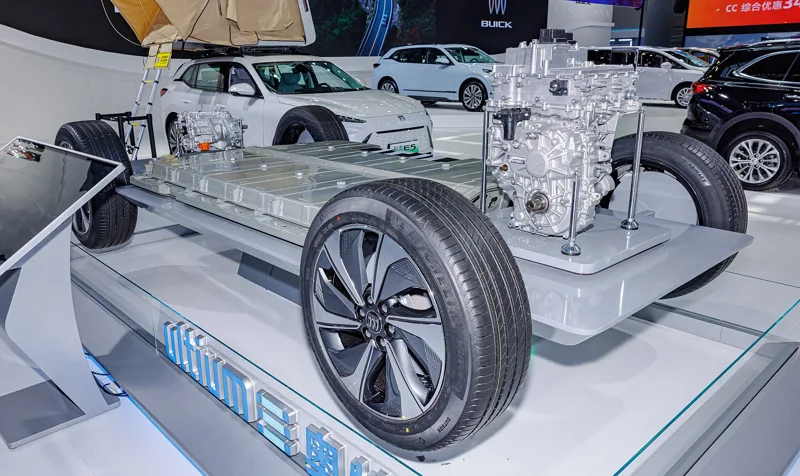
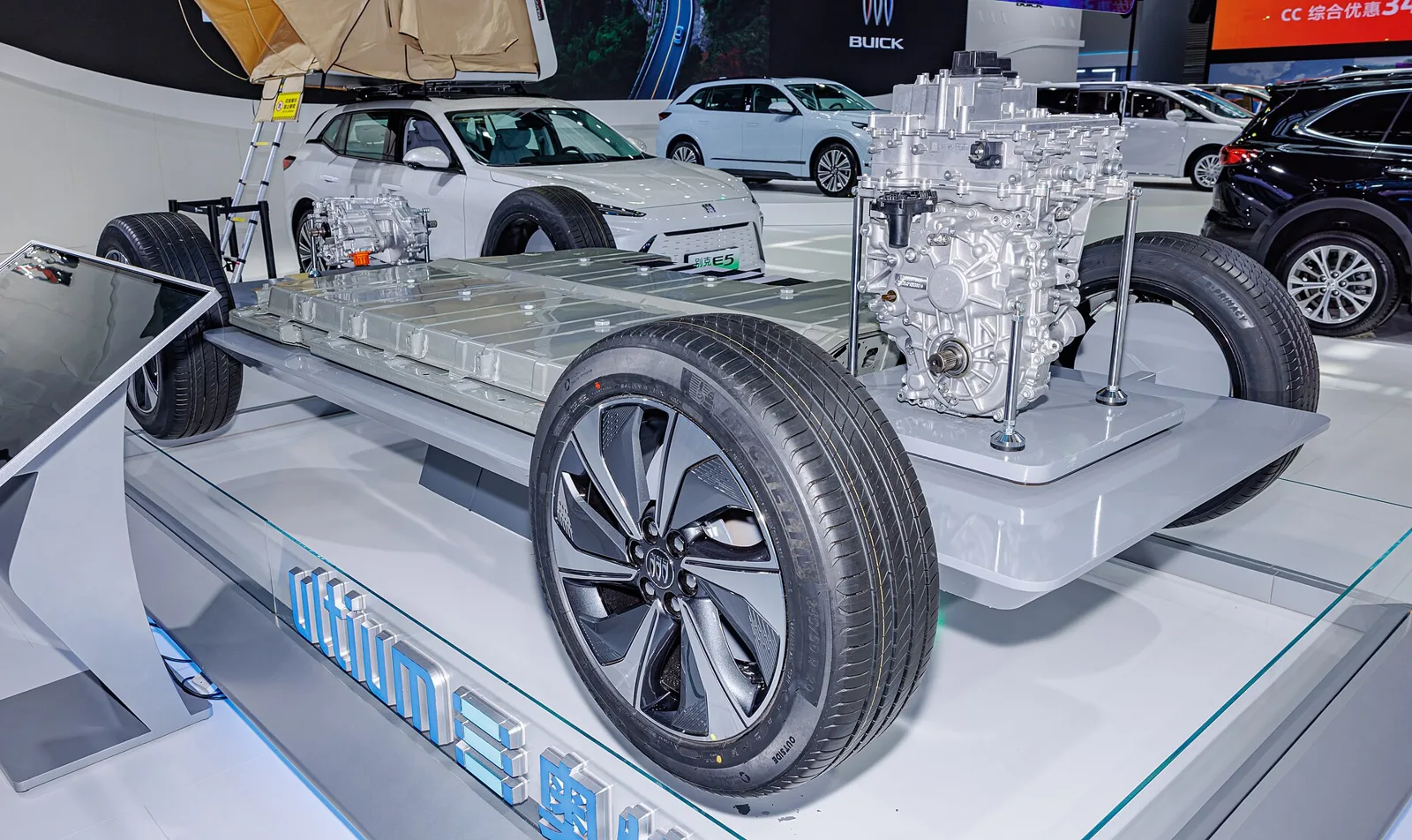
A battery pack in an electric car is built from many small cells, much as a torch might hold a row of ordinary batteries in a plastic carrier. The cell maker produces the chemistry and the individual units, and a pack builder assembles them with the casing and electronics. The companies below are best known for cells, although Samsung SDI also bought a pack business in 2015.
Three of the four have South Korean roots. LG Energy Solution and Samsung SDI are Korean giants, and SK On was Ford's partner in BlueOval SK, the joint venture that planned plants in Kentucky and Tennessee. Northvolt was the European outlier, a newcomer trying to build a continental champion from scratch.
Northvolt ran down to a week of cash and BlueOval SK was divided between its partners: two ways a cell-making plan can end.
LG Energy Solution: from a 1992 visit to Korea's biggest IPO
LG Energy Solution, usually shortened to LGES, is headquartered in Seoul and counts among the biggest battery makers anywhere. Its products go into electric vehicles and energy storage systems. Its story starts in 1992, when Koo Bon-moo, chairman of the LG Group, called at the office of the United Kingdom Atomic Energy Authority, came back with rechargeable battery samples and started research inside LG Chem.
LG Chem made South Korea's first lithium-ion battery in 1999. By the late 2000s it was supplying automotive batteries for General Motors' Chevrolet Volt, and over time the customer list grew to include SAIC Motor, Volvo, Renault, Audi, Chrysler and Ford.
The spin-off and the IPO
In September 2020 LG Chem announced it would spin the battery business out to cope with growing demand from carmakers. The new company took the name LG Energy Solution in December 2020, then floated on the Korea Exchange in January 2022 to raise money for more production capacity. At that point it was the biggest IPO South Korea had seen.
More recent events have shown how global the business has become. In the first half of 2025 LGES secured three court injunctions against Sunwoda over patent infringement. Separately, on 4 September 2025, United States immigration agents took LG employees and contractors into custody during a raid at Hyundai Motor Group Metaplant America.
The Bolt fires
One costly episode concerns the Chevrolet Bolt. General Motors attributed 13 confirmed fires to manufacturing defects in the car's batteries. The defective cells were made at LGES plants in South Korea and in Michigan, and GM sought reimbursement. LGES and LG Electronics eventually agreed to pay GM as much as $1.9 billion toward recalls of every car built since 2016.
Samsung SDI: from vacuum tubes to battery cells
Samsung SDI's early products were nothing like a battery. The company began in 1970 as Samsung-NEC, making vacuum tubes, moved on to cathode ray tubes by 1975, took the name Samsung Electron Device in 1984 and added liquid crystal displays two years later. By 1998 it had developed a cylindrical lithium-ion battery, and in 1999 it became Samsung SDI. AMOLED display production followed in 2007.
Today it runs two segments from Yongin in South Korea. Energy Solution makes rechargeable batteries for IT devices, vehicles and energy storage, and Electronic Materials supplies the chip and display industries. SNE Research put it sixth in the world in the first half of 2022, with 5 percent of the market.
Buying in and building out
The corporate path was not straight. In 2012 the European Commission fined Samsung SDI and several other companies for price fixing of television cathode-ray tubes. It merged with Cheil Industries in 2014 and in 2015 acquired the battery pack business of Magna International. In 2022 it started work on a solid-state battery pilot line in Suwon, which made its first production in 2023.
In October 2023 Samsung SDI had six cell plants: two at home in South Korea and four abroad, in Malaysia, Hungary, China and the United States. By 2024 Audi was among its customers.
The Hungarian plant allegations
In February 2026 the Hungarian news site Telex said that cancer-causing substances had been found at levels above 500 times the legal limit at the Goed plant, and alleged that the company neither fixed nor disclosed the problem. Agence France-Presse said the claims surfaced after a government surveillance report leaked. Critics quoted by both outlets argued that Hungary's government hesitated to shut the plant, given the economic and political cost. Hungary's Supreme Court later confirmed the plant's environmental certification.
Northvolt: the European battery champion that ran out of cash
Northvolt began in 2015 as SGF Energy, founded by Peter Carlsson and Paolo Cerruti, both of whom had previously planned supply chains and operations at Tesla Motors. It became Northvolt in 2017 and received a 52.5 million euro loan from the European Investment Bank for a demonstration plant in Vasteras. In March 2019 EURACTIV described it as fast becoming the EU's first stop for home-grown batteries.
Money and customers
The funding that followed was large. The European Investment Bank followed in May 2019 with an offer of 3.5 billion Swedish kronor, about 350 million euros. A month later Goldman Sachs, Folksam, BMW Group and Volkswagen Group said they would invest. Volkswagen put in 900 million euros for a 20% share and a board seat, and total investment reached US$1.6 billion, framed as a way to challenge the reported dominance of Tesla and Asian companies in the EV battery market.
The first battery at the Skelleftea factory was assembled in December 2021, with first customer cell deliveries in 2022. Northvolt Ett, as the plant is called, had a goal of 60 GWh and 3,000 employees at full strength. The company projected 16 GWh by 2024, enough for about 300,000 EVs.
Contracts and capital continued to arrive. In July 2020 Northvolt and BMW signed a 2 billion euro deal for batteries from 2024, which was cancelled in June 2024 because Northvolt could not deliver on time. Northvolt raised $1.2 billion in August 2023, and a classified interim report found by Dagens industri showed a net loss of about $1 billion, or 11 billion Swedish kronor, in the first nine months of that year. In January 2024 it raised a further $5 billion through green lending.
The unravelling
On 23 September 2024 Northvolt announced extensive staff reductions affecting 1,600 employees, with 1,000 positions in Skelleftea, 400 in Vasteras and 200 in Stockholm, and said it would discontinue the expansion of Northvolt Ett. Two months later came the Chapter 11 filing. Co-founder and chief executive Peter Carlsson resigned the next day, saying that long-term survival would take at least $1 billion. Investors began writing down their stakes, among them the Canada Pension Plan Investment Board and Investment Management Corp. of Ontario, which took a $400 million loss.
On 4 December 2024 Northvolt said it would sell off its industrial battery arm and wind up its energy storage unit. On 13 January 2025 it handed its last Hydrovolt shares, in the recycling arm, to Norsk Hydro, which paid 78 million Norwegian crowns ($6.79 million). On 12 March 2025 it applied for bankruptcy in Sweden, the largest in modern Swedish industrial history. A deal with key stakeholders let it carry on smaller, with about 1,700 employees instead of 5,000.
Questions about the production chain followed. Swedish public television SVT investigated and decided it was probable that very few cells had actually been sold, and that they were made from intermediate materials bought from other companies, contrary to Northvolt's promise of a whole chain at one site and "100% in Sweden". In May 2025 a former employee, Mikaela Lundh, published a book alleging that the leadership knew of significant production and financial problems as early as 2022. On 22 May 2025 the bankruptcy manager decided that the remaining limited production would be stopped during June.
What happened to the factories
Most of the gigafactories, built or under construction, were sold in a liquidation deal to Lyten, a United States lithium-sulfur battery company, during 2025. Northvolt Dwa, a 25,000 square metre plant in Gdansk with 6 GWh of annual capacity, opened in 2023 and was sold to Lyten in June 2025. Northvolt Drei, planned near Heide in Germany with 902 million euros of European Commission funding and construction from 25 March 2024, was bought by Lyten in November 2024. The California start-up Cuberg, acquired in November 2021, was shut down in November 2024 and its site resold to Lyten.
Other plans simply ended. Northvolt Fem, planned for Borlange, was shelved in late 2024 and the land sold back to the municipality. Northvolt Six near Montreal suffered delays of 12 to 18 months, and the Canadian government cancelled its partial funding. Novo Energy, the 2021 joint venture with Volvo Cars, was meant to start production in 2025, but on 30 October 2024 Volvo said it would use its redemption rights to buy Northvolt's shares because Northvolt had not met its financing obligations.
BlueOval SK: Ford and SK On's joint venture
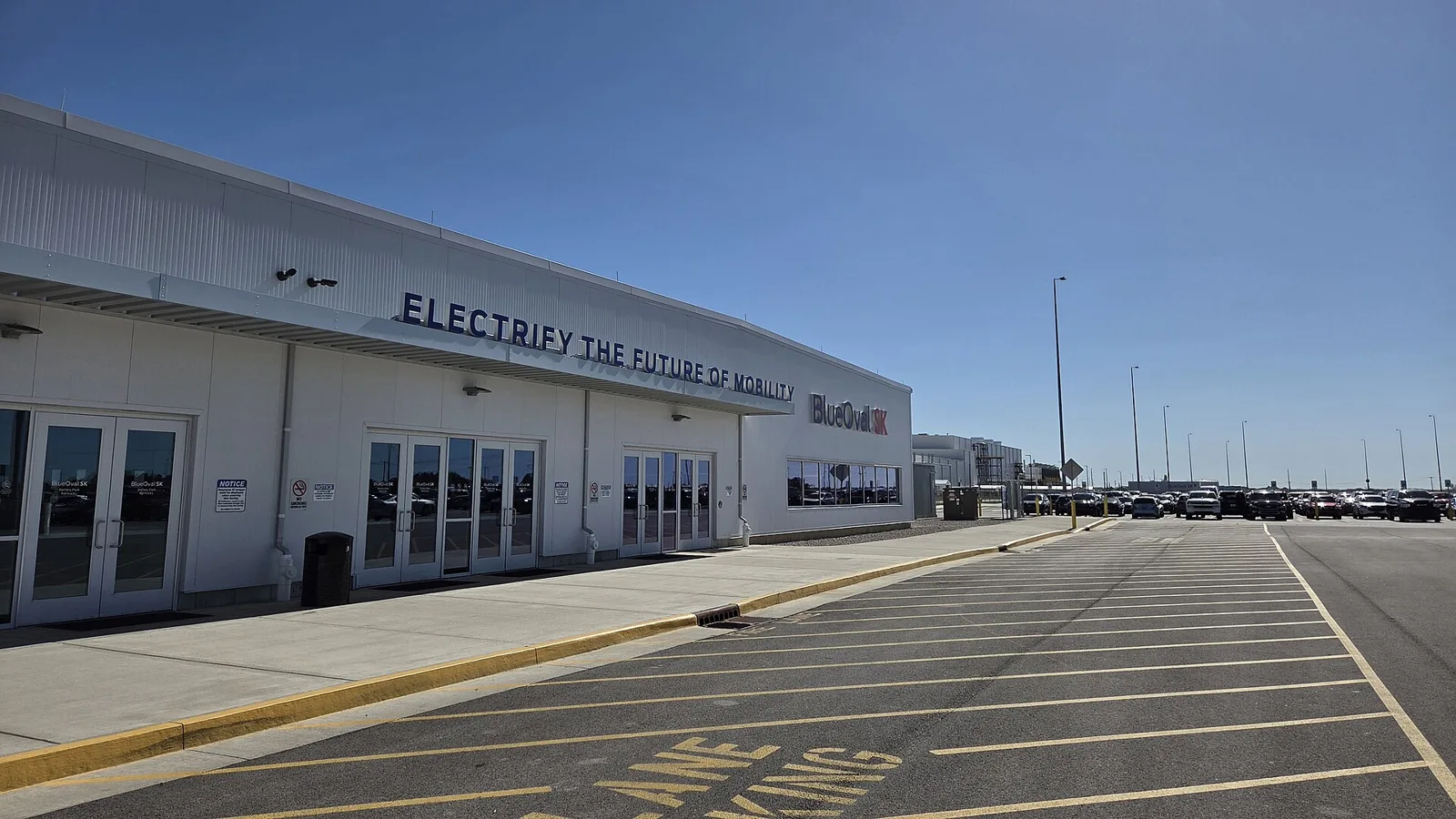
BlueOval SK, or BOSK, was an EV battery joint venture between Ford and South Korea's SK On that ran from 2021 to 2026, with batteries meant for Ford and Lincoln vehicles. Plans called for three plants, one in Tennessee and two in Kentucky, and Governors Andy Beshear and Bill Lee each described it as the biggest single investment their state had ever seen.
In May 2021 the two companies announced a memorandum for roughly 60 GWh a year by the middle of the decade and 11,000 jobs. That September, Kentucky set aside $350 million in forgivable loans, with $250 million for BOSK, and the sites were named as Stanton, Tennessee and Glendale, Kentucky. Groundbreaking began at both in 2022.
Loans, slowdowns and a split
The Department of Energy said in June 2023 that it would lend the venture $9.2 billion, and the loan was finalised in December 2024 at $9.63 billion. But in October 2023 Ford announced a slowdown in investments, BOSK among them, to match declining EV demand, and the second Glendale plant was delayed. In January 2025 the United Auto Workers petitioned for a vote on union representation at the Kentucky plant, production there began the week before the August vote, and BOSK contested the result on the grounds of ineligible ballots.
In December 2025 Ford halted plans for larger electric vehicles, citing regulatory, demand and cost issues, and agreed a disposition of the joint venture with SK On and SK Battery America. A Ford subsidiary would operate the Kentucky plants alone, and SK On would take Tennessee, where the electric vehicle centre in BlueOval City was rebranded the Tennessee Truck Plant. Ford's battery focus moved to energy storage for data centres and the electric grid.
The Kentucky workforce was to be laid off by February 2026, and about 2,100 people were due to be taken back in 2027 once the plant was retooled. In January 2026 the National Labor Relations Board cleared the union's certification to proceed, and BOSK planned an appeal. February brought word that Ford did not intend to run the second Kentucky building and would seek other manufacturers who might take it on. In March, 150 people were laid off at the Tennessee site.
The sites themselves have a history. BlueOval City occupies the Memphis Regional Megasite, a plot that sat without a tenant for years because of wastewater treatment problems. The Battery Park in Kentucky sits on land the state bought in 2002 in the hope of bringing in Hyundai.
Four ways into cell making compared
| Company | Base | Route into cells | Milestone | Where it stands |
|---|---|---|---|---|
| LG Energy Solution | Seoul, South Korea | Spin-off from LG Chem, whose battery work began in 1992 | Korea's first lithium-ion battery in 1999; IPO in January 2022 | Among the biggest battery makers anywhere |
| Samsung SDI | Yongin, South Korea | Electronics maker founded in 1970 making vacuum tubes | Cylindrical lithium-ion cell by 1998; solid-state pilot line in 2022 | Ranked sixth worldwide with 5 percent in the first half of 2022 |
| Northvolt | Stockholm, Sweden | Start-up founded in 2015 by two former Tesla executives | First Skelleftea battery in December 2021 | Bankrupt in Sweden on 12 March 2025; assets mostly sold to Lyten |
| BlueOval SK | Kentucky and Tennessee, United States | Joint venture of Ford and SK On announced in 2021 | US Department of Energy loan finalised at $9.63 billion | Joint venture divided between Ford and SK On in December 2025 |
What the battery maker means for a buyer
Behind each of these names sit carmakers whose customers never see them. LGES customers have included General Motors, Volvo, Audi, Renault, Chrysler, Ford and SAIC Motor, and as of 2024 Samsung SDI supplied Audi. BlueOval SK existed to supply Ford and Lincoln. Northvolt had a BMW supply deal until it was cancelled, Volkswagen as an investor and a joint venture with Volvo Cars.
The Chevrolet Bolt case shows why the cell maker matters after a car is sold. Battery defects traced to LGES plants led to recalls of every car produced since 2016, and the bill for the recalls was shared between GM and its supplier. A carmaker can recall a vehicle, but the fault can sit in a component built by another company.
Where this goes next
Samsung SDI's solid-state pilot line in Suwon began production in 2023. In Kentucky the BlueOval workforce is due back in 2027 after the retooling, with Ford's battery plans now pointed at energy storage, and the second building there is to be offered elsewhere. BOSK planned to appeal the union ruling, so the plant's future unionisation is open. In March 2025 Northvolt's scaled-back operations were seen as crucial to a possible sale of the business, and when the bankruptcy manager ordered the remaining limited production stopped during June 2025, efforts to sell certain parts of the company were reportedly going well.