How a small-car skateboard built with LG became GM's first dedicated EV in 20 years, why Ultium cells and drive units followed, and what happened when GM tried to end the Bolt.
BEV2 is GM's platform for small EVs, built with LG, and it underpinned the Chevrolet Bolt from 2017 to 2023. Ultium is GM's later battery and motor system, with modular pouch cells and five drive units. GM ended Bolt production in December 2023 and unveiled a new Bolt in October 2025.
General Motors ended Chevrolet Bolt production on 20 December 2023 to make room for its Ultium electric cars. Public outcry followed, and GM reversed course: a second-generation Bolt was unveiled on 9 October 2025, based on the previous Bolt EUV. The story links two GM electric architectures, BEV2 and Ultium.
What is the GM BEV2 platform?
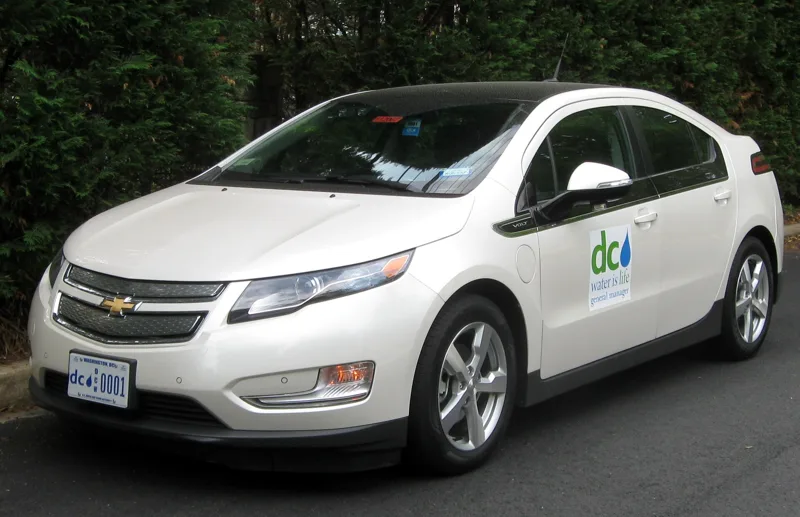
BEV2 is a General Motors platform designed specifically for small electric vehicles, built with extensive help from several divisions of LG. It underpinned the Chevrolet Bolt, the first dedicated electric car GM had built in 20 years.
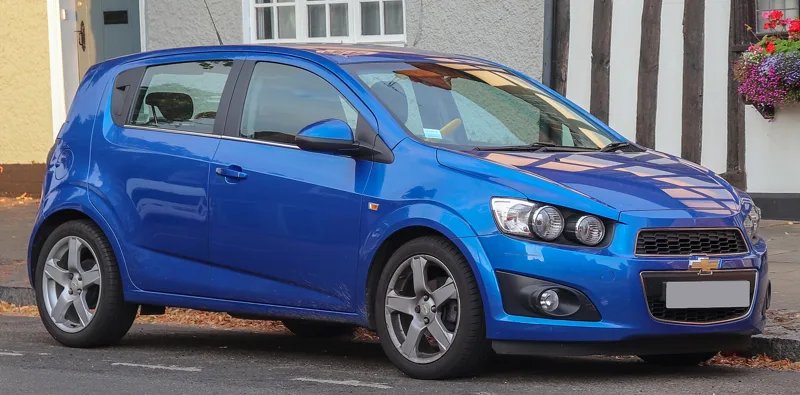
Despite the 2 in its name, BEV2 had no direct predecessor. The idea of a BEV1 actually refers to the EV1 of 1996 to 2003, a car separated from the Bolt by two decades. BEV2 is described as derived from the Gamma 2 platform used for the Chevrolet Sonic and Spark, but significant changes during the Bolt's development led GM to give it a unique designation.
The Gamma link is real in spirit. In 2011 GM finished developing an electric vehicle supplier base in China, which coincided with the Springo, an EV based on the Chevrolet Sail. The Spark EV followed in 2013 and sold until 2016, the year of the Bolt. GM said openly that Gamma was not the Bolt's starting point, yet the car's model codes began with G2, which hints at some influence.
GM ended the Bolt to make room for Ultium, then brought it back.
How was the Bolt designed?
A team of 180 people at GM Korea began work in 2012, creating a B-segment car with the project code G2KCZ. GM took charge of the traction motor, battery control system, powertrain integration and validation, while LG Chem designed the traction battery and other LG units supplied the vehicle electronics, infotainment included.
BEV2 has a skateboard-like chassis with the traction battery between the wheels and under the seats. The 2017 Bolt EV carried a 440 kg (960 lb) battery of 60 kWh feeding a front motor rated at 150 kW (200 hp), with 361 N m (266 lb ft) of torque. Its onboard charger took AC power at up to 7.2 kW, and a CCS DC port was optional at up to 50 kW. For the 2020 model year LG moved battery production from Korea to Michigan, and capacity rose to 66 kWh.
Inside, the EPA classes it as a small station wagon with 94 cubic feet (2,700 litres) of passenger space and 17 cubic feet (480 litres) of cargo space. The doors, tailgate and bonnet are aluminium, the driver can adjust the strength of regenerative braking, and over-the-air updates, planned for 2017, finally reached the car in April 2018. In Europe the Bolt was sold as the Opel Ampera-e, which was discontinued after 2018, although one account has the badge-swapped Bolt on sale in Europe until 2020, shortly after GM sold Opel and Vauxhall to Groupe PSA.
How did the Bolt reach the road?
Its concept appeared at the 2015 North American International Auto Show, and by June 2015 GM had tested more than 50 hand-built prototypes at its Milford proving grounds. The production car was shown at the Consumer Electronics Show in January 2016 with a projected range of at least 200 miles (320 km) and a price of around US$30,000 after incentives. Sales began in California in December 2016.
Production was a mix of continents. Final assembly took place at the Orion Assembly plant in Michigan, which received a US$160 million upgrade, while the battery, motor and drive unit came from LG in Incheon, South Korea, from August 2016. The Bolt shared a line with the Sonic, the two together building 90,000 a year, and early output ran at 9 cars an hour, rising to 30. Despite assembly near Detroit, only 20 per cent of its parts content was domestic.
Critics liked it. It ranked second among plug-in cars sold in the United States in 2017 and won Motor Trend Car of the Year, North American Car of the Year and a place in Time's list of the best 25 inventions of 2016. Worldwide sales of the Bolt and Ampera-e reached 112,000 by the close of 2020.
Profit was another matter. An unnamed person quoted by Bloomberg estimated GM would lose US$8,000 to US$9,000 on each car. Opel disputed this, saying GM's battery cell costs were $130/kWh, and a 2017 UBS tear-down suggested smaller losses, $7418 on a base car and $5520 on a higher-spec one, with a profit of about $6000 per car predicted by 2025.
What happened with the Bolt battery recalls?
In November 2020 GM recalled 50,932 Bolts from the 2017 to 2019 model years because high-voltage batteries made at LG Chem's Ochang plant could pose a fire risk when charged fully. Software limited charging to 90 per cent, and the National Highway Traffic Safety Administration confirmed five fires with two injuries and advised parking recalled cars outdoors.
On 20 August 2021 the recall widened to every Bolt EV and EUV from 2017 to 2022, nearly 142,000 cars. GM replaced the batteries, citing manufacturing defects by LG, and stopped production on 23 August 2021. Assembly did not resume until 4 April 2022. GM expected the cost to be $1.8 billion, and LG Chem ended up paying $1.9 billion. Cars repaired this way get the 259-mile (417 km) range of the 2020-and-later Bolt and an 8-year warranty on the new battery. Some of the recalled packs found a second life as grid batteries.
What were the Bolt EUV and the other BEV2 cars?
The Bolt EUV, short for electric utility vehicle, was presented on 14 February 2021. It is a larger version of the Bolt with an extended wheelbase, built on the same BEV2 platform and sharing its powertrain. A Bolt-like crossover, the Buick Velite 7, had launched in China in 2020. For the 2022 model year the Bolt itself gained new front and rear styling, a revised interior, shifter buttons and faster home charging, 48 amps rather than 32.
Not every GM EV is a BEV2 car. The Buick Velite 6 and Chevrolet Menlo in China, for example, have a different wheelbase and motor and do not use the platform.
Why did GM try to cancel the Bolt?
GM wanted the space for trucks and a new generation of electric cars. In January 2022 it announced a $4 billion retooling of the Orion plant to build the Chevrolet Silverado EV and GMC Sierra EV from 2024, and expected the Equinox EV on Ultium to fill the affordable segment. On 25 April 2023 CEO Mary Barra said the Bolt and Bolt EUV would end at the close of the year.
Public outcry followed. By 25 July 2023 Barra was talking of a second-generation Bolt, this time with Ultium hardware and Ultifi software, in the Bolt EUV body style only. Production ended on 20 December 2023. The second-generation car was unveiled on 9 October 2025 and goes on sale in 2026 as a 2027 model, with lithium iron phosphate Ultium cells. In July 2025 GM Authority reported that the 2027 Bolt would rely on the BEV2 platform rather than a clean-sheet design, which sits uneasily with the earlier Ultium plan.
What is Ultium?
Ultium is GM's electric vehicle battery and motor architecture, used across GM brands and in vehicles from Honda and Acura. GM revealed it during a week-long event in March 2020 at its Technical Center in Warren, Michigan, and added the Ultium Drive name for the drivetrain components six months later.
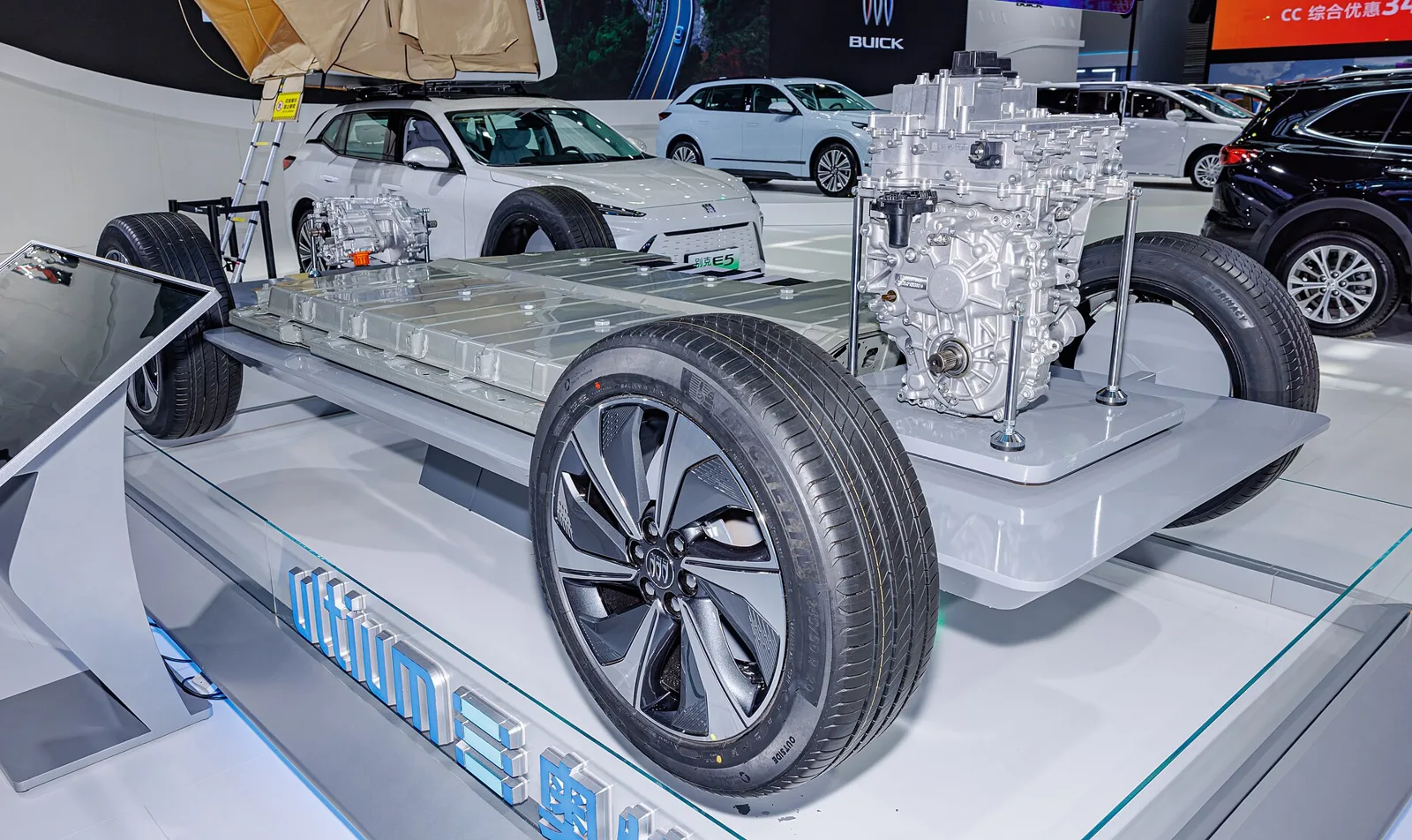
The layout is modular. An Ultium battery supplies one or two Ultium Drive units, which share a common set of power electronics for charging, battery management and inversion. The pouch cells can be piled flat or on edge, depending on the vehicle, and the pack sits between the axles under the floor. Three electric motor designs share a common stator. Ultium underpins GM's BEV3 and BT1 platforms.
What is in Ultium Drive?
Ultium Drive comprises five drive units and three traction motors. The planned motors are a 180 kW (245 PS; 241 hp) permanent-magnet motor for front drive, a 255 kW (347 PS; 342 hp) permanent-magnet motor for front or rear drive, and a 62 kW (84 PS; 83 hp) induction motor that assists all-wheel drive. The Hummer EV prototype revealed in March 2020 is permanently all-wheel drive, with a 255 kW motor up front and two more at the back.
Each drive unit is a one-speed reduction gearbox that accepts one or two motors, with the control modules for the inverter, onboard charger and accessory power built in. That integration brings the combined mass down to half that of the equivalent Chevrolet Bolt EV components. The five units are an all-wheel-drive assist unit, a front-drive unit, a rear-drive unit, a front or rear unit for trucks and a dual-motor rear unit for trucks. In the Hummer EV the reduction ratios are 13.3:1 at the front and 10.5:1 at the rear. Mass production of Ultium Drive was scheduled to start in 2024 at GM's Toledo and St. Catharines propulsion plants.
How does the Ultium battery work?
Ultium cells are large-format pouch cells using nickel-cobalt-manganese-aluminium chemistry, built by Ultium Cells LLC, the GM and LG Energy Solution venture. In China the cells are cylindrical and use nickel-manganese-cobalt chemistry from CATL. After GM and Samsung SDI agreed a joint venture for a fourth US plant in April 2023, prismatic and cylindrical cells are also due to be made in the United States.
Each pouch cell measures about 584 by 102 by 10 mm, weighs 1.36 kg (3.0 lb), stores 0.37 kWh at a nominal 3.7 V and holds 280 Wh/kg. Cells are combined into modules of 24, 20 or 12 cells, and a pack uses 6 to 24 modules, so capacity can run from 50 to 200 kWh. The Hummer EV pack has 24 modules and 576 cells, stores 212.7 kWh of usable energy and weighs 1,326 kg (2,923 lb). Its two layers sit at 400 V, but they can be switched into series for 800 V charging at up to 350 kW. The Cadillac Lyriq has a 12-module pack, charges at up to 190 kW and runs at 400 V nominal.
Ultium also uses a wireless battery management system, which GM developed with Analog Devices. It is the first such system from any automaker and, according to GM, needs 90 per cent less wiring and 15 per cent less volume.
Costs are central. In 2010 the Chevrolet Volt's 16 kWh battery was thought to cost about US$1,000 a kilowatt-hour, and the Bolt's 60 kWh pack was priced at about $262/kWh in 2017, although GM had negotiated $145/kWh with LG Chem. GM estimates Ultium will cost about $100/kWh, a 90 per cent reduction, helped by 70 per cent less cobalt than the Bolt's battery and wiring cut by 88 per cent.
Where does Ultium production stand?
| Plant | Location | Opening | Capacity per year |
|---|---|---|---|
| Ultium Cells | Warren, Ohio | September 2022 | Below the 50 GWh of the next two plants |
| Ultium Cells | Spring Hill, Tennessee | March 2024 | 50 GWh |
| Ultium Cells | Lansing, Michigan | Late 2024 | 50 GWh |
| GM and Samsung SDI | New Carlisle, Indiana | 2026 | More than 30 GWh |
GM also opened an Ultium Center in Shanghai in October 2021 to make batteries and motors for China. In 2022 the US Department of Energy lent Ultium Cells $2.5 billion, its first loan to a battery cell producer under the Advanced Technology Vehicles Manufacturing programme. In January 2023 GM and LG paused plans for the fourth plant, and Samsung SDI joined later that year.
Ramp-up proved hard. Problems with the machines that assemble cells into modules caused delays during 2023, and it proved impossible to lift speed from 5 to 30 modules per hour per line, so GM added lines. Low cell output made GM idle BrightDrop Zevo van production in July 2023, and module lines were added at CAMI Assembly, Factory Zero, Spring Hill and Ramos Arizpe. By the end of 2023 the Ohio plant was running at full capacity. Spring Hill began shipping cells in March 2024, and in December 2024 GM said it would sell its stake in the Lansing plant to LG, with the deal due to close early in 2025.
Several milestones remain ahead. The Spring Hill plant is due to be retrofitted and targets lithium iron phosphate production by late 2027, and the Indiana plant with Samsung SDI is scheduled to open in 2026. A report in January 2023 said GM was weighing cylindrical cells, which would reduce volumetric energy density but could cut production time and costs.