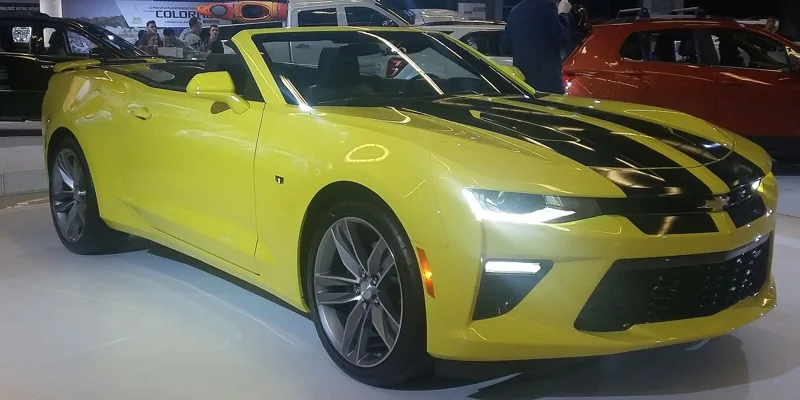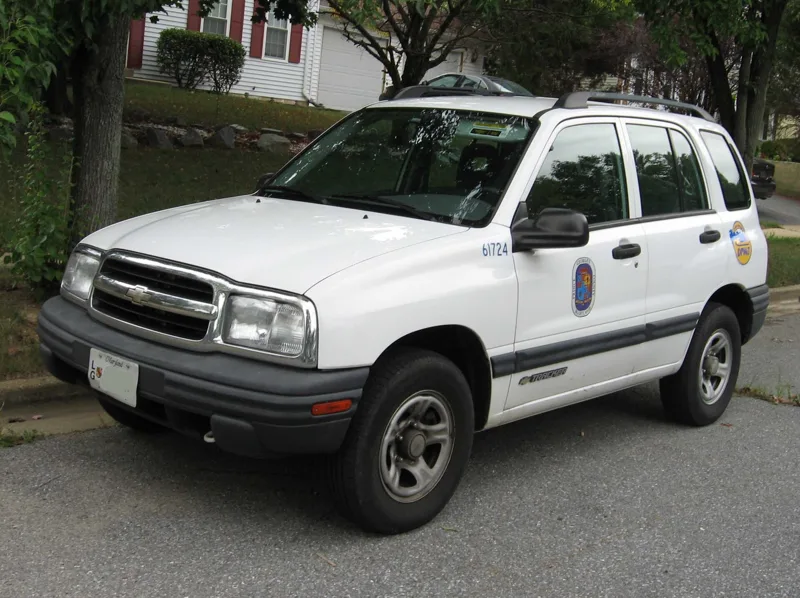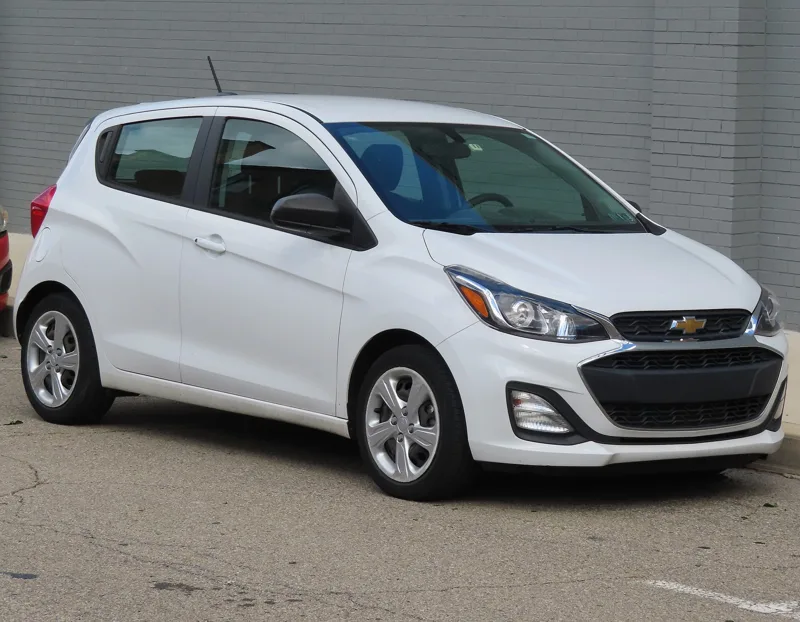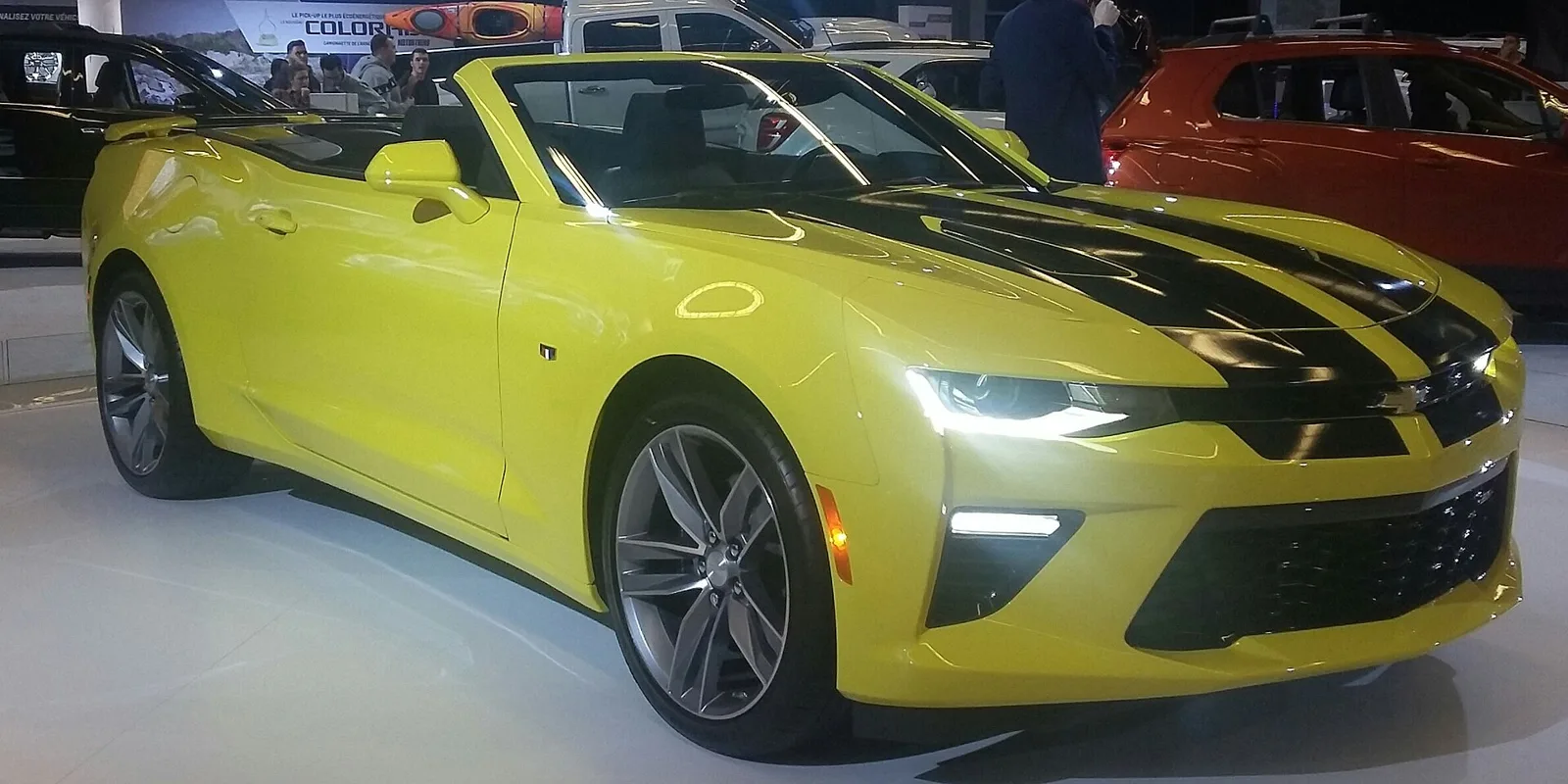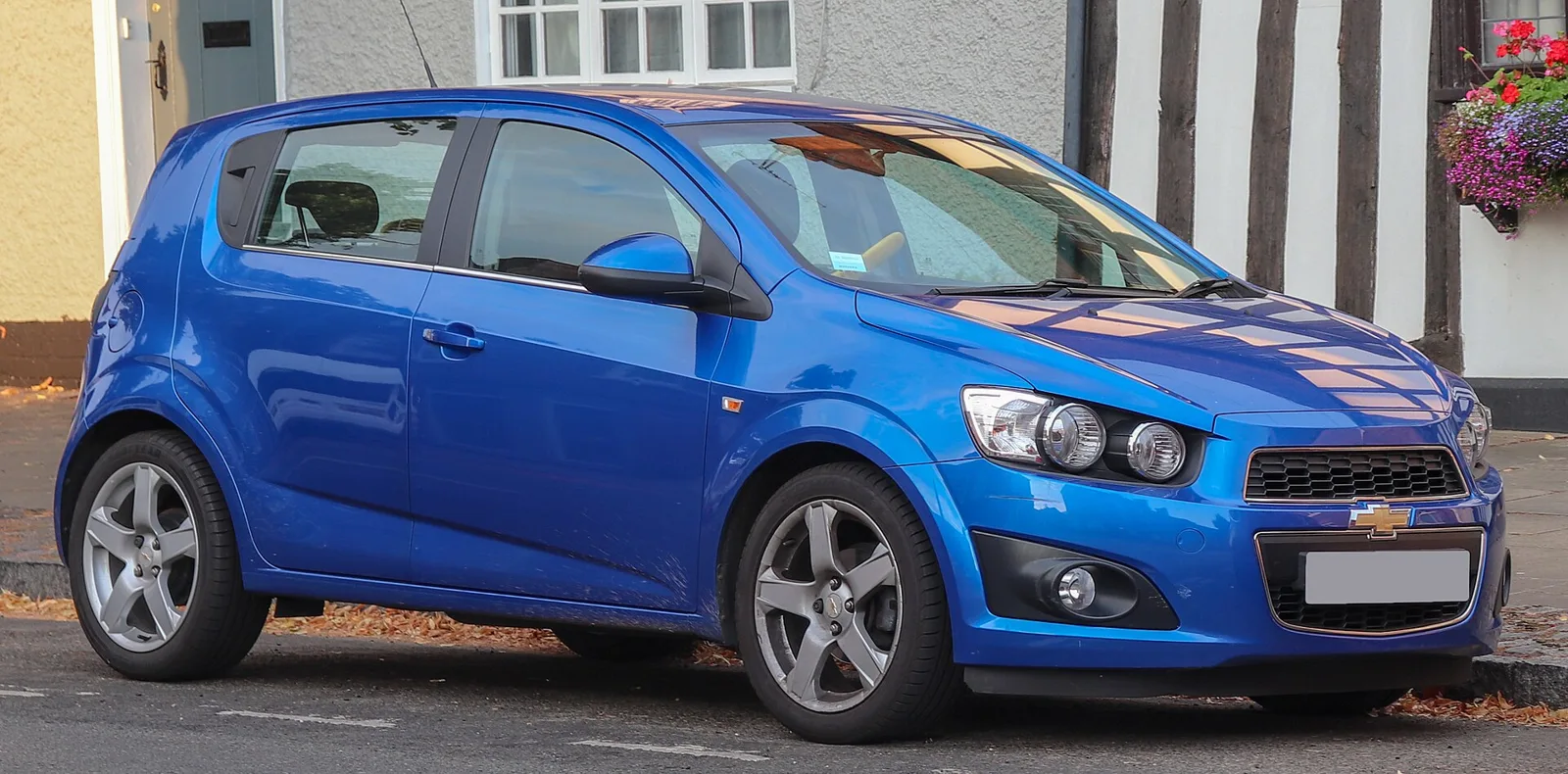
One Korean company, four model families and badges from Daewoo, Holden, Suzuki, Buick and ZAZ.
GM Daewoo's Aveo, Lacetti, Captiva and Orlando were South Korean designs sold as Chevrolets, and also under Holden, Suzuki, Buick and other badges, in many markets around the world. The Aveo alone reached 120 countries under seven brands, after General Motors took over Daewoo and renamed the company GM Daewoo.
One small hatchback from Korea ended up on sale in 120 countries under seven different badges, among them Holden, Pontiac, Suzuki and ZAZ as well as Chevrolet and Daewoo. It began life as the Daewoo Kalos, a car designed while its maker was in financial trouble, and General Motors turned it into the Chevrolet Aveo. The same trick, applied to the Lacetti, the Captiva and the Orlando, put cars from one South Korean company on forecourts from Bogota to Bangkok.
How did the Daewoo Kalos become the Chevrolet Aveo?
General Motors took over Daewoo after its bankruptcy and gave the first new model of the combined company, the Kalos, a global career. Introduced in September 2002 as a replacement for the Lanos, it was rebadged as the Chevrolet Aveo and sold in 120 countries under seven brands, which makes it the widest-travelled car in this story.
The Kalos was in development before Daewoo's collapse, so the takeover left GM with a nearly finished car. Production began in early March 2002 and prototypes appeared at the Geneva show that April. Italdesign drew the shape, from the Kalos Dream concept shown at the Paris Motor Show in 2000, over a three-year development in which Daewoo was struggling financially. The name came from the Greek kalos, meaning beautiful and good. Bodies were a four-door sedan and five-door hatchback, with a three-door hatchback added in certain European markets from 2005.
Two faces were sold. The first had headlamps detached from a strip of amber indicators beneath them, with a semi-elliptical grille, and was used mainly in South Korea and North America. European cars from 2003 had integrated lamps slanting up from a V-shaped grille, and Australian hatchbacks followed suit. In 2005 GM showed a heavily revised sedan at Auto Shanghai, designed with its Chinese partner PATAC and called Gentra in South Korea. A new dashboard and better sound deadening came with it, and a wind-tunnel programme cut the drag coefficient from 0.348 to 0.326. The matching hatchback appeared as the Chevrolet Aveo at the 2007 Frankfurt show, while South Korea got its own Gentra X, and a bumper without the Chevrolet split grille went on the Pontiac, Holden and Suzuki versions. In the United States the Aveo was pitched as the cheapest new car on sale.
Further afield the design was licensed. Ukraine's ZAZ built it as the Vida from early 2012, starting with 15% Ukrainian components and raising the share to 51%, and made 10 thousand cars that year. A Vida Cargo van with a 750 kg capacity followed in 2016. In Uzbekistan and Russia the refreshed sedan became the Ravon Nexia R3 in 2016, with a 105 hp 1.5-litre engine, renamed Chevrolet Nexia after 2020 and discontinued in 2023.
One Korean maker's cars went round the world under badges chosen by each market, and Chevrolet was only the most common.
What was the second-generation Aveo, or Chevrolet Sonic?
The next Aveo was shown at the 2010 Paris show on the new Gamma II global subcompact platform, and in many markets it was called the Chevrolet Sonic. Production of this generation ended on 20 October 2020. In Australia and New Zealand it was the Holden Barina.
GM Korea led development, with Opel engineers running the platform and help from Holden and Chevrolet in the United States. Exterior design came from Kim Tae Wan and the Australian Ondrej Koromhaz, who described his target as a four-seat motorcycle, hence the exposed headlights and a motorcycle-style instrument cluster. A preview concept, the Aveo RS, had a 1.4-litre turbo engine of 103 kW with a six-speed manual gearbox.
The Sonic was sold in the Americas, Japan, the Middle East, South Africa and parts of Southeast Asia, while Europe kept the Aveo name until sales ended in 2014. The North American car came with a 1.8-litre four of 101 kW or a 1.4-litre turbo of 103 kW, and no rival in its class was assembled in America. Orion Assembly started production on 2 August 2011. It used a water-based paint process that dispensed with a primer bake oven, cutting the paint shop footprint by 10% and energy per car by half. By 2016 the Bolt was sharing the line, and the two together were building at a rate of 90,000 a year.
Elsewhere the car was built in Thailand, from July 2012 at Rayong until 2015, in Bogota, and in Nizhny Novgorod in Russia until the contract ended in 2015. Japan received a five-door with a 1.6-litre engine of 85 kW in November 2011. Safety was a weak point of the cheapest cars: the barest Latin American Aveo earned 0 stars for adult occupants from Latin NCAP in 2015 and again in 2017.
In marketing, GM had the skateboarder Rob Dyrdek flip a Sonic off a ramp in a full rotation and built a Super Bowl XLVI commercial around the stunt. The end came in stages: the Sonic left Canada after 2018, the Aveo left South Korea in March 2019, and the United States lost the Sonic after the 2020 model year because GM planned to convert the Orion plant to electric vehicles and sales had slipped. No successor is planned.
The Sail-based Aveo and the third generation
The name did not die. In several Central American countries it moved to the Chinese-made Chevrolet Sail, which reached Mexican showrooms in November 2017 as a budget car alongside the Sonic. A new third generation, code 310C, was introduced in December 2022 and launched in Mexico in February 2023, as a hatchback and sedan built by SAIC-GM-Wuling. In Chile and nearby countries it is the Sail, and in Egypt it is the Optra.
Why did the Daewoo Lacetti have so many names?
Because it was sold under the badges of whichever brand each market had. The Lacetti, a compact car made since 2002 by GM Korea, was also the Daewoo Nubira, Suzuki Forenza, Suzuki Reno, Chevrolet Optra, Chevrolet Nubira and Holden Viva, depending on body style and country.
The sedan and wagon were styled by Pininfarina and the hatchback by Giorgetto Giugiaro. The name derives from the Latin lacertus, meaning youthful. The sedan was launched in South Korea on 25 November 2002 after two and a half years of development, and the hatchback prototype appeared at Frankfurt in September 2003, with the wagon at Geneva in March 2004. In 2008 a second-generation Lacetti Premiere appeared, which was a badge-engineered Chevrolet Cruze, and the Daewoo brand ended at the start of 2011.
Each market told its own story. In Australia the Daewoo sedan lasted only from September 2003 to December 2004, when Daewoo withdrew; from 2005 the cars were sold as the Holden Viva, priced at A$17,990 against A$21,990 for the Astra above it, though the Astra outsold it by about two to one. The Viva ended in mid-2009 when the Cruze arrived. In Canada the Optra was sold as a sedan, hatchback and wagon with a 2.0-litre engine of 89 kW and a $12,000 price; its fuel economy, 10.7 and 7.4 L/100 km, was worse than larger mid-size cars, and the last Canadian model year was 2007.
In China the car became the Buick Excelle, whose first-generation sedan carried on until 2016. Europe saw it first as the Daewoo Nubira at the Frankfurt show in September 2003, then as the Chevrolet Nubira in Eastern Europe in early 2004, and by the end of 2004 as the Chevrolet Lacetti across the continent. Engines ranged from a 1.4-litre of 70 kW to a 2.0-litre diesel of 121 PS. India had the Optra from 2004, and the sedan sold there until 2013. In Pakistan sales were poor because Chevrolet was a recent arrival with few dealers, competing with Toyota, Honda and Suzuki. In Japan, where Suzuki distributed it, its width of over 1,700 mm triggered a higher annual tax. Mexico had it as the Optra from 2006, replacing the Cavalier, until the Cruze took over after 2009.
What was the Chevrolet Captiva?
The Captiva is a compact crossover SUV developed by GM Korea from the 2004 S3X concept and released in 2006. It was sold as the Chevrolet Captiva, the Holden Captiva in Australia and New Zealand and the Daewoo Winstorm in South Korea until 2011.
The first generation sat on the GM Theta platform and shared much with the Opel and Vauxhall Antara and the second-generation Saturn Vue. Buyers could choose five or seven seats, and standard safety kit included ABS and electronic stability control. Euro NCAP gave it four stars out of five. Engines came from several places: a Holden-built V6 and four-cylinder petrol units from Australia, and turbo-diesels, 2.0 and 2.2 litres with 163 and 184 PS, made with VM Motori.
The Captiva travelled widely. It reached Vietnam in 2006, assembled from kits with 20% local parts; 8,500 were sold there between 2006 and July 2009. Thailand built it at Rayong from 2006 to 2018, and China sold it from November 2007 until 2017. When GM renamed GM Daewoo as GM Korea in March 2011 and phased out the Daewoo name, the Winstorm became the Captiva. Japan got it on 30 July 2011, the first GM model sold there since the company went through its chapter 11 reorganisation in June 2009. In Australia and New Zealand the Holden Captiva ran from November 2006 to 2017, with production briefly moved to Thailand in 2007 while the Korean plant was upgraded, and the seven-seat models were renamed Captiva 7 when a cheaper five-seat version arrived in December 2009.
On 13 September 2018 Chevrolet announced that the first generation would end and be phased out globally in favour of the Equinox. The second generation, which reached Colombia in November 2018 and Thailand in March 2019, is a rebadged Baojun 530 built by SAIC-GM-Wuling and sold in many emerging markets, positioned between the Tracker or Trax and the Equinox. In 2025 the maker announced a Captiva EV and PHEV, based on the Wuling Starlight S, for sale in Latin America, the Middle East and the Philippines.
What was the Chevrolet Orlando?
The Orlando is a three-row compact MPV that Chevrolet sold from 2010 to 2023. The first generation was developed and made mainly by GM Korea, and the second generation, launched in 2018, is built and sold only in China by SAIC-GM.
The concept appeared at the 2008 Paris show with a 150 PS turbo-diesel, and GM previewed the production version in August 2009. Production began at Gunsan, South Korea, in October 2010, and the Korean market launch in February 2011 billed it as an Active Life Vehicle. It rode on the Delta II platform shared with the first-generation Cruze and the third-generation Opel Zafira, but its plastic wheel arches and boxy shape gave it a rugged, crossover-like look. GM had intended to sell it in the United States, then reversed the decision in May 2010. Canada got it from mid-2011 to 2014, and Europe from 2011 until Chevrolet withdrew from that market in 2014; Russia stopped in 2015.
Engines varied: a 2.4-litre petrol in Canada, 1.8 petrol and 2.0 diesel in Europe, and LPG and diesel versions in South Korea, where a 1.6-litre diesel sourced from Opel arrived in 2015 to meet Euro 6. First-generation production ended in 2018 when GM closed the Gunsan plant. The Chinese second generation uses a 1.35-litre three-cylinder turbo making 116 kW (158 PS).
The four Daewoo-built families compared
| Daewoo-built model | First shown or launched | Main Chevrolet name | Other badges |
|---|---|---|---|
| Kalos | 2002 | Aveo, then Sonic | Daewoo, ZAZ, Holden, Pontiac, Ravon, Suzuki |
| Lacetti | 2002 | Optra, Nubira, Lacetti | Suzuki Forenza and Reno, Holden Viva, Buick Excelle |
| Captiva | 2006 | Captiva | Daewoo Winstorm, Holden Captiva |
| Orlando | 2010 | Orlando | None listed |
Why do the newest Captiva, Orlando and Aveo come from China?
It shifted to China. The Daewoo name went in 2011, Chevrolet left Europe in 2014, Gunsan closed in 2018, and the later Captiva, Orlando and Aveo now come from Chinese joint ventures such as SAIC-GM and SAIC-GM-Wuling.
The Korean-built originals gave way one by one. The Sonic ended in 2020, the first-generation Captiva in 2018 and the first-generation Orlando the same year. Their successors keep the names but are Chinese designs, and the Captiva is joining an electric and plug-in hybrid line in 2025.