How a Zaporizhzhia farm-machinery works became the maker of the rear-engined Zaporozhets, the front-drive Tavria and Ukraine's biggest car plant, then slipped into decline.
ZAZ is Ukraine's main automobile manufacturer, based in Zaporizhzhia and descended from a farm-machinery works. It built the rear-engined Zaporozhets from 1960 and the front-drive Tavria from 1988, then declined after its 2007 peak.
ZAZ, short for the Zaporizhzhia Automobile Building Plant, is Ukraine's main automobile manufacturer. It makes cars, buses and trucks in the south-eastern city of Zaporizhzhia, and the public often knows it by its former parent name, AvtoZAZ. Its best-known car is the rear-engined Zaporozhets, nicknamed the humpbacked Zaporozhets.
Where did the ZAZ plant begin?
The date of the plant's foundation is considered to be 1863. The company that became ZAZ grew out of businesses founded by the German-born entrepreneur Abram J. Koop, who made agricultural machinery in a factory that produced iron parts for windmills, reapers, threshers and ploughs.
The works was later nationalised and restarted as the state-run Kommunar factory, which produced twenty-four types of machine. Its first combine harvesters appeared in 1929, and 129,724 had been built by 1952, not counting the war years.
In 1930 Kommunar began producing the first Soviet harvester, based on an American horse-drawn design. Its success meant the Soviet Union no longer had to import harvesters from abroad.
A farm-machinery works in Zaporizhzhia built the Zaporozhets, a people's car that outlived its era and ended in commercial vehicles.
How did a harvester works turn to cars?
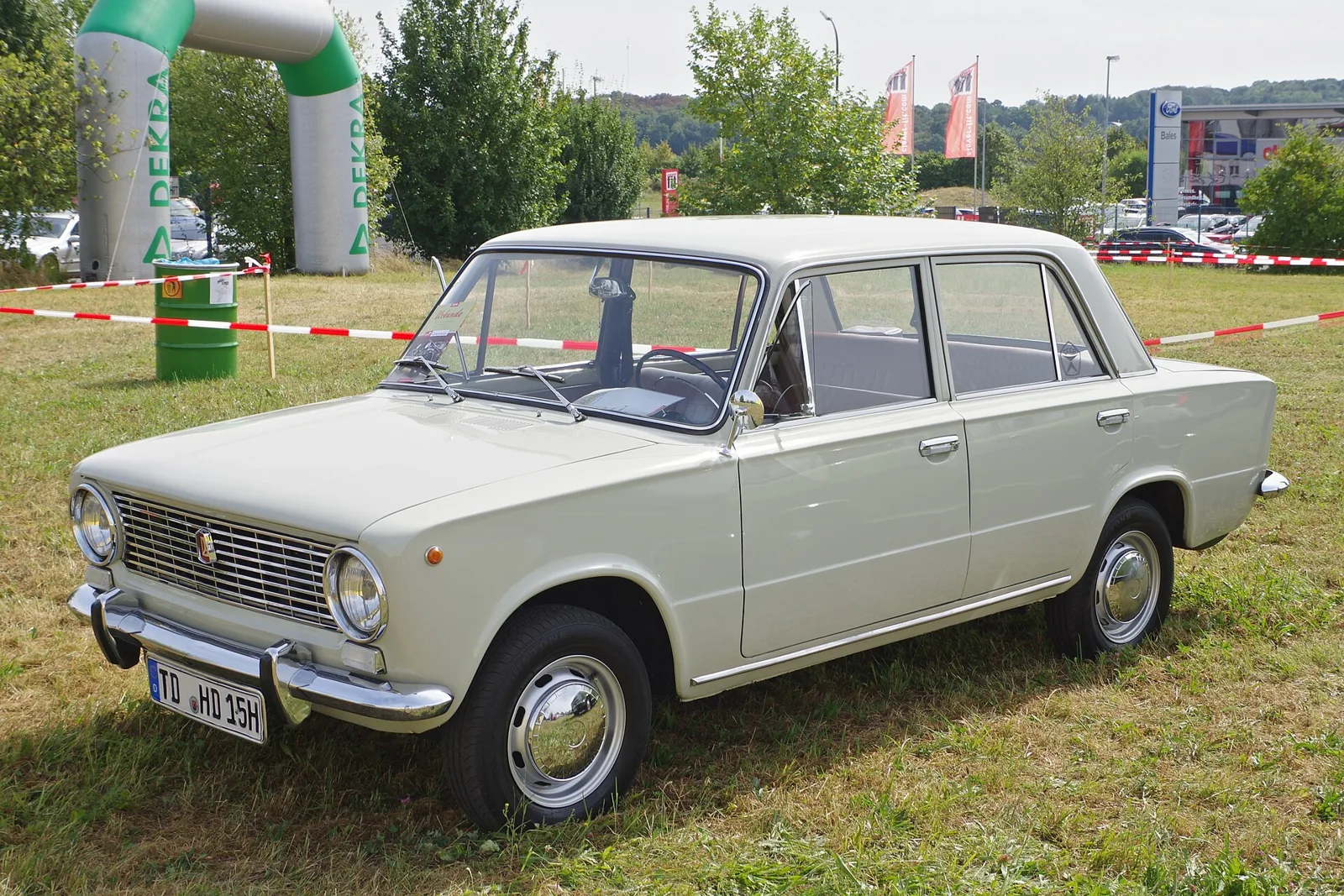
In 1956 the company, then known as MZMA, began mass production of the Moskvitch 402, one of the Soviet Union's most accessible cars. The Soviet automotive ministry, Minavtroprom, selected the Fiat 600 as the model to follow, because small cars were then a large share of European sales.
The first prototype, the MZMA 444, appeared in October 1957. It used a flat twin-cylinder engine that produced only 17.5 hp (13.0 kW; 17.7 PS) and needed major overhauls far too often. The search for a new engine led to an air-cooled design, the NAMI-G V4 of 746 cc, which the ministry preferred.
On 28 November 1958 the new car was approved for production, and the company's name changed to ZAZ, reflecting its new profile. The Zaporizhzhia factory was supplemented by a diesel-building works in Melitopol.
What was the Zaporozhets?
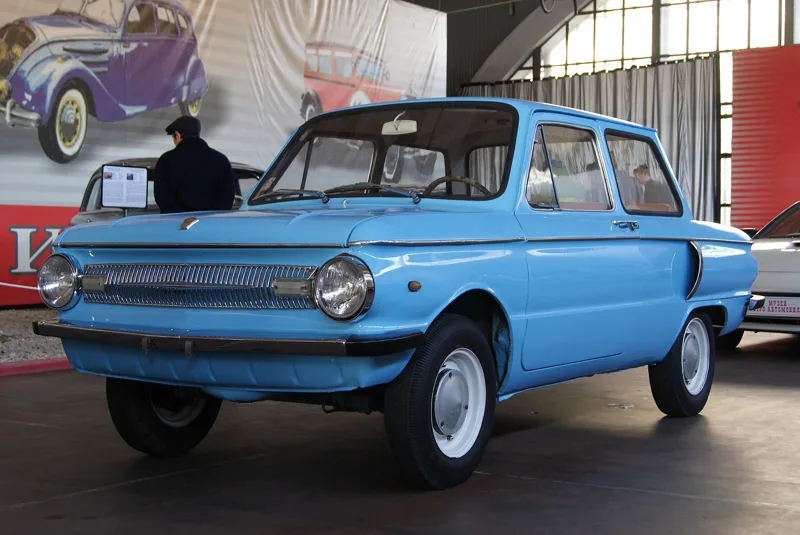
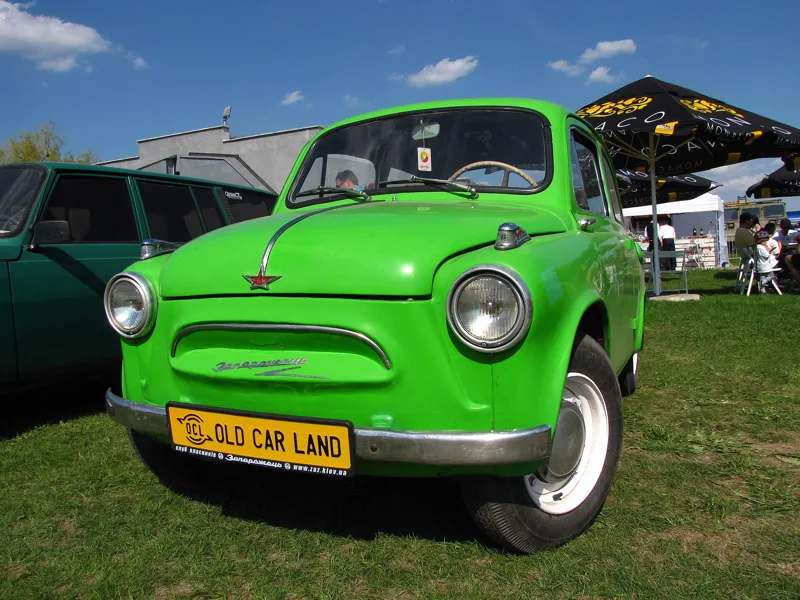
The prototype of the first car, the ZAZ-965 Zaporozhets, was delivered on 12 June 1959. It was approved on 25 July 1960 and entered production on 25 October 1960, although serial machines had begun on 1 October 1960 and about one and a half thousand were built by the end of that year.
The car was a rear-engined microcar with a compact, four-seat body, and its operating fuel use of 7.3 litres per 100 km compared well with the 10 litres of the Moskvich 402. Its length of 3.33 m made it easy to manoeuvre, and its independent suspension on all wheels gave good ground clearance.
For several years the factory built essentially one car. The Melitopol Motor Plant began supplying engines to the Zaporizhzhia works in 1960, and it joined the AvtoZAZ production association in 1975, when the car was already part of the plant's identity.
The Zaporozhets also had clear weaknesses. Its noise annoyed rear passengers, its doors opened against the direction of travel, and its fuel tank sat in front of the body, which was poor for fire safety. Many owners also found the power too low.
How did the Zaporozhets develop over time?
In October 1962 the modernised ZAZ-965A arrived. Its engine grew from 746 to 887 cc, and power rose from 22 to 27 hp, lifting the top speed from 80 to 90 km/h. It was built until 1969.
The ZAZ-966 took six years to reach production, because the leadership considered it unwise to launch a new model a year after the last. It used a 40-horsepower MeMZ-966V engine, which could push the car to 120 km/h on a straight road, although few drivers came close to that speed.
From 1969 the ZAZ-968 followed on the 966 platform, and in 1975 the ZAZ-968A added a new brake system and improved front seats. The ZAZ-968M was the last domestic car with a rear engine, and it was built until 1 June 1994 with 45 hp and 50 hp versions.
In total, from 1960 to 1994, 3,422,444 Zaporozhets cars were manufactured in Zaporizhzhia, with air-cooled engines made in Melitopol.
When the plant's 130th anniversary was celebrated in September 1993, the procession opened with one of the first Zaporozhets cars, decorated with a banner marking the cars built in those early years.
In 1975 the factory was folded into the AvtoZAZ holding, which became a joint-stock company in the 1990s. In 1986 ZAZ, together with Comau, installed a new production complex, and the Illichivsk parts plant on the Black Sea joined the AvtoZAZ holding.
What was the Tavria and why did it matter?
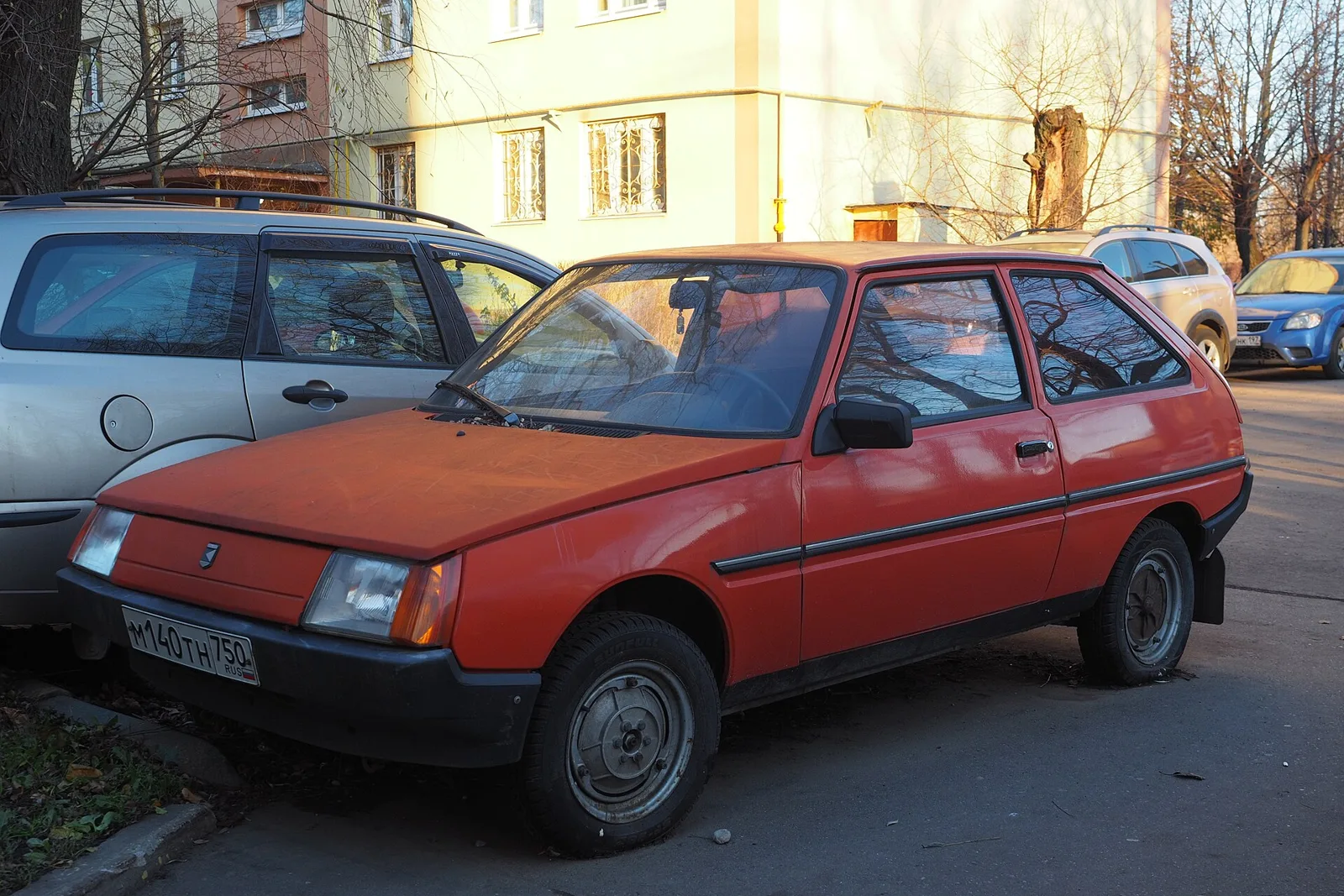
The ZAZ-1102 Tavria was a front-wheel drive car whose development spanned many years. The first front-drive concept with the Tavria name appeared in 1970 under chief designer Steshenko, and testing revealed shortcomings that stopped its progress.
Two experimental versions followed in 1973, a hatchback and a saloon, but neither was put into mass production. A 1976 all-wheel-drive version then adopted more modern styling for the period, before the final car went into production in 1988.
The Tavria had a water-cooled, front-mounted MeMZ engine and was a micro-class car. The first ZAZ-1102 was produced in November 1987, and by October 1989 the plant had built its three millionth car.
How did the Tavria family grow in the 1990s?
In 1991 the Tavria received a minor facelift, with new front fenders and some interior changes. Economic difficulties in the mid-1990s reduced consumer buying power and hurt production quality, and manufacturers tried to replace imported Czech lighting parts with domestic ones.
In 1995 ZAZ introduced the five-door station wagon ZAZ-1105 Dana, which stayed in production until 1997. The ZAZ-1103 Slavuta, a five-door liftback on the Tavria platform, debuted in late 1995 and reached full output only in 1999.
What did the Daewoo partnership change?
On 15 April 1998 the closed joint-stock company AvtoZAZ-Daewoo was established on the production base of the Zaporizhzhia plant. The Daewoo side contributed $150 million, and the joint venture also included the Melitopol plant, the Black Sea assembly works and the Pologi plant.
The partnership brought Daewoo Lanos, Nubira and Leganza kits, assembled at Chornomorsk from 1998, and the Tavria-Nova, which used imported Korean components. Daewoo invested in new technology and quality control, while ZAZ kept its own brand alive.
What happened after the Daewoo bankruptcy?
After Daewoo Motors collapsed in 2001, the UKRAVTO group bought AvtoZAZ in 2002, and the Daewoo share of the venture was bought by the Swiss company Hirsch and Cie in 2003. In January 2003 the company was renamed the Zaporizhzhia Automobile Plant. The company later described itself as Ukraine's only maker with a full passenger car production cycle, covering stamping, welding, painting, body equipment and assembly, and it held to the ISO 9001 quality standard.
Full-scale production of the domestic ZAZ Lanos (T150) began at the end of 2004, and in 2006 an agreement with Chery allowed the plant to assemble cars from kits. The Chevrolet Aveo was also moved from the FSO plant to ZAZ that year.
Between 1998 and 2003 the company reorganised its quality control to meet international standards, and it opened talks with DaimlerChrysler, General Motors, Opel and Renault. UkrAvto's stake grew to more than 82% of AvtoZAZ, which in turn owned half of ZAZ.
Production rose to 148,163 cars in 2005 and 193,113 in 2006. The peak came in 2007, with 282,300 cars, but the boom was short-lived.
In 2004 serial production of the Opel Astra Classic began, and in 2005 the plant started full-scale production of the Daewoo Lanos. The Chevrolet Lanos built at Zaporizhzhia was exported to Russia.
What did the Forza and the buses bring?
ZAZ introduced the A10 bus with a load-bearing body and units from leading European companies in 2010. The company also produced I-VAN buses on a platform from the Indian firm Tata from 2006.
In 2011 production began on the ZAZ Forza, a licensed adaptation of the Chery A13. That year the plant made 60,862 cars, 33.9% more than the 45,465 of 2010, and more than half were exported.
Why did ZAZ decline after 2011?
Output fell sharply as the economy weakened and imported used cars became more popular. The plant's annual production had dropped to only 825 cars by 2017, and it stopped making the Lanos to focus on commercial vehicles.
ZAZ moved from its own models to assembling the Forza, which was a licensed adaptation of Chery, and it made up to 50% of the parts for some models. By 2021 it also assembled Lada and Kia vehicles.
How was ZAZ seen by Soviet and later buyers?
ZAZ's products were never held in high esteem by Soviet citizens, even though its original mission was to create a people's car, much like the Volkswagen Beetle. The Zaporozhets is remembered mostly as a symbol of the era.
In May 2009 ZAZ won an international tender to supply vehicles for veterans and disabled people in Azerbaijan. Employees were also recognised with state awards of Ukraine by presidential decree in 2009.
What happened to ZAZ on 27 December 2016?
On 27 December 2016 the joint-stock company officially changed its name to Promautoinvest. The rename came as the plant's output had collapsed and it had turned to commercial vehicles and licensed assembly.
Its Melitopol plant still produced Tata commercial vehicles from 2014, and the Zaporizhzhia site continued to assemble other brands under contract.
What are the key ZAZ figures?
| Item | Detail |
|---|---|
| Foundation date | 1863, considered the plant's start |
| Name change to ZAZ | 28 November 1958 |
| Zaporozhets approval | 25 July 1960; production from 25 October 1960 |
| ZAZ-965A engine | 887 cc, 27 hp, 90 km/h top speed |
| ZAZ-968M end | 1 June 1994, 45 and 50 hp versions |
| Zaporozhets total | 3,422,444 cars, 1960 to 1994 |
| Tavria | Front-wheel drive, serial production from 1988 |
| AvtoZAZ-Daewoo | Established 15 April 1998, $150 million from Daewoo |
| Peak output | 282,300 cars in 2007 |
| 2017 output | 825 cars |
| Rename | Promautoinvest, 27 December 2016 |