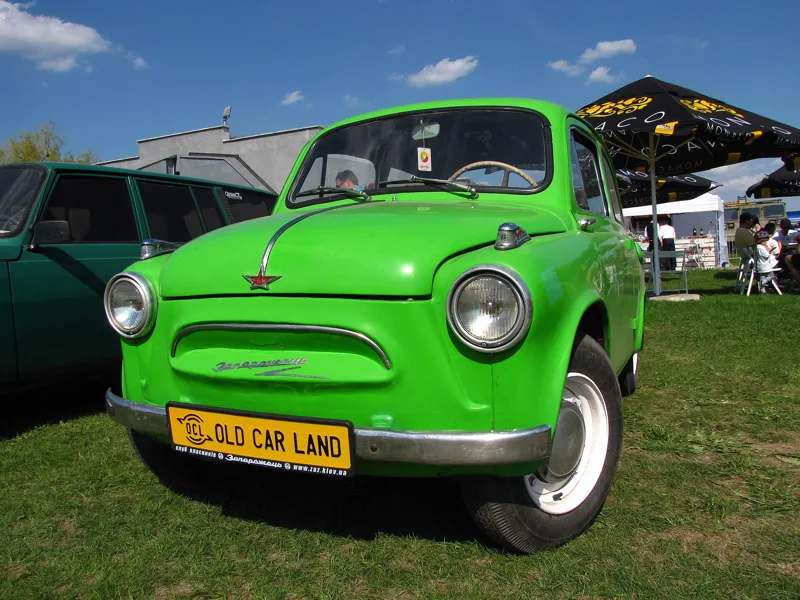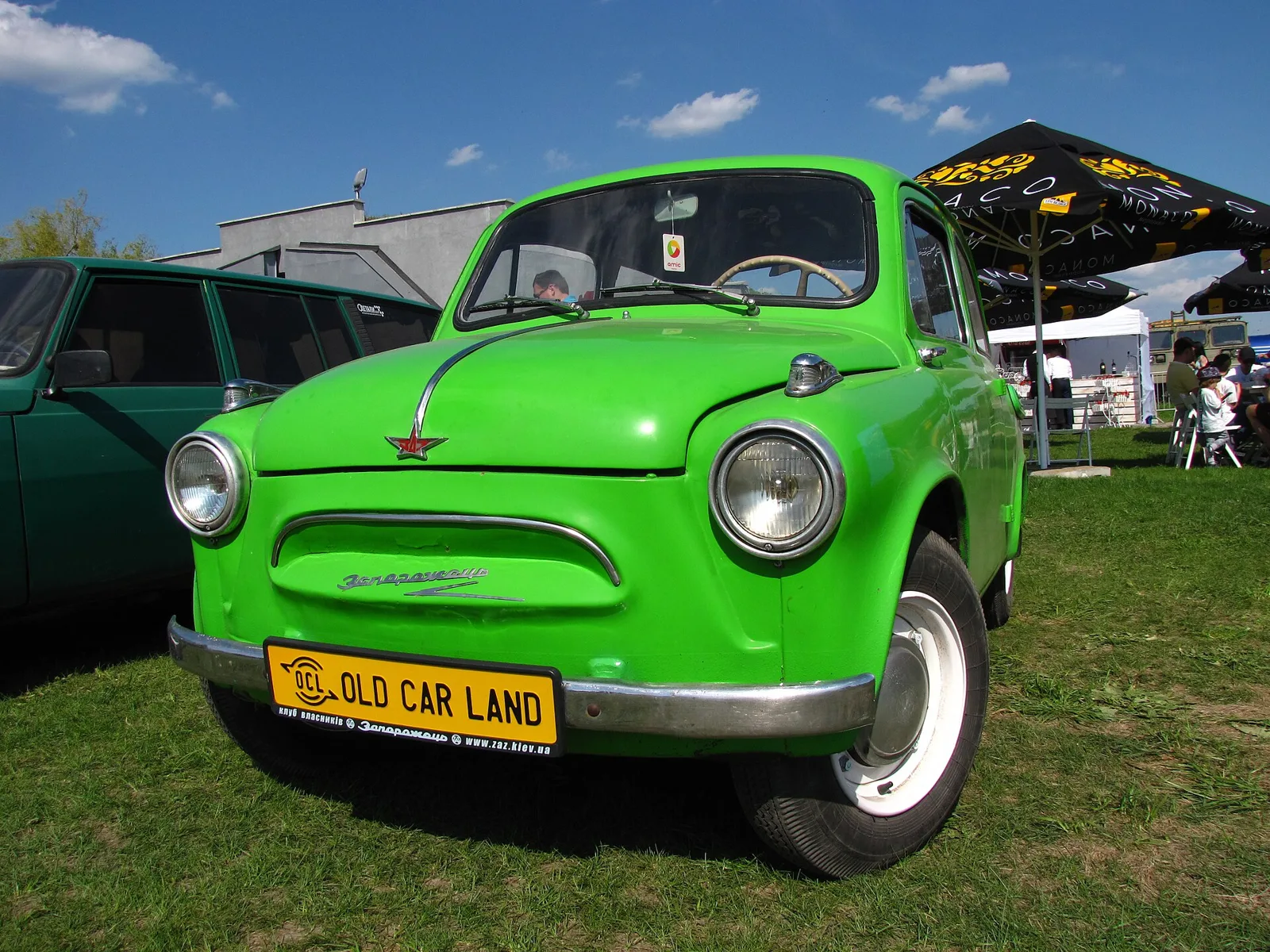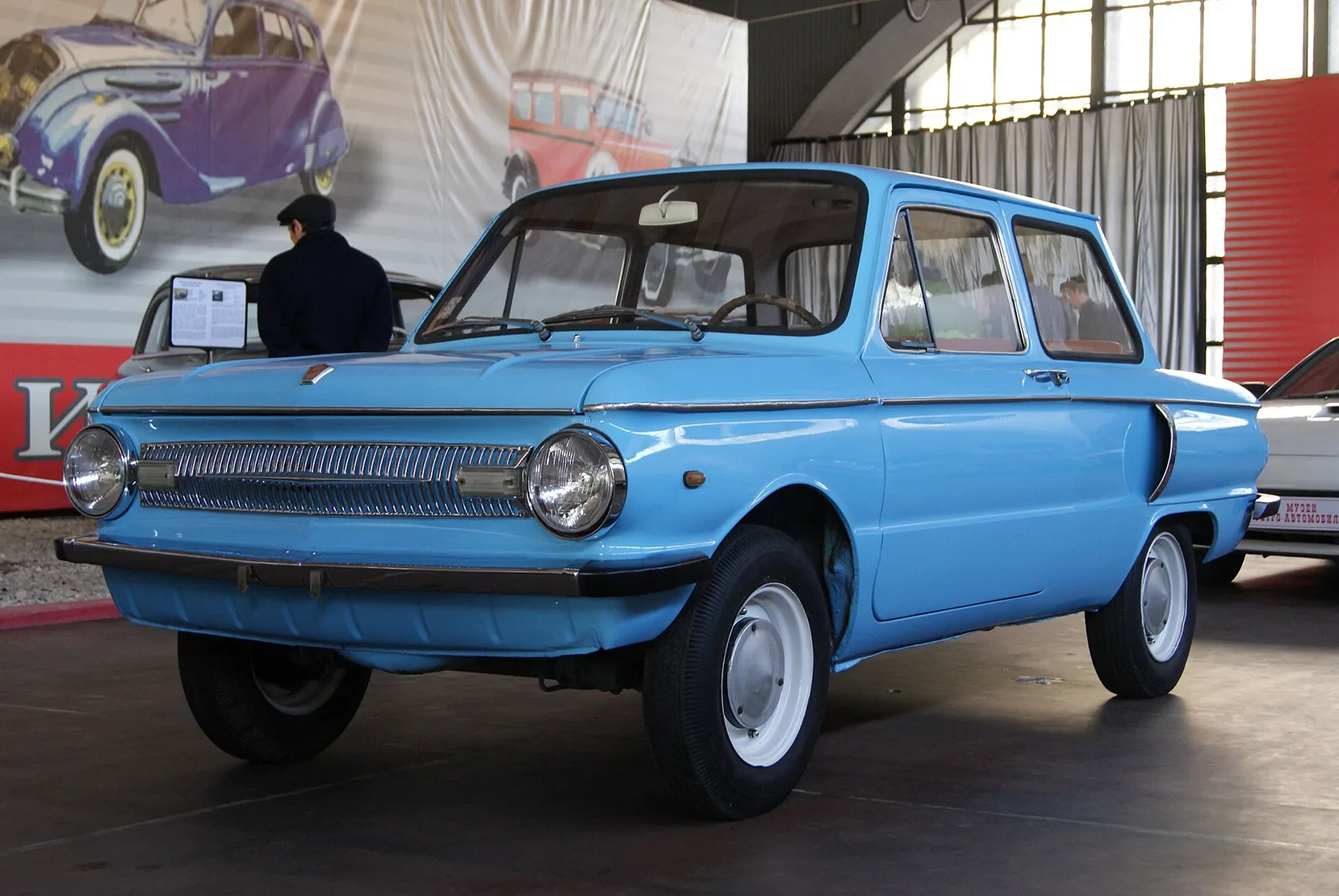
The Soviet Zaporozhets of 1966 to 1972, with cooling fixes that made its air intakes famous, a new rear suspension and an engine that arrived late.
The ZAZ-966 was the second-generation Zaporozhets, built from 1966 to 1972. It aimed to fix the overheating and small boot of the ZAZ-965 with a new body, rear independent suspension and a larger engine.
The ZAZ-966 was built to fix the faults of the ZAZ-965, and its engineers made the "ears" on its cooling air intakes famous along the way. Produced at the Kommunar plant in Zaporozhye from 1966 to 1972, it kept the Zaporozhets name but gained a new rear suspension and a larger engine. Output never matched the plan, and the car was caught up in the wider push to build the Volga Automobile Plant.
Why was a new Zaporozhets needed?
The ZAZ-966 answered a list of shortcomings in the ZAZ-965, which had poor comfort, a small luggage compartment, overheating in hot weather and an outdated design. Those faults could not be cured without a radical redesign, so work on a replacement began in spring 1961. An early prototype was shown at VDNKh that November.
The development brief had a practical problem. The earlier model had reached the Kommunar plant almost finished, the work having been done by the MZMA design team in cooperation with NAMI, so the plant's own designers had little hands-on experience. Other factors slowed the move into production, and the first series-built second-generation cars only appeared in 1966.
Those first cars carried a temporary engine adapted from the previous model, and they were designated ZAZ-966V. The V stood for temporary. The MeMZ-966V "thirty" engine, with 887 cc (54.1 cu in) and 27 to 30 PS (27 to 30 hp), was due to be replaced by a unit developed for the car. Full production with the MeMZ-968 "forty", of 1,198 cc (73.1 cu in) and 40 to 43 PS (39 to 42 hp), started only in 1968.
Some versions, including those for disabled drivers, kept the older MeMZ-966 engine. In 1979 that unit was upgraded to the MeMZ-966G, taking the cooling system of the MeMZ-968 with its blowing fan. The change solved the overheating and lifted output from 27 PS (27 hp) to 29 PS (29 hp).
The ears on its air intakes almost removed the overheating that had dogged its predecessor.
How did the cooling problem get solved?
Wind-tunnel testing of models of the new car led to special collectors on the air intakes, known as the famous ears. They created the back-pressure the cooling system needed, and the overheating problem of the previous model was almost completely eliminated.
The thirty-engine ZAZ-966V kept the cooling principle of the ZAZ-965. Intake air entered through side openings in the bodywork, and a fan mounted behind the block drew it across the jacket and blew it out toward the rear. The ears gave that airflow the pressure it needed in hot weather.
Later forty-engine versions ran the flow the other way round. Air taken in through the ears travelled along ducts in the rear wings to an exposed fan, which pushed it through the engine's jacket so that it exited under the car via the shrouds. During warm-up the thermostat flaps shut and diverted the flow back into the engine bay.
How did the front and rear suspension differ?
The front kept the ZAZ-965's parallelogram layout, with torsion bars inside steel tubes, but added coil springs that carried about 25% of the load. The rear was a new design with H-shaped longitudinal arms, which removed the pigeon-toed tendency of the earlier car. The front-suspension changes lengthened service intervals considerably.
Steel tubes housed the torsion bars, and stamped brackets tied the tubes into a single unit. That unit carried the whole front suspension and the steering parts, except the steering gearbox, and it bolted to the body with six bolts. Each bar was fixed at its centre, and forged arms at its ends ran in metal-ceramic plain bearings instead of the short-lived nylon bearings used before.
Motorcycle-type coil springs, combined with the shock absorbers, took roughly 25% of the front load and nearly doubled the life of the torsion bars. The kingpin assembly was dropped on all but the earliest cars. In its place a steering knuckle was linked to the suspension arms by horizontal ball joints.
The result was a much longer service schedule. The torsion bars needed greasing every 3 to 4 thousand km, against every 1 thousand km on the ZAZ-965, and the steering knuckle every 6 to 8 thousand km. The front suspension was expected to last up to 100 thousand km.
The rear suspension used H-shaped longitudinal arms with a transverse pivot axis, replacing the earlier A-shaped arms that pivoted at 45 degrees. Each wheel kept two drive-shaft joints, cardan joints on the outside and bell-type joints on the inside, but the shafts became stronger. The coil springs and shock absorbers formed single units that rested on the body through spherical rubber bushings.
This type of rear suspension was only starting to win favour at the time. It later appeared on European cars and on American rear-drive sports cars, including the Chevrolet Corvette C2 and C3, the BMW range from the BMW 700 onward through 3-series (E21, E30), 5-series (E12) and 7-series (E23) cars, and the Ford Sierra, Ford Scorpio and Opel Omega B. Only complex multi-link layouts, which spread much later, offered better geometry.
Which engines and gearbox did the ZAZ-966 use?
The forty engine enlarged the earlier 877 cc (53.5 cu in) unit to 1,197 cc (73.0 cu in) by increasing bore from 72 to 76 mm and stroke from 54.5 to 66 mm. The gearbox was newly designed, with fully synchronised forward gears, and it proved reliable enough for much more powerful engines.
The gearbox had no direct top gear. Fourth was an overdrive, with a ratio below one, much like fifth gear on modern cars. Prototypes had a shift lever on the dashboard, to the right of the instrument cluster, as some foreign models of the period did. Production cars dropped that layout as an unnecessary complication.
The gearbox was so robust that home builders fitted it to buggies and cars with engines from the Zhiguli, various Moskvich models and even the GAZ-21 Volga. The Volga engine, however, noticeably cut the life of the unit. The half-shafts and inner joints, with their delicate rubber dust covers, were the weak point, and they showed up mainly when cars were driven regularly away from good roads.
How did the ZAZ-966 compare with the Corvair and the NSU?
The final body looked much like the German NSU Prinz IV of 1961, which itself echoed the American Chevrolet Corvair shown in late 1959. The ZAZ-966 was built differently, with a longitudinal engine where the NSU had a transverse one, and its designers took only the general stylistic idea from the Corvair.
The Corvair's design was among the most copied of its era. Models that followed a similar line included the Sunbeam and Hillman Imp, the NSU Prinz, the Fiat 1300 and 1500, the Simca 1000, the Renault R8, the Mazda 800, the Hino Contessa and the Dodge A100 vans and minibuses. The Chevrolet was the first, and so the original model for the whole direction, while the rest were imitations to a broadly similar degree.
The predecessor, the ZAZ-965, had been linked to the Fiat 600, a connection the Soviet side never denied. Its designers deliberately kept the division of the body panels and the manufacturing steps as close to the original as possible. Nothing of the kind was done with the NSU, and the construction of the ZAZ-966 differed fundamentally from it.
Sources mention purchases of Corvair samples and their study in the Soviet Union. A Chevrolet Corvair was reportedly held by NAMI and later passed to the Zaporozhye plant, or in another version to the Melitopol Motor Plant, to study its engine cooling. The Corvair's influence on the overall styling is therefore plausible, even though the car's architecture was its own.
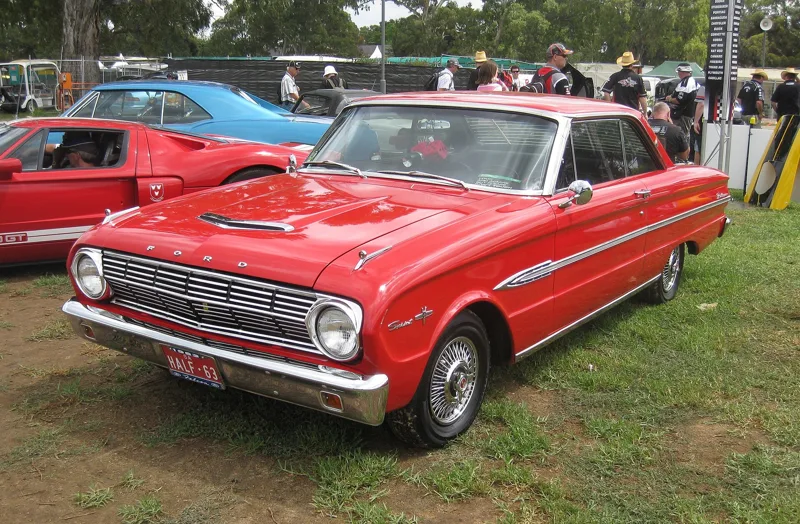
Other details echo different cars. The rear lamps and the complex body-side profile recall the early-1960s Ford Falcon. The interior, with its open-shelf instrument panel, trapezoidal instrument cluster and two-spoke steering wheel, strongly recalled the British Hillman Imp.
Did production meet the plan?
Production fell well short of the plan. The factory aimed for 150 thousand cars a year, but only by 1973 did it approach 100 thousand. Output and deliveries ran substantially below the planned figures, and the car press of the time discussed the shortfall at length.
Expansion was uneven even after the car reached the line. Soviet car makers were juggling several big projects at once, and the largest was the Volga Automobile Plant, which drew the industry's effort away from everything else, the ZAZ range's renewal included.
In 1968 the ZAZ-966 was shown at a motor show in Brussels as a single example, called the Yalta 1000. It had a water-cooled Renault engine and was intended for possible future production at the Belgian plant S.A. Scaldia-Volga.
Variants and successors
The Tselina was a light cargo-passenger van with a railway-carriage style body and a 300 kg load capacity. It sat on a ZAZ-966 chassis with the new independent suspension and an increased engine output, and one prototype was built in the early 1960s.
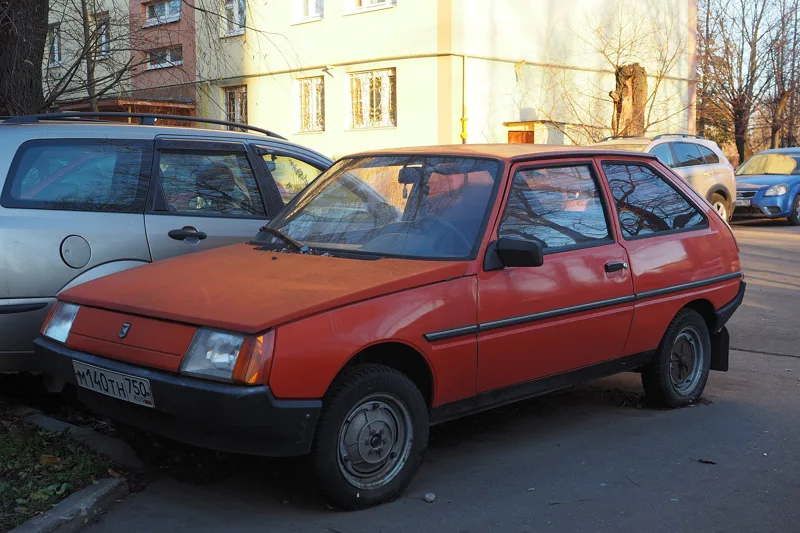
The ZAZ-968 was the further development of the ZAZ-966. It was built from 1971 to 1994 and at first differed little from its predecessor, its main external change being reversing lamps on the rear panel. In 1974 a decorative element nicknamed the wings of communism replaced the false radiator grille, and the lighting changed.
In 1979 the ZAZ-968M arrived with a convex front panel that enlarged the luggage space, rectangular tail lamps taken from the experimental ZAZ-1102 and a revised cooling layout. Outwardly that showed in small grilles, called gills, in place of the large ears. The ZAZ-966 itself left production at the end of 1972, and some disabled-driver versions were still built in 1973.
Specifications at a glance
| Specification | Detail |
|---|---|
| Production | 1966 to 1972 at the Kommunar plant, Zaporozhye |
| Early designation | ZAZ-966V with the thirty engine |
| Thirty engine (MeMZ-966V) | 887 cc (54.1 cu in); 27 to 30 PS (27 to 30 hp) |
| Forty engine (MeMZ-968) | 1,198 cc (73.1 cu in); 40 to 43 PS (39 to 42 hp) |
| Forty engine bore and stroke | Bore 72 to 76 mm; stroke 54.5 to 66 mm |
| Gearbox | Fully synchronised forward gears; fourth gear an overdrive |
| Torsion bar greasing | Every 3 to 4 thousand km |
| Steering knuckle greasing | Every 6 to 8 thousand km |
| Front suspension life | Up to 100 thousand km |
| Planned output | 150 thousand cars a year |
| Output by 1973 | Approaching 100 thousand cars a year |
| Tselina payload | 300 kg |
Scale models and souvenirs
Metal 1:43 scale models were made by the Moscow factory Progress from 1978, while plastic versions came from the Zaporozhye plant itself. Both were of primitive, almost toy-like quality.
China's IST Models produced a 1:43 model in a Soviet Car Legends series. The boxed version is white with short ears, while the magazine version is light blue with long ones.