From a missed one-million target to a 15.3% Canadian share, how credits, rebates and model choice shape what an electric car costs to buy.
In the US, plug-in sales reached 1,402,371 in 2023, a 9.1% share, helped by federal credits of US$2,500 to US$7,500 that vary with battery size. Canada had 901,545 plug-ins in use by April 2025, took a 15.3% sales share in 2024, and paused its C$5000 rebate.
In his 2011 State of the Union address, President Barack Obama set a goal of one million electric vehicles on American roads by 2015. The target was reached in September 2018, more than three years late. By 2023 the country was selling that many in a single year: 1,402,371 plug-in cars, a 9.1% share of the market.
Across the border, Canada reached a 15.3% share in 2024. What an electric car costs a driver in either country depends heavily on tax credits and rebates that have been switched on, trimmed and paused over the years, and on which models are for sale. Both markets have seen those supports change within a few years.
How many electric cars does the United States have?
Cumulative American sales reached 4.7 million plug-in cars between 2010 and December 2023, led by all-electric models. In 2023 alone sales passed the 1 million mark for the first time. At the end of 2019 the US held 20% of the world's plug-in fleet, third behind China at 47% and Europe at 25%.
The climb has been steep rather than steady. The plug-in share of passenger car sales was 0.14% in 2011, 0.66% in 2015 and 1.13% in 2017. It reached 2.1% in 2018, slipped to 1.9% in 2019, then rose to 2.2% in 2020, 4.0% in 2021, 6.8% in 2022 and a record 9.1% in 2023. California is the largest regional market, with 1 million plug-in cars registered by November 2021, which was 46% of the national stock. For context, new vehicle sales in all categories were expected to reach 16.3 million in 2025, the highest since 2019 and a modest rise from 16.0 million in 2024.
A 450 km electric car matched on cost with a combustion rival was the Department of Energy's stated aim.
What are the best selling electric cars in the US?
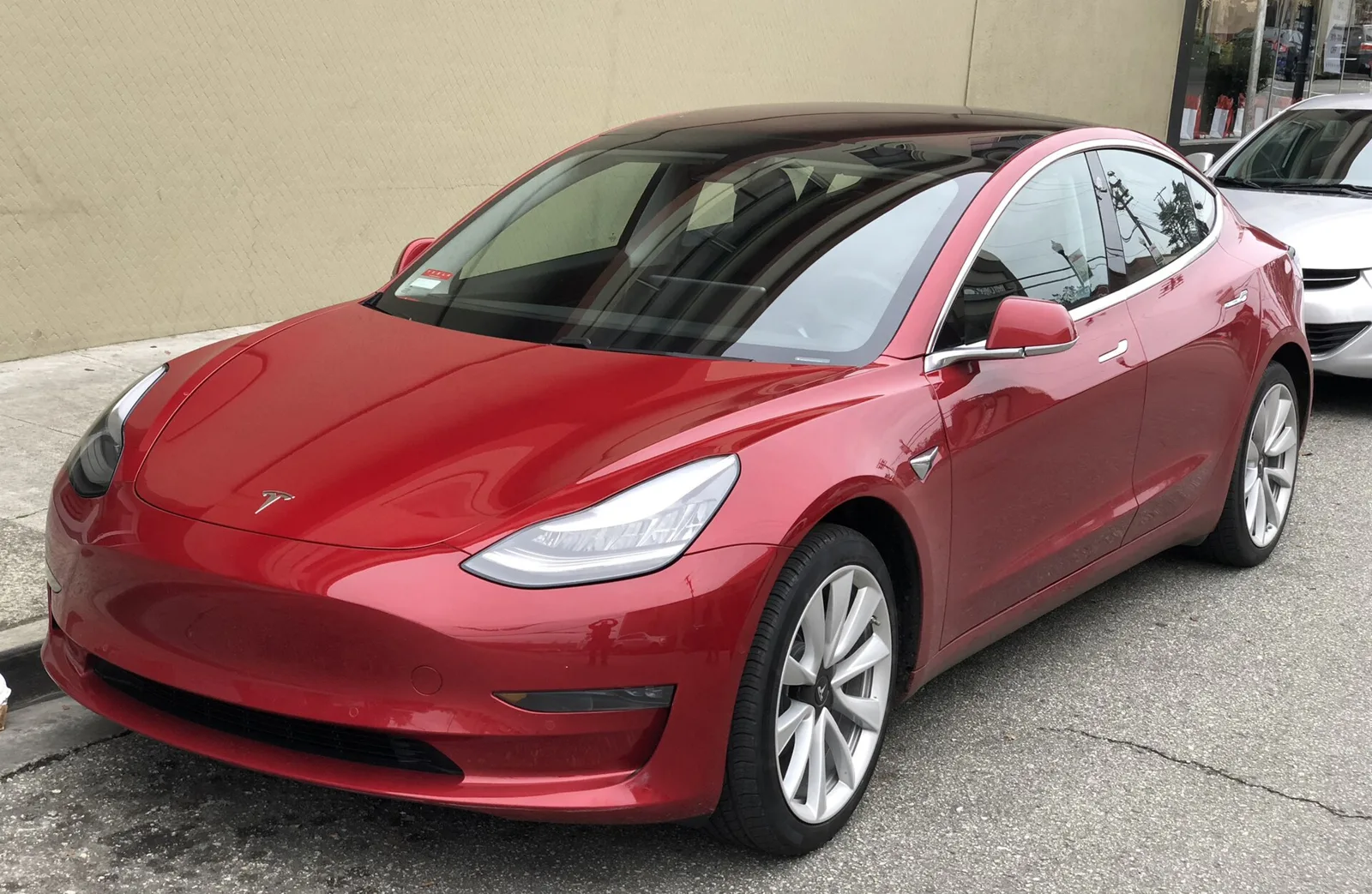
As of December 2020 the Tesla Model 3 was the all-time best-selling plug-in car in America, with an estimated 395,600 deliveries. The Tesla Model S followed with about 172,400, and the Chevrolet Volt plug-in hybrid with 157,125 across both generations. The Model S was the best-selling plug-in for three straight years, 2015 to 2017, and the Model 3 took over for the three years from 2018 to 2020.
By November 2018 the other makers' cumulative plug-in deliveries stood at 126,875 for Nissan, 111,715 for Ford, 93,011 for Toyota and 79,679 for the BMW Group.
What federal money backed the early push?
The 2011 goal rested on Department of Energy forecasts of 1,222,200 cumulative plug-ins by 2015, built from manufacturer announcements for cars such as the Chevrolet Volt, Nissan Leaf, Tesla Roadster and Model S. Real sales fell short, and by early 2013 industry observers had decided the target was out of reach. Behind it sat US$2.4 billion in federal grants under the American Recovery and Reinvestment Act: US$1.5 billion for batteries, up to US$500 million for motors and other components, and up to US$400 million for demonstration projects such as truck stop charging. Local leaders moved too. In 2008 the mayors of San Francisco, San Jose and Oakland announced a nine-step plan to make the Bay Area the electric vehicle capital of the country, and in March 2012 Governor Jerry Brown set a goal of 1.5 million zero-emission vehicles on California roads by 2025.
How does the US federal tax credit work?
The credit goes back to the Energy Improvement and Extension Act of 2008 and the American Clean Energy and Security Act of 2009, and the Inflation Reduction Act later granted credits worth up to US$7,500 as well. A plug-in qualifies if it draws propulsion energy from a traction battery of at least 5 kWh that is recharged from an off-board source.
The amount follows the battery. Every qualifying car gets US$2,500, plus US$417 for each kilowatt-hour above 5 kWh, and the battery portion cannot exceed US$5,000. With battery sizes running from 4 to 16 kWh, the total lands between US$2,500 and US$7,500. That is why the Nissan Leaf and the Chevrolet Volt, both launched in December 2010, earned the full US$7,500, while the Toyota Prius Plug-in Hybrid, with its 5.2 kWh battery, qualified for US$2,500. All Tesla cars, the Chevrolet Bolt and the BMW i3 were eligible for the full amount.
When does the credit run out for a car maker?
Each manufacturer has a ceiling. The credit phases out over a year starting in the second calendar quarter after the maker has sold 200,000 qualifying plug-ins in the US, counting from 31 December 2009. For one quarter after the cap, buyers still earn the full credit, then 50% for six months, then 25% for another six months, then nothing. Tesla was first to pass 200,000, in July 2018, with the full credit available until the end of 2018 and the phase-out starting in January 2019. General Motors passed 200,000 in November 2018, kept the full credit until the end of March 2019, and saw it removed completely from 1 April 2020.
Does the credit change what people buy?
A 2016 study by researchers at the University of California, Davis found the federal credit was behind more than 30% of plug-in sales, and up to 49% among Nissan Leaf owners. Based on a survey of more than 2,882 plug-in owners in 11 states, it also found the credit shifts buyers away from petrol and diesel cars and brings the timing of a new-car purchase forward by a year or more. In January 2024 the University of Michigan Center for Sustainable Systems concluded that the US$7,500 credit and other federal incentives were needed to make battery electric vehicles cost-competitive with combustion cars in many places and for many vehicle classes.
Buyers have had to wait, though. The credit is applied against income tax, which can mean waiting up to a year. Several federal attempts since 2011 to turn it into an instant point-of-sale rebate have failed. In March 2014 the Obama administration proposed lifting the maximum from US$7,500 to US$10,000 in the FY 2015 budget, with luxury cars priced over US$45,000, such as the Model S and the Cadillac ELR, held at US$7,500. In November 2017 House Republicans proposed scrapping the US$7,500 credit in a tax overhaul.
What do states and cities add?
By November 2014, 37 states and Washington, D.C. offered incentives, tax or fee exemptions, utility-rate breaks and perks such as free parking and access to high-occupancy lanes regardless of how many people are in the car. California's Clean Vehicle Rebate Project began with up to US$5,000 per light-duty vehicle, later cut to US$2,500, for new eligible cars bought or leased on or after 15 March 2010, with up to US$20,000 for certain zero-emission commercial vehicles. California's regulations are expected to put 1.5 million electric vehicles on the road by 2025, which would be 15% of sales, and the state's mix of incentives aims to push the national share of electric vehicle sales to 40%.
What help is there for home and public charging?
Until 2010 there was a federal credit equal to 50% of the cost of buying and installing a home charging station, up to US$2,000, and businesses could claim up to US$50,000 for larger installations. The credits expired on 31 December 2010, then returned through 2013 at 30%, up to US$1,000 for individuals and US$30,000 for commercial buyers. In 2016 the Obama administration and partners announced US$4.5 billion in loan guarantees for public charging stations.
What did the Department of Energy say about cost?
In March 2012 the president launched the EV Everywhere Challenge, aimed at producing by 2022 a five-passenger electric car with a payback time under five years and enough fast-charging ability for the typical American driver. The January 2013 blueprint set targets: cut battery costs from US$500/kWh to US$125/kWh, remove almost 30% of vehicle weight, and cut the cost of electric drive systems from US$30/kW to US$8/kW.
The department's aim was to match the combined purchase and fuel cost of an electric vehicle with a 450 km (280 mi) range to that of a combustion car of similar size. It expected that even before those targets were met, the five-year cost of ownership of most plug-in hybrids, and of electric cars with shorter ranges such as 160 km (100 mi), would be comparable to that of equivalent combustion cars. Up to US$120 million over five years went to the Joint Center for Energy Storage Research, led by Argonne National Laboratory near Chicago.
How big is the electric car market in Canada?
As of April 2025 Canada had 901,545 plug-in passenger cars on the road, of which 644,679 were all-electric and 256,866 plug-in hybrids. That is 3.4% of all light-duty vehicles. Sales took a 15.3% share in 2024, made up of 11.4% all-electric and 3.9% plug-in hybrids, though the figure is expected to fall in 2025. The start was slow. Canada sold 521 plug-ins in 2011, 1,969 in 2012, 3,106 in 2013, up 57.7%, and 5,062 in 2014, up 63.0%, for a 0.27% market share. Cumulative sales passed 30,000 in January 2017.
Which electric cars sold in Canada?
The Mitsubishi i-MiEV got the earliest trials. In January 2009 Hydro-Quebec and Mitsubishi started the largest electric car pilot in Canada, 50 cars, to learn about winter use, and retail sales began in December 2011. Nissan's Leaf reached fleet customers on 29 July 2011 and individuals in late September that year. At first it was sold through only 27 certified dealers, and only to customers within 65 km (40 mi) of one. It had 1,965 cumulative sales by December 2014. The Tesla Model S began retail sales in 2012 with 95 deliveries and 638 in 2013.
The 2015 leaderboard read Model S 2,010, Chevrolet Volt 1,463, Nissan Leaf 1,233, BMW i3 367 and Kia Soul EV 318. Through December 2017 the Volt was the top plug-in hybrid with 13,619 units, and the Model S the top all-electric with 6,731. In Canada's early years the split between types was even, 50.8% all-electric and 49.2% plug-in hybrid until 2014, and of the 18,451 plug-ins registered by December 2015, 54% were all-electric.
Quebec leads the provinces. It had about 11,000 plug-in cars by September 2016, 55% of them plug-in hybrids, and its 3,100 registrations in 2015 were 0.7% of its new car sales and 45% of the national total. British Columbia is the only place where low-speed electric cars may be driven on public roads, with warning markings and flashing lights, while Quebec is running a three-year pilot that allows them on city streets but not highways.
How do the two countries differ?
| Measure | United States | Canada |
|---|---|---|
| Latest sales share | 9.1% in 2023 | 15.3% in 2024 |
| Cumulative or stock figure | 4.7 million sold since 2010, to December 2023 | 901,545 in use, April 2025 |
| Purchase incentive | Federal credit of US$2,500 to US$7,500 | C$5000 rebate, 2019 to 2025, paused |
| Early best sellers | Model S, then Model 3 | Volt, then Model S |
| Regional leader | California, 46% of stock | Quebec, 45% of 2015 sales |
Where this goes next
Canada's rebate of C$5000, available from 2019 to 2025, ran out of funding and was paused in 2025. On 21 December 2022 environment minister Steven Guilbeault unveiled a regulation that would require 20% of new vehicle sales to be zero-emission by 2026, 60% by 2030 and 100% by 2035. That mandate was paused for review in September 2025.
In the United States, the mix of federal credits has already shifted several times. The credit began phasing out for individual makers in 2019 as each passed 200,000 sales. California's target of 1.5 million zero-emission vehicles on its roads by 2025 sits alongside the federal rules.