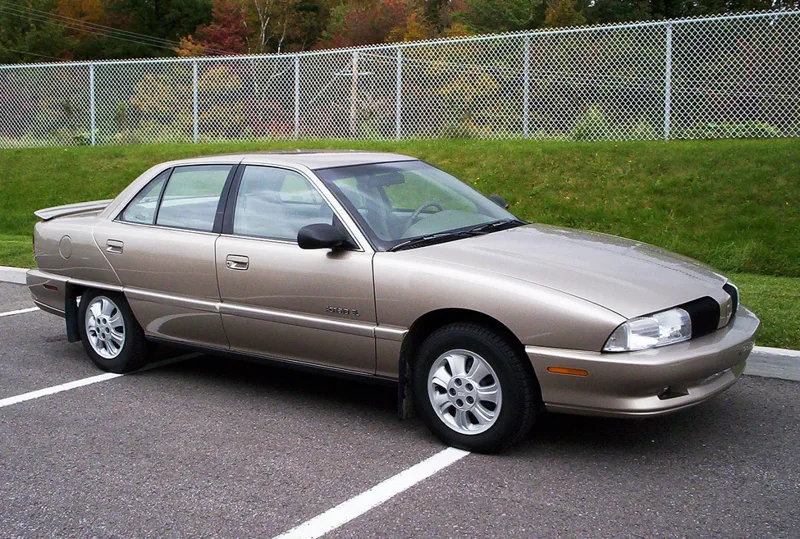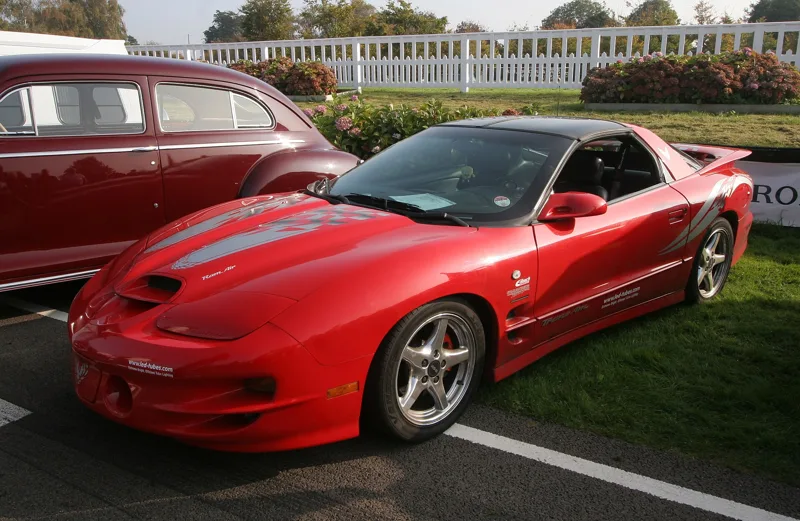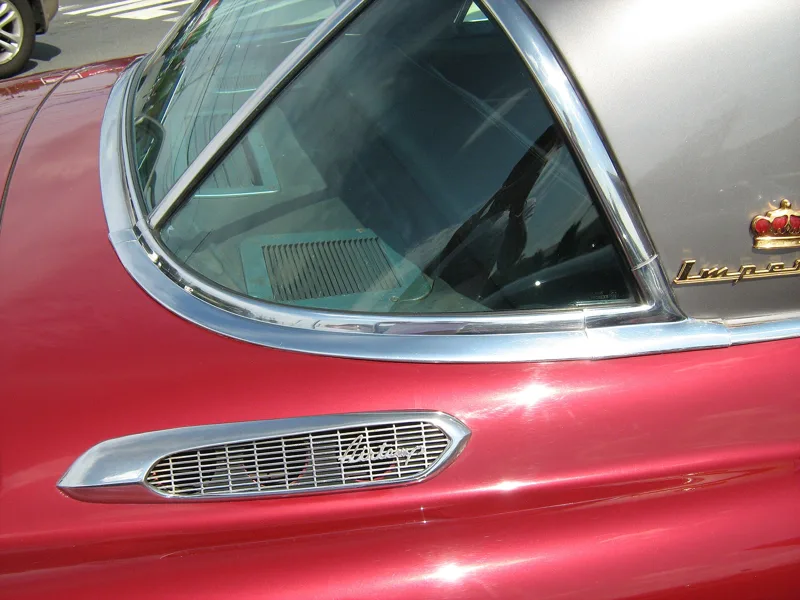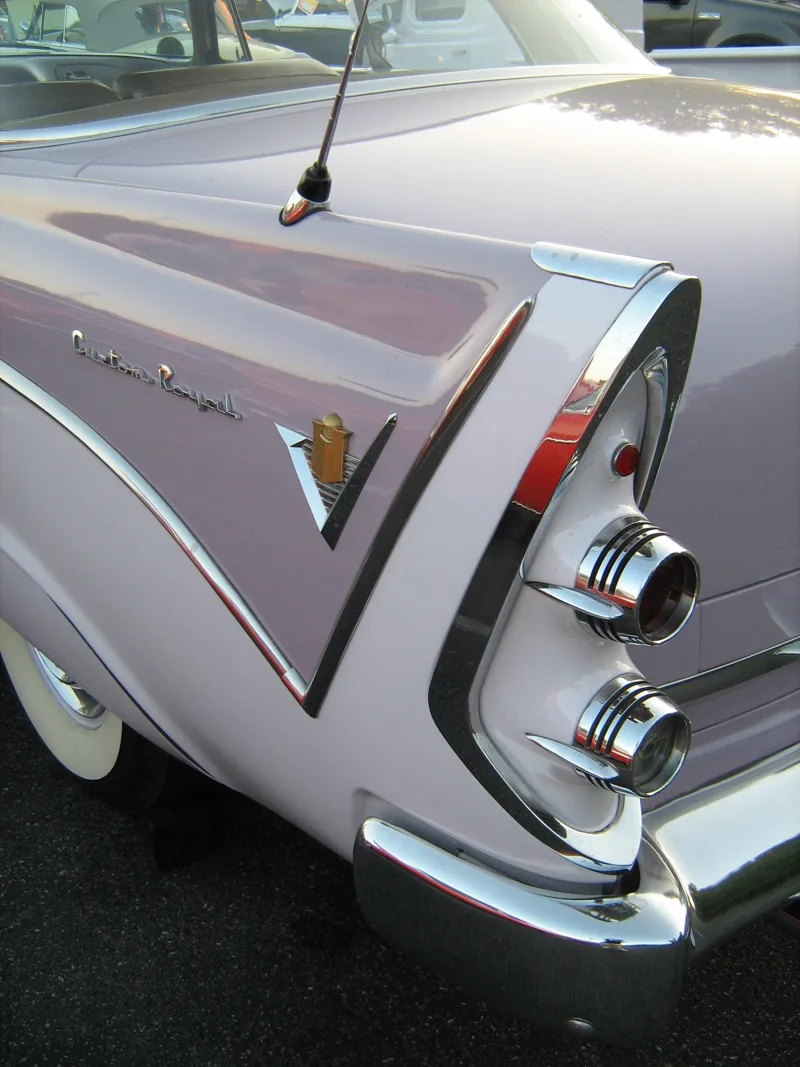
Oldsmobile's fluid-coupling Hydra-Matic, Buick's non-shifting Dynaflow, Packard's locking Ultramatic and the three-speed design that replaced them.
Detroit's first mass-market automatics were Oldsmobile's Hydramatic (1940 model year), Buick's smooth but inefficient Dynaflow (1948) and Packard's lock-up Ultramatic (1949). General Motors later replaced its own range with the three-speed Turbo-Hydramatic, first fitted to 1964 Cadillacs, which had no mechanical link to the original Hydra-Matic.
On 12 August 1953, a fire destroyed General Motors' Hydra-Matic plant in Livonia, Michigan. Overnight, three GM divisions and a string of independent carmakers lost their supply of automatic transmissions. Oldsmobiles and Cadillacs were finished with Buick's Dynaflow, Pontiacs received the Powerglide built by Chevrolet, and Lincoln turned to a Borg-Warner design. About nine weeks later, a new source at Willow Run, Michigan, put things right.
The episode shows how much Detroit had come to rely on the first automatic transmission and how many rival designs were waiting. The Hydra-Matic, Buick's Dynaflow, Packard's Ultramatic and the Turbo-Hydramatic that finally replaced the lot took very different routes to the same goal of taking the clutch pedal away.
What was the first automatic transmission?
The Hydramatic, also spelled Hydra-Matic, set the pattern as the first fully automatic transmission mass-produced for passenger cars. It was developed by General Motors' Oldsmobile Division and introduced in 1939 for the 1940 model year, a year before Cadillac offered it.
In the 1930s, carmakers wanted to cut down on gear changing. Synchronised shifting was still a novelty, mostly confined to the higher gears, and working a manual gearbox took more effort than many drivers cared to give. Cadillac had already made a breakthrough with a fully synchronised manual gearbox designed by engineer Earl A. Thompson, introduced in the autumn of 1928. In 1932, Thompson led a new department at Cadillac that started on a shiftless transmission. His engineers included Ernest Seaholm, Ed Cole, Owen Nacker and Oliver Kelley. By 1934 the group had a step-ratio gearbox that shifted automatically under full torque. The engineers then moved to the GM Research Laboratory, built pilot units in 1935-36, and handed them to Oldsmobile for testing.
A side branch of the work was the Automatic Safety Transmission, a semi-automatic design with planetary gears and an ordinary friction clutch. Oldsmobile offered it from 1937 to 1939, Buick only in 1938.
The Hydramatic then paired a hydraulically operated planetary gearbox with a fluid coupling in place of the clutch. Production started in May 1939, and the first Oldsmobile Series 60 and Series 70 cars with it shipped in October. Oldsmobile got the job for two reasons. It built more cars than Cadillac or Buick, which gave a bigger test base, and a flop would not tarnish the two more prestigious names. Its advertising likened it to the self-starter as an advance.
A fire at one plant in 1953 showed how much Detroit relied on the Hydra-Matic and how many rivals were waiting.
How does a Hydramatic work?
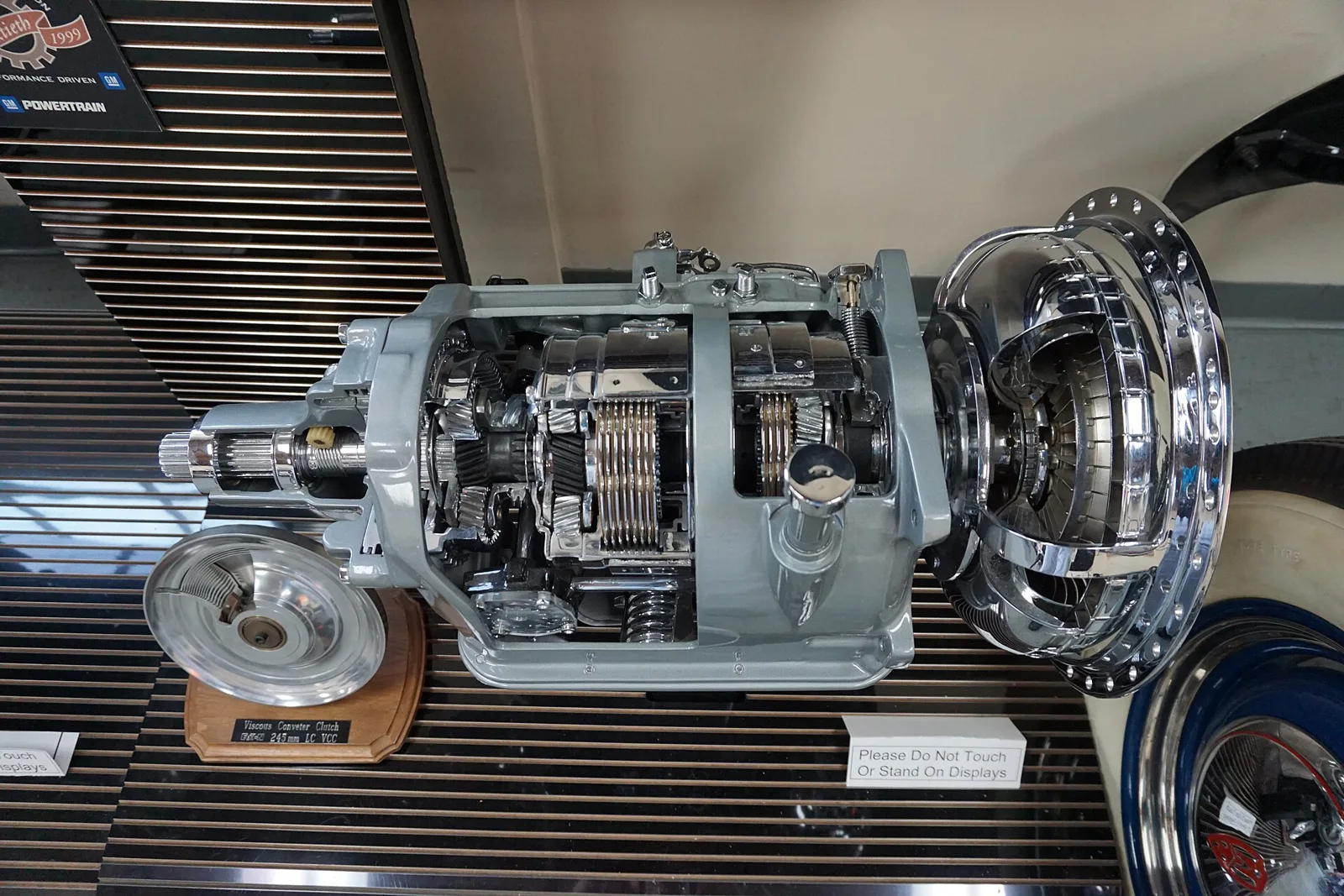
Picture two household fans facing one another. Switch one on and the air it pushes spins the other, with nothing physically connecting them. A fluid coupling does the same job with oil, linking engine to gearbox without a clutch. Because the coupling only passes torque along, it does not multiply it as a torque converter does, which needs at least three elements: a pump, a turbine and a stator. The Hydramatic used a two-element coupling and three planetary gearsets to give four forward speeds plus reverse. A torque converter prototype from Vulcan in 1924 was in some respects more sophisticated.
The ratios of the original were 3.82:1, 2.63:1, 1.45:1 and 1.00:1, with a lower-geared set of 4.08:1 for light trucks. First gear was a very deep ratio, which made up for the lack of torque multiplication. There was no separate Park position at first: the parking pawl engaged when the selector went to reverse with the engine off.
Two oil pumps ran the hydraulics. The front one, a variable-displacement vane pump driven from the coupling housing, gave pressure the moment the engine started. The rear one, a gear pump driven by the output shaft, could pressurise the transmission whenever the car was moving, which meant a car with a flat battery could be push-started once it reached 15 to 20 mph (24 to 32 km/h).
Later Hydramatics added a split-torque layout. In high gear, the Controlled-Coupling and Roto versions sent 40% of the torque through the fluid coupling and 60% through a mechanical connection, making them more efficient than any other automatic before the lock-up torque converter arrived.
How well did the Hydra-Matic sell?
It was not cheap. In 1940 the option cost US$57.00 ($1,310 in 2025 dollars), rising to US$100.00 ($2,189) the following year, and Cadillac buyers paid $125.00 ($2,736). Even so, almost 200,000 had sold by the time passenger car production stopped for the war in February 1942.
The war helped. The transmission served in military vehicles such as the M5 Stuart tank, which had two of them coupled to a pair of Cadillac V8 engines, as well as in the M24 Chaffee. That service was later advertised as battle-tested and improved the postwar engineering. From 1948 it was optional on Pontiacs, and 70% of the division's output that year had it. In 1949, V8 Oldsmobiles were automatic-only because Oldsmobile had no manual gearbox that could cope with the new Rocket V8. One million Hydramatics had been sold by 1949.
Outsiders bought it too. Hudson, Nash, Rambler, Frazer, Kaiser, Willys and Lincoln all used it, and Austin and Vanden Plas Princess fitted it from 1956 to 1968. In 1952, Rolls-Royce obtained a licence to build it for Rolls-Royce and Bentley cars, without using the Hydramatic name, and kept at it until 1979.
Competition forced revision. Dual-range versions appeared from 1952, and in 1956 the Controlled-Coupling Hydra-Matic arrived, sold under names including Jetaway at Oldsmobile, StratoFlight and Super Hydra-Matic at Pontiac, and 315 at Cadillac. Where earlier units used a friction clutch and brake bands, it had a second fluid coupling and two sprag clutches, and shifted partly by draining and refilling that coupling. It was smoother but more complex and costly. The Roto Hydramatic of 1961 was a three-speed, four-range unit that dropped the front coupling and went into all Oldsmobiles and several Pontiacs, while Cadillac and Pontiac's Bonneville and Star Chief kept the four-speed.
The family's reputation was mixed. It was complex and expensive to build, and despite some early problems proved reliable and rugged enough to be widely used in 1960s drag racing. It was less smooth than Buick's Dynaflow, but more efficient, especially at highway speeds.
What was the Dynaflow transmission?
Dynaflow was Buick's answer, built from late 1947 to mid-1963 and offered for the 1948 model year only on Roadmasters. Its roots lay in the Torqmatic used in the M18 Hellcat tank destroyer and the M26 Pershing tank during the war, and it was also fitted to the 1951 Le Sabre concept car.
The original paired a five-element torque converter (two impellers and two stators) with a planetary gearset for two forward speeds plus reverse. It started in direct drive, leaning on the converter's 3.1:1 torque multiplication. A low gear of 1.8:1 could be selected by hand and held to around 60 mph (97 km/h) for stronger acceleration. It could not shift by itself at all, which meant passengers never felt the interruption in acceleration that other automatics produced. The price was slowness, and the nickname Dynaslush.
Efficiency suffered because normal driving relied entirely on the converter, and the double stator wasted more power than a plain three-element converter such as the one in Chrysler's TorqueFlite. Buick accepted the trade. Its torque-tube rear suspension, with a rigid shaft and a single universal joint at the front, was said to amplify the harshness of shifting automatics, so a non-shifting gearbox suited it, and the layout let Buick use soft coil springs while rivals used firmer leaf springs. The car earned a gas-hog reputation, though cheap fuel, no emissions concerns and an upscale market meant sales did not suffer. Engine speed followed pedal position more than road speed, a sound similar to a continuously variable transmission.
Buick kept refining it. The 1953 Twin Turbine Dynaflow had two turbines, a planetary gearset and a single stator, giving 2.5:1 torque multiplication that was partly mechanical, and a variable-pitch stator followed in 1955. A second stator in 1956 lifted the stall ratio to 3.5:1, bringing it to par with other automatics. A three-turbine version, the Flight Pitch Dynaflow, came in 1958 and became the Triple Turbine in 1959, with a variable-pitch stator for 3:1 multiplication, but it was cancelled after 1959 because of technical problems and poor sales. The Twin Turbine lasted to 1963, and in 1964 Dynaflow gave way to the Super Turbine 300 two-speed and the Super Turbine 400, Buick's name for the Turbo-Hydramatic. The 1953 fire also pushed Dynaflow into Cadillacs: about 28,000 of them, including some 19,000 Series 62 cars, were fitted with it, along with several thousand Oldsmobiles.
Why was Packard's Ultramatic different?
The Ultramatic was the creation of Packard chief engineer Forest McFarland and his team, and it was the only automatic developed and produced by an independent automaker alone, with no outside help. Work had started in 1935, stopped for the war and resumed in 1946. It arrived in mid-1949 as a $199 option ($2,693 in 2025 dollars), first on the top Packard Customs and across the range from 1950.
It combined a two-speed epicyclic gearset with a torque converter that could lock up. The driver chose high or low range through the column shift. In normal driving, high (1:1) was meant to stay engaged, with the dual-turbine converter, four turbines in all, handling the start-off. Between 15 and 56 mph (24 and 90 km/h), depending on the rear axle ratio, hydraulic pressure overcame throttle pressure and the direct drive clutch locked the converter, which stopped the slippage that wasted power at cruising speed. On the highway it delivered the economy and power of a manual. Apart from Borg-Warner in the Studebaker, major manufacturers did not generally use a locking converter until nearly thirty years later.
Drivers soon found that starting in low and shifting to high gave brisker pick-up, and the manual change handled it poorly. The Gear-Start Ultramatic of 1954 added a Drive range that began in low and shifted automatically. For 1955 came the Twin-Ultramatic, tuned for Packard's new V8, with a converter pump angle changed to allow a higher stall speed. It had many teething problems, which damaged Packard's name for quality, although the engineers' running changes improved it and lower-powered cars suffered fewer. American Motors bought Twin-Ultramatics for the Nash Ambassador and Hudson Hornet with its 320ci V8.
In 1956 the components were redesigned and an aluminium casing made the unit 90 lb (41 kg) lighter than competitors'. GM threatened legal action over Packard's talk of dual drive ranges, because it had used a dual-range Hydra-Matic since 1953. Packard also introduced Touch Button Ultramatic, a six-button electric selector that proved troublesome: its shift motor was a modified starter that could trip the circuit breaker on a steep hill. It cost $52 extra, and after Packard production ended, Auto-Lite destroyed the tooling. Studebaker used Ultramatic in the 1956 Golden Hawk. Packard did not exploit the 1953 Livonia fire to supply Lincoln, Nash, Hudson and Kaiser-Willys.
| Transmission | Maker and debut | Core design | Shifting |
|---|---|---|---|
| Hydramatic | Oldsmobile (GM), 1940 model year | Two-element fluid coupling, three planetary gearsets | Four speeds, fully automatic |
| Dynaflow | Buick, 1948 model year | Five-element torque converter, two-speed planetary | Starts in direct drive, manual low of 1.8:1 |
| Ultramatic | Packard, mid-1949 | Torque converter with lock-up, two-speed gearset | Driver picks high or low; Gear-Start version automatic from 1954 |
| Turbo-Hydramatic | GM, 1964 model year | Three-element torque converter, Simpson planetary | Three speeds, automatic |
What is the Turbo-Hydramatic?
Turbo-Hydramatic, also written Turbo Hydra-Matic (THM), is the name of a GM family built around a three-element turbine torque converter and a Simpson planetary geartrain, which together give three forward speeds plus reverse. GM brought it in to supersede the original Hydra-Matic and the Dynaflow, and despite the shared name it has no mechanical kinship with the Hydra-Matic. The first, the Turbo-Hydramatic 400, appeared in 1964 Cadillacs, with Buick's version called the Super Turbine 400. Oldsmobile, Pontiac and some Chevrolets followed in 1965, and by 1973 it had replaced every other GM automatic, among them Powerglide, the Super Turbine 300 and Jetaway. From the early 1980s four-speed automatics, some still named Hydramatic, gradually took over.
The THM400 is prized for strength. A cast-iron centre support carries the shafts and gives first gear a sturdy anchor. It was also the first Simpson-geared three-speed with overrunning clutches handling both first and second gear, so it can survive very high input torque and a huge number of shifts. That has made it popular in competition and commercial use. Switch-Pitch variants with a variable-pitch stator, built from 1964 to 1967, are prized by collectors and drag racers. Other makers took it up, including Ferrari in the 400 and 412, Jaguar and Daimler in XJ12 and XJ-S models before 1994, and Rolls-Royce in the Silver Shadow (1965-1980) and Silver Spirit (1980-1992). The US Army's HMMWV is now the only vehicle still using it.
GM renamed it the 3L80 for 1987, and by 1991 a four-speed overdrive version, the 4L80-E, had taken its place in Chevrolet and GMC trucks, vans and SUVs. It was the first Hydramatic with electronic controls.
Lighter siblings followed. The THM350 arrived in 1969, developed by Buick and Chevrolet to replace the Super Turbine 300 and aluminium-case Powerglide, and was often described as a three-speed Powerglide. A lock-up version, the THM350-C, came in 1981. After the 1973 OPEC oil embargo, GM built the lighter THM200, introduced in 1976, but it had a notorious failure rate behind any engine, and owners often swapped in a THM350. A light-duty THM180 ran from 1981 to 1998.
Where this goes next
The Turbo-Hydramatic's own successors were four-speed automatics, some of which still carry the Hydramatic name. Modern automatics have gone on adding ratios, to as many as ten, while the three-element torque converter has stayed the norm, albeit tighter and more efficient than the early ones.