A truck workshop from 1949, a motorcycle repair shop that grew to 51 export markets and a battery maker that tried car vending machines: three Chinese vehicle makers, three outcomes.
Nanjing Automobile dates its history to 1947 and acquired MG Rover assets in 2005 before merging into SAIC. Lifan began as a 1992 motorcycle repair shop and sought bankruptcy reorganisation in 2020. Kandi, founded in 2002, builds small electric vehicles and golf carts.
When the Chinese Civil War reached Nanjing in July 1949, a repair unit attached to the East China Field Army took over a car workshop in the captured city. That workshop became Nanjing Automobile, which says its history dates from 1947 and which is the oldest of the Chinese automobile manufacturers, though FAW was the first to build cars. In 2005 it acquired part of what was left of MG Rover.
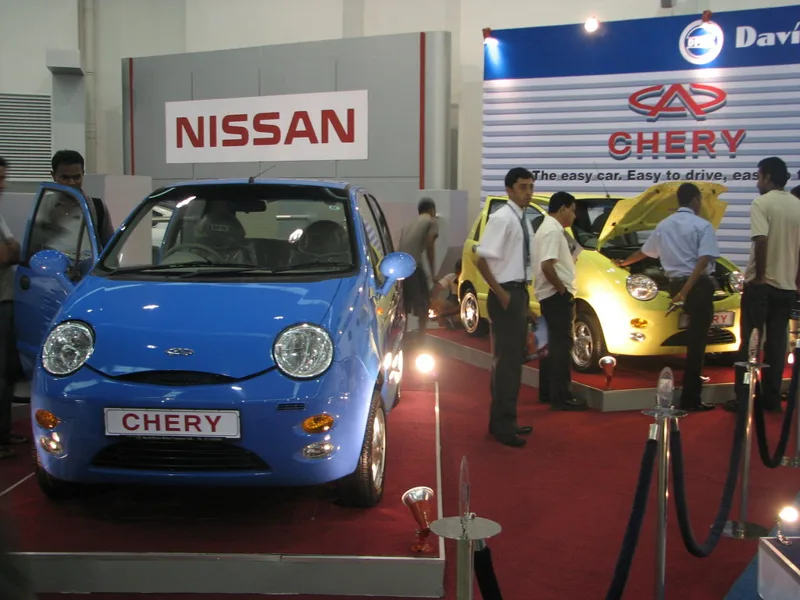
Two other Chinese vehicle makers took very different roads. Lifan started in 1992 as a motorcycle repair shop with nine staff and ended up applying for bankruptcy reorganisation under heavy debt. Kandi began with batteries and electric vehicles, ran a car-sharing scheme in Hangzhou and now sells small electric vehicles and golf carts in America.
Nanjing Automobile, from a workshop to MG
In the 1950s oversight of the small workshop passed to China's First Ministry of Industrial Machinery. In 1958 it began building China's first domestically produced light-duty trucks, the NJ-130, based on the Soviet GAZ-51. The ministry branded the truck Guerin, literally "Leap Forward", and approved the creation of Nanjing Automobile Works that same year. The name later became Yue Jin. By July 1987, 161,988 trucks of several models had been built, among them the NJ-130, NJ-230, NJ-135 and NJ-134.
Buying designs from abroad
Nanjing used technology transfers repeatedly to keep up. In the mid-1980s it bought designs and moulds from Isuzu and took technology from Iveco, the commercial vehicle unit of Fiat. The Iveco deals let it build a version of the Iveco Daily, and it also makes the NJ2045/2046 truck used by the Chinese Army, which is based on the Iveco VM 90. In 2000 it acquired the design, and possibly the tooling, for the first-generation SEAT Ibiza and sold the car in China as the Nanjing Yuejin Soyat. The Soyat was discontinued in 2008.
Partnerships followed. Naveco, a joint venture with Iveco, was set up in 1996 and made the Iveco Daily for China; it took over Yuejin's truck assets in 2007 and in July 2017 began making the new Iveco China Daily at a new factory in Qiaolin, Nanjing. Nanjing Fiat, established in 1999, built the Perla and Siena sedans and the Palio hatchback and Palio Weekend wagon. Fiat quit in 2007, citing a lack of investment from its Chinese partner, and most of the design and tooling went to Zotye in 2008.
The MG Rover deal
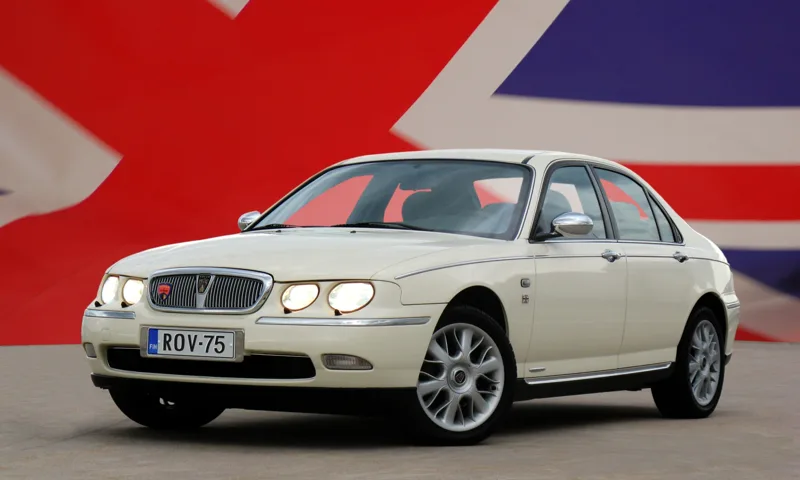
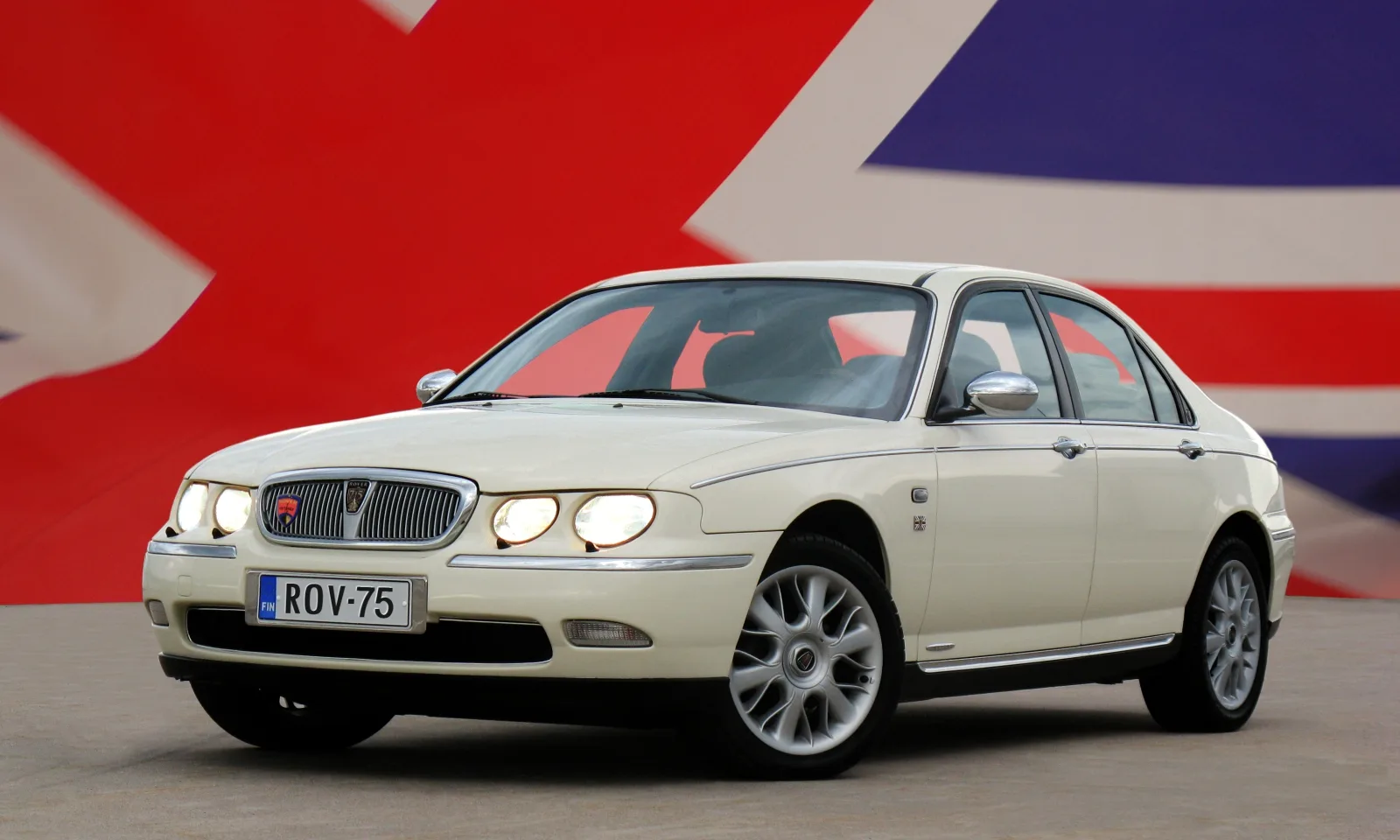
In 2005, after MG Rover Group had entered administration, Nanjing acquired some of its assets along with those of Powertrain Ltd. The purchase covered the MG, Austin and other dormant British brands, plus tooling and know-how for the MG ZT and MG TF. Honda repossessed some equipment and blueprints, because its intellectual property sat inside the Rover 45 and MG ZS, both built on the Honda Domani. The deal also brought the Wolseley, Morris, Vanden Plas, American Austin, Princess and Sterling names.
The plan was to produce MGs at Longbridge and at a new factory in Nanjing's Pukou district. A third plant in Ardmore, Oklahoma, was never built. Engines, transmissions and cheaper models would shift to China, while the UK kept a facility to build the MG TF and to work on Euro IV engines and a new generation of vehicles. In 2007 Nanjing planned to build 13,000 cars based on the Rover 75 and MG ZT, renamed the MG 7, mostly saloons plus some MG 7T estates, and 3,000 MG TF convertibles. The Pukou plant was meant to reach a capacity of 200,000 cars, 250,000 engines and 100,000 gearboxes. The first MG range was just the MG 7 and TF, and the Rover Streetwise-based MG 3SW followed in 2008.
Longbridge had been one of Europe's most important car factories and the largest British-owned one, making Austin cars for most of the 20th century. After Abingdon closed in 1980 it became the home of MG from 1982. The site belongs to St. Modwen Properties, which bought 412 acres in 2003 and 2004 for 57.5 million pounds. In February 2006 Nanjing signed a 33-year lease on 105 acres, including the two main assembly plants, at about 1.8 million pounds a year, and 10 million pounds was estimated as the cost of reopening the factory. After the merger with SAIC, Longbridge became an SAIC facility.
Merger with SAIC
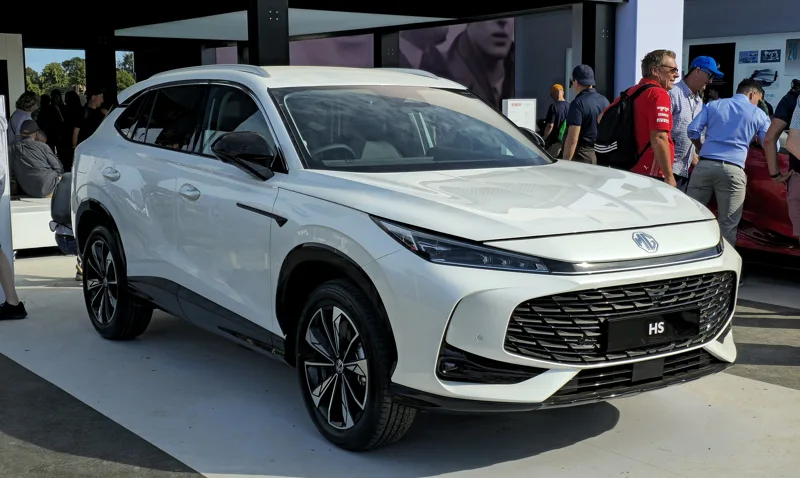
Nanjing's parent, Yuejin Automotive Group, finalised a long-planned merger with SAIC Motor in December 2007, following state policy to encourage consolidation. Talks had begun fitfully in 2001. Bidding alongside SAIC, Nanjing had bought the remaining MG Rover assets for close to US$100 million. Before that, as of 2003, the maker was majority-owned by Yuejin Automobile Group of Jiangsu, with two state firms created to dispose of bad bank loans, Huarong and Cinda, among the other shareholders.
Nanjing also founded an electric-van sub-brand with SAIC. Chang Da, established in 2009, builds electric light vans for last-mile delivery, and its first product, the Chang Da H9, was launched in 2017 after three years of development. Fleets could buy or lease it.
One state truck workshop, one private motorcycle shop and one battery maker: three routes into the Chinese car business.
Lifan Group, from motorcycles to cars
Yin Mingshan, a former political dissident, founded Lifan in 1992 as a small repair business for motorbikes. It was first called Chongqing Hongda Auto Fittings Research Centre and became Lifan Industry Group in 1997. By 2004 it was being called China's largest private motorcycle manufacturer. It added buses in 2003, and its non-vehicle activities include sports shoes and winemaking.
The Lifan cars
Car production began in 2005 with the LF6361/1010, a small minivan and pickup built from the 1999 Daihatsu Atrai. In December 2005 came Lifan's first independently developed car, the 520 sedan, with a Brazilian Tritec engine. The 520 sat on the chassis of the 1991 Citroen ZX. The 320 hatchback, sold from 2008 to 2016, has been described as a fairly straightforward copy of the Mini. Other cars included the 620 compact sedan, the 720 and 820, and the X60, Lifan's first SUV, built from 2011 to 2018. The company also built the Foison and Xingshun minivans and mini trucks based on them. Many of the models ran into 2020, and the Xingshun carried on until 2022.
Lifan listed on the Shanghai Stock Exchange in late 2010. In 2011 its listed entity reported revenue of $1.83 billion and profits of $62 million. On 4 July 2014 it agreed to become MV Agusta's sole distributor in China. Founder Yin and his family were worth $1.3 billion as of 2014.
Selling abroad
Chinese state permission for exports arrived in 1998. Lifan has sent passenger cars to 51 countries, and in 2010 only Chery rivalled its automotive exports. Its motorcycles reached Japan in 2001 and 18 European countries after 2003, and cars have sold in Laos and Syria since 2009. Some exports travelled as knock-down kits, to be assembled in small local workshops, which is an easy way into developing markets.
Local assembly has spread: Vietnam from March 2007, Russia from August 2007, Azerbaijan in early 2010 and Uruguay in 2010 with capacity of 40,000 units a year. In Ethiopia the 520 was assembled from 2007 to 2010 as the Abay by Holland Car Company, and by 2016 the facility, set up in 2014, could make five models and sell about fifty cars a month at prices from $15,000 to $30,000. By the end of 2006 Lifan owned over 3,800 patents, more than any other Chinese automaker, although 346 of them sat with its car division.
It also fought Honda in court. In 2004 Lifan was ordered to stop selling motorcycles under the brand name "Hongda" after a successful lawsuit by Honda, and Honda launched a separate suit that year over badges similar to its own.
Debt, bankruptcy and Geely
By the end of 2017 Lifan's cash balance had shrunk from 3.1 billion yuan to 370 million yuan, and it had drawn only 450 million yuan of 12.6 billion yuan in credit lines from 25 banks. In 2018 it raised about 4 billion yuan by selling land to the government and its unit Lifan Motors to the electric vehicle start-up Li Auto. By June 2019 its debt totalled 31 billion yuan ($4.4 billion), 60% due within a year, against assets of 41.5 billion yuan.
On 6 August 2020 Lifan said its controlling shareholder could not pay debts that had fallen due, and applied to the Chongqing No. 5 Intermediate People's Court for bankruptcy reorganisation. Shares were suspended for one trading day, then renamed *ST Lifan under a delisting risk warning. In October 2020 the China Securities Regulatory Commission investigated founder Yin Mingshan, his wife and their children for suspected violations.
In January 2021 the group was renamed Lifan Technology, with the Manjianghong Fund and Geely Maijie coming in as investors and Xu Zhihao of Geely Holding Group as chairman. The car business restarted in May, and on 13 December Geely Auto and Lifan jointly invested in a joint venture. Under Geely, Lifan is more focused on original vehicle development for taxi customers and battery swap support. In March 2025 Lifan Technology was renamed Chongqing Qianli Technology.
Kandi Technologies and its small electric vehicles
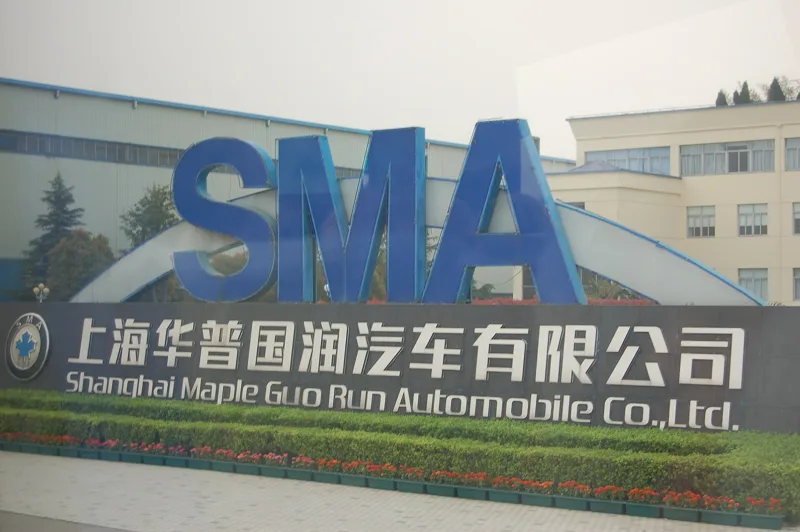
Kandi, listed on NASDAQ as KNDI, is a manufacturer of batteries and electric vehicles founded in 2002 in Jinhua, Zhejiang, by Hu Xiaoming. In February 2013 it announced a joint venture with Shanghai Maple, a Geely subsidiary, with equal ownership and registered capital of 1 billion yuan ($160 million), signed on 22 March 2013. Geely chairman Li Shufu was its first chairman and Hu its general manager. In 2016 Geely Auto sold its stake to Geely Holding. Kandi also works with Geely on the Gleagle brand, where Geely gave design input and Kandi manufactured the EX3.
The Hangzhou car-share experiment
In July 2012 Kandi agreed with the city of Hangzhou to supply 20,000 electric vehicles for a pilot leasing programme. In 2013 it announced Kandi EV Car Share, which ran only Kandi electric cars, handed out through an automated parking system dubbed a car vending machine. Leases covered insurance, maintenance and power through battery swaps at the garages, and Kandi planned to put 100,000 cars in front of Hangzhou residents over two years. Forbes reported that by 11 July 2012 Kandi had delivered more than 40,000 vehicles through car sharing, then the largest scheme of its kind in the world.
A network of up to 750 garages, built with Geely Auto, was envisaged, but only a few were finished and the project reportedly moved to horizontal street parking kiosks. In 2019 Kandi signed a non-binding agreement to supply vehicles to a ride-sharing platform, and in 2020 it helped found a ride-sharing company called Ruiheng.
The models
| Model | Type | Key figures |
|---|---|---|
| K17 | Electric car | Debuted 5 August 2016; based on the Geely Englon SC5-RV platform; used in police patrol fleets in Hangzhou |
| EX3 (formerly K26) | Electric SUV | Launched 2017; 380 km (240 miles) range; top speed 110 km/h (68 mph) |
| K23 | Electric MPV | 41.4 kWh battery; 302 km (188 miles) range; production from 2018 |
| K27 | Four-door electric car | 17.69 kWh battery; 161 km (100 miles) range |
| K32 | Electric UTV | 21 kW (28 hp); 20.7 kWh with 97 km (60 miles) or 50 kWh with 240 km (150 miles); not for public roads |
Selling in America
In 2019 Kandi said the US National Highway Traffic Safety Administration had approved its EX3 and K22 models for export to the United States, and it shipped 50 to 100 vehicles in late May and early June. In July 2020 it announced sales in Dallas-Fort Worth would start that summer, with the K27 and K23 as the first two cars. The K27 is marketed as one of the cheapest EVs in the US, potentially under $10,000 after federal and state incentives. In July 2024 Kandi America partnered with Lowe's on a limited-edition set of 32 golf carts with NFL team designs, and on 2 December 2024 it appointed Bin Yu as chief executive of its US subsidiary, SC Autosports.
The money has been uneven. Kandi sold 1,215 EVs in China in the first quarter of 2014 and 4,114 in the second, growth of 238%, for 5,329 in the first half. Its city car cost 41,517 yuan ($6,317) in 2015, and the China Association of Automobile Manufacturers reported 16,376 sold that year. In 2023 net revenue reached $123.6 million, its highest in three years, with a net profit of $1.7 million after a net loss of $12.9 million in 2022.
In November 2020 Hindenburg Research, a short-selling firm, accused Kandi of faking at least 55% of its sales. Kandi replied that the report contained "numerous errors, misstatements of historical facts, inaccurate conclusions, and superfluous opinions".
The three makers compared
| Maker | Founded | Based | Core business | Key partner |
|---|---|---|---|---|
| Nanjing Automobile | 1947 (history) | Nanjing, Jiangsu | Trucks, buses, MG | Iveco, Fiat, SAIC |
| Lifan Group | 1992 | Chongqing | Motorcycles, small cars | Geely |
| Kandi Technologies | 2002 | Jinhua, Zhejiang | Batteries, small EVs, golf carts | Geely |
What are Nanjing, Lifan and Kandi doing now?
Nanjing is a subsidiary of SAIC, and the Wuxi factory it once used now builds the Maxus commercial van for the larger group. Lifan is Chongqing Qianli Technology under Geely-linked leadership. Kandi, through Kandi America, sells UTVs and mini golf carts in North America alongside its cars.