From 1832 experiments and 1899 speed records to 21 million plug-in sales in 2025, a plain guide to battery electric cars and their trade-offs.
An electric car is a road vehicle powered mainly by electric motors and a battery that is charged from the grid. Battery electric models are the core of the category, and plug-in sales reached 21 million worldwide in 2025, up 20% on 2024.
Electric cars are road vehicles that take their main power from a battery and electric motors rather than an engine. Battery electric models sit at the core of the category, and they are quieter, more responsive and cheaper to run than many petrol cars.
What counts as an electric car?
An electric car is a road vehicle that uses electricity as its main source of propulsion. The term usually means a battery electric vehicle, which draws only on the power held in its battery pack. Broader definitions also include plug-in hybrids, range-extended and fuel cell electric vehicles.
Compared with combustion cars, battery electric cars are quieter, more responsive and more energy-efficient, and they produce no exhaust emissions. They generally have lower life-cycle greenhouse gas emissions, although the size of the climate benefit depends on the vehicle, the electricity mix, manufacturing and lifetime use.
Low-speed electric vehicles form a separate class, with limits on weight, power and maximum speed. The United States calls them Neighborhood Electric Vehicles, while Europe treats them as electric motorised quadricycles. They are allowed on certain public roads, but they are not highway cars.
Battery electric cars are quieter, quicker to respond and cheaper to run, and they now sell in the tens of millions.
How do electric cars work?
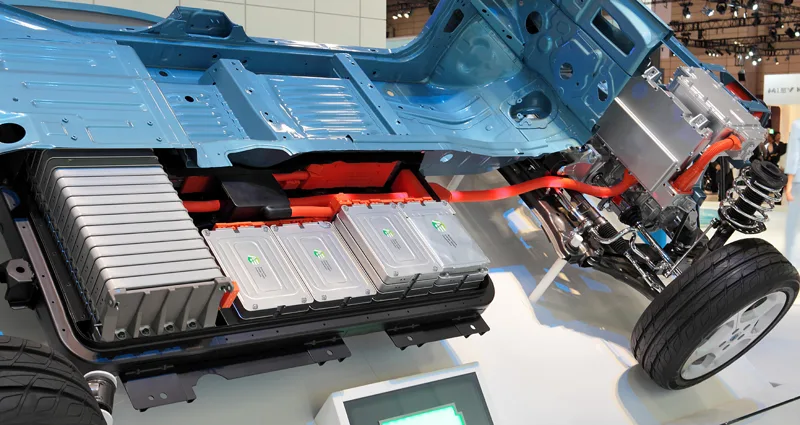
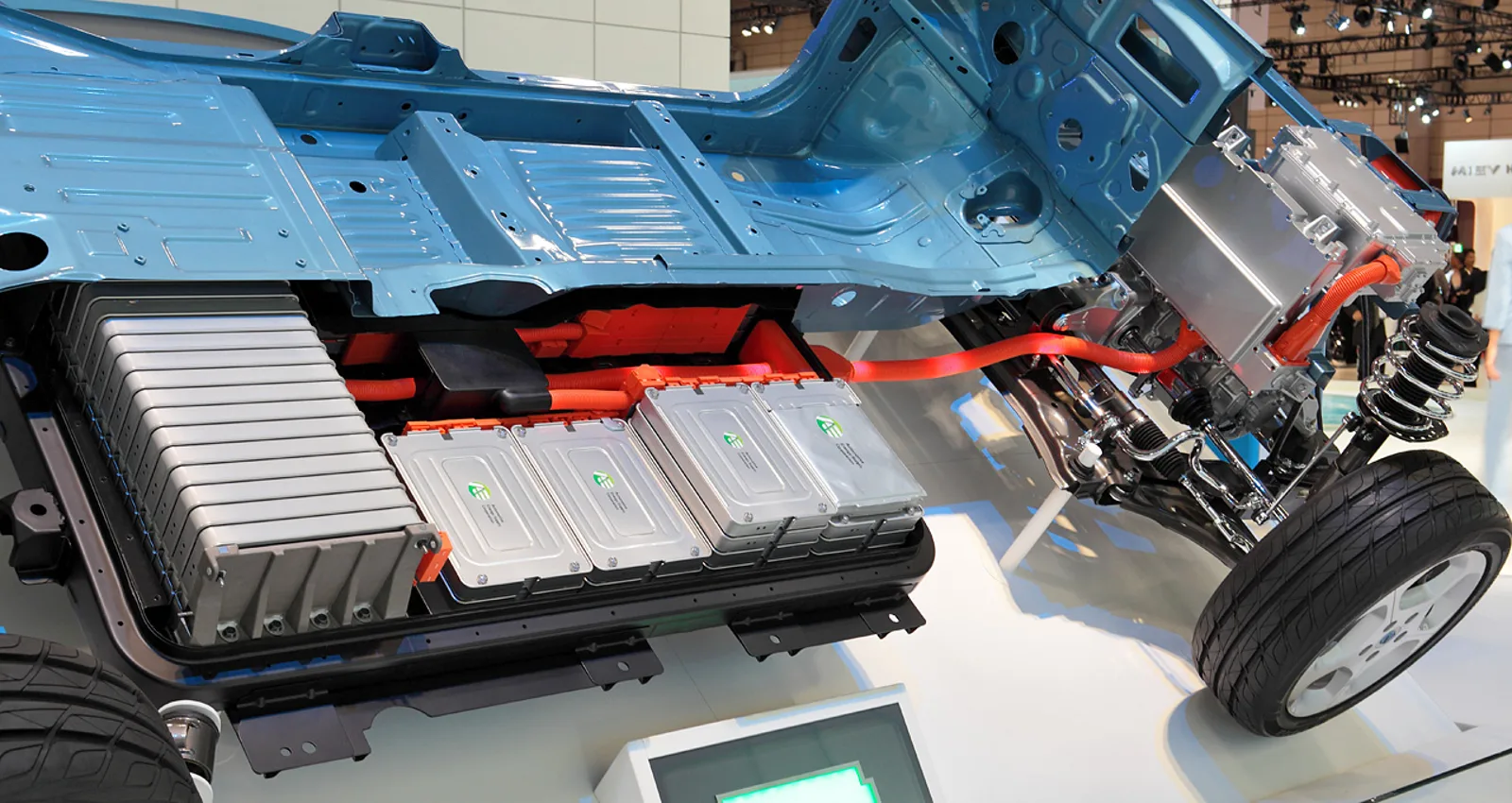
Electric motors give electric cars high power-to-weight ratios and high torque from a standing start. Most use a fixed-ratio gearbox with no clutch, and regenerative braking can return part of the energy normally lost when slowing down to the battery.
Some designs put a motor in each wheel hub or beside the wheels, and some drag racers use two-speed manual gearboxes. The Rimac Concept One electric supercar was claimed to reach 0-97 km/h (0-60 mph) in 2.5 seconds.
Combustion engines are limited by thermodynamics. A petrol engine uses only 15% of its fuel energy to move the car or power its accessories, and a diesel can reach 20%. Electric vehicles convert over 77% of their electrical energy to the wheels, although the weight of the batteries offsets some of that advantage.
Regenerative braking is the most common form of energy recovery in these cars, and it can reclaim up to a fifth of the energy that would otherwise be lost when slowing. Dual-motor designs can run mostly on one motor and call on the second when more power is needed.
Who built the first electric cars?
The Scottish inventor Robert Anderson developed a crude electric carriage between 1832 and 1839. Experimental electric cars then appeared through the 1880s, and in 1888 Andreas Flocken designed the Flocken Elektrowagen, which is regarded as the first real electric car.
In 1881 Gustave Trouve showed an electric car powered by an upgraded Siemens motor at a Paris electricity exhibition. In 1884 Thomas Parker built one in Wolverhampton, England, using his own high-capacity rechargeable batteries. Andrew Morrison introduced an electric car to the United States in 1890.
Electricity was among the preferred methods of automobile propulsion in the late 19th and early 20th centuries, because it offered comfort and easy operation that the era's combustion cars could not match. The electric vehicle fleet peaked at approximately 30,000 vehicles.
Why did electric cars lose ground to petrol?
Electric cars stayed popular until advances in combustion engines left them behind. Electric cars were valued for their comfort and ease of operation. Petrol cars offered shorter refuelling times and lower production costs, and the 1912 introduction of the electric starter motor, which replaced hand-cranking, made them more attractive still.
Electric cars still found commercial work. In 1897 Walter Bersey's electric cabs became the first self-propelled vehicles for hire in London, at a time when cabs were horse-drawn. New York City ran a fleet of twelve hansom cabs and one brougham that year, built on the Electrobat II.
Six electric cars held the land speed record during the 19th century. The last of them, La Jamais Contente, was rocket-shaped, and Camille Jenatzy drove it to 105.88 km/h (65.79 mph) in 1899, beyond the 100 km/h barrier.
How did battery cars return to the road?
In the early 1990s the California Air Resources Board pushed for lower-emissions vehicles, and automakers responded with electric models, although many were later withdrawn. Tesla began development of the Roadster in 2004, and the car first reached customers in 2008 as a highway-legal all-electric car with lithium-ion cells.
The Roadster also managed more than 320 km (200 miles) on a single charge, a first for a production all-electric car. The 2009 Mitsubishi i-MiEV was the first series-production electric car legal for highway use, and it was also the first to pass 10,000 sales. The Leaf arrived in 2010 and soon overtook the i-MiEV as the top-selling all-electric model.
Better Place developed battery charging and swapping services, but went bankrupt in 2013. Battery progress and concern about greenhouse gases and city air quality revived demand in 2008. Through the 2010s China's EV sector grew quickly with state backing.
In July 2019 Motor Trend named the Tesla Model S its ultimate car of the year. In March 2020 the Model 3 overtook the Leaf as the top seller among electric cars, after more than 500,000 units had been delivered, and it hit 1 million units in June 2021.
How many electric cars are sold, and where?
Worldwide, 21 million plug-in electric cars were sold in 2025, more than a quarter of new car sales and a 20% increase on 2024. China has the largest stock of electric vehicles, with cumulative sales of 22.09 million units through December 2024, although that figure includes buses and other heavy commercial vehicles.
In 2023 the Tesla Model Y became the world's best-selling car. BYD surpassed Tesla as the top-selling electric vehicle maker in the fourth quarter of 2023, selling 526,409 battery electric cars against Tesla's 484,507 deliveries in the same quarter.
In the United States, electric vehicle sales reached 187,000 in 2021, which was 6% of light-duty vehicles. California took nearly 40% of purchases. Florida, Texas and New York followed with 6%, 5% and 4.4% respectively.
Norway stands out, with 9 of 10 cars sold there being electric. Tax rebates for electric vehicle purchases and a wide charging infrastructure explain much of that result.
What does an electric car cost to run?
Electric cars typically have a much lower cost of ownership than combustion cars, although they were somewhat more expensive to buy in 2024. Electricity generally costs less than petrol per kilometre, and EV drivers can save approximately 50% on maintenance and repair because of their simpler mechanical structure.
Purchase prices are narrowing the gap. In 2024 small EVs in China were roughly half the price of small petrol cars, and electric SUVs became cheaper than petrol ones in China for the first time that year. In 2026, EVs in the UK had become cheaper to buy than petrol cars.
Total cost still depends on distance, because the more a car is driven each year, the more likely an EV is to be cheaper overall. Petrol and electricity prices both vary by location and even time of day, so local rates matter.
The largest cost item is the battery. Battery prices fell from 605 euros per kWh in 2010 to 170 euros in 2017 and 100 euros in 2019, and LFP batteries are cheaper than the more powerful NCM cells.
How long do electric car batteries last?
Electric car batteries often outlast the vehicles they power, with minimal degradation. Industry warranties typically cover them for 8 years or 100,000 miles, and they guarantee that capacity is retained, typically at 70%. Most owners will never need a replacement pack.
The main long-term financial risk is an out-of-warranty battery replacement. A replacement pack typically costs between $5,000 and $16,000, and quotes for large trucks such as the Long Range Ford F-150 Lightning have approached $47,000.
Batteries usually last 15 to 20 years in the car and then more years in another use. Degradation is more likely if the battery is frequently charged to 100%, and any loss may take several years to become noticeable.
How do you charge an electric car?
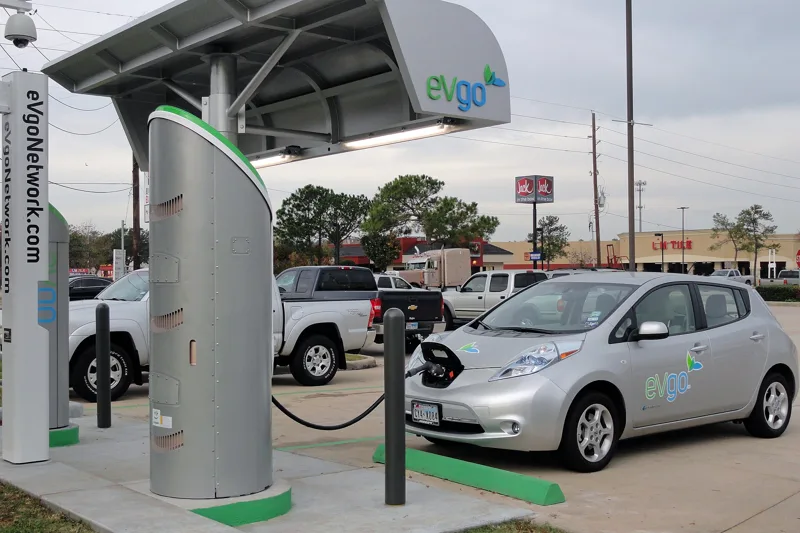
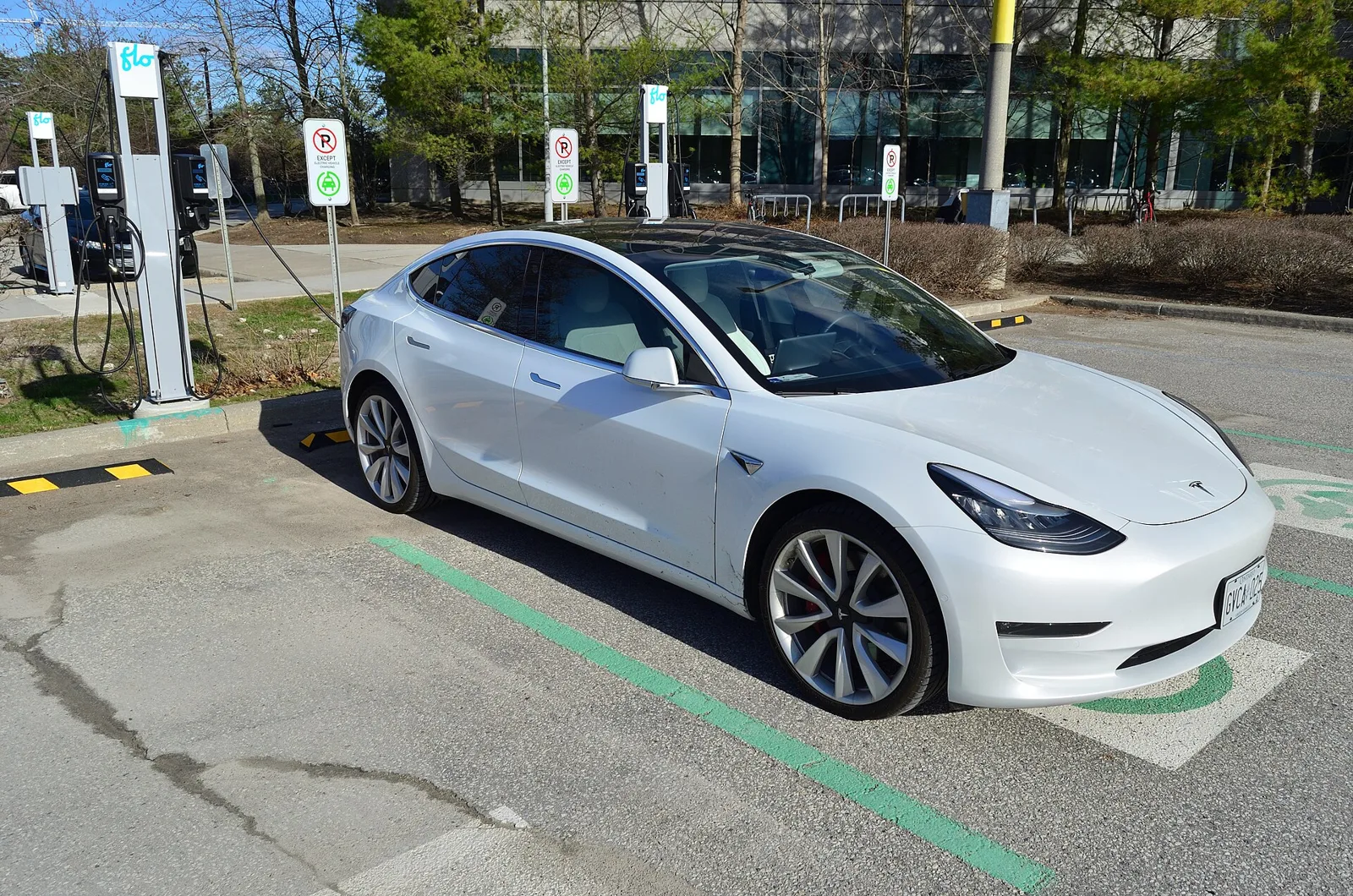
Most owners charge overnight at home from a wallbox, which as of 2021 typically delivered 7 kW. Public fast chargers supply direct current and reached 350 kW as of 2021, refilling a battery to 80% in 15 to 20 minutes, while slower units may take two hours.
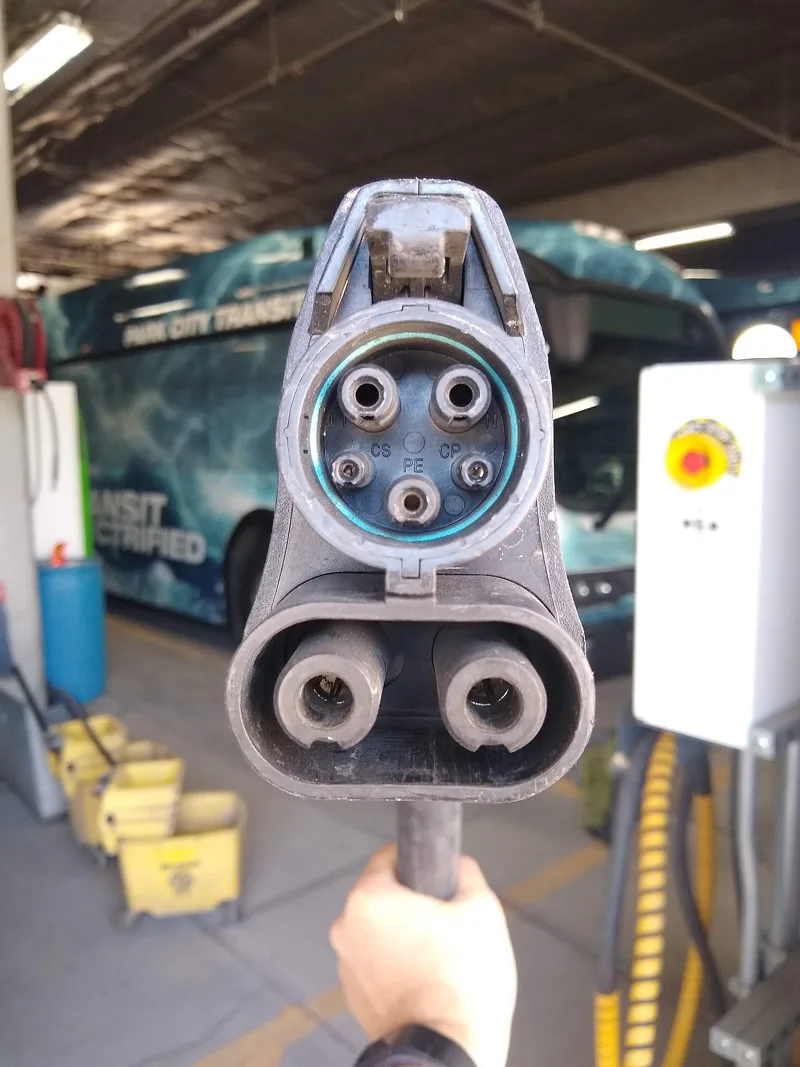
Most electric cars use a wired connection, and plugs are not universal around the world. Vehicles with one plug type can generally use other stations with adapters. The table sets out the main standards by region.
| Region or market | Standard or connector | Notes |
|---|---|---|
| Most widespread globally | Combined Charging System (CCS) | The most widespread charging standard |
| Europe and China | Type 2 | The most common plug, with different versions used in China and Europe |
| China | GB/T 27930 | Standard used in China |
| Japan | CHAdeMO | Standard used in Japan |
| North America | Type 1 (SAE J1772) | Common in North America, rare elsewhere, and does not support three-phase charging |
| United States | Mixed | No de facto standard: CCS, Tesla Superchargers and CHAdeMO all in use |
Range is shaped by battery size, aerodynamics, weight, the weather and the performance requirements of the vehicle. Most electric cars show an expected range on the display, although the estimate can differ from the actual range over a route. Wireless charging is less common, but some cities use it for taxis.
How green are electric cars over their lives?
Across their whole life, battery electric cars usually emit far less greenhouse gas than similar petrol or diesel models. A 2025 assessment of cars sold in the European Union estimated 73% fewer life-cycle emissions than petrol cars, while a 2023 US study found a 65% reduction relative to combustion vehicles.
Production is still heavier. Battery and vehicle manufacturing usually causes more emissions than a comparable combustion car, but the more efficient drivetrain and cleaner electricity normally offset that during use. A forward-looking study that paired 5,000 vehicle configurations across 16 regions found battery electric cars had a smaller carbon footprint than hybrids in 99% of cases.
The break-even point, where the extra production emissions are recovered through driving, ranged from about 17,000 to 70,000 km across recent assessments. The Intergovernmental Panel on Climate Change regards electric vehicles running on low-emissions power as the land transport option with the most potential to cut life-cycle emissions.
The picture is not uniform. A German government study found a battery electric compact car worse than a petrol car for acidification and fine-particle formation, mainly because of battery production and coal-based electricity. Batteries also need lithium and graphite and, depending on chemistry, nickel and cobalt.
What are the safety concerns with electric cars?
Electric cars are covered by the international standard ISO 6469, which addresses the battery, functional safety and protection against failures, and electrical hazards. Like combustion cars, they can catch fire after a crash, and firefighters may need far more water and a thermal imaging camera to deal with a battery fire.
Weight is a trade-off. Batteries make electric cars heavier than comparable combustion cars, and that protects their own occupants but adds risk to others. On average, a crash involving a 900 kg (2,000 lb) vehicle causes about 50% more injuries to its occupants than one involving a 1,400 kg (3,000 lb) vehicle.
Quiet running is also a concern. Research published in the British Medical Journal in 2024 found that in the United Kingdom between 2013 and 2017, electric cars killed pedestrians at twice the rate of combustion vehicles, because they are harder to hear in urban areas. Some jurisdictions now require EVs to generate sounds when moving.
Electric cars produce no tailpipe exhaust during operation, which reduces local exposure to nitrogen oxides and exhaust particles. Tyre and road wear particles remain, though regenerative braking generally reduces brake wear and maintenance.
What are the main drawbacks of electric cars?
The main drawbacks are range anxiety, charging time, battery replacement costs, extra weight and the need for materials such as lithium and graphite. Range anxiety and charging time remain psychological obstacles for some buyers, even though fast chargers are widespread in some areas.
Battery replacement is the largest financial uncertainty for owners after the warranty ends. Buyers also face a change in driving habits, because drivers need to decide when to stop at a charging point en route, and some roadside assistance organisations offer charge trucks in an emergency.
Electric cars have clear advantages in cost of maintenance and local air quality, but their weight, battery materials and charging infrastructure still set limits. Those limits matter most for buyers who drive long distances without a home charger.
How are governments and trade rules shaping the market?
Governments support plug-in cars through grants and tax credits, exemptions from road tolls, access to bus lanes and charging infrastructure rules, and some have legislated phase-outs of fossil fuel car sales. Trade measures have also grown, with the European Union imposing duties on Chinese battery electric vehicles in 2024.
The European Commission's duties followed a vote by EU member states on 4 October 2024. They were levied in response to alleged Chinese state subsidies, which the EU views as potentially violating World Trade Organization rules. China launched a WTO complaint in response.
In the United States the first Trump presidency imposed a 27.5 percent tariff on Chinese-made cars. In May 2024 the US raised the import tariff on Chinese EVs to 100%, and in August 2024 Canada announced a similar 100% tariff. In 2025 Canada replaced that tariff with a quota after a bilateral agreement with China.
Chinese manufacturers have responded by shifting their expansion towards price-sensitive markets such as Southeast Asia and Latin America. Norway set a national goal that by 2025 all new car sales should be zero-emissions vehicles, battery electric or hydrogen.
What do forecasts predict?
Deloitte predicted total global EV sales of 31.1 million in 2030. The International Energy Agency projected a global EV stock of almost 145 million by 2030 under current policies, or 230 million if Sustainable Development policies were adopted. These are forecasts rather than sales records.
Africa is a long way behind. As of 2024 over 700 million people lacked electricity, mostly in sub-Saharan Africa. There were just over 20,000 electric vehicles and less than 1,000 charging stations across the continent, although manufacturers have already built or plan production plants in 21 African countries.
The World Bank and the African Development Bank plan to give 300 million people in the region access to electricity by 2030. Whether that happens will shape how far electric cars can spread across the continent.