The fear of being stranded in an electric car has a dated origin, a trademark filing and a graveyard of attempted cures.
Range anxiety is the fear that a vehicle lacks the battery or fuel to reach its destination. The term first appeared in print in September 1997. Cures tried include charging networks, battery swapping, range extenders and loan cars, while studies suggest most daily trips fit within an electric car's range.
A study by the American Automobile Association concluded that the cure for range anxiety is to own an electric vehicle. Industry has not waited for that to take effect. It has built charging networks, tried swappable batteries, fitted petrol generators and handed out free rental cars, with mixed results.
The phrase has a documented origin and a long list of attempted cures. Some worked, some collapsed, and some studies suggest the worry may be exaggerated.
What is range anxiety?
Range anxiety is a driver's fear that a vehicle does not hold enough energy, in fuel or battery, to cover the distance to its destination and will leave its occupants stranded part of the way. As of 2010 the term was used mainly about battery electric vehicles, and it was regarded as a leading psychological obstacle to mass uptake of electric cars.
The words first surfaced in print in the San Diego Business Journal on 1 September 1997, in a piece by Richard Acello about worries among drivers of the General Motors EV1. General Motors applied on 6 July 2010 to trademark the phrase, saying it wanted to promote awareness of what electric vehicles can do. The Norwegian equivalent, rekkeviddeangst, took second place in the Norwegian Language Council's list of words of the year for 2013.
The cure for range anxiety is owning an electric car.
Is range anxiety justified?
It depends whose evidence is read. Toyota's national manager of advanced technology, Bill Reinert, said in 2010 that range anxiety would limit the use of all-electric cars in some applications even if battery costs came down. On the other side, recent studies find that an inexpensive electric car can cover most daily trips on one charge, which suggests the worry may be exaggerated.
Real constraints remain. A battery electric car can only go as far as its battery allows, so long-distance travel may be a poor fit. Recharging takes longer than refuelling and depends heavily on a sufficient charging network. Lack of information makes things worse; a good navigation system that knows the battery capacity and the distance remaining can reduce the fear, and some of it can be dealt with before buying a car at all.
What are the main cures for range anxiety?
The list of strategies is short: wide charging coverage, bigger batteries at an affordable price, battery swapping, range extenders, free loan vehicles for long trips, and navigation that predicts range accurately. Each has a history.
Charging networks
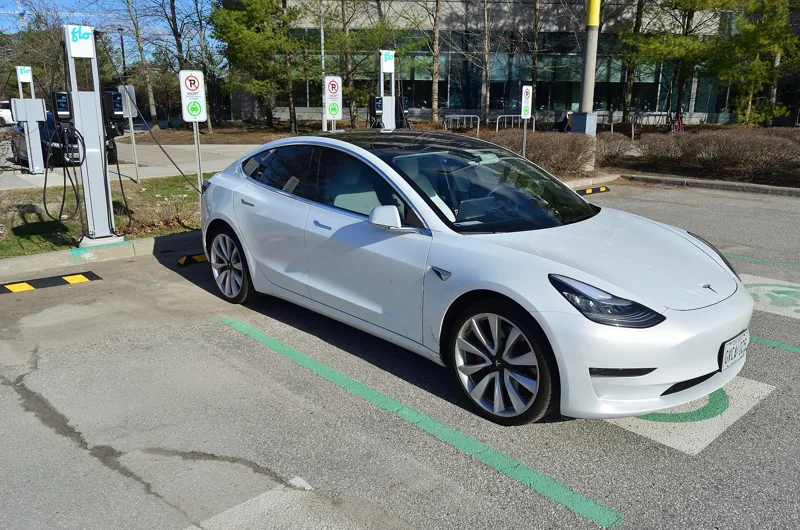
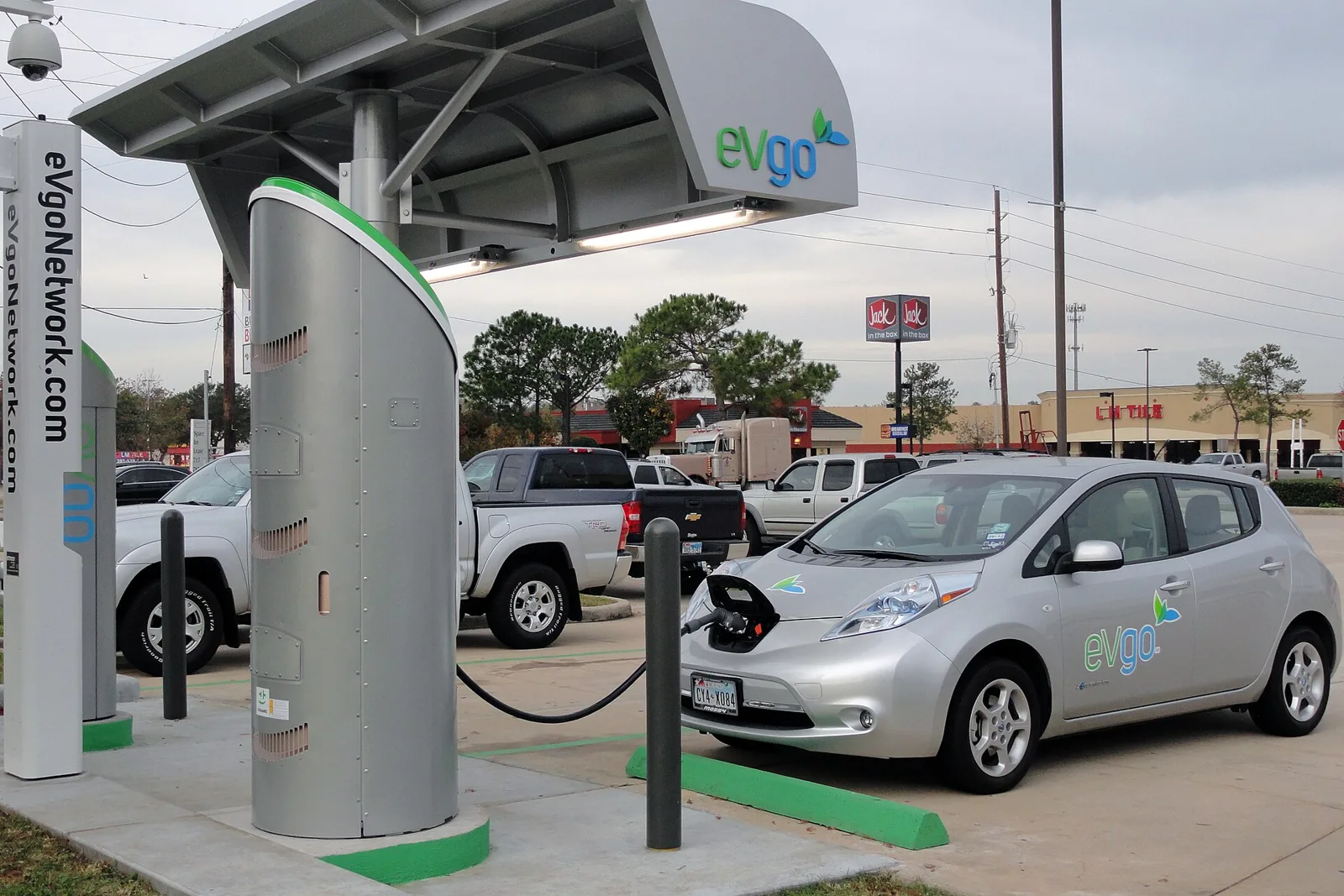
Fear of being stranded has prompted public demands for wide charging networks. By December 2013 only Estonia had one with nationwide coverage, with fast chargers along highways at intervals of between 40 and 60 km (25 and 37 miles) and a denser spread in urban areas. Its land area and population density are likely reasons it was viable, and comparisons with other countries need care, because Estonia covers less ground than many first-level regions elsewhere. It has half the area of West Bengal, and three US counties are larger.
Charging can also come to the car. The American Automobile Association began a road-recharge pilot in six cities, Tampa, Seattle, San Francisco, Portland, Los Angeles and Knoxville. Members who drive electric cars can call on a truck with level 3 charging capacity, enough to take a Nissan Leaf to 80% capacity in 30 minutes.
Bigger batteries and reserves
Manufacturers have also tried increasing battery capacity to stretch the range. REVA, an electric vehicle maker, has a proprietary technology called Revive: a battery reserve that drivers can release by texting or calling an operations centre. A further idea, proposed by Ridek, would let a vehicle's chassis be exchanged for one with a larger battery at a network of exchange stations before a long journey.
Does battery swapping work?
In theory a swap is simple: a depleted battery is exchanged for a charged one in about the time it takes to fill a petrol tank. Swapping is common today in warehouses with electric forklift trucks, and the idea is older than most people assume. The idea of an exchangeable battery service dates to 1896, when electric cars and trucks were competing with the petrol engine.
The first practical version came from the Hartford Electric Light Company. Its GeVeCo service ran from 1910 to 1924 and covered more than 6 million miles, selling electric trucks without a battery and charging owners a variable per-mile fee plus a monthly service fee for maintenance and storage. From 1917 a similar scheme in Chicago served owners of Milburn Light Electric cars.
Better Place
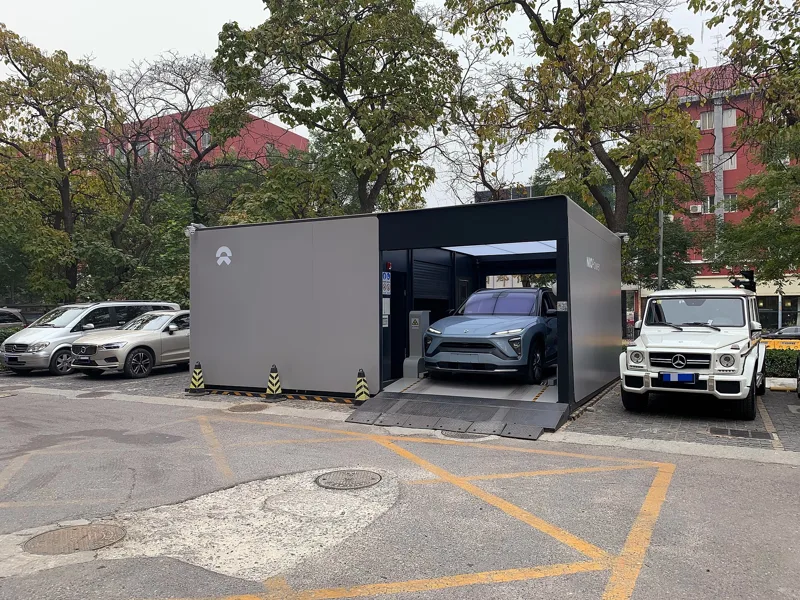
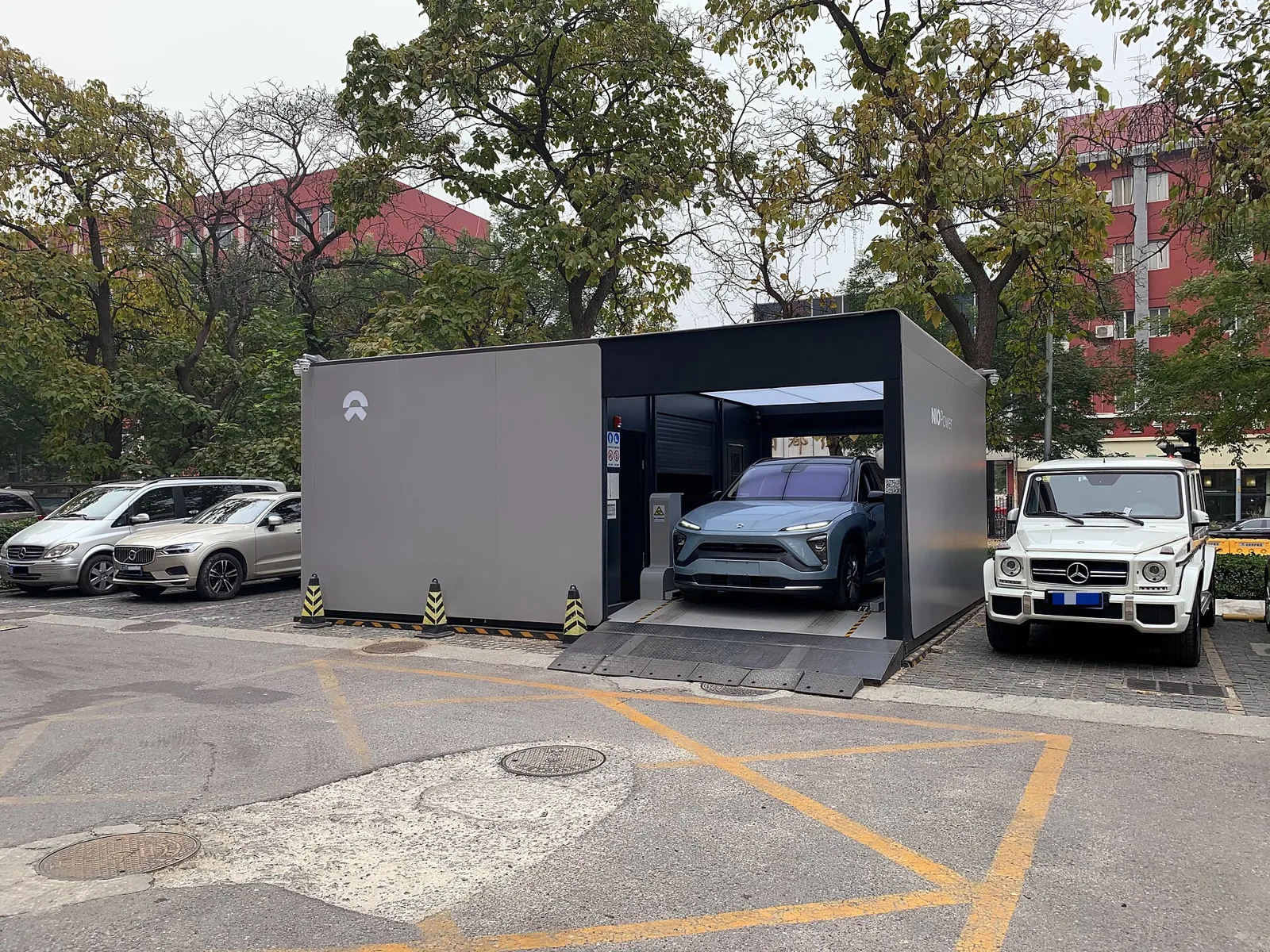
The first modern commercial swapping network was Better Place, which used the Renault Fluence Z.E. in Israel and Denmark. Its first station opened in March 2011 in Kiryat Ekron, near Rehovot, and a swap took five minutes. By December 2012, 17 swap stations in Denmark were fully operating, letting customers drive anywhere across the country.
Then it unravelled. Late in 2012 the company ran into financial difficulties, put its Australian roll-out on hold and filed for bankruptcy in Israel in May 2013. Its troubles were blamed on the heavy spending on charging and swapping infrastructure, roughly US$850 million of private money, and on a market far smaller than forecast. Israel received fewer than 1,000 of the Fluence Z.E. cars and Denmark around 400. Because the company owned the batteries, customers risked being left with a useless car.
Tesla's swap demonstration
Tesla designed the Model S so that its battery could be changed fast. In June 2013 the company announced an aim of adding swap bays to every supercharging site. At a demonstration it showed a swap taking just over 90 seconds, about half the time needed to refill the petrol car used for comparison. The first stations were to go along Interstate 5 in California, with the Washington, DC to Boston corridor to come next. Elon Musk put the price at about the same as 15 US gallons (57 litres) of petrol, around US$60 to US$80 at June 2013 prices, though pricing had not been settled.
Do range extenders and plug-in hybrids cure it?
Plug-in hybrids remove the concern by design: the petrol engine serves as a back-up, charging the battery or driving the wheels directly, so a PHEV can match the range of a conventional car wherever a filling station is reachable. Real-world habits are interesting, though. A June 2016 study by the Norwegian Institute of Transport Economics found plug-in hybrid owners in Norway cover 55% of their yearly distance, on average, in electric mode, rising to about 63% for work trips.
| Vehicle | Electric range | Backup |
|---|---|---|
| Chevrolet Volt, first generation | 40 to 80 km (25 to 50 miles) | Petrol generator in charge-sustaining mode |
| Chevrolet Volt, second generation | 85 km (53 miles) | Petrol generator |
| BMW i3 | 130 to 160 km (80 to 100 miles) | Range extender lifts total to 240 to 300 km (150 to 190 miles) |
| Toyota Prius Plug-in Hybrid | 18 km (11 miles), blended, US EPA estimate | Petrol and electricity together |
Not every plug-in works the same way. Parallel and series-parallel hybrids operate mostly in blended mode while the battery depletes, which is why the US EPA put the Toyota Prius Plug-in Hybrid's blended all-electric range at just 11 miles (18 km). Ford's C-Max Energi and Fusion Energi, and the Honda Accord Plug-in Hybrid, also spend most of their time blending.
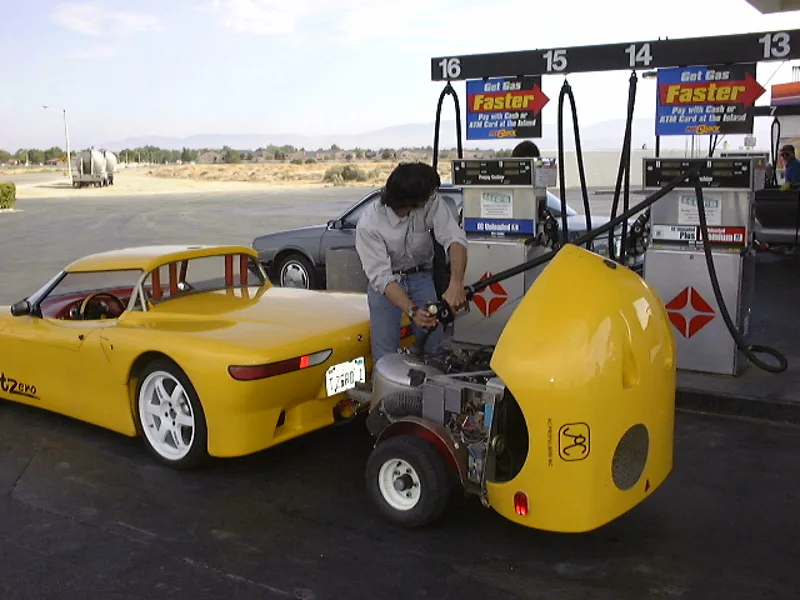
Series hybrids, also called extended-range electric vehicles, are built to run mostly on the battery, with a petrol or diesel generator to recharge it on long trips. The Chevrolet Volt and Fisker Karma are examples. General Motors says Volt owners passed 100 million miles in electric mode by 30 November 2012, spent more than 65% of their driving time on electricity alone and averaged about 900 miles (1,400 km) between fill-ups. By August 2016 the total reached almost 1.5 billion miles (2.4 billion km), 60% of all miles driven.
In 2014 the Idaho National Laboratory analysed 21,600 cars, all-electric and plug-in hybrid. Volt owners covered on average 9,112 miles a year in electric mode and Leaf owners 9,697, even though the Volt's electric range was about half the Leaf's.
The BMW i3 extender
BMW offered the i3 with an optional petrol range extender, a 647 cc two-cylinder engine from its C650 GT motorcycle with a 9-litre tank. The engine only starts when the battery falls to a set level and acts purely as a generator, lifting the range from 130 to 160 km to 240 to 300 km (80 to 100 miles to 150 to 190 miles). BMW made clear that it is an emergency backup to reach the next charging point and not meant for long-distance travel. The option cost an extra US$3,850 in the United States, 4,710 euros in France and 4,490 euros in the Netherlands.
Do carmakers lend a petrol car for long trips?
Some did. BMW planned mobility packages that included a conventional BMW on a set number of days a year, and in areas of high sales a roadside programme in which the assistance vehicle brings a charge instead of a tow, so the i3 can reach the next charger. In April 2013 Fiat North America announced that each Fiat 500e came with up to 12 days a year of free rental for its first three years, through a points scheme called ePass that could be spent on a petrol car from a major rental group; further points were added in the following two years.
How big has the plug-in car market become?
Series production of plug-in cars began in December 2008 with the plug-in hybrid BYD F3DM, then the all-electric Mitsubishi i-MiEV in July 2009. Retail sales only took off with the Nissan Leaf and the Chevrolet Volt in December 2011. Cumulative sales reached 1 million in September 2015, 5 million in December 2018 and 10 million in 2020, yet by the end of 2020 plug-in vehicles still made up just 1% of all passenger vehicles on the world's roads, two thirds of them pure electrics.
China held the largest stock at December 2021, with 7.84 million plug-in cars, or 46% of the world total. Europe had roughly 5.6 million plug-in cars and light vans, around 32%, and the United States had sold about 2.32 million. Germany passed 1 million by July 2021. Norway leads the world per head of population, and in 2021 registered the largest annual share ever, 86.2% of new car sales. As of December 2023 the Tesla Model Y was the best-selling plug-in car in history, and the BYD Song DM series the best-selling plug-in hybrid with over 1,050,000 sales.
The attraction explains the adoption. Electric drive vehicles typically convert about 80% of on-board energy into movement, against about 15% for petrol engines and 20% for diesels, and regenerative braking can recapture as much as a fifth of the energy otherwise lost slowing down. Running and maintenance costs are lower.
Where this goes next
Most of these cures arrived, stalled or failed. Tesla set a goal in 2013 of a swap station at each supercharging station. BMW said it was planning additional mobility packages for the i3. Ridek's chassis-exchange idea remains a proposal. Estonia's highway chargers, in place by the end of 2013, were the only nationwide network at that date. Better Place, whose swap model was the first commercial deployment, ended in bankruptcy in May 2013, and its experience shows how large the investment needed is.