The electric Fluence promised a battery change in minutes. How it worked, what it cost in each market, and how the Korean SM3 Z.E. kept going after Better Place collapsed.
The Renault Fluence Z.E. was an electric saloon with a 22 kWh battery and a 185 km NEDC range, shown in 2009 and sold from 2011. Its battery could be swapped in minutes at Better Place stations in Israel and Denmark until that company collapsed in May 2013. A fixed-battery SM3 Z.E. continued in South Korea.
A robot slid beneath the car, removed a depleted battery and fitted a charged one while the driver sat still, and the whole job took a few minutes. In a Tokyo taxi trial the average was 59.1 seconds. That was the promise of the Renault Fluence Z.E., an electric saloon unveiled at the 2009 Frankfurt Motor Show, and it was a promise that outlasted the company that made it. Better Place went bankrupt in May 2013, but a fixed-battery version of the car kept selling in South Korea for years afterwards.
What was the car underneath the Z.E.?
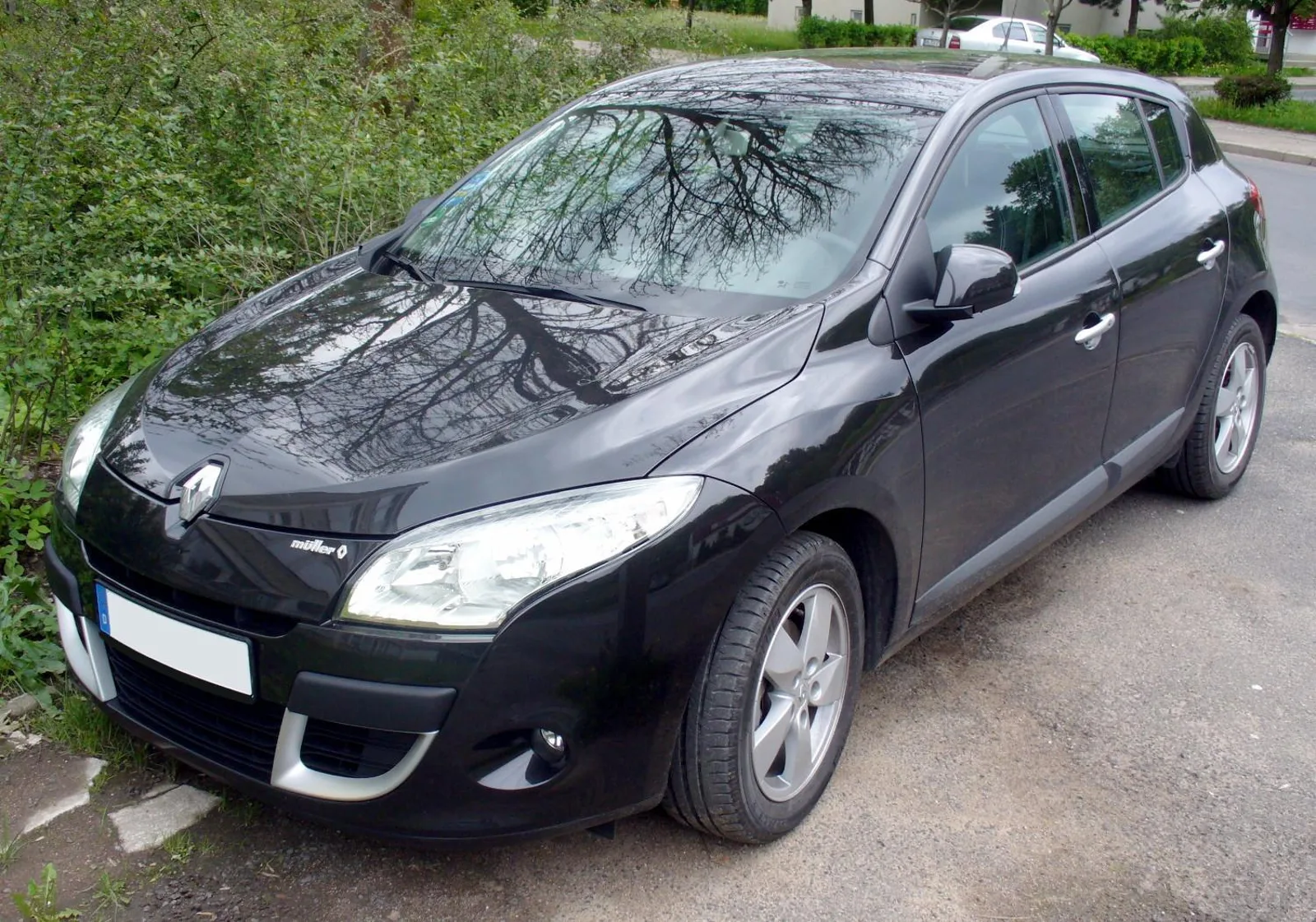
The conventional Fluence appeared in August 2009. It used the Renault and Nissan C platform and sat in size between the compact family saloon class and the upper medium segment. Its job was to fill a hole: the Megane range had offered a three-box saloon until the end of 2008, but it was never a big seller, and when the Megane III arrived there was no notchback version. The Fluence took over that role in France, Italy, Belgium and Ireland, and in Germany from August 2010. The same car was sold as the Renault Samsung SM3, which made its debut at the Seoul show in April 2009 and reached showrooms that November.
The first petrol engines were a 1.6-litre with 82 kW (110 hp) and a two-litre with 104 kW (140 hp), the latter available with a CVT. The diesel was a 1.5 dCi sold in 63 kW (85 hp), 67 kW (90 hp), 78 kW (105 hp) and 82 kW (110 hp) forms, all with a particulate filter. The strongest of them could be paired with Renault's EDC dual-clutch gearbox. Kerb weight began at 1,145 kg (2,524 lb) for the diesel and 1,056 or 1,080 kg for the petrol cars.
Renault facelifted the Fluence in 2012, showing it at the Istanbul Motor Show with the new corporate grille and standard projector headlamps, and added a new rear light cluster with LED brake lights in 2015. The Turkish plant at Bursa built it until 2016, and Santa Isabel in Argentina continued for Latin America until the end of 2018. On 12 July 2016 Renault revealed the Megane Sedan IV as its successor.
The swap took less time than the average forecourt queue, but the network behind it cost about US$850 million and still fell short.
Where else did the Fluence sell?
The saloon travelled widely. Gulf states, the United Arab Emirates among them, received it as a 2011 model shipped from Korea with a 1.6-litre (manual or CVT) or a 2.0-litre CVT, while Algeria and Israel imported from Turkey. Egypt received a Nissan HR16DE engine with 84 kW (114 PS; 112 hp) and a CVT after the facelift in the second half of 2013, and that arrangement lasted until the final production year of 2017. China received a Korea-sourced car from 2009, Mexico and Chile took a three-trim range of 2.0-litre cars with a six-speed manual or CVT, and TC Euro Car assembled it in Malaysia. In Argentina and Brazil the car was built locally, and in its most basic Latin American form it earned four stars for adult occupants and two for children from Latin NCAP in 2012.
What was the Fluence GT?
Argentina and Brazil also received the performance version. In November 2012 Renault worked with Renault Sport engineers from France and with local teams in South America to build the Fluence GT, the first Renault Sport product developed outside France. It took the Privilege trim as its base, added revised springs and dampers and used the same engine and gearbox as the Megane GT in Europe.
That engine was the 2.0-litre TCe 180, 1,998 cc with a bore of 82.7 mm and a stroke of 93 mm. It made 132 kW (177 hp; 179 PS) at 5,500 rpm and 300 N-m (221 lb-ft) at 2,250 rpm, helped by a Mitsubishi TD04-10T twin-scroll turbocharger chosen to reduce lag. The gearbox was a six-speed manual. The cabin gained a digital speedometer, aluminium pedals and leather sport seats, and the car reached 100 km/h (62 mph) in eight seconds with top speed limited to 220 km/h (137 mph). Phase 1 ran from November 2012 until July 2014, and a Phase 2 car called the GT2 was sold only in Argentina. Three colours were offered: Branco Glacier, Vermelho Fogo and Preto Nacre.
How did the Fluence Z.E. differ from the standard car?
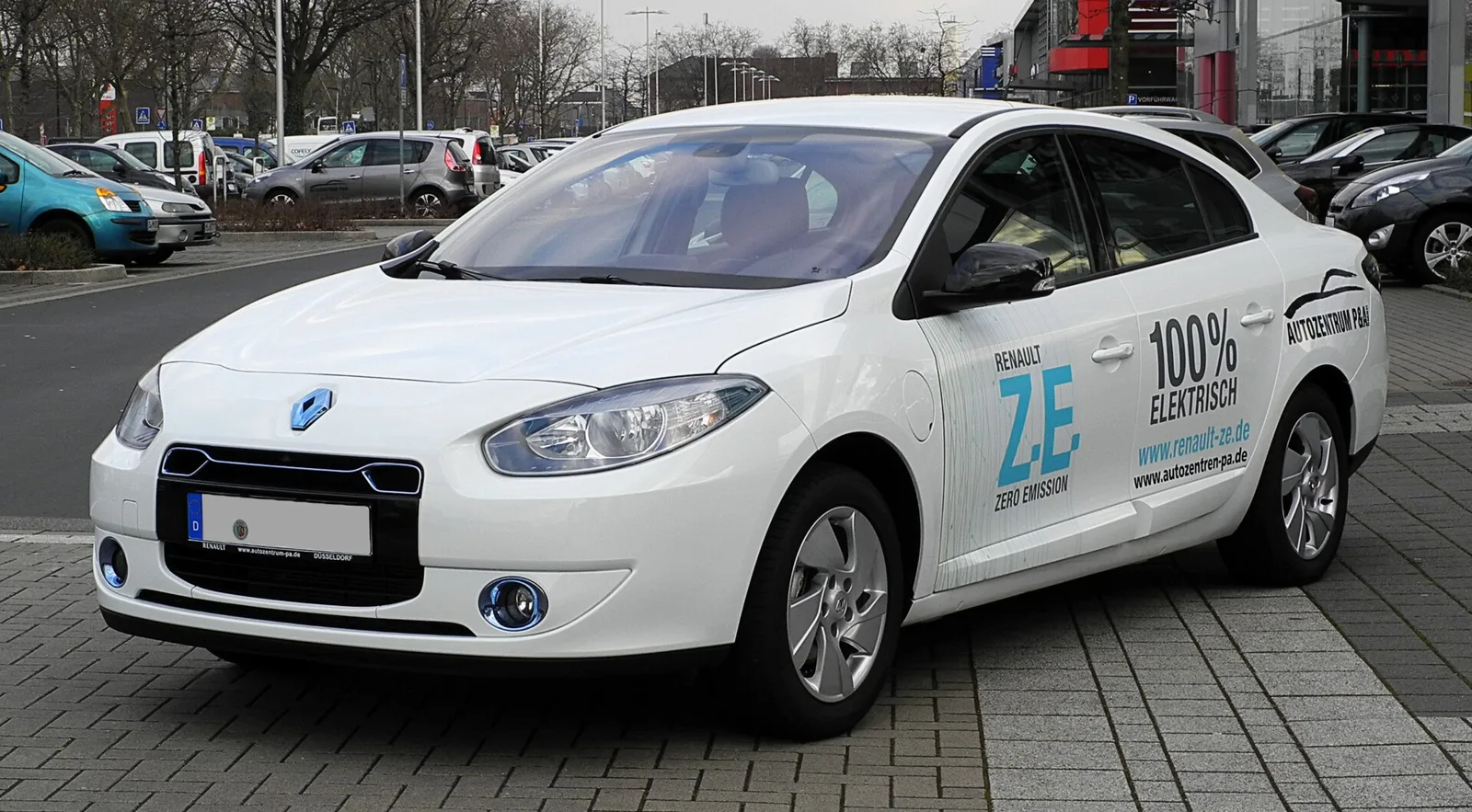
Renault revealed the electric Fluence in Frankfurt in 2009 as one of the cars in its Z.E. programme, and the same day the Israeli company Better Place said it would be the first electric car able to use the swappable-battery network it was building. Early material quoted a range of 160 km (99 mi); the figure later published on the NEDC combined cycle was 185 km (115 mi), with a top speed of 135 km/h (84 mph) in both cases. It was based on the Megane III platform and was built at the same Bursa plant as the petrol and diesel cars.
The body grew by 13 cm (5.1 in) to fit the battery behind the rear seats. That battery was a 22 kWh lithium-ion pack weighing 250 kg (551 lb). A planned Renault battery plant near Paris was held up by technical constraints, so the cells came from LG Chem of South Korea.
The synchronous electric motor had a rotor coil, weighed 160 kg (350 lb) and peaked at 70 kW (94 hp), with 226 N-m (167 lbf ft) of torque. Renault gave the car a PRND gate selector and a touch of creep in D, so drivers coming from automatics with combustion engines would find the car familiar.
How long did the Fluence Z.E. take to charge?
On an ordinary household socket drawing 10 A at 220 to 240 V, a full charge took 10 to 12 hours. With 16 A from a 3 kW public or specially installed home charge spot, the time fell to 6 to 9 hours. The swap alternative was a QuickDrop exchange at a dedicated station, which bypassed charging altogether.
How did battery swapping work?
A driver approached the station entrance. The in-car Oscar navigation system talked to the station's computers over Wi-Fi, while an RFID tag on the windscreen identified the subscriber. A barrier lifted and the customer drove forward to a marked spot, then followed dashboard and external screen instructions to select Neutral and turn the ignition off. After that everything was automated, much like a car wash. The car never needed to be vacated: a robot beneath removed the old battery and fitted a full one, the driver was told to restart, and an exit barrier opened.
The Tokyo trial station, working with taxis until the end of 2010, swapped a flat pack for a freshly charged 100-mile (160 km) one in 59.1 seconds on average. Then in August 2010 Better Place revealed a non-binding order for 100,000 Fluence Z.E. cars, and four months later it claimed that 70,000 had been sold from it, a year before its network opened to the public.
What did the car cost in each market?
In Israel, orders began in July 2011 at NIS 123,000, a little above a petrol car of similar size. Buyers also picked a service plan priced by annual mileage: the cheapest was NIS 1,090 a month for up to 20,000 km, and a higher package at NIS 1,599 a month covered up to 30,000 km. Plans included a home charger, access to the swap stations and roadside service. A bundled deal covering the car and three years of unlimited mileage up to 25,000 km a year cost NIS 157,500. The first production models were delivered in January 2012, with nearly 100 going to Better Place staff, and retail deliveries started in the second quarter. By December 2012, 518 cars had been sold, and 422 more followed in the early months of 2013, bringing the total to 940.
Danish buyers paid 205,000 DKK including VAT, equal to EUR 27,496 or US$38,378, and then a monthly fee for the switchable battery. Better Place offered five fixed-price packages based on distance covered, and the top one, for more than 40,000 km a year, cost 2,995 DKK a month. A private charging station cost a one-time 9,995 DKK. The first Danish station opened at Gladsaxe near Copenhagen in June 2011, 20 were planned, and 17 were operating by December 2012. Sales through Better Place began in late 2011, reaching 198 cars by the end of 2012 and 234 by April 2013, although the company reported between 400 and 500 customers when it failed.
French prices in 2012 started at EUR 26,300 before a EUR 5,000 government incentive, with the battery service from EUR 82 a month, and 727 cars were registered there through October 2014. In Britain the car reached showrooms in spring 2012 with a mandatory battery lease, which Renault argued made it the UK's cheapest electric car because the pack was worth more than GBP 7,000. Even so, only 79 were sold before it was withdrawn in 2014. Turkey, where the car was made, took 215 units up to 2013, and Estonia dropped the car from its ELMO programme.
Why did Better Place fail?
The firm filed for bankruptcy in Israel in May 2013, having run the first modern commercial battery-swap service in Israel and Denmark. Two problems sank it: the infrastructure needed about US$850 million in private capital, and uptake was well below forecast. Close to 1,000 Fluence Z.E. cars had been deployed in Israel and around 400 in Denmark by then.
Under its business model Better Place owned the batteries, so owners faced the risk of being left with a car that had no power source. A court liquidator had to decide what to do about the batteries and the stations. Renault said it would carry on servicing the car in both Israel and Denmark.
What happened in Australia?
The Fluence Z.E. made its Australian debut at the 2011 International Motor Show in Melbourne and was due to go on sale by mid-2012 once the swap network started in Canberra. GE pledged to buy at least 1,000 of them as part of a goal of 25,000 electric vehicles worldwide by 2015. In December 2012 Renault put the launch on hold indefinitely, because of delays to the country's charging infrastructure. Better Place said Australia would trail the other markets by 12 to 18 months, and then it went under.
How did the SM3 Z.E. carry on?
As the swappable car faded, Renault Samsung sold a fixed-battery version in South Korea under the name SM3 Z.E. The car debuted at the 2011 Seoul show and entered series production at the Busan factory in October 2013, with a target of around 4,000 cars a year and part-funding from the South Korean government. Renault stopped building the Z.E. in Turkey at the end of 2013, so from then it was produced with the Renault Samsung badge for Asia and the Pacific only.
In 2013, the first year of Korean assembly, it led the country's electric car sales with a 58% share of the segment and 453 cars sold. The company credited its AC-3 charger, its range advantage over rivals and a better battery warranty. Later in the decade rivals such as the Tesla Model 3, the Chevrolet Bolt and electric SUVs from Hyundai and Kia took over, but the SM3 Z.E. was still available in 2019 with a 36 kWh battery. Taken together, the two cars had sold 10,600 units by December 2019, most of them SM3s. In 2016 Dongfeng Renault showed a China-made version at the Beijing Auto Show as the Dongfeng Fengnuo E300 EV, but it never entered mass production, perhaps because China's range rules and subsidies tightened soon afterwards. Renault later replaced the Fluence Z.E. with the Megane E-Tech Electric, a hatchback only.
Renault Fluence versions at a glance
| Version | Powertrain | Notes |
|---|---|---|
| Fluence petrol | 1.6 L, 82 kW (110 hp); 2.0 L, 104 kW (140 hp), optional CVT | Revealed August 2009; Bursa until 2016 |
| Fluence dCi | 1.5 L diesel, 63 to 82 kW (85 to 110 hp) | Particulate filter; EDC on the 110 hp version |
| Fluence GT | 2.0 L TCe 180, 132 kW (177 hp), 300 N-m | Argentina and Brazil; November 2012 to July 2014; 0-100 km/h in eight seconds |
| Fluence Z.E. | Synchronous motor, 70 kW (94 hp), 226 N-m; 22 kWh battery, 250 kg | 185 km NEDC; 135 km/h; swappable pack on the Better Place network |
| Charging | 10 A household socket: 10 to 12 hours; 16 A with 3 kW spot: 6 to 9 hours | Swap in a few minutes at a station |
| SM3 Z.E. | Fixed battery, upgraded to 36 kWh for the 2018 model year | Busan production from October 2013; 453 sold in 2013 |
| Total sales | Fluence Z.E. and SM3 Z.E. together | 10,600 through December 2019 |