Model cars, a Parisian tricycle, a record-breaking rocket and the taxis that gave London its first drunk-driving charge, until petrol took over.
Electric cars grew from model vehicles in the 1830s to working cars in the 1880s, then a boom around 1900 with Baker Electrics in America and Bersey cabs in London. Better roads, cheap petrol, the 1912 electric starter and Ford's mass production pushed them into niches by the 1920s.
The first person ever charged with drunk driving was at the wheel of an electric cab. George Smith crashed into a building on New Bond Street, London, just 22 days after the city's electric taxis went into service in 1897.
Electric cars are often treated as a twenty-first-century invention, yet they had a full career a century earlier: a rush of inventors in the 1830s, working cars by the 1880s, a boom around 1900 and a rapid retreat by the 1920s. The history of electric cars is a story of batteries, roads and prices, and the same three forces explain why Baker Electrics and London's Bersey cabs came and went.
What was the first electric car, and who built it?
There is no single answer, because the claims are for different things. Anyos Jedlik, a Hungarian priest, built an early electric motor in 1827 and the next year used it to drive a small model car on a battery that could not be recharged. Between 1832 and 1839 the Scot Robert Anderson developed a crude electric carriage, and in 1835 Professor Sibrandus Stratingh of Groningen and his assistant Christopher Becker made a small-scale car running on primary cells.
Railways came next. In 1834 the Vermont blacksmith Thomas Davenport ran a contraption round a short circular track that was electrified. Scotland produced the first known electric locomotive in 1837, the work of the Aberdeen chemist Robert Davidson, and it ran on galvanic cells. He later built a larger machine named Galvani, which went on show to the Royal Scottish Society of Arts in 1841. It weighed 7,100 kg and hauled 6,100 kg at 6.4 km/h (4 mph) for 2.4 km (1.5 mi). Battery power was too weak for regular use, and railway workers, who feared for their jobs, destroyed it.
The ideas worked, but nothing could store enough electricity. That had to wait for the battery.
The ideas worked, but nothing could store enough electricity.
How did the battery change everything?
A rechargeable battery that could be carried on board did not exist until 1859, when the French physicist Gaston Plante invented the lead-acid cell. In 1881 another Frenchman, Camille Alphonse Faure, improved its design and greatly raised its capacity, which led straight to manufacture on an industrial scale.
That same year, on 19 April 1881, Gustave Trouve tested what was very probably the first electric vehicle to carry a person and supply its own power, on Paris's Rue Valois. He had taken a small Siemens motor, improved its efficiency, and fitted it with a rechargeable battery to a tricycle made by the Englishman James Starley. Trouve could not patent it. He quickly turned the same motor to boats, making it portable and removable so he could carry it from workshop to the Seine, and in doing so he invented the outboard motor. His five-metre boat, Le Telephone, reached 3.6 km/h going upstream and 9.0 km/h downstream on 26 May 1881.
In Britain, Thomas Parker, who also electrified the London Underground and the overhead tramways of Liverpool and Birmingham, produced a first electric car at Wolverhampton in 1884. A photograph from 1895 is the only record of it. His cars were built by the Elwell-Parker Company, set up in 1882 for electric trams, which merged with its rivals in 1888 as the Electric Construction Corporation and then held a virtual monopoly on British electric cars through the 1890s. In 1888 the German engineer Andreas Flocken built the Flocken Elektrowagen, described as the first real electric car.
Across the Atlantic, William Morrison of Des Moines, Iowa, built the first American electric car in 1890-91, a six-passenger wagon good for 23 km/h (14 mph). Consumers paid little attention until 1895, when A. L. Ryker brought in the first electric tricycles.
Could early electric cars really go fast?
They held the land speed record until around 1900. On 29 April 1899 Camille Jenatzy broke the 100 km/h barrier in a rocket-shaped car called Jamais Contente, reaching 105.88 km/h (65.79 mph). Ferdinand Porsche built an all-wheel-drive electric car with a motor in each hub, which took several records for its owner, E. W. Hart.
Records were the exception. Everyday models were slow, and that was part of the story that followed.
Bersey Electric Cab: the hummingbirds of London
Walter Bersey, an electrical engineer who had already designed two electric buses and a van, drew up a cab for London, and Harry Lawson promoted it through his Great Horseless Carriage Company. The first 12 went into service as hackney carriages on 19 August 1897, the first self-propelled taxis the city had seen. There were 25 by the end of the year and a further 50 or so improved cars in 1898, 77 in all, with a fleet peak of about 75.
Londoners nicknamed them hummingbirds, after the noise of their motors and a distinctive black and yellow livery. A Johnson-Lundell motor drove each cab, rated at 3.5 horsepower in the 1897 cars and 8 in 1898. Forty traction batteries gave a total of 170 ampere hours and weighed 1,568 lb (711 kg), slung under the chassis on springs, and Bersey tested them on his own shaking machine before they entered service. The cab weighed 2 long tons and carried two passengers. A lever offered three speeds, 3, 7 or 9 mph (5, 11 or 14 km/h), and a foot pedal braked the car by disconnecting the drive circuit.
Range was 30 to 35 miles (48 to 56 km) and a full charge took about 3 hours, but charging was not the point. Every cab returned to a single depot at Lambeth, where hydraulic lifts swapped a tray of flat batteries for a charged one in two or three minutes. The Metropolitan Police licensed the cabs on four conditions: professional drivers only, the ability to stop on demand, a small turning circle, and a hill-climbing test on Savoy Hill, which was the steepest in London.
Passengers liked the luxurious fittings and the electric lighting inside and out, though a few complained that the bright light made them conspicuous to people in the street. Fares matched horse cabs, and even the Prince of Wales, the future Edward VII, took a ride. Bersey claimed there was no smell, noise, heat or vibration, and no possible danger, and that horses did not take fright.
Why did the Bersey cabs fail?
Weight did the damage. The heavy cab chewed through tyres, which then shook the delicate glass plates in the batteries, and the batteries slid around and knocked into the floor of the passenger compartment. Replacement batteries and tyres were expensive. Breakdowns became common, and the cabs were often slower than a horse. The London Electrical Cab Company lost 6,200 pounds in its first year, and when the hire rate climbed to match the price of a horse-drawn cab, fewer cabs went out.
Safety was another black mark. Stephen Hackney died in September 1897 when his coat caught in a driving chain. Henry Charles Moore, writing in 1902, argued that a person knocked down by one of the cabs could not roll clear, since the battery sat only a few inches off the ground.
The company closed in August 1899, its cabs sold separately, and a few carried on with private owners until June 1900. A Bersey cab survives at the Science Museum in London. Electric hackney carriages did not come back until the Nissan Dynamo arrived in October 2019.
| Early electric | Date | Top speed | Range | Price |
|---|---|---|---|---|
| Bersey Electric Cab | 1897 to 1898 | 12 mph (19 km/h) | 30 to 35 miles (48 to 56 km) | Hire at 6 shillings a day |
| Baker Stanhope | 1902 | 14 mph (23 km/h) | - | US$1,600 |
| Standard Electric Model M | 1910s | 20 mph | 110 miles claimed | US$1,785 to US$1,900 |
| Beardsley light town car | 1916 | - | 115 km (70 miles) | US$1,285 |
Baker Electric: the American luxury electric
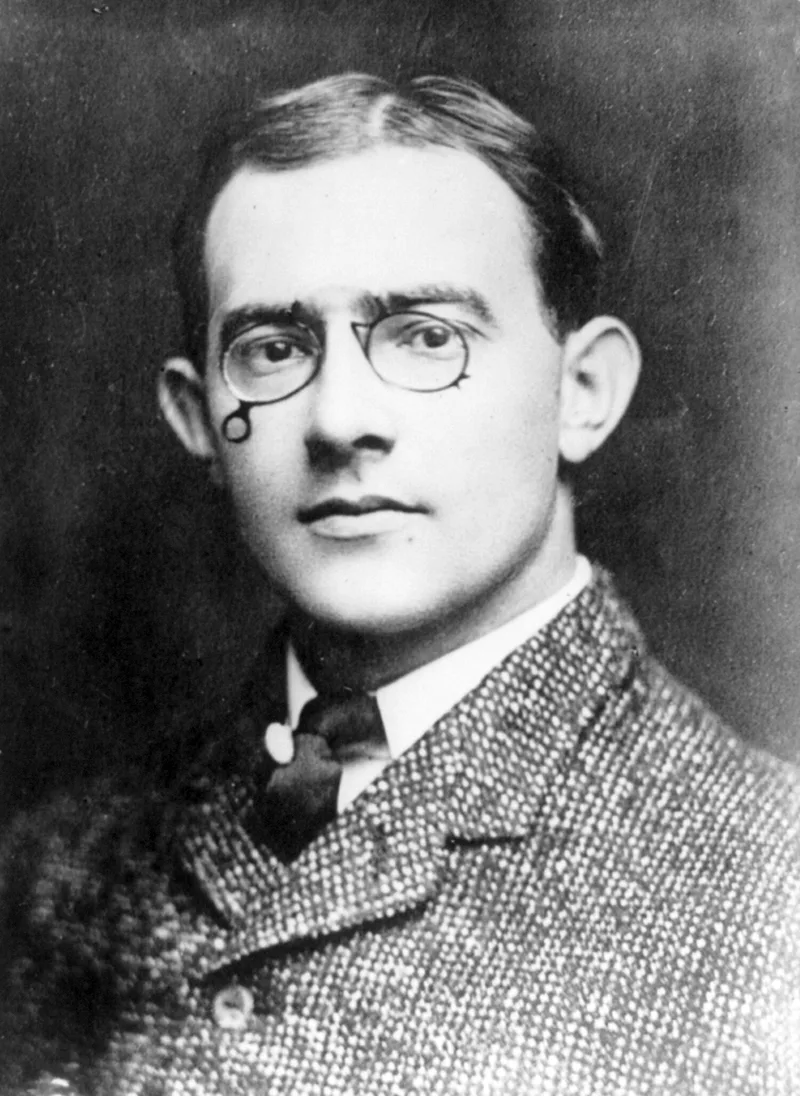
The Baker Motor Vehicle Company of Cleveland, Ohio, was founded by Walter C. Baker. It began in 1898 as a spin-off from the American Ball Bearing Company, whose aim was to show off its axles and bearings. The first Baker was a two-seater at US$850, and Thomas Edison bought one, his first car. Edison went on to design nickel-iron batteries for some later models.
By 1902 there were four models with a 12-cell battery. The Runabout produced 0.75 horsepower (0.56 kW) and weighed 650 lb (290 kg). The Stanhope cost US$1,600, made 1.75 horsepower (1.30 kW), had three forward speeds and could reach 14 mph (23 km/h). In 1906 Baker made 800 cars, which made it the biggest electric vehicle builder anywhere, and it advertised its new Edgewater Park factory as the biggest anywhere. The 1906 Landolet cost $4,000. By 1907 the range had grown to seventeen models, from the Stanhope to the Inside Drive Coupe, together with trucks of up to five tons.
In 1910 Baker moved to shaft drive with a GE high-speed motor. The Broughams that year cost $2,250 to $2,600, seated four, and came with a black chassis and a choice of blue, green or maroon panels. A Queen Victoria body could be fitted for another $300. Customers included King Chulalongkorn of Siam, who bought one trimmed with ivory and gold with pigskin seats in 1903, and the White House, where a Baker was part of the first fleet of cars and was driven by Helen Taft and later Edith Bolling Wilson. Jay Leno owns a restored 1909 example.
The 1902 Staten Island crash
In May 1902 Baker entered a racing Torpedo in a public-road speed trial on New York's Staten Island. The car had a streamlined, enclosed body, carried a brakesman as well as Baker himself, and tipped the scales at 3,000 lb (1,400 kg) with all its batteries. The aim was to beat a mile a minute from a standing start and better the Riker's 1901 electric record of 1:08. It averaged 63.62 mph for the kilometre, and was still gaining speed when the driver lost control and slid into the crowd. Two spectators died. The Automobile Club of America decided to end road racing on public highways, and confidence in the safety of electric cars suffered across the board.
The Torpedo was said to be the first car with seat belts, and was capable of more than 75 mph (120 km/h). Around 1913 Detroit Electric overtook Baker in sales, and in 1915 the company merged with Rauch and Lang as Baker, Rauch & Lang. Cars carrying the Baker name ended in 1916, while the electric industrial trucks carried on far longer.
Why did people buy electric cars in 1900?
Because the alternatives were hard work. Petrol cars shook, smelled, made noise and had to be started with a hand crank, which could be difficult and sometimes dangerous. Steam cars needed up to 45 minutes to build pressure on a cold morning. An electric car had no gear changes and no starting effort. Wealthy drivers used them as city cars, where the short range mattered least, and makers built big, ornate carriages with luxurious interiors. They were often marketed to women, which may have produced a stigma among men.
The numbers differ by source. One figure puts the American share in 1900 at 28 percent of cars on the road, another at 38 per cent electric, against 40 per cent steam and 22 per cent petrol. Both agree that America accepted electrics more readily than anywhere else. In 1902 Studebaker entered the car business with electric models, and Sightseeing in Washington for President Woodrow Wilson and his security detail was done in Milburn Light Electrics. Sales peaked in the early 1910s, and more than 300 makers are listed in the United States up to 1942.
Lack of power infrastructure held electrics back, and one idea for beating it was to swap the battery instead of waiting. Proposed as early as 1896, it became reality as the GeVeCo service, run by Hartford Electric Light with the General Vehicle Company, a General Electric subsidiary. Owners bought an electric truck without its battery and paid for electricity through a variable charge plus a monthly fee. It ran between 1910 and 1924 and covered more than 6 million miles. A similar scheme for Milburn cars began in Chicago in 1917.
What killed the electric car by the 1920s?
Several things arrived together. Better roads called for longer range, and big petroleum discoveries made petrol cheap. Electric cars were stuck at 24 to 32 km/h (15 to 20 mph) with a range of 50 to 65 km (30 to 40 miles). Petrol cars fixed their weaknesses: Charles Kettering's electric starter in 1912 made hand cranking history, and the muffler invented in 1897 by the Reeves pair, Milton and Marshall, brought noise down. Then Henry Ford's mass production cut prices. By 1912 an electric car cost almost double a petrol one.
Most makers stopped in the 1910s. The technology stayed where range hardly mattered. Yale launched electric forklifts in 1923, and electric trucks remained an established niche into the 1920s. The milk float became a British fixture, and for most of the twentieth century the majority of the world's battery road vehicles were British milk floats. Lektro was building golf carts as early as 1954.
What this history means for drivers today
The old trade-offs are recognisable. Range, price and charging infrastructure decided the outcome in 1912 and they are still the things buyers weigh. The swap tray at Lambeth and the GeVeCo truck battery were early answers to the problem of waiting for a recharge.
Interest returned at the start of this century because of emissions concerns and better batteries. By the end of 2020, light-duty plug-in electric cars had sold 10 million units in total.